27+ Jaw-Dropping Scandinavian Interior Design Ideas for 2026 You Need to See

Still scrolling through Scandinavian interior photos without a clear idea of where to start? We get it. The minimalist aesthetic is beautiful, but making it feel warm and personal is the real challenge. After filtering through hundreds of looks across IKEA, Article, and West Elm, we narrowed it down to 27 distinct ideas that actually work for real homes in 2026. You’ll find everything from dark, moody takes on Scandi to the light and airy Japandi fusion that’s taking over our feeds. And stay until the end — we break down the most common mistakes that can ruin these looks. 📌 Save this to Pinterest for later — you’ll want to revisit these ideas.
1. Contrast Pale Neutrals with Characterful Dark Wood
The single element holding this look together is the confident use of dark wood. In a world of all-white and pale oak Scandi, introducing darker, characterful wood for structural elements or key furniture pieces adds instant depth and a sense of history. It grounds the lighter elements and prevents the room from feeling one-dimensional or flat. Without it, the space would lose its unique, soulful quality and feel like any other pale neutral interior.
⚠️ Real Talk
A barn retreat vibe sounds dreamy, but achieving it in a standard home requires careful balance. Dark wood can feel heavy and make a room seem smaller if you don’t have high ceilings or abundant natural light. Before committing to dark wood beams or paneling, assess your light sources. If your room is naturally dim, consider using dark wood on a single accent wall or for furniture pieces instead of architectural features, like in Idea #21.
2. Embrace Rattan Accents and a Pinkish-Beige Palette
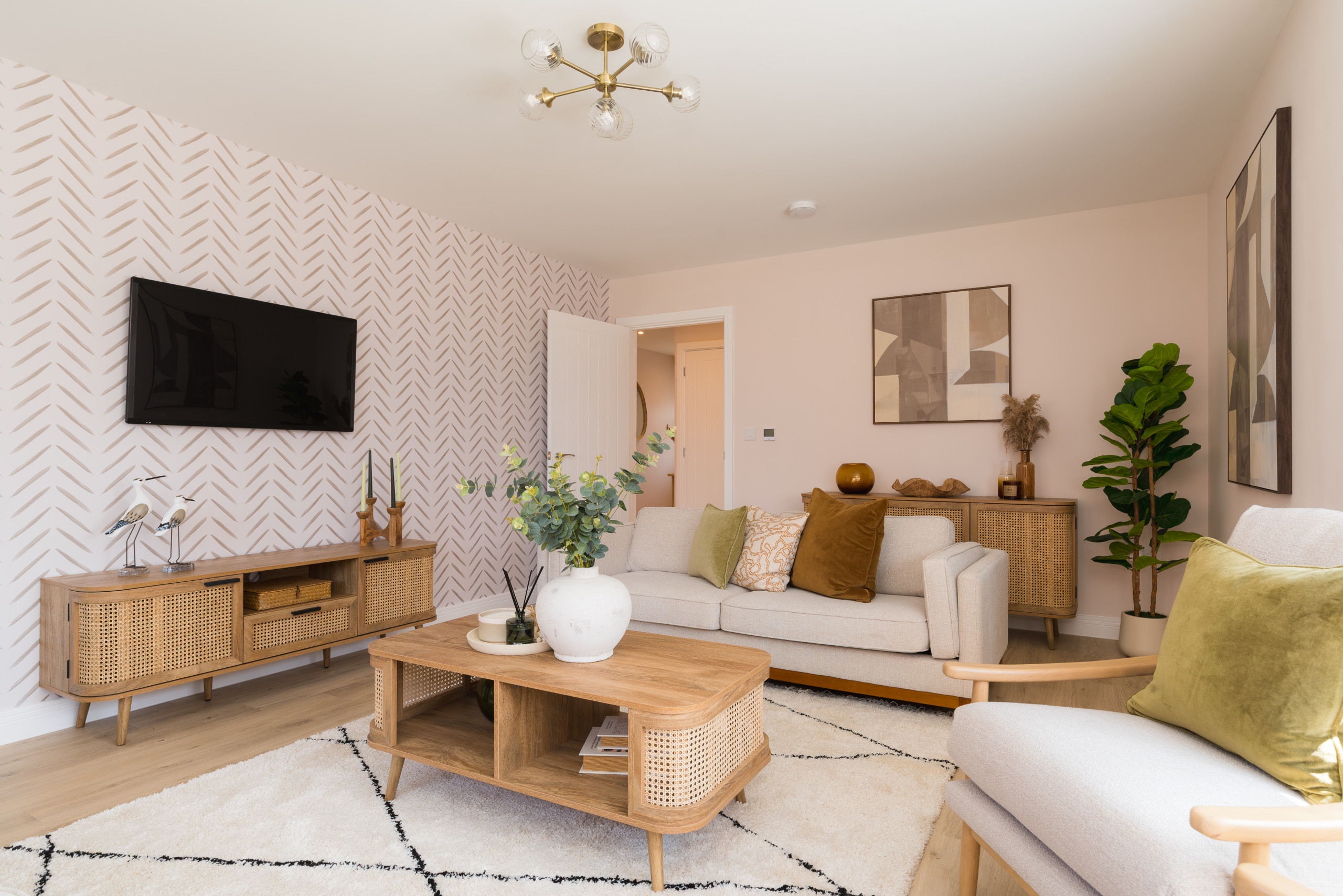
What makes this room sing is the masterful blend of texture and subtle color. The rattan brings in a natural, woven element that contrasts beautifully with the smooth surfaces of the light wood furniture. The soft, pinkish-beige walls provide a warm backdrop that feels more personal than plain white, while the chevron wallpaper adds a layer of quiet pattern without overwhelming the space. It’s a lesson in balancing warmth with modern lines.
🔧 How-To Brief
That Sputnik chandelier is a showstopper, but placement is key. For a living room, hang chandeliers so the bottom is at least 7 feet from the floor. If your ceilings are lower than 8 feet, opt for a semi-flush mount version to get the same vibe without sacrificing headroom. Always install a dimmer switch—it’s the secret to taking a room from bright and functional to cozy and intimate in seconds.
3. Layer Rustic Wood Beams with Plush Sheepskin
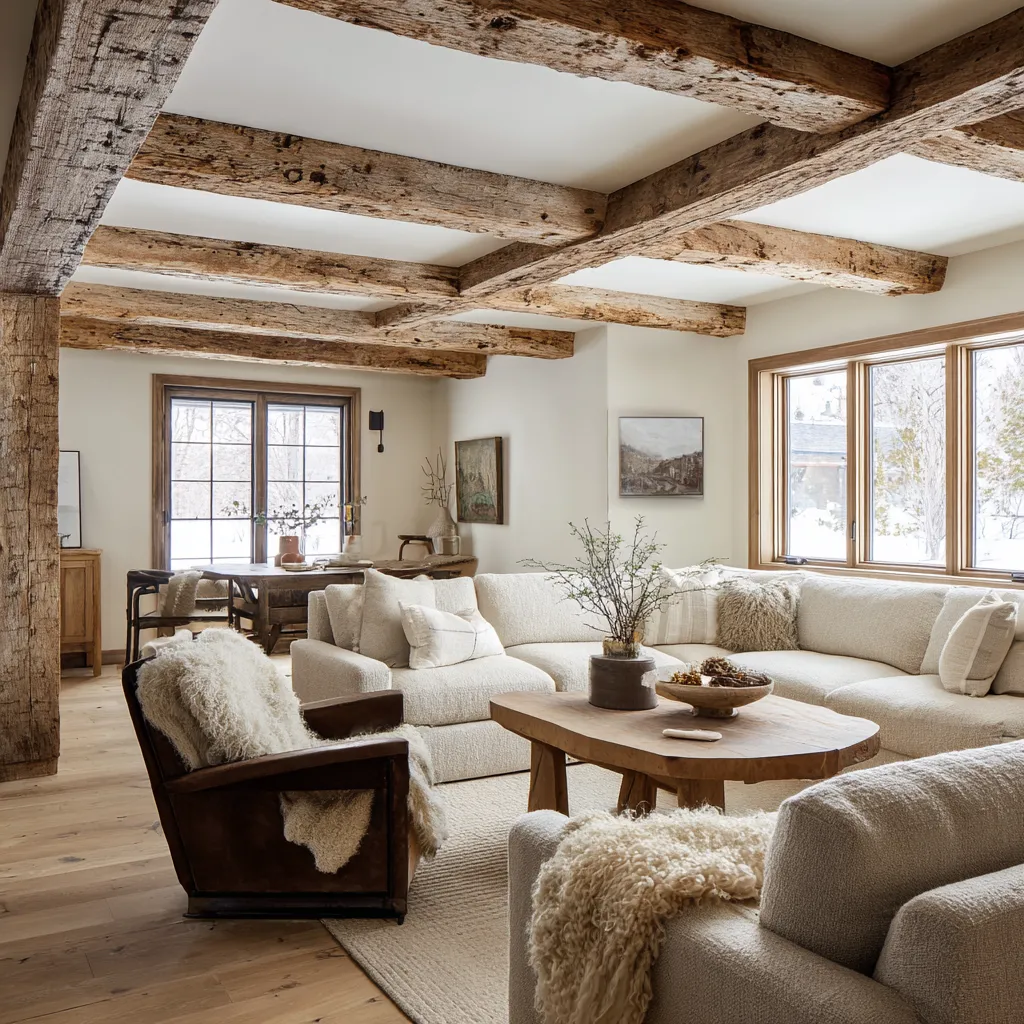
Think of this room as a formula: 50% rustic structure + 40% plush, soft textiles + 10% clean lines. The dominant features are the heavy wooden beams and column, which provide a strong, earthy base. To balance that, almost half the room’s visual weight comes from oversized, soft elements like the sectional and the decadent sheepskin throws. The clean, dark lines of the window frames provide the final touch of modern contrast. You could swap the sheepskin for velvet or bouclé and still achieve this cozy-yet-structured feel.
⭐ The One Thing
This look thrives in a room with generous proportions and higher-than-average ceilings (9ft+). The heavy ceiling beams need vertical space to avoid feeling oppressive. A minimum room size of 15ft x 20ft is ideal to accommodate the large sectional and prevent the rustic elements from overwhelming the space. For smaller rooms, consider a more minimalist approach with fewer, lighter beams, like in Idea #14.
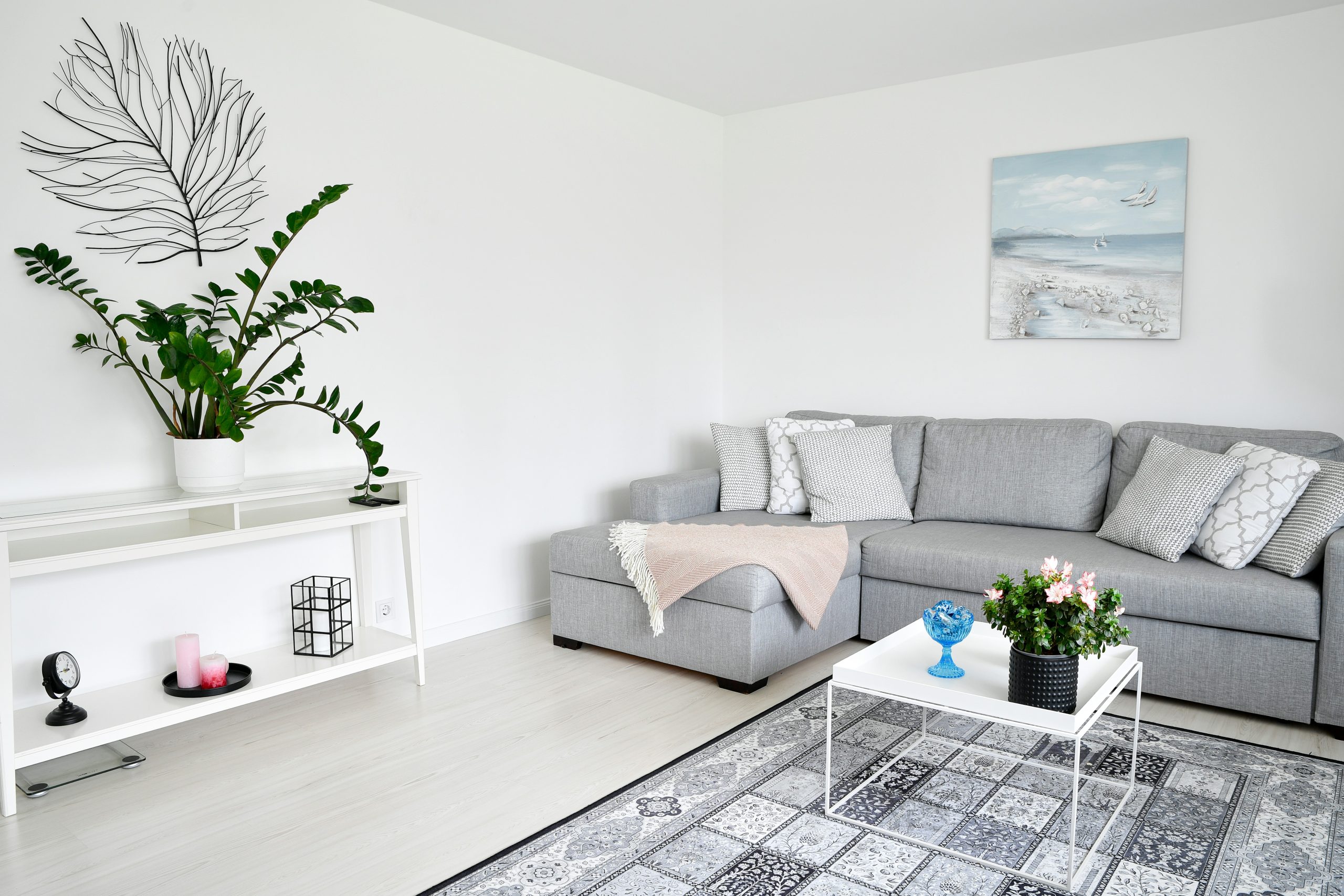
4. Anchor a Bright White Room with a Checkered Rug
In an otherwise classic white-and-gray Scandinavian setup, the gray checkered rug is the crucial grounding element. It adds a bold geometric pattern that breaks up the solid blocks of color from the white walls and gray sofa. This single piece introduces a touch of playful structure and visual interest underfoot, preventing the minimalist palette from feeling too plain or forgettable. Remove the rug, and the room instantly loses its anchor and a significant portion of its personality.
💰 Budget Breakdown
You don’t need a designer budget to get this classic Scandi look. Find a simple gray sofa from IKEA or Article for around $800-$1200. The key is the rug, which you can often find at Target or on Rugs USA for under $200. A black tripod floor lamp can be found on Amazon or at Walmart for about $50. The lush houseplant? A trip to your local nursery or even Home Depot can score you a beautiful fiddle-leaf fig or monstera for $40-$80. The whole vibe can be yours for well under $1500.
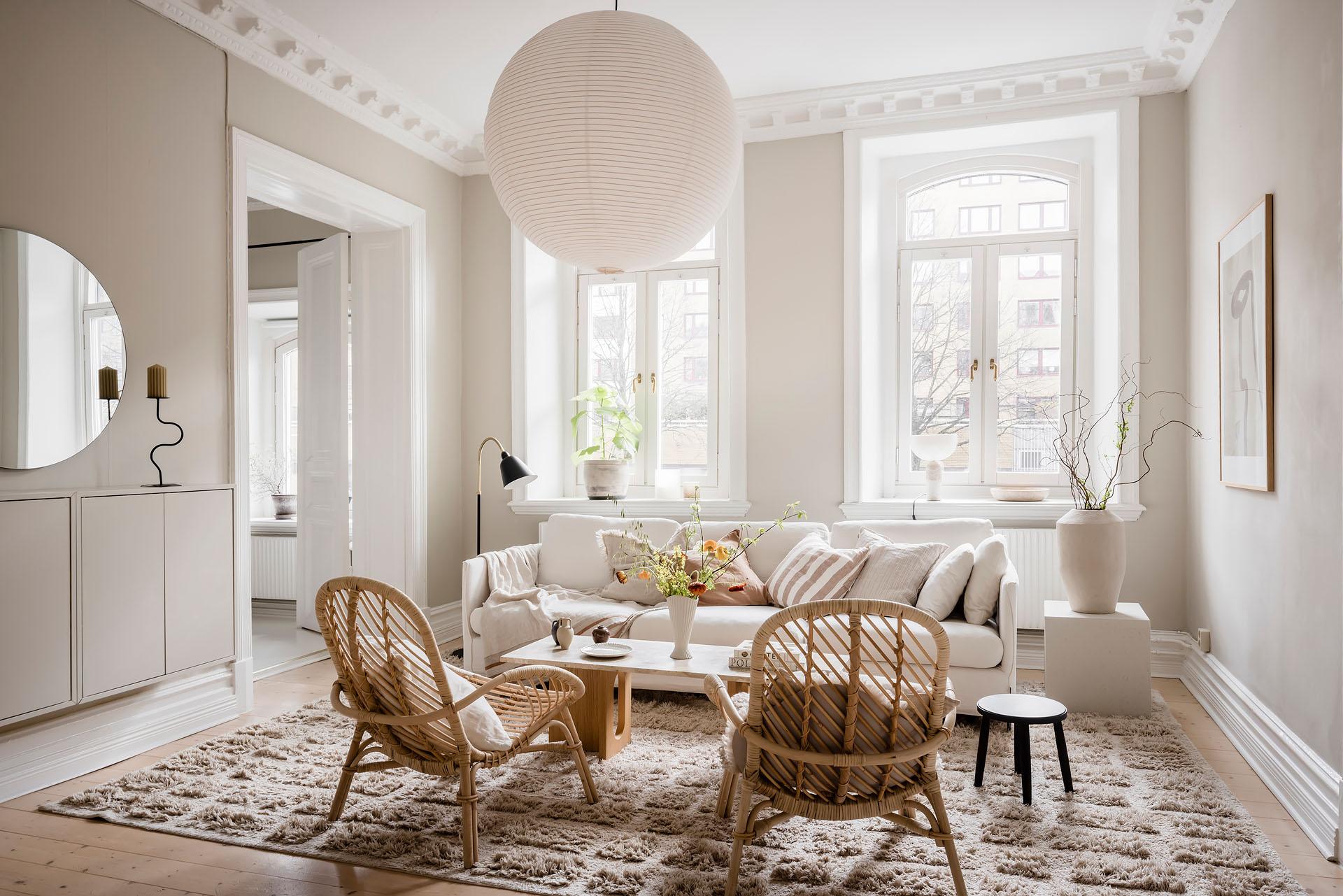
5. Create Warmth with a Dreamy Beige-on-Beige Palette
This all-beige look is a direct evolution of the classic all-white Scandinavian interior. As we move into 2026, designers and homeowners are craving more warmth and less starkness. Beige, once considered dated, is making a huge comeback because it provides the same neutral, calming backdrop as white but with a softer, more inviting energy. This trend has staying power because it’s incredibly versatile and pairs beautifully with the natural wood and textiles central to Scandi design.
🎯 What Makes It Work
Layering different shades and textures of the same color is what gives this room its sophisticated depth. From the paint on the walls to the upholstery on the sofa and the fibers in the rug, slight variations in beige create a rich, tonal landscape. This technique, known as tone-on-tone decorating, is effective because it creates harmony and visual calm while allowing textural differences—a smooth wall versus a nubby textile—to become the focal point. It feels cohesive, not monotonous.
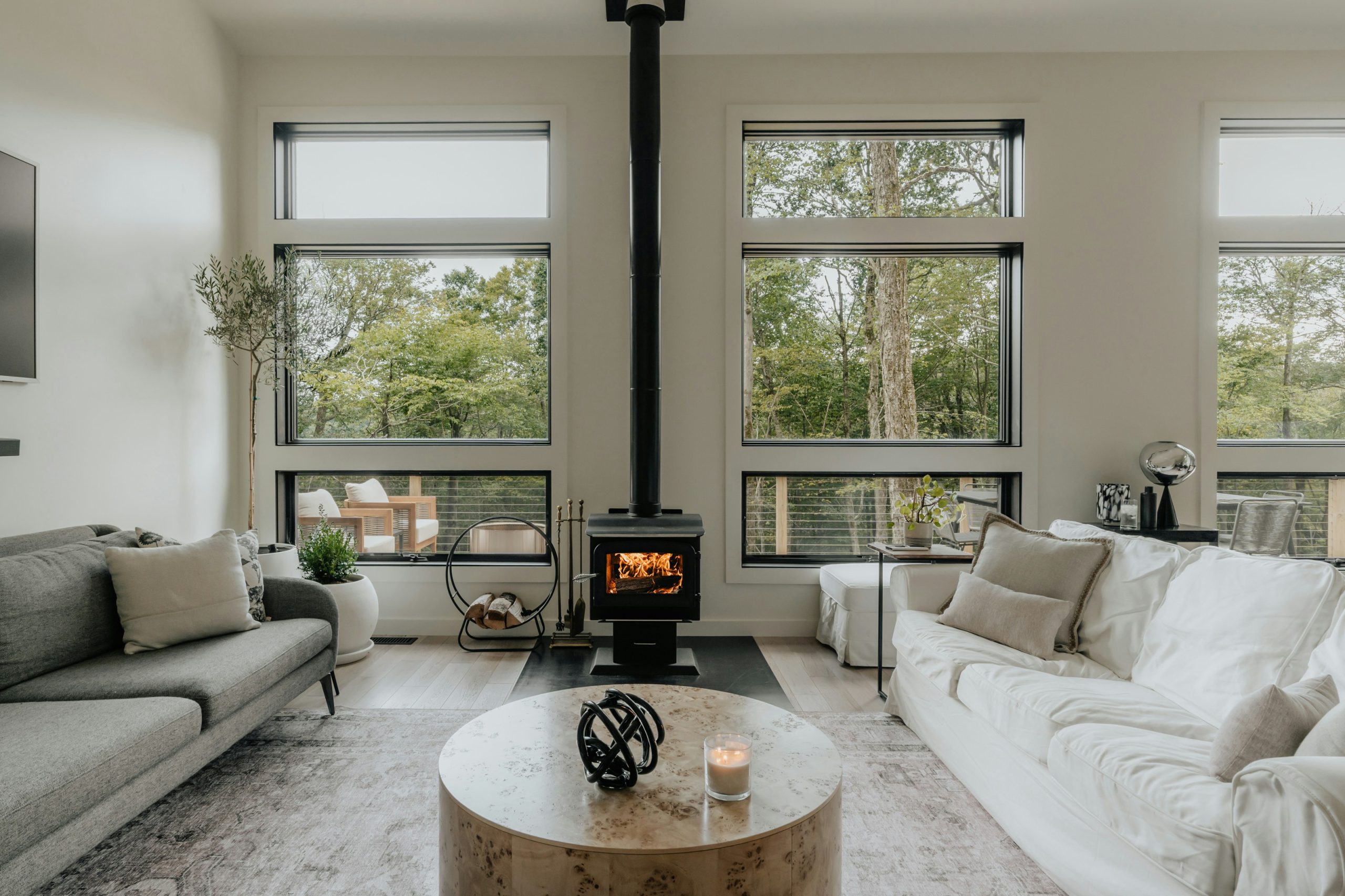
6. Frame Nature with Black Accents and a Wood-Burning Stove
A wood-burning stove is the heart of coziness, but entails real work. You’ll need a professional installer, annual chimney sweeping (around $200-$300), and a steady supply of seasoned firewood. The glass door requires regular cleaning with a special stove glass cleaner to remove soot, and you’ll be managing ash disposal. For a similar aesthetic with zero upkeep, consider a high-quality electric stove. Many models now have surprisingly realistic flame effects and can provide heat, all with the flip of a switch.
📐 Style Math
When you have a view this good, the interior should complement it, not compete with it. By keeping the color palette simple (white, grey, light wood) and using bold black for the window frames and stove, the design cleverly frames the lush greenery outside. The black acts like a picture frame, making the natural landscape the room’s primary artwork. This technique is perfect for any room with a strong connection to the outdoors.
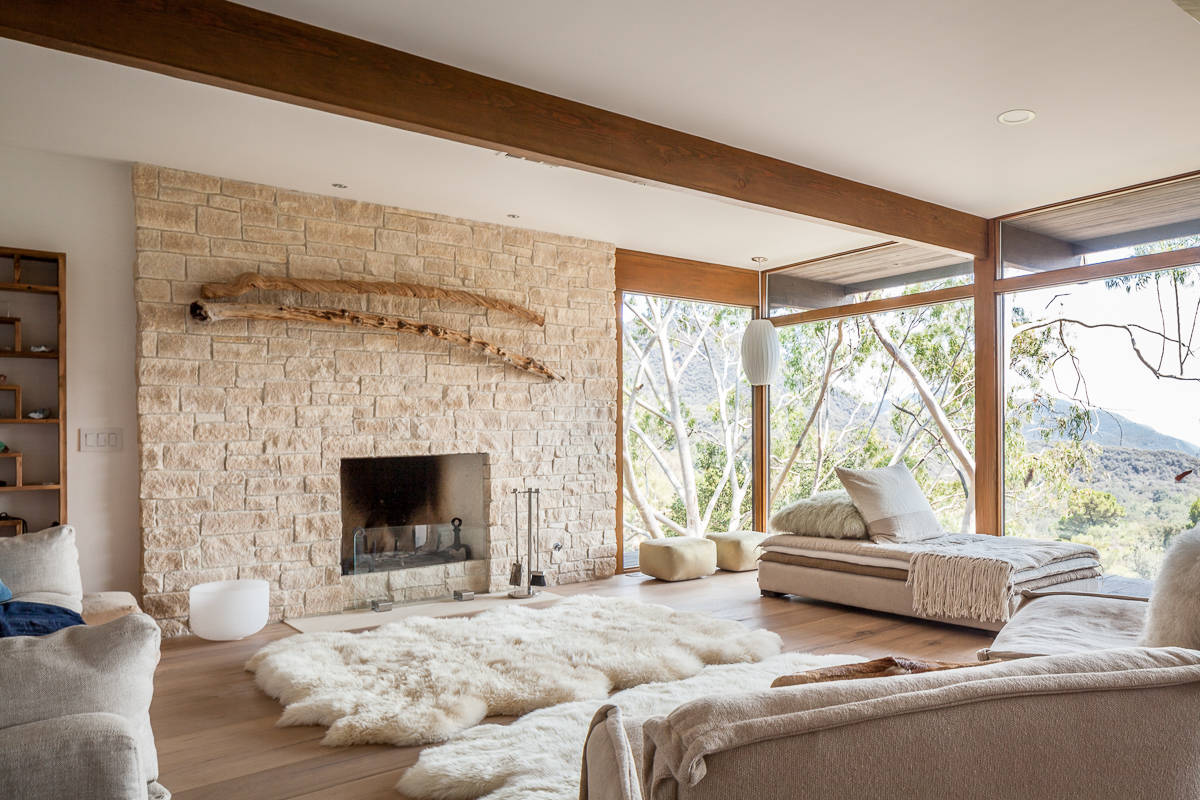
7. Build a Room Around a Full-Height Stone Fireplace
The undeniable hero of this space is the floor-to-ceiling stone fireplace. It’s more than a heat source; it’s a massive, textural statement piece that dictates the room’s entire mood. The natural variation in the stone adds organic pattern and a powerful sense of permanence. Without this architectural anchor, the room, with its light floors and plush white decor, would feel pretty but could float away. The fireplace gives it gravity and a strong, rustic soul.
🔥 Trending Context
A stone feature wall of this magnitude is a major commitment in both cost and style. It’s not something you can easily paint over or change in a few years. Before you build, be absolutely certain that this rustic, natural look is your long-term vision. Also, consider the cleaning—the uneven surfaces of natural stone can be a dust magnet. For a lighter commitment, consider stone veneer, which is thinner, less expensive, and can create a similar, albeit less massive, effect.
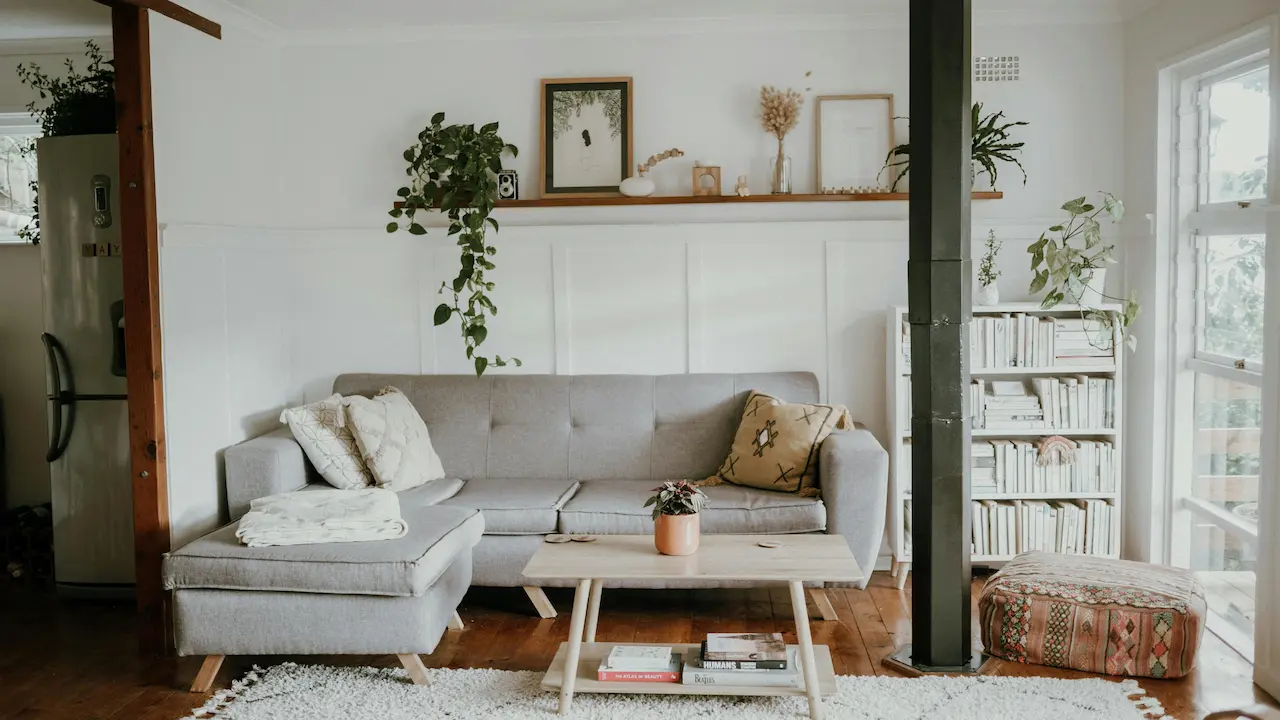
8. Add Character with Mid-Height Paneled Walls
Installing a paneled half-wall is a great weekend project. Here’s a quick guide:
💸 Get This Look For Less
- Measure and Plan: Decide on the height (typically 32-40 inches). Use a level to draw a guideline around the room. Mark the stud locations using a stud finder.
- Install the Top Rail: Cut a 1×4 MDF or wood board to length and nail it to the wall, aligning the top with your guideline.
- Add the Vertical Battens: Cut your 1×3 battens to the height from your baseboard to the bottom of the top rail. Space them 12-18 inches apart and nail them to the studs where possible.
- Caulk and Fill: Caulk all the seams where the wood meets the wall and fill any nail holes with wood filler. This is the secret to a professional finish!
- Paint: Prime the wood and then paint it, along with the wall section below, in your desired color.
a project like this, run through a quick checklist:
- Have I measured all wall lengths accurately and accounted for windows and doors?
- Is the wall surface relatively smooth and in good repair? Major holes will need patching first.
- Do I have the right tools? You’ll need a saw, level, nail gun (or hammer and nails), stud finder, and caulking gun.
- Have I chosen a paint finish? A satin or semi-gloss finish is typically recommended for trim and paneling for durability.
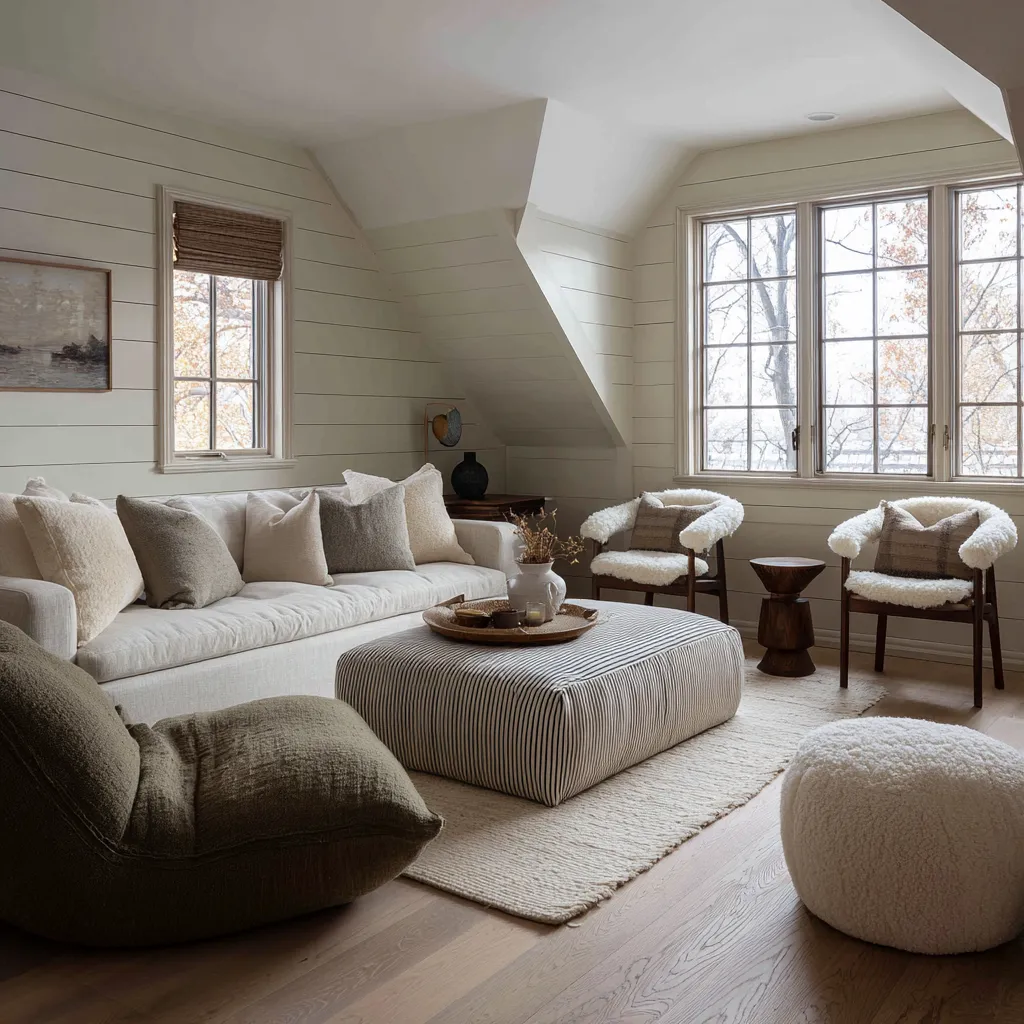
9. Use White Shiplap on a Sloped Loft Ceiling
This space works because the shiplap does two important things at once. First, the clean horizontal lines create a sense of width and order, making the loft feel more spacious and less chaotic than it might with just plain drywall. Second, applying it to the sloped ceiling as well as the walls creates a cohesive, wrap-around effect, almost like being inside a cozy, whitewashed cabin. This continuity is what makes the room feel so intentionally designed and enveloping.
💡 Designer Tip
Shiplap on a sloped ceiling is a fantastic solution for attic or loft spaces with ceiling heights that vary. It works well in rooms starting at about 12ft x 15ft. The key is to have at least one wall with a standard height (8ft+) to prevent feeling too closed in. This treatment helps to unify awkward angles and can actually make a smaller or oddly-shaped room feel more structured and charming. It’s less suited for grand rooms with consistently high, flat ceilings, where it might look too busy.
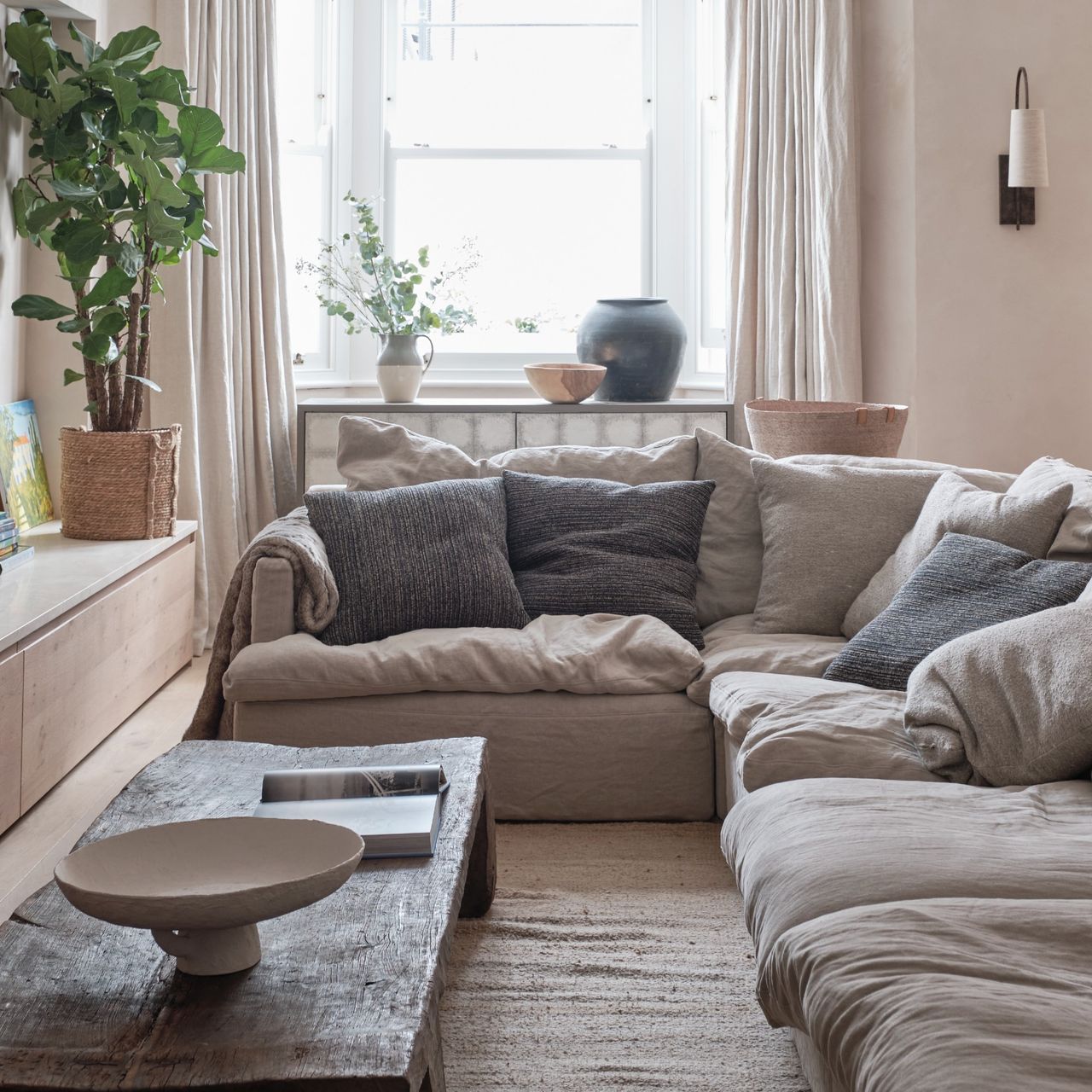
10. Combine Oatmeal Linen and a Rustic Wood Coffee Table
The visual recipe here is simple and effective: 60% soft, neutral base + 25% rustic wood + 15% dark accents. The large oatmeal linen sofa provides a sprawling, comfortable foundation. The rustic coffee table and plant basket offer a healthy dose of natural, raw texture. Finally, the dark gray pillows and black legs of the plant stand inject just enough contrast to keep the neutral palette from looking bland. You could swap the dark gray for navy or olive green for a similar effect.
📏 Scale Guide
Let’s be honest: a large, light-colored linen sofa is beautiful but requires care. Linen is prone to wrinkling and can stain if spills aren’t treated immediately. A slipcovered version is your best friend here, as you can remove and wash it. The rustic wood coffee table is more forgiving but can be sensitive to water rings, so coasters are a must. For a lower-maintenance alternative, consider a performance fabric sofa in a similar color and a reclaimed wood table with a matte protective sealant.
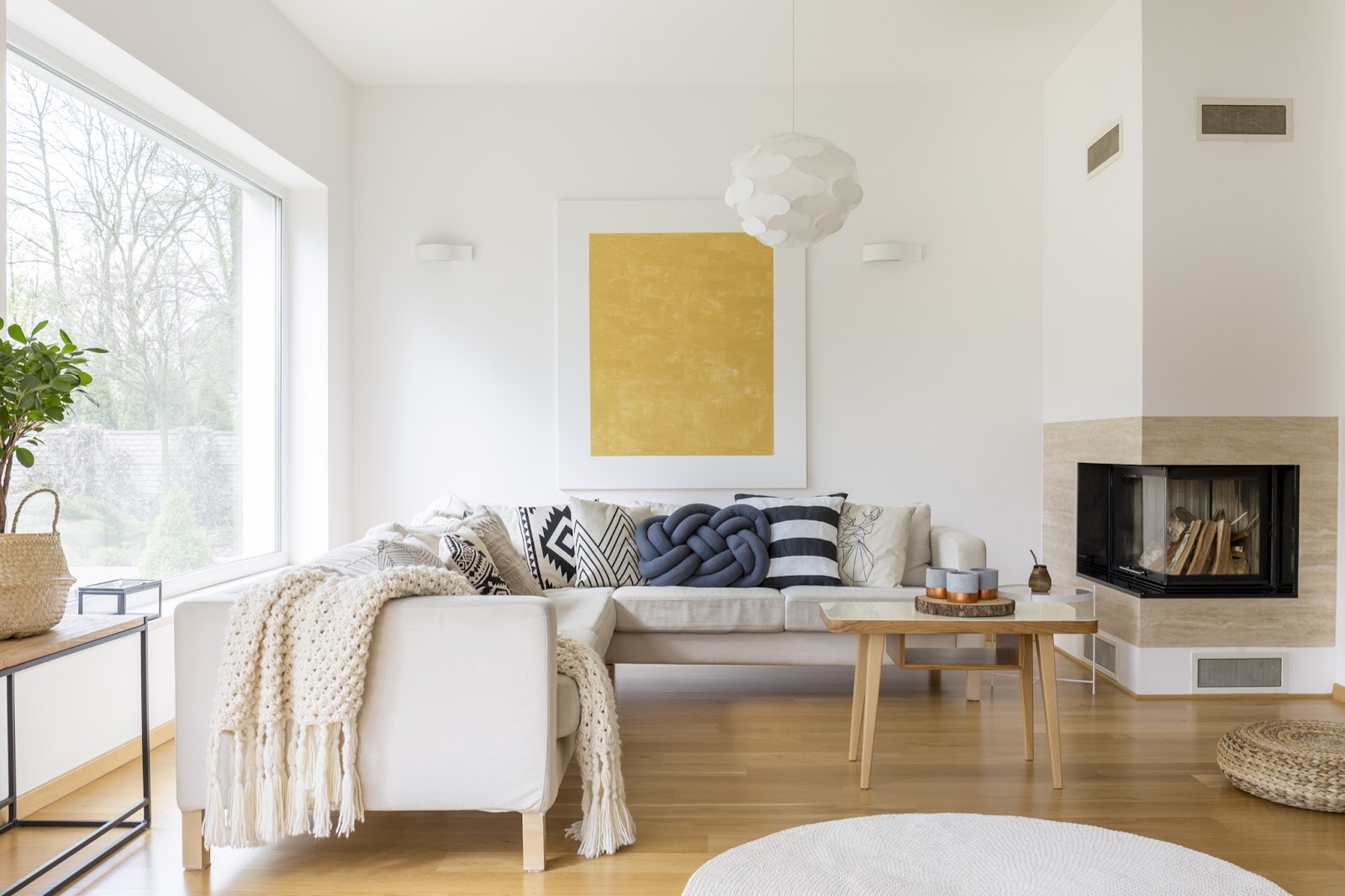
11. Pair a White Sectional with a Beige Stone Fireplace
This room feels so balanced because of the smart interplay between soft and hard surfaces, and warm and cool tones. The plush, sprawling white sectional is pure softness, inviting you to lounge. This is perfectly counterbalanced by the hard, textured surface of the beige stone fireplace. The white is cool, while the beige stone and light wood floors bring in warmth. Splashes of yellow in the pillows add a final, cheerful pop, proving that a mostly-neutral room can still have energy.
✅ Before You Start
That beautiful stone fireplace is a big investment. You can get a remarkably similar feeling on a budget. Use peel-and-stick stone veneer panels (around $10-15 per sq. ft.) around an existing fireplace insert. For the furniture, an IKEA Söderhamn or Kivik sectional in white or light beige gives you the same scale and comfort for a fraction of the designer price. Add some affordable yellow and black patterned pillows from H&M Home or Target, and you’ve captured the essence for thousands less.
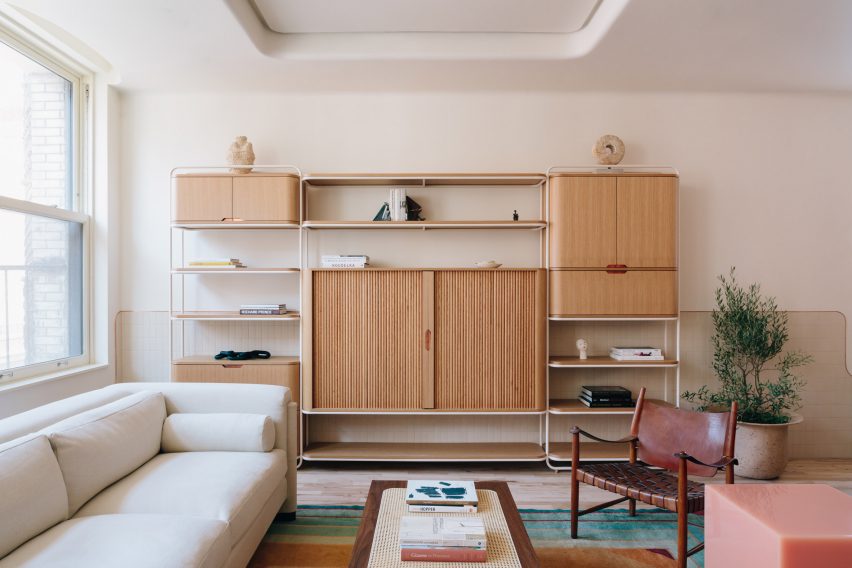
12. Mix Ribbed Wood Cabinets into a Modular Shelving Unit
When designing a large shelving system, the key to making it look custom and high-end is to mix open shelves with closed storage. Furthermore, varying the door fronts, as seen here with the ribbed wood texture, adds another layer of sophisticated detail. For a 10-foot wide unit, aim for about 60% open shelving and 40% closed cabinets. This gives you space to display beautiful objects while hiding the everyday clutter that makes a room feel messy.
🧹 Maintenance Reality
The element that truly elevates this wall system is the ribbed wood on the cabinet doors. It’s a detail that adds incredible texture and a subtle, linear pattern to the composition. In a sea of smooth, flat surfaces (the wall, the shelves, the other cabinets), this textural touch catches the light and creates visual rhythm. It transforms a standard modular unit from purely functional to a piece of architectural art. It’s a small detail with a massive impact.
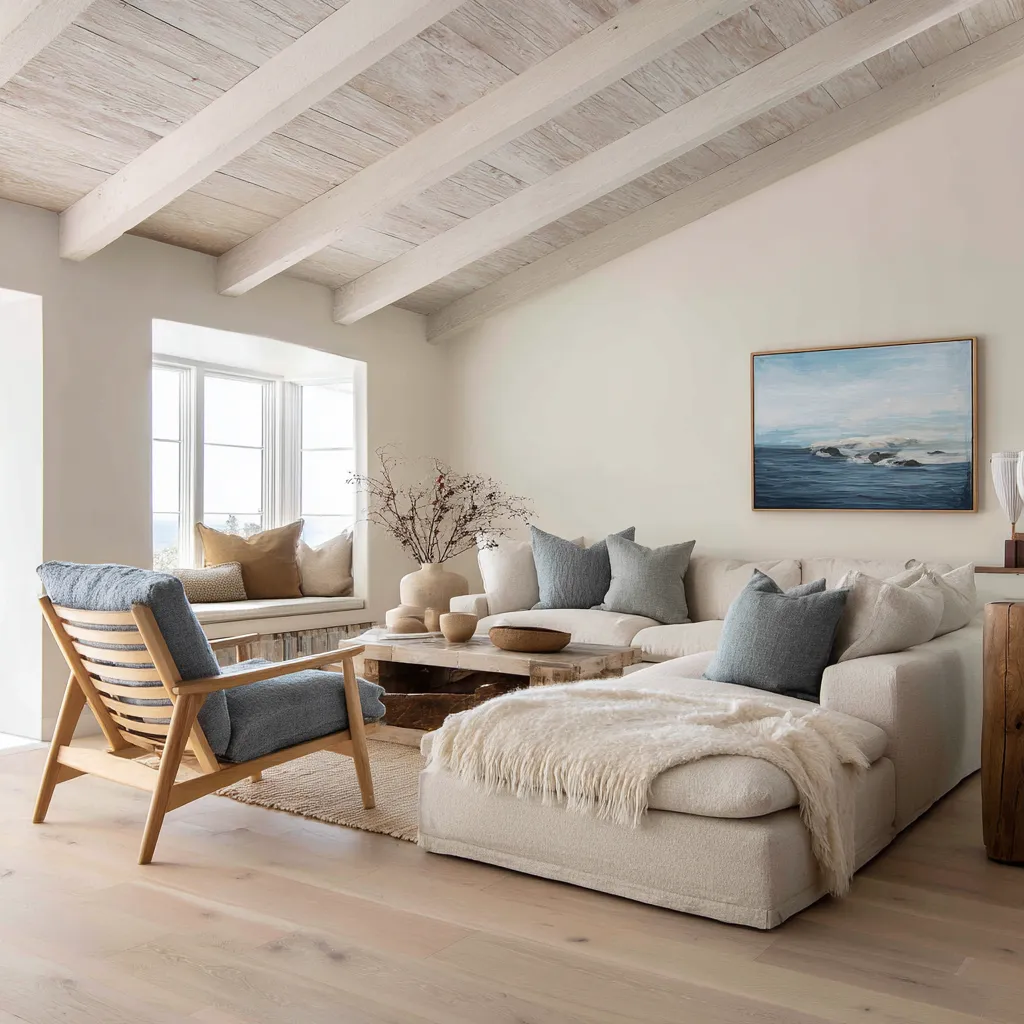
13. Soften a Vaulted Ceiling with Whitewashed Beams
The combination of a vaulted ceiling and an airy, natural palette is what makes this room feel so serene. The whitewashed beams draw the eye upward, celebrating the room’s height, but their softened finish keeps them from feeling heavy or overly rustic like the beams in Idea #3. The light wood floor provides a warm foundation, while the mix of blues and whites in the textiles echoes the colors of the sea and sky, reinforcing the calm, coastal-Scandi vibe.
⚠️ Real Talk
A vaulted ceiling adds incredible drama and airiness, but it can also present challenges. It can be more expensive to heat and cool a room with so much volume. Changing a lightbulb in that high-up fixture might require a very tall ladder or a specialist. Sound can also bounce around more in a vaulted room, creating an echo. While beautiful, it’s a feature that impacts the practical, everyday experience of living in the space.
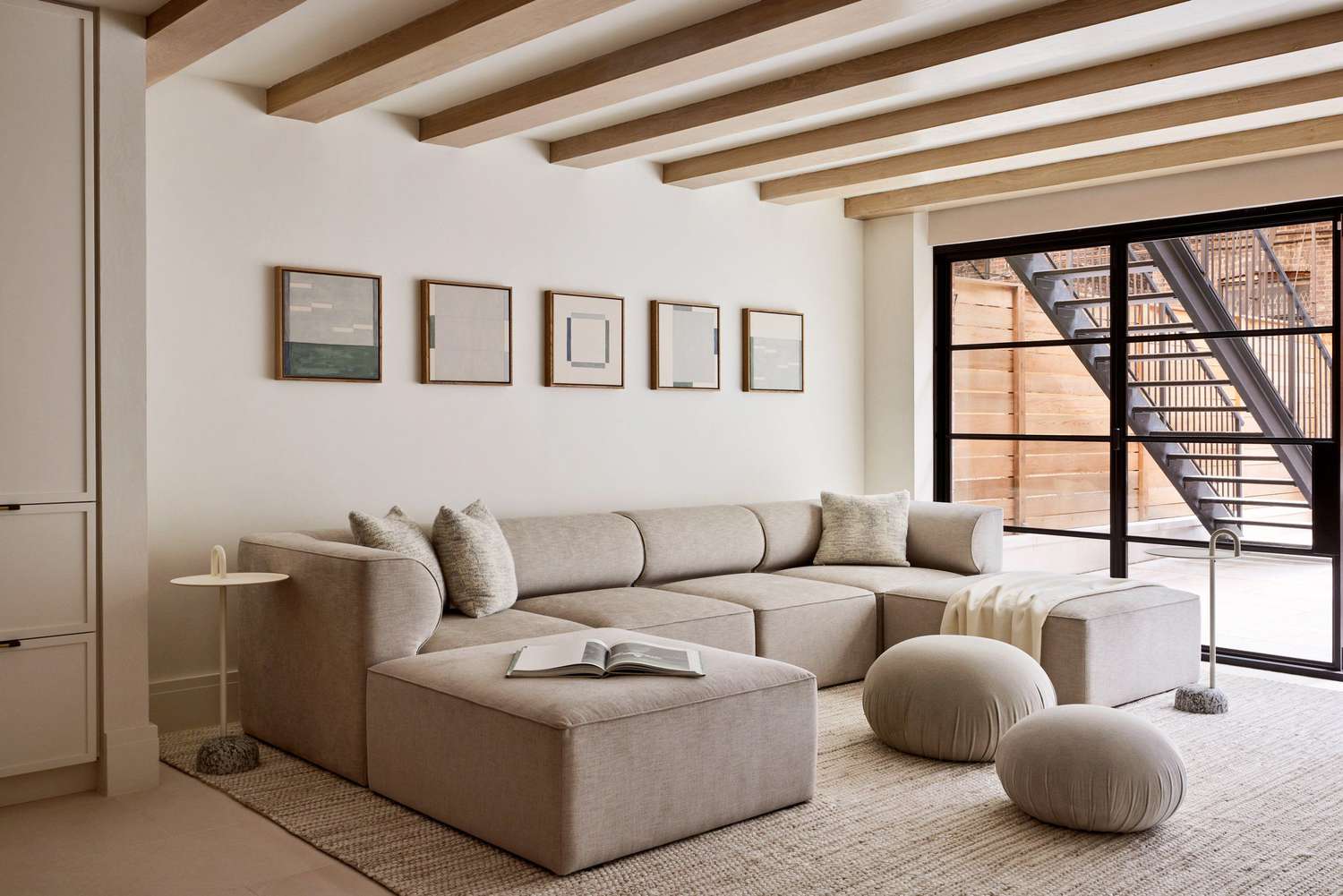
14. Balance a Modular Sofa with a Gallery Wall
This room demonstrates a formula for contemporary calm: 70% soft, low-slung furniture + 20% strong vertical lines + 10% curated art. The sprawling, neutral modular sofa keeps the visual center of gravity low and comfortable. This is balanced by the strong vertical lines of the black-framed windows, which draw the eye upward. The gallery wall provides a point of focus and personality without adding clutter, filling the large wall space with curated interest.
🔧 How-To Brief
This look is perfect for large, open-plan spaces with high ceilings (10ft or more). A large modular sofa needs room to breathe, so a minimum footprint of 18ft x 25ft for the living area is recommended. The full-height windows are key to the airy feel; without abundant natural light, the large sofa and expansive walls could feel imposing. The gallery wall is also a great technique for breaking up a large, blank wall that might otherwise feel empty and cold.
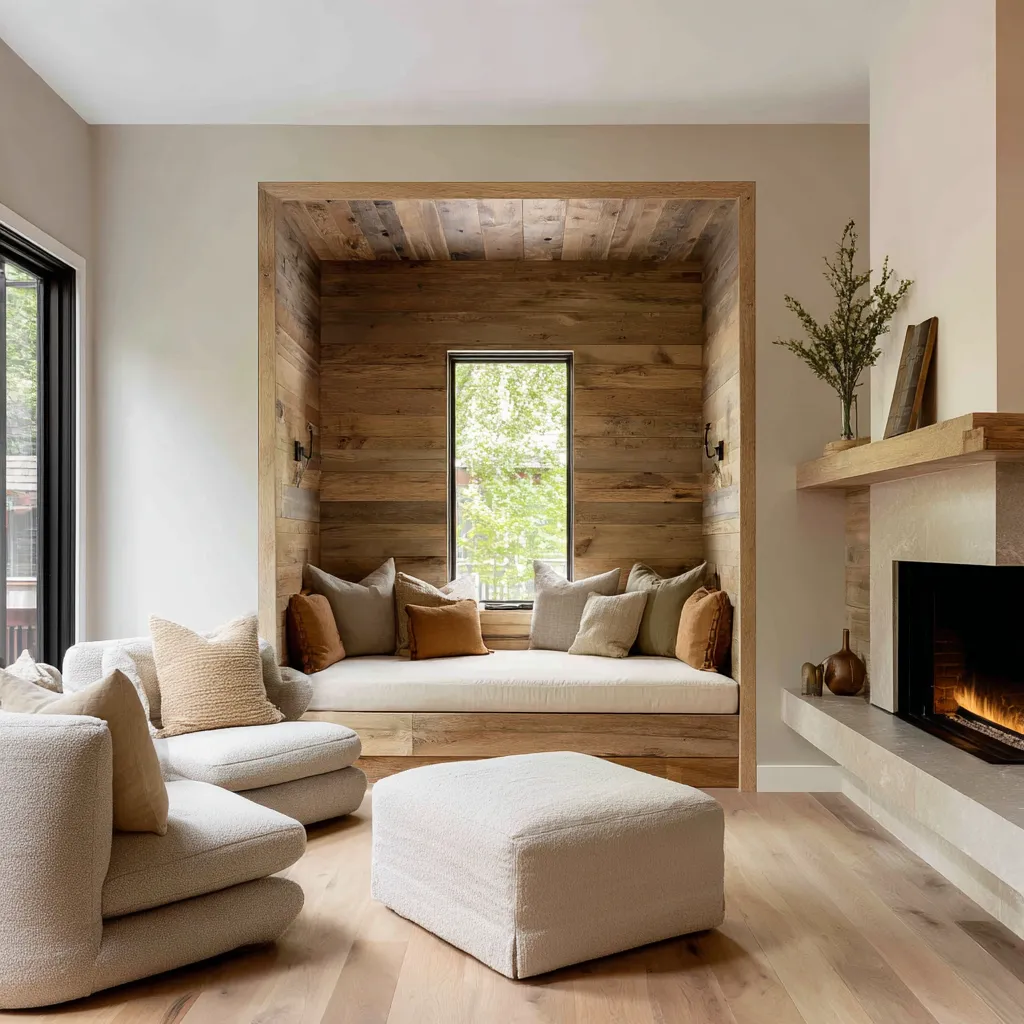
15. Carve Out a Cozy Nook with Reclaimed Wood Paneling
Creating a feature like this involves custom work, but here’s a rough estimate:
⭐ The One Thing
- Reclaimed Wood Paneling: $1,500 – $4,000 (depending on wood type and source)
- Custom Bench & Cushion: $800 – $2,500
- Minimalist Fireplace (electric insert & finishing): $2,000 – $5,000
- Accent Chairs (per chair): $600 – $1,800
- Decor (pillows, etc.): $200 – $500
- TOTAL: $5,100 – $13,800
- Budget alternative: Use wood-look peel-and-stick planks ($300), a pre-made storage bench from IKEA ($200), and find similar chairs on Facebook Marketplace ($400 for a pair) for a similar vibe under $1,000.
This design nook is a masterclass in creating a ‘room within a room’. By wrapping the walls and ceiling of the alcove in a single material (reclaimed wood), the designer defines a separate, intimate zone distinct from the main living space. The minimalist fireplace, with its clean lines, offers a modern counterpoint to the rustic wood. This contrast—rustic and modern, open and enclosed—is what makes the design so dynamic and inviting.
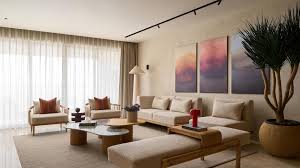
16. Fuse Japanese Simplicity with Scandinavian Warmth (Japandi)
Japandi isn’t a fleeting trend; it’s a design philosophy that’s here to stay. It merges the cozy, comfort-focused nature of Scandinavian ‘hygge’ with the Japanese ‘wabi-sabi’ appreciation for imperfection and simplicity. In 2026, this fusion is about finding calm and intention in our homes. As our lives get busier and more digital, we’re craving spaces that are uncluttered, connected to nature, and built with quality materials—the very definition of Japandi.
💰 Budget Breakdown
To achieve a true Japandi feel, focus on craftsmanship and natural materials. Instead of buying a matching set of furniture, select individual pieces that feel special. Look for furniture with clean lines but also visible wood grain or handcrafted details. Incorporate a mix of light Scandinavian woods (like oak or maple) with darker Japanese-inspired woods (like walnut or blackened ash). Keep decor minimal but impactful: a single beautiful ceramic vase is more Japandi than a shelf full of trinkets. This is a quieter, more considered take on minimalism than Idea #17.
17. Use Light Wood Floating Shelves for Minimalist Displays
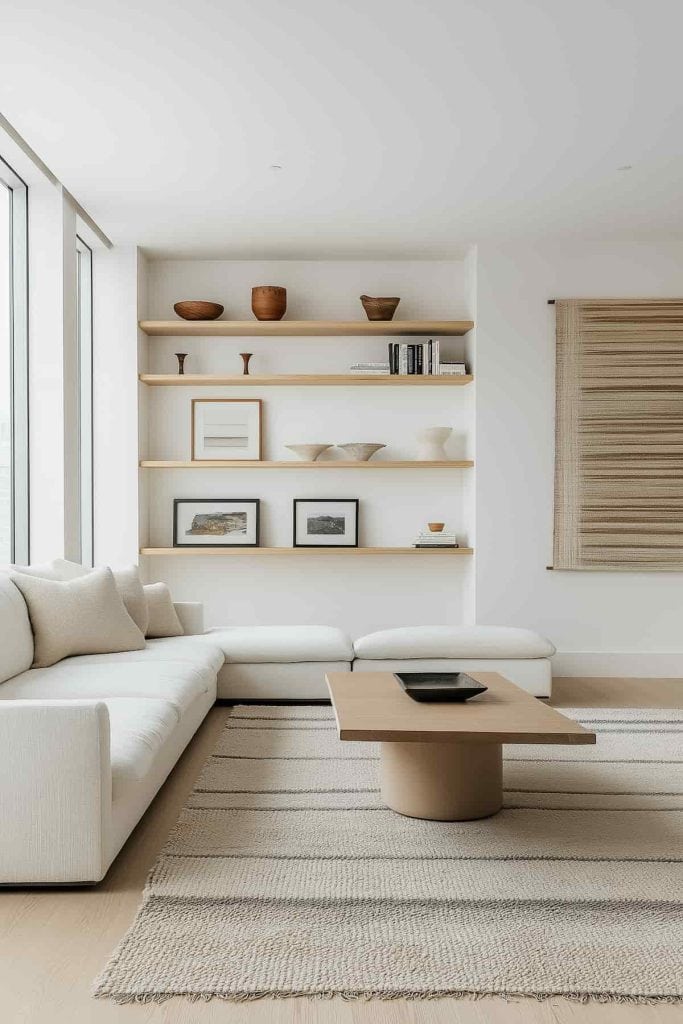
The floating shelves are the quiet star of this minimalist room. They provide essential storage and display space without the visual weight of a traditional bookcase. By matching the light wood of the floor and coffee table, they create a sense of harmony and continuity. Their clean, horizontal lines contribute to the room’s overall feeling of calm and order, allowing the few carefully chosen objects on them to stand out as miniature art installations.
🎯 What Makes It Work
Styling shelves like a pro is an art. Here’s a 5-minute guide:
- Start with a Clean Slate: Empty the shelves completely.
- Add Anchor Pieces: Place your largest items first (a vase, a stack of books) spreading them out across the shelves.
- Create Triangles: Arrange items in visual triangles of varying heights to guide the eye. For example, a tall vase, a medium plant, and a small bowl.
- Vary Textures: Mix smooth ceramics, rough textiles, glossy book covers, and natural wood.
- Leave Breathing Room: Don’t fill every inch. Negative space is a key element of minimalist design. Step back, edit, and remove one or two items.
18. Embrace Calm with a Curved White Bouclé Sofa
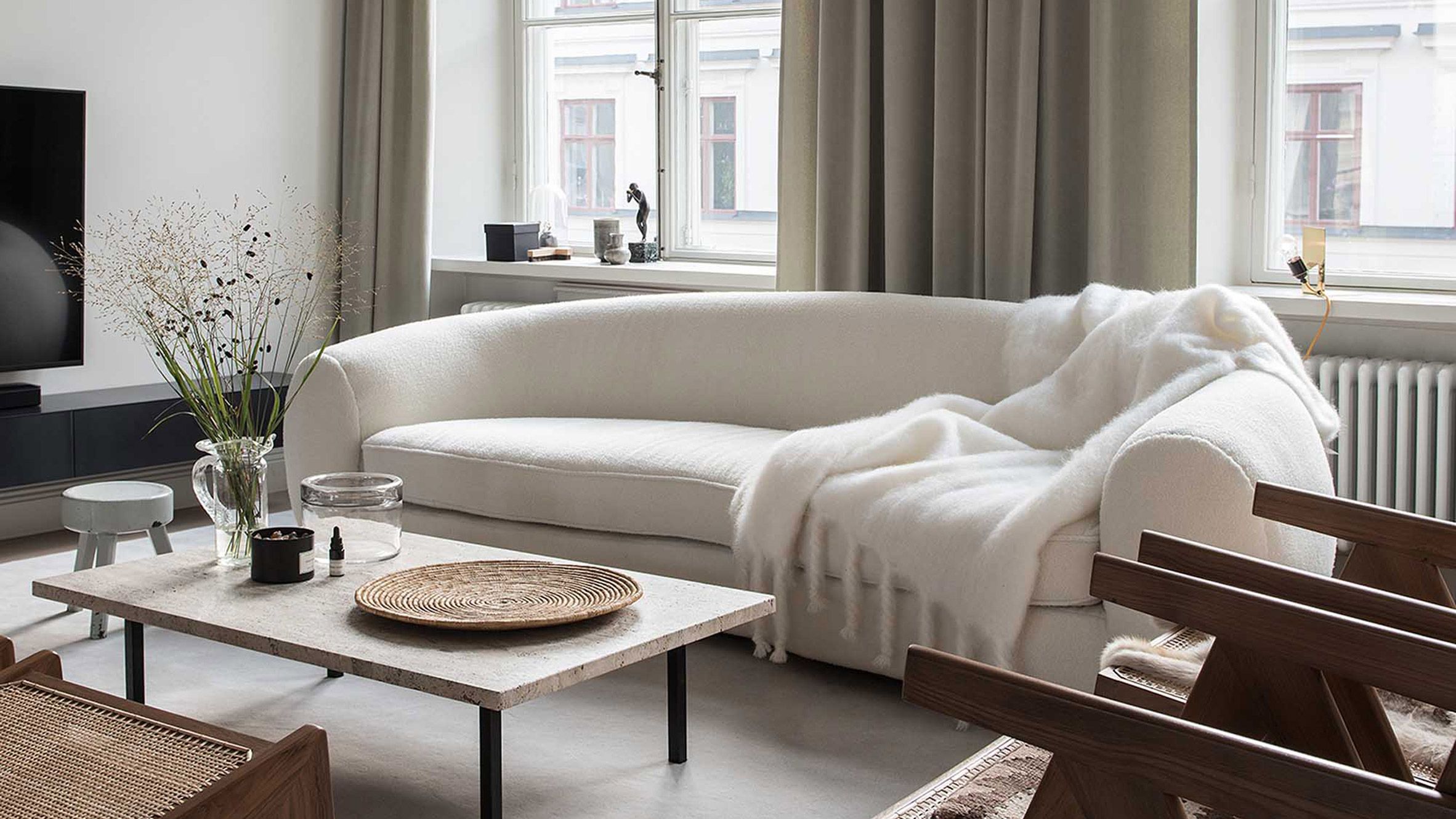
The magic of this room lies in its deep commitment to softness. The curved silhouette of the bouclé sofa is the primary element; its gentle arc is more welcoming and organic than a traditional straight-edged couch. This softness is then amplified by the fluffy throw blanket, the diffuse light from the curtains, and the rounded edges of the decor. Even the hard stone coffee table is softened by the natural, irregular patterns within it. It’s a space designed to soothe the senses.
📐 Style Math
A white bouclé sofa is the height of chic, but it can be a high-maintenance choice, especially in a home with pets, kids, or a love for red wine. The nubby texture can trap dust and dirt, requiring regular vacuuming with an upholstery attachment. Spills must be blotted immediately. Look for bouclé fabrics that are treated for stain resistance or, even better, opt for a slipcovered version if you can find one. For a more practical alternative, a light gray or beige bouclé will be much more forgiving.
19. Integrate Storage with a Touch of Childlike Whimsy
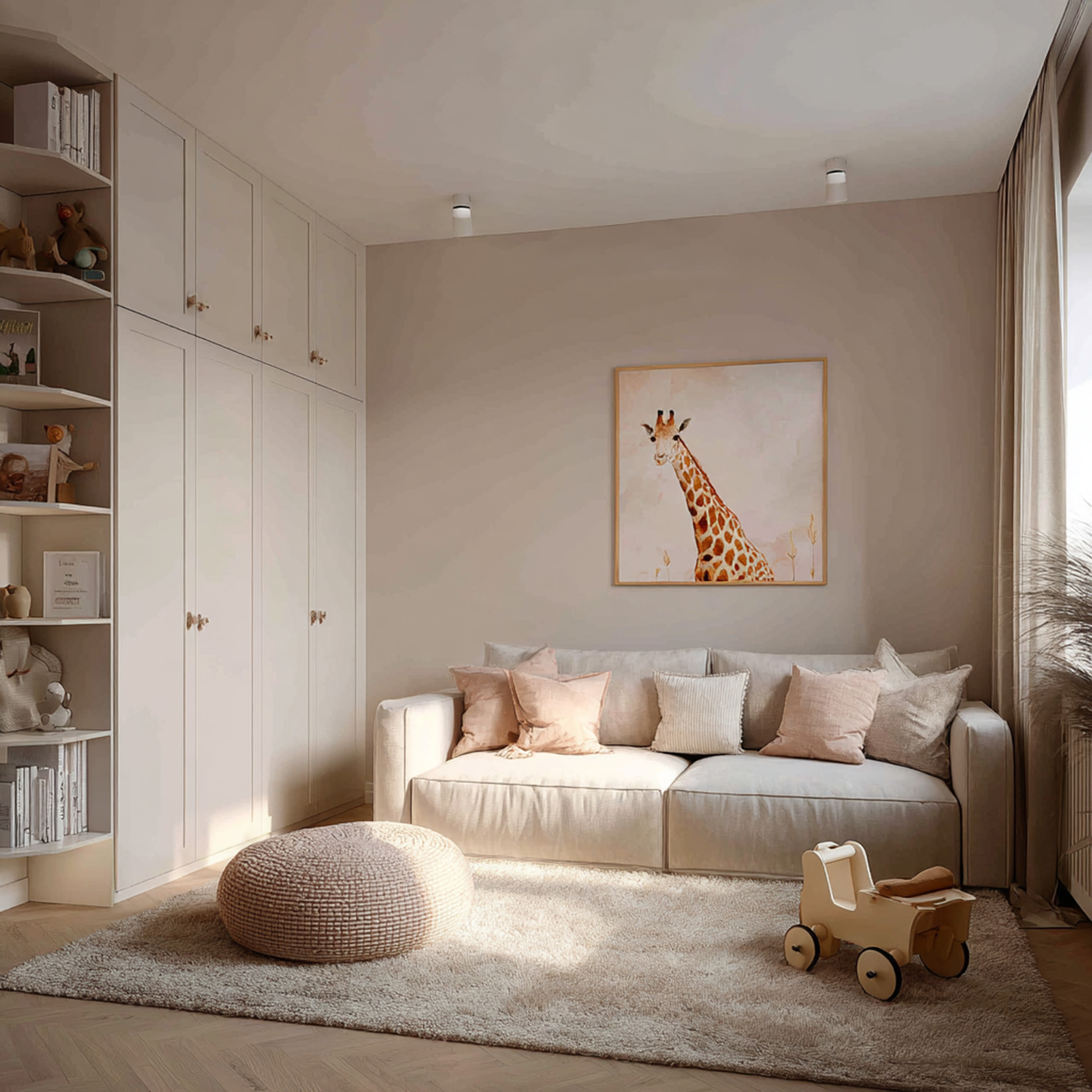
The best way to create a family-friendly space that still feels chic is to integrate, not isolate. Here, the wall of seamless, floor-to-ceiling cabinets provides sophisticated, adult-approved storage. But the large giraffe artwork and soft knitted pouf introduce a sense of playfulness without resorting to primary colors or plastic toys. The key is to choose kid-friendly elements that share the same elevated color palette and material quality as the rest of the room.
🔥 Trending Context
A wall of custom built-in cabinets is a fantastic storage solution, but it’s a permanent architectural change. This isn’t a piece of furniture you can take with you when you move. It’s a significant investment that becomes part of the house itself. Before you commit, be sure the layout works for the long term. A more flexible (and less expensive) option is to use multiple IKEA PAX or BESTÅ units and trim them out to look built-in.
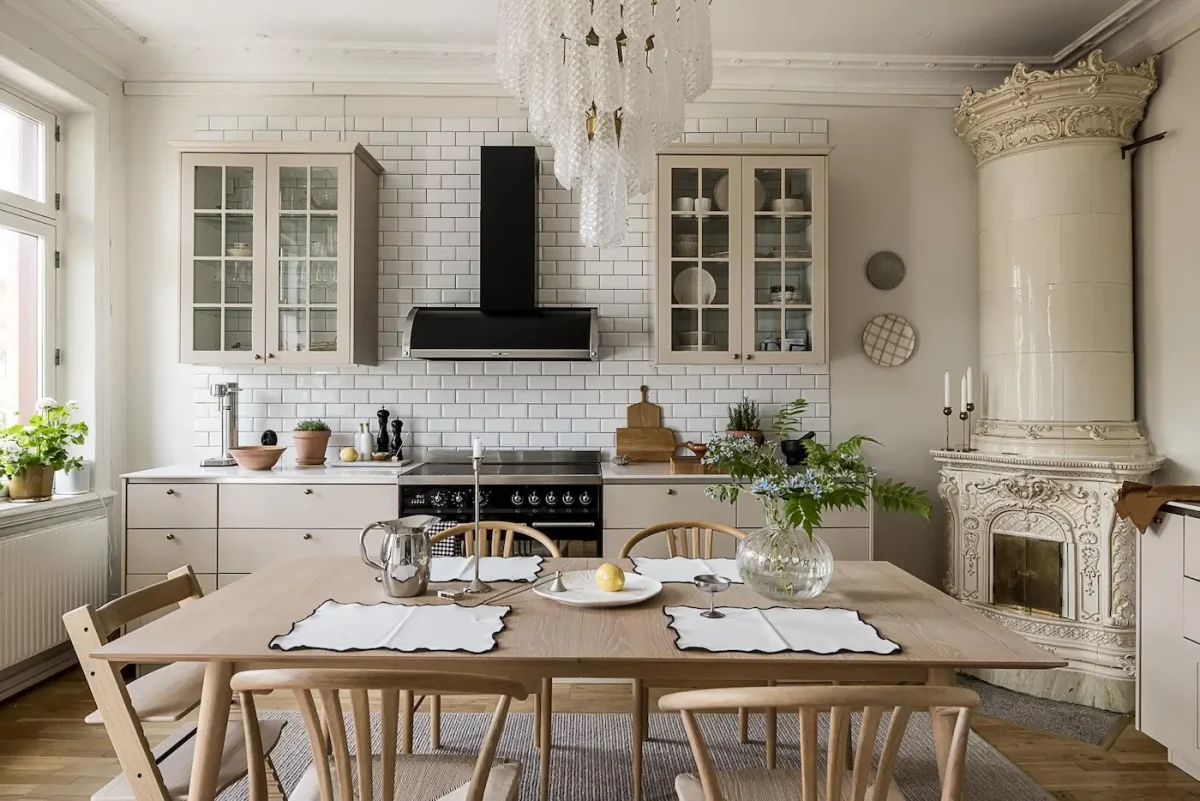
20. Blend Traditional and Modern in a Farmhouse Kitchen
This kitchen successfully marries two different eras. The traditional, ornate ceramic stove and classic subway tiles give the space a timeless, almost historic quality. This is balanced by modern Scandinavian elements: the clean lines of the light wood cabinetry, the simple wishbone chairs, and the sleek black range hood. It works because the elements are united by a strict, simple color palette—white, light wood, and black. This allows the different styles to feel complementary rather than chaotic.
💸 Get This Look For Less
Recreating this blend of classic and modern can vary wildly in price.
- Cabinetry & Backsplash: $4,000 – $15,000+
- Traditional Stove: $3,000 – $10,000+ (brands like Lacanche or Ilve are pricey)
- Dining Set (table & 4 chairs): $1,200 – $4,000
- Lighting & Hood: $800 – $3,000
- TOTAL: $9,000 – $32,000+
- Budget alternative: Use IKEA wood cabinets ($3k), standard subway tile ($500), and a conventional stove ($1k). Find wishbone chair replicas ($500 for 4) and a simple table ($400) for a look that’s 70% cheaper.
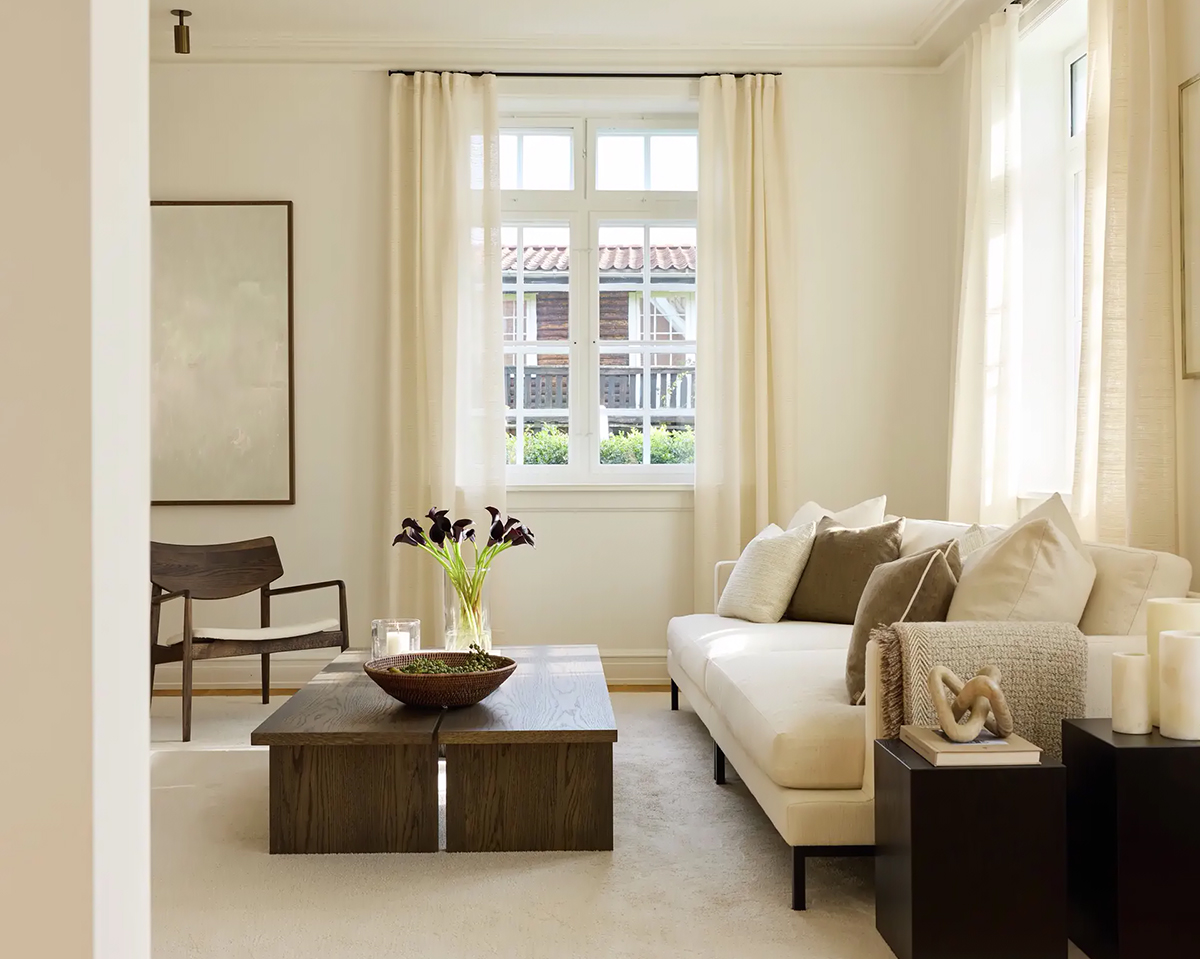
21. Create Contrast with Dark Wood and a Cream Sofa
The formula for this elegant space is high contrast: 50% light and soft + 40% dark and structured + 10% curated color. The cream sofa and light walls create a bright, airy base. The dark wood coffee table, armchair, and picture frame provide strong, grounding contrast. Finally, the small touches of dark olive green in the pillows add a subtle, sophisticated hint of color that bridges the gap between the light and dark elements. The look feels intentional and balanced, not just like a random collection of furniture.

💡 Designer Tip
A cream sofa is gorgeous, but a magnet for stains. If you have pets, children, or enjoy eating in the living room, you must be realistic about upkeep. Performance fabrics (like Sunbrella, Crypton) are your best defense. They are engineered to be stain-resistant and easier to clean. Without one, you’ll be living in constant, low-grade fear of spills. A slipcovered sofa is another excellent, washable alternative. Compare this to the more forgiving beige sofa in Idea #19.
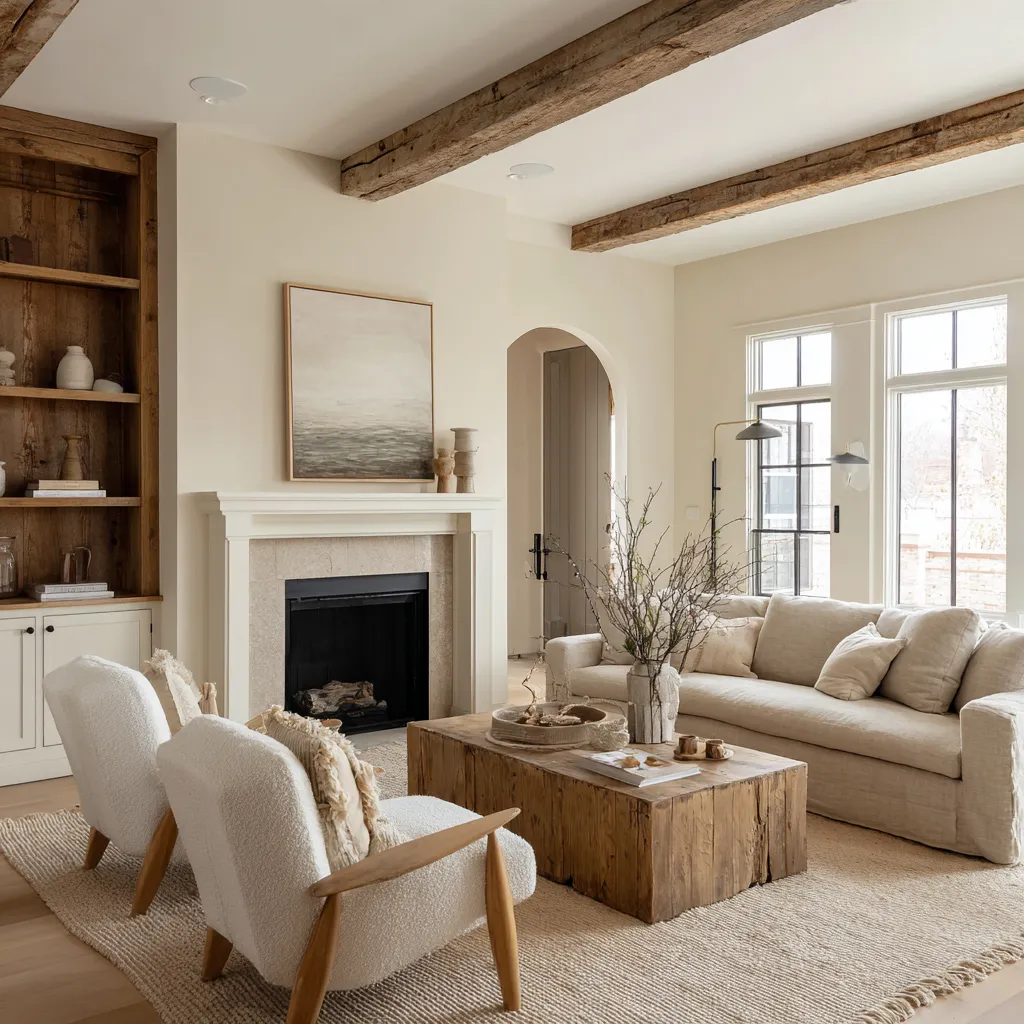
22. Mix Raw Wood, Bouclé Chairs, and Exposed Beams
The single element that defines this room is texture. From the rough, dark grain of the ceiling beams to the massive, raw wood coffee table, the smooth stone of the fireplace, and the nubby texture of the bouclé chairs—every key piece begs to be touched. This focus on varied tactile surfaces is what makes the neutral space feel so rich and engaging. Without this textural play, the room would be a simple beige box.

📏 Scale Guide
This space is a masterclass in mixing wood tones and textures. The dark, rough-hewn ceiling beams provide a rustic frame. The built-in bookcase offers a smoother, medium-brown wood tone. The raw, almost unfinished wood block coffee table acts as a natural centerpiece. Finally, the light, smooth wood frames of the bouclé chairs tie into the lighter tones in the room. This confident mix of different woods gives the room a collected-over-time, authentic feel.
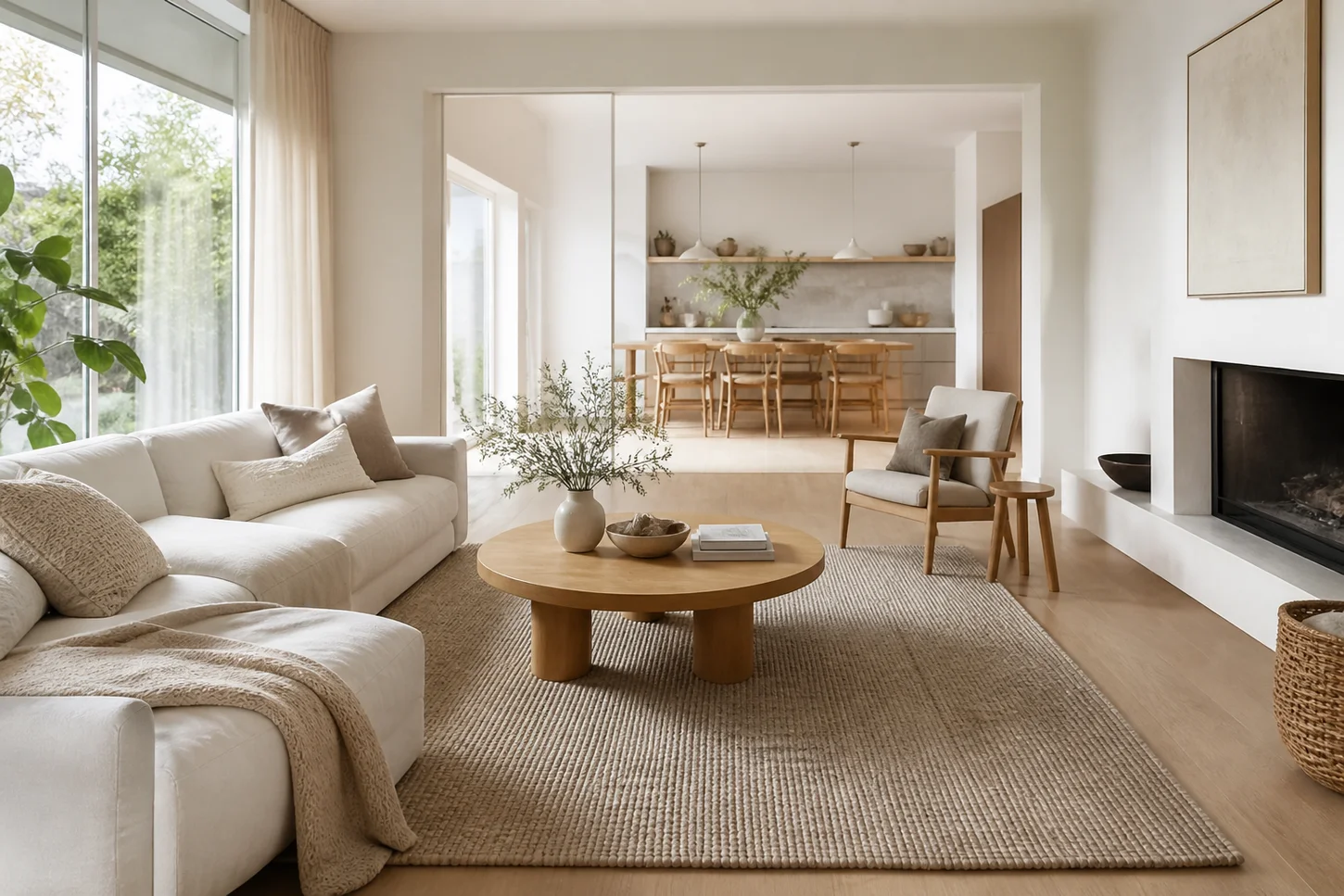
23. Go Minimalist with a White Sectional and Round Wood Table
When using a large sectional in a minimalist space, the coffee table choice is critical. A round coffee table, like the one shown, is a brilliant move. Its soft curves break up the sharp, rectangular lines of the sofa and the room itself. This contrast in shape adds visual interest and improves flow, making it easier to walk around the seating area. For a large L-shaped sofa, choose a round table with a diameter that is roughly half the length of the longest side of the sofa.

✅ Before You Start
You can achieve this breezy, minimalist look for less. Start with an IKEA Kivik or Järvfjället sectional, which offers a similar low-profile feel for under $2000. Find a round, light wood coffee table from places like Target’s Studio McGee line or Wayfair for $150-$300. The key is the large, textured beige rug; look for jute or wool-blend options on Overstock or Rugs USA to anchor the space without breaking the bank. The whole setup can be achieved for around $2500.
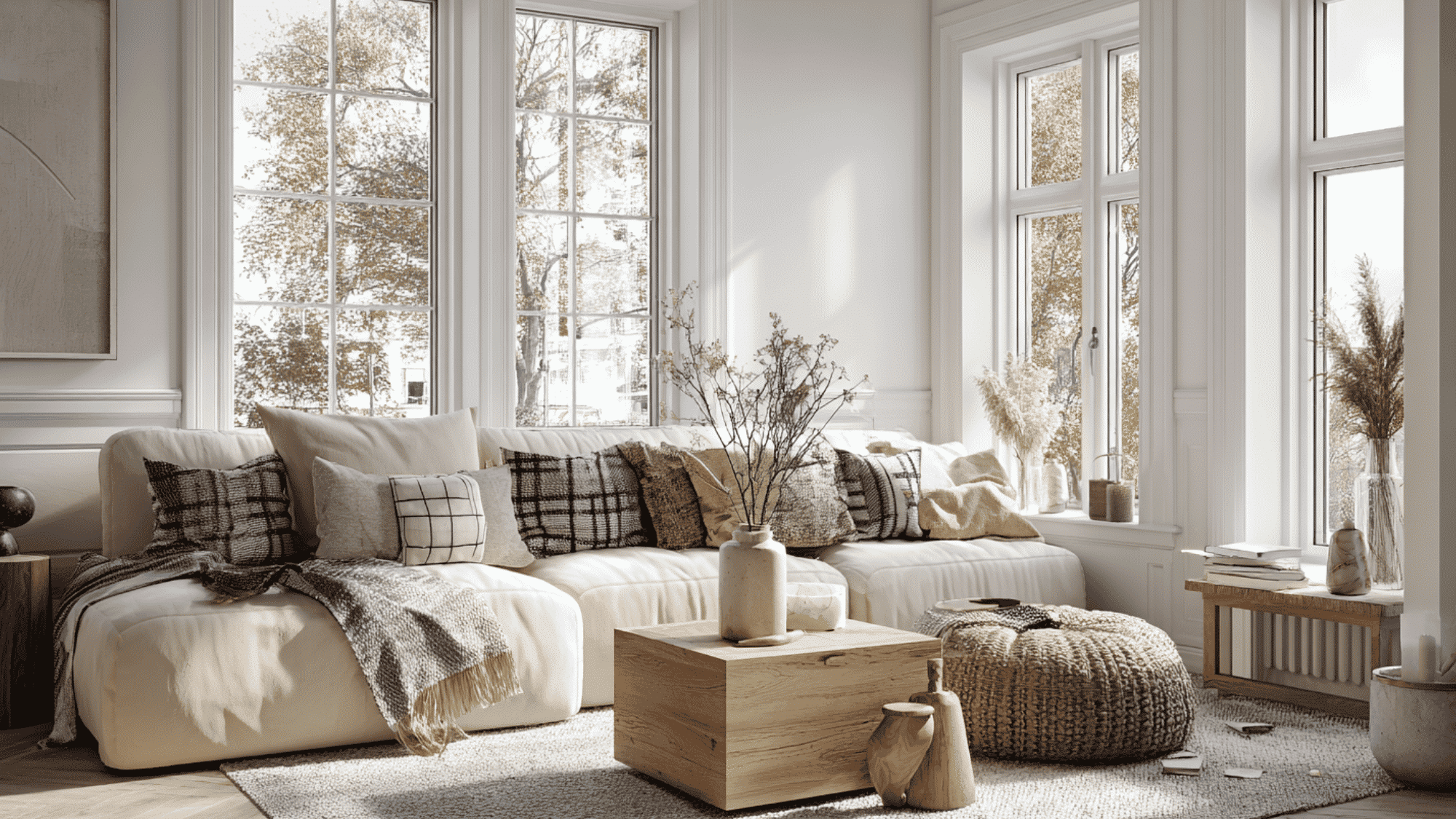
24. Layer Textures with a Cream Sofa and Knit Pouf
This room’s success comes from its dedication to layering similar light tones in a variety of textures. The base is the large cream sofa, a soft and inviting anchor. The texture is then built up with a chunky knit blanket, assorted linen and cotton pillows, a woven knit pouf, and a textured rug. Even the walls have texture from the detailed molding. This approach makes the monochromatic palette feel incredibly rich and visually interesting, not at all boring.

🧹 Maintenance Reality
A room this light and bright is stunning, but it’s a battle to keep it that way. Light wood floors can show dust and dirt easily, requiring frequent sweeping or vacuuming. White and cream upholstery, as we’ve noted, is notoriously high-maintenance. Even the gorgeous tall windows are a double-edged sword: they let in tons of light, which is great, but also UV rays that can cause textiles and wood floors to fade over time. Consider UV-blocking film for south-facing windows.
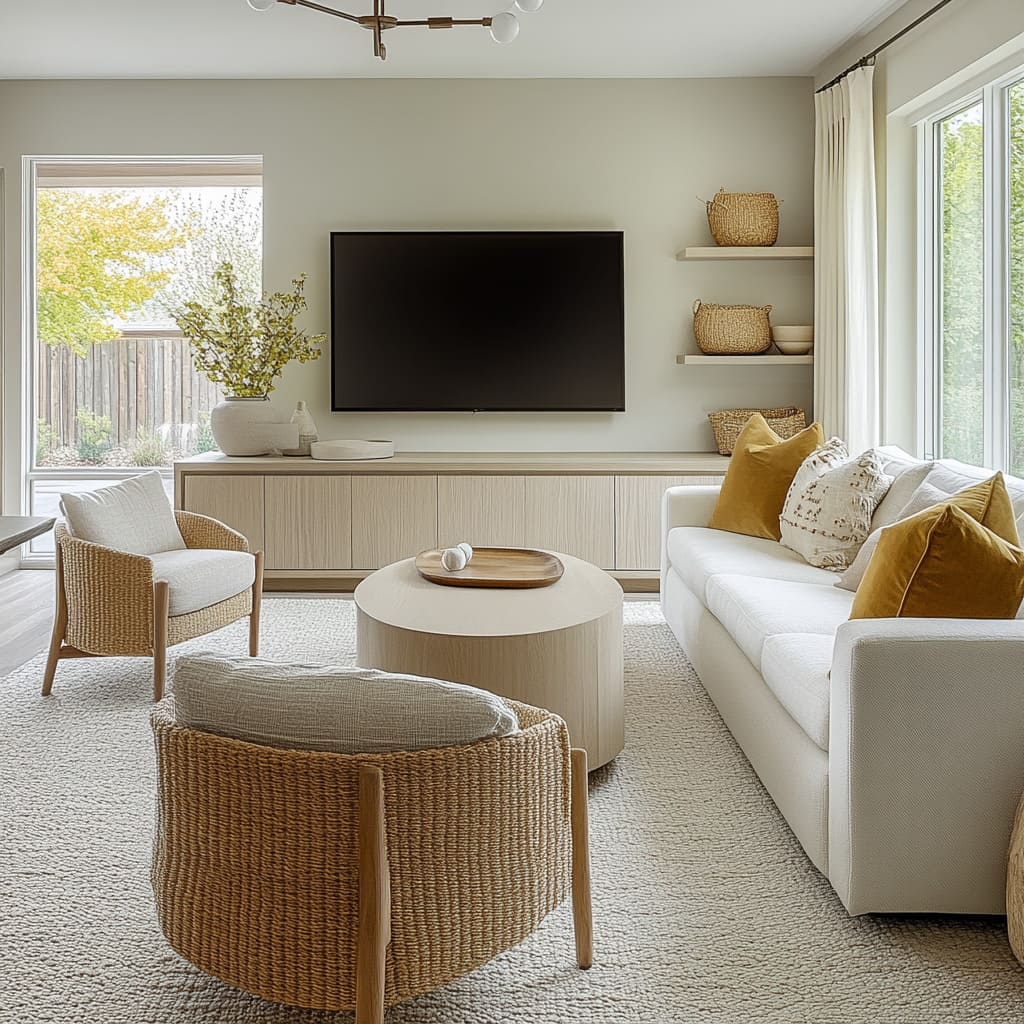
25. Energize a Neutral Room with Mustard Yellow Accents
The mustard yellow pillows are, without a doubt, the element that brings this room to life. In a beautifully calm and balanced but otherwise monochromatic space (pale green-grey walls, white sofa, light wood), these pillows provide a crucial jolt of energy and warmth. They prove that you don’t need a lot of color to make a big impact. Remove them, and the room is still lovely, but it loses its spark and personality. They are the exclamation point on a very calm sentence.
⚠️ Real Talk
This room follows a classic and easily adaptable design formula: 80% neutral base + 15% natural texture + 5% bold color pop. The walls, sofa, and rug create a soft, neutral envelope. The woven armchairs and light wood furniture add organic texture and warmth. The final, crucial touch is the small dose of a single, saturated accent color. You could easily swap the mustard yellow for emerald green, deep navy, or terracotta and the room would still work perfectly—the formula is the key.
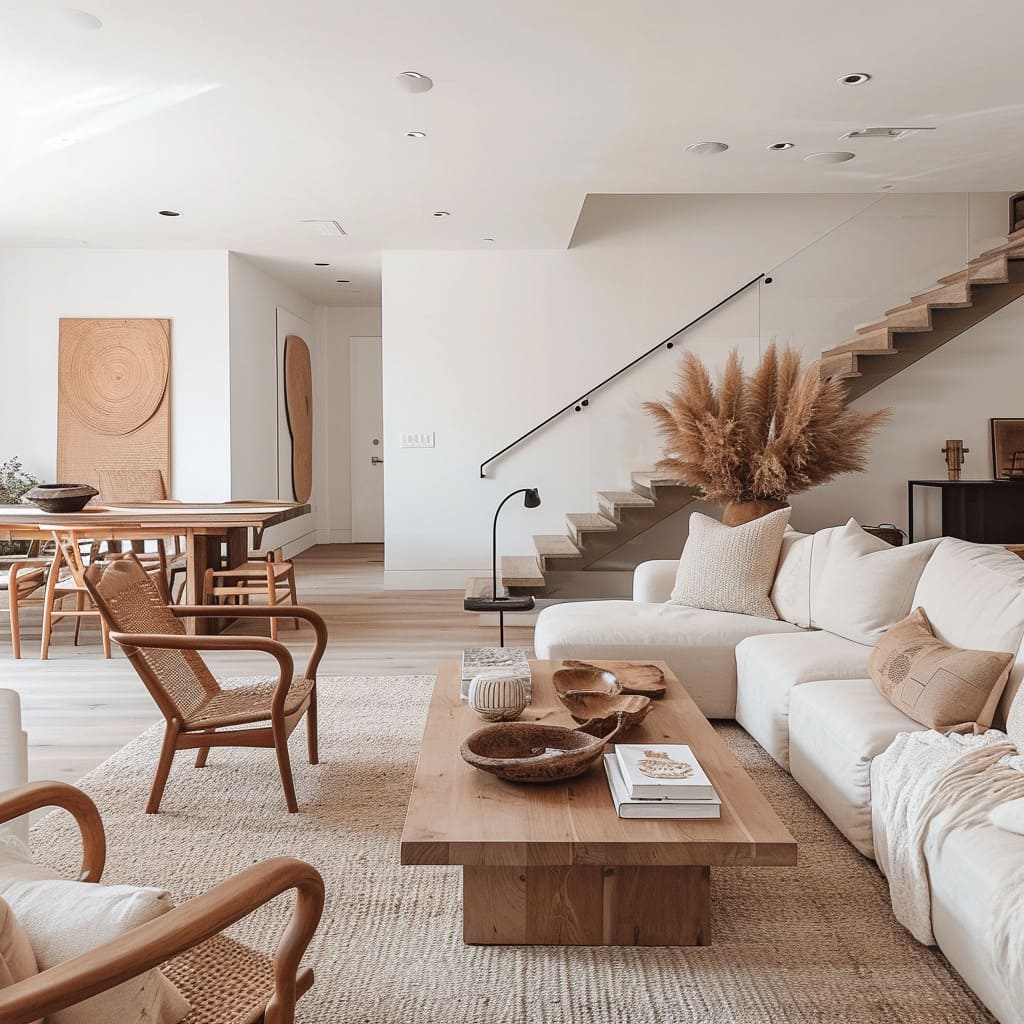
26. Combine a Sectional Sofa with Large-Scale Textural Art
An open-plan layout like this works best in a generous space, typically at least 25 feet in length to comfortably accommodate both living and dining zones. The key to success is using large-scale pieces to anchor each area, like the oversized sectional and the substantial dining table. This prevents the furniture from looking lost in the open space. The large textured wall art also helps to define the dining zone and fill the vertical space of the wall.
🔧 How-To Brief
In an open-plan room, use rugs to create defined ‘zones.’ The large woven rug here clearly marks the boundary of the living area, separating it from the dining space and the walkway for the stairs. When placing a rug under a sectional, ensure it’s large enough to have at least the front two feet of the sofa on the rug from all sides. A rug that is too small will make the whole area feel disconnected and poorly planned.
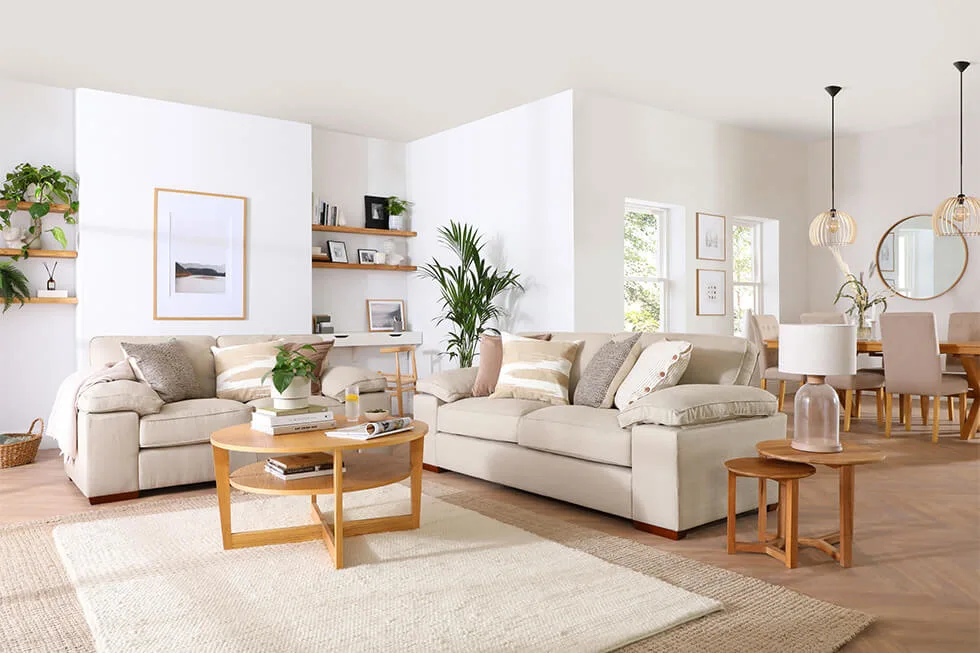
27. Unify an Open-Plan Space with Light Wood Tones
What makes this open-plan area feel so cohesive and serene is the consistent repetition of light wood. It appears in the coffee table, the side tables, the legs of the sofas, the open shelving, the mirror frame, and even the pendant lights. This repetition creates a visual rhythm that ties the living and dining areas together. While the furniture pieces are different, their shared material palette makes them feel like part of the same family, resulting in a calm, unified space.

⭐ The One Thing
Achieving this harmonious look doesn’t require a huge budget. The key is sticking to a consistent wood tone. You can source your pieces from multiple affordable stores like IKEA (try the LISABO or STOCKHOLM series), Target, and Wayfair. A beige sofa like the UPPLAND from IKEA provides the perfect neutral base. The trick is to take a sample (a photo on your phone works!) of your first wood piece with you when you shop for others to ensure the tones are complementary.
Your Scandinavian Story Starts Here
You’ve seen the inspiration, from cozy nooks to airy, open-plan spaces. Now it’s your turn to mix, match, and create a home that feels uniquely you. Start by saving your favorite looks and remember that the best designs evolve over time. Ready to build your dream space? Head over to Pinterest and start creating a board with the ideas that spoke to you most!