
31 Jaw-Dropping Bookshelf Styling Ideas for an Eclectic Aesthetic in 2026

If your bookshelves have been bothering you for longer than you’d like to admit, you’ve come to the right place. Let’s be honest, achieving that “effortlessly styled” look you see all over Pinterest is anything but effortless. After filtering through hundreds of looks—from high-end design showcases to clever finds at places like Target and IKEA—we narrowed it down to the 31 ideas that actually work for real homes. Inside, you’ll find everything from grand, traditional library walls to minimalist nooks that sing. For 2026, it’s all about moving past catalog-perfect displays and creating shelves that tell your personal story. And stay until the end — we break down the most common mistakes that can ruin these looks.
📌 Save this to Pinterest for later — you’ll want to revisit these ideas.
1. Create a Rainbow Effect with Color-Blocked Books
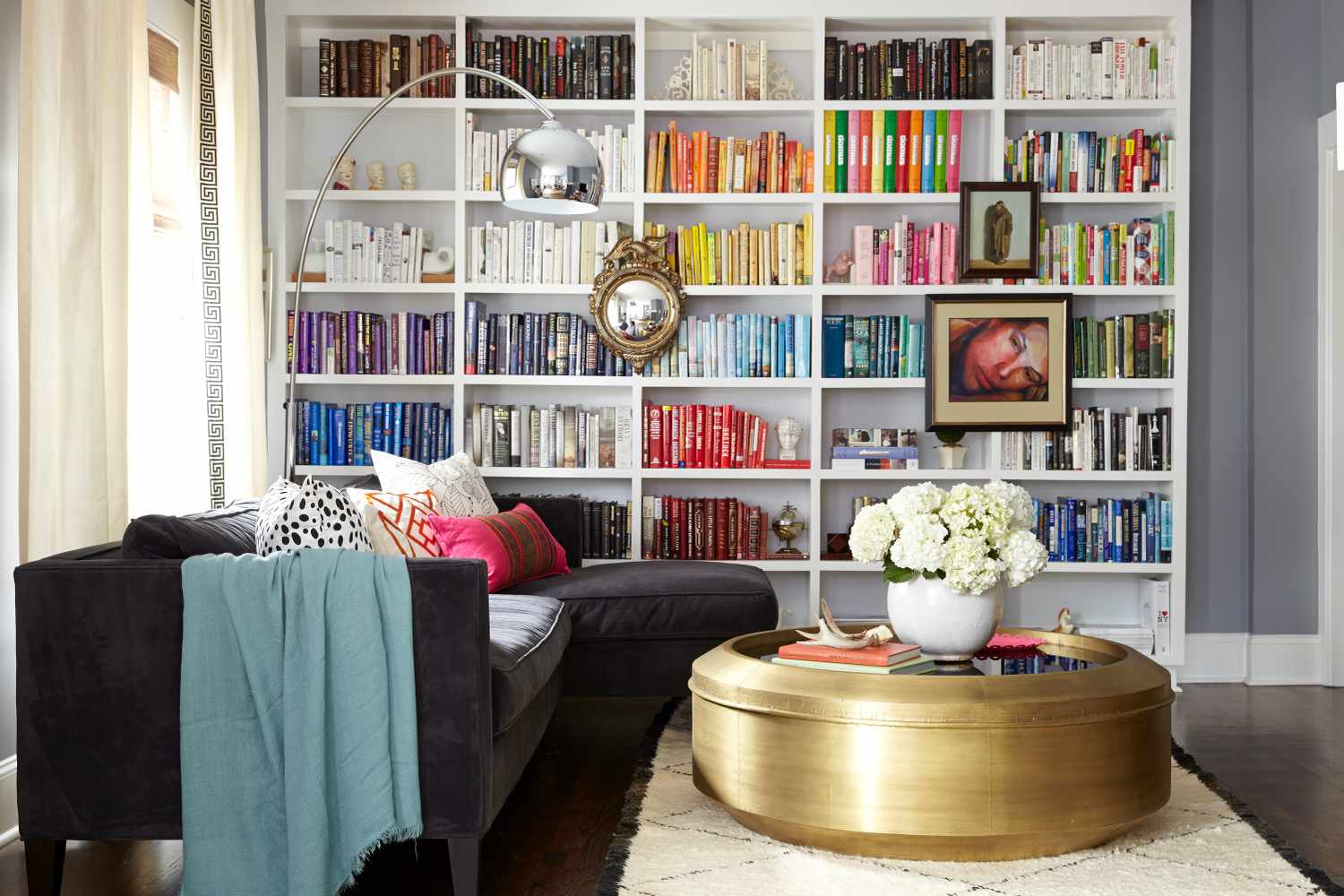
This look is pure, unadulterated joy. The success of this rainbow bookshelf hinges on two things: commitment and scale. By dedicating the entire expanse of a large built-in to the color gradient, the effect becomes an intentional, defining feature of the room, not just a quirky storage solution. It works because the white shelving acts as a clean, neutral canvas, allowing the book spines to become the art. The interspersed gold and brass accents, like the coffee table and mirror, add a necessary touch of warmth and sophistication, preventing the vibrant colors from feeling too juvenile.
💡 Designer Tip
To arrange a rainbow bookshelf that looks curated, not chaotic, use the ROY G BIV model as your starting point, but don’t be afraid to create sub-gradients. For instance, within your blue section, arrange books from lightest sky blue to deepest navy. This adds a layer of subtle organization that the eye will appreciate. For a final professional touch, ensure the top edge of all books on a single shelf are as level as possible; use horizontally stacked books at the end of a color group to fill any awkward vertical gaps and create a cleaner line.
2. Weave Trailing Vines Through Color-Coded Shelves
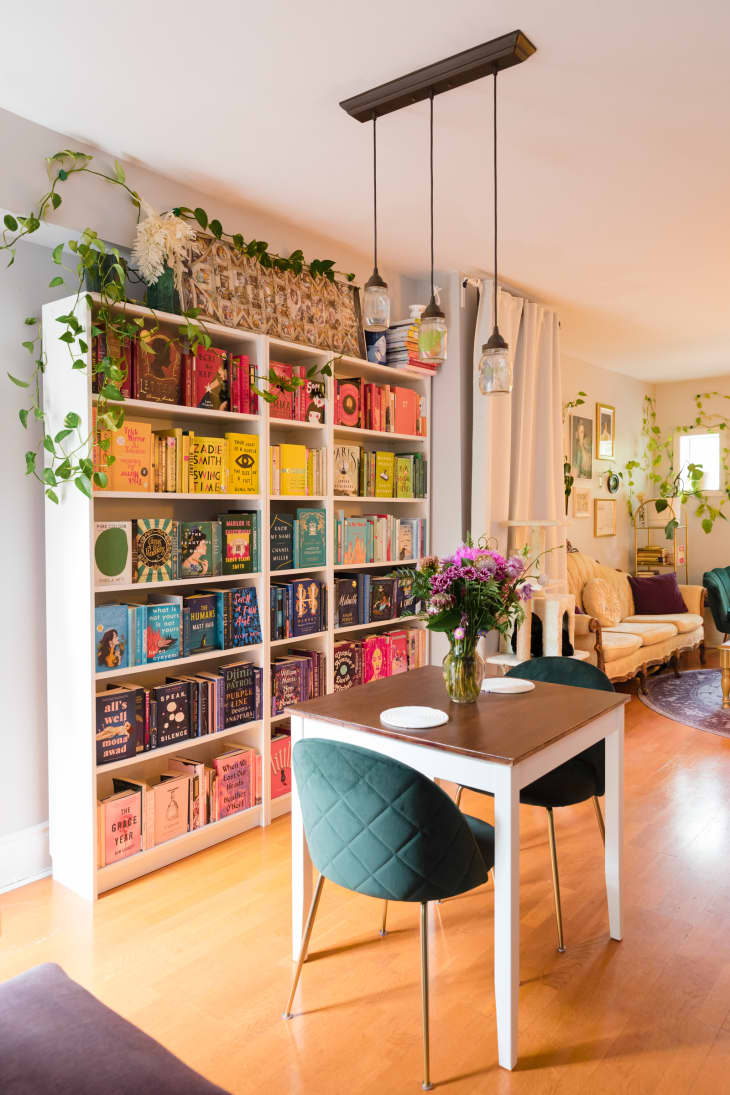
The magic here is in the formula: 60% color-blocked books + 30% natural elements + 10% industrial detail. The books provide the vibrant, organized base. The greenery, specifically the trailing vines, injects life and softness, breaking up the hard lines of the shelves and books. The final 10%, represented by the dark metal on the mason jar pendants, adds a touch of modern, industrial contrast that keeps the look from feeling overly sweet. You could swap the vines for dried branches in the fall or the colorful books for neutral-spined ones for a completely different, calmer vibe using the same ratio.
🔧 How-To Brief
Let’s be honest: keeping those vines looking lush takes work. If your bookshelf isn’t near a good natural light source, you will be swapping out dead plants regularly or resigning yourself to a sad, withered look. Faux vines are your best friend here. High-quality fakes look incredibly realistic and require zero maintenance beyond a quick dusting every month or so. Just be sure to ‘plant’ them in a real pot or basket on the shelf to sell the illusion; don’t just drape a plastic strand over the edge.
3. An Olive-and-Teal Reading Nook with Dark Wood Shelving
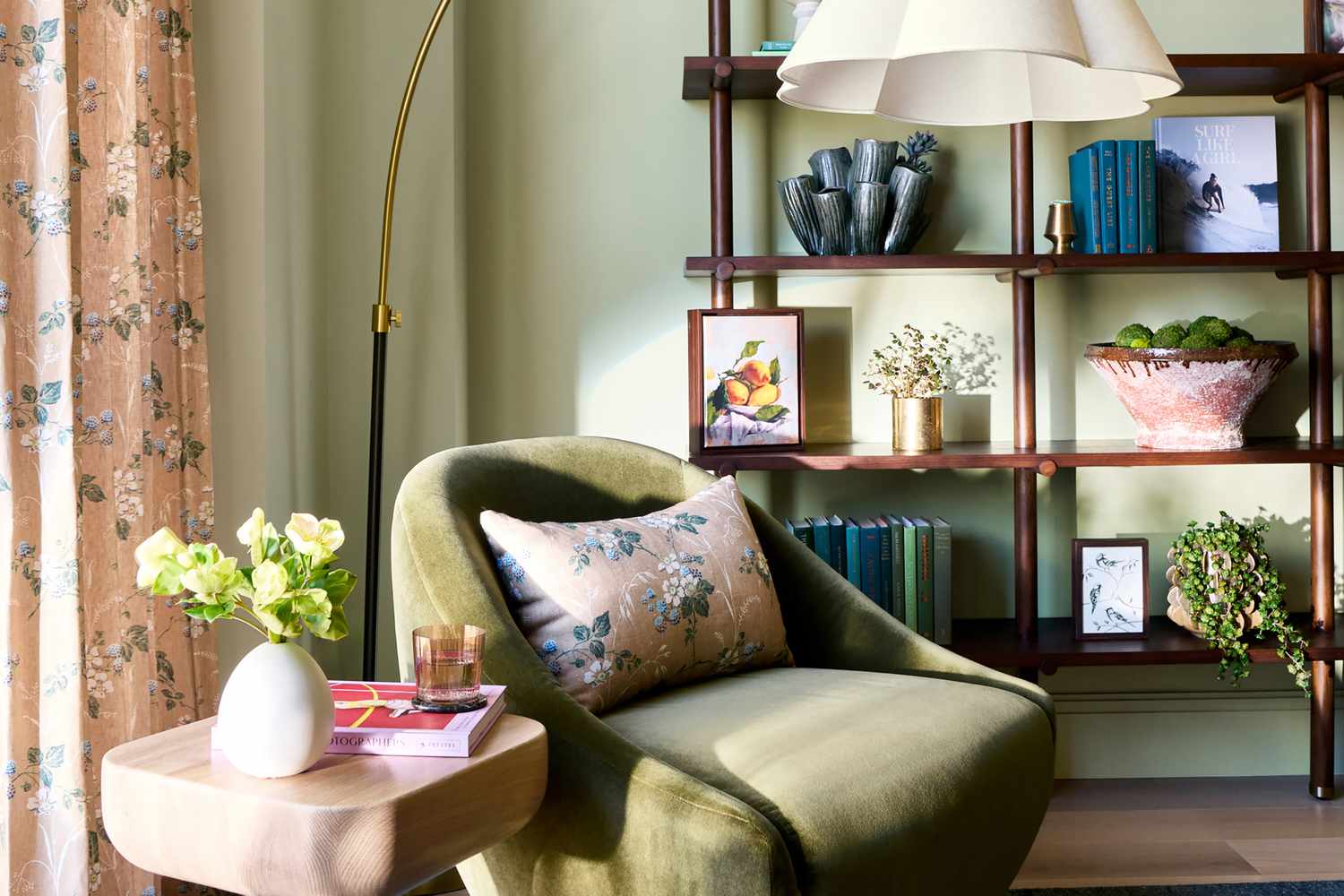
that makes this corner work is the masterful use of analogous colors. The palette is a sophisticated blend of greens and blues—from the pale green on the wall, to the deep olive of the velvet armchair, to the pops of teal on the book spines. This tight, related color scheme creates a serene, cocoon-like atmosphere that is essential for a successful reading nook. Without this deliberate color story, the dark wood furniture could feel heavy and the decor would look like a random assortment rather than a curated collection.
🎯 What Makes It Work
This idea is perfect for smaller, underutilized corners of a room, ideally a space at least 5 feet by 7 feet. You need enough depth for a comfortable armchair without it feeling wedged against the wall, and enough width for a bookshelf that feels substantial. The key is to keep the scale intimate. This isn’t about a massive library wall; it’s about a personal escape. For an even more compact space, consider a narrower, taller bookshelf (like in Idea #16) and a more upright slipper chair to get a similar feel.
4. Full-Wall Shelving with Integrated Teal Storage
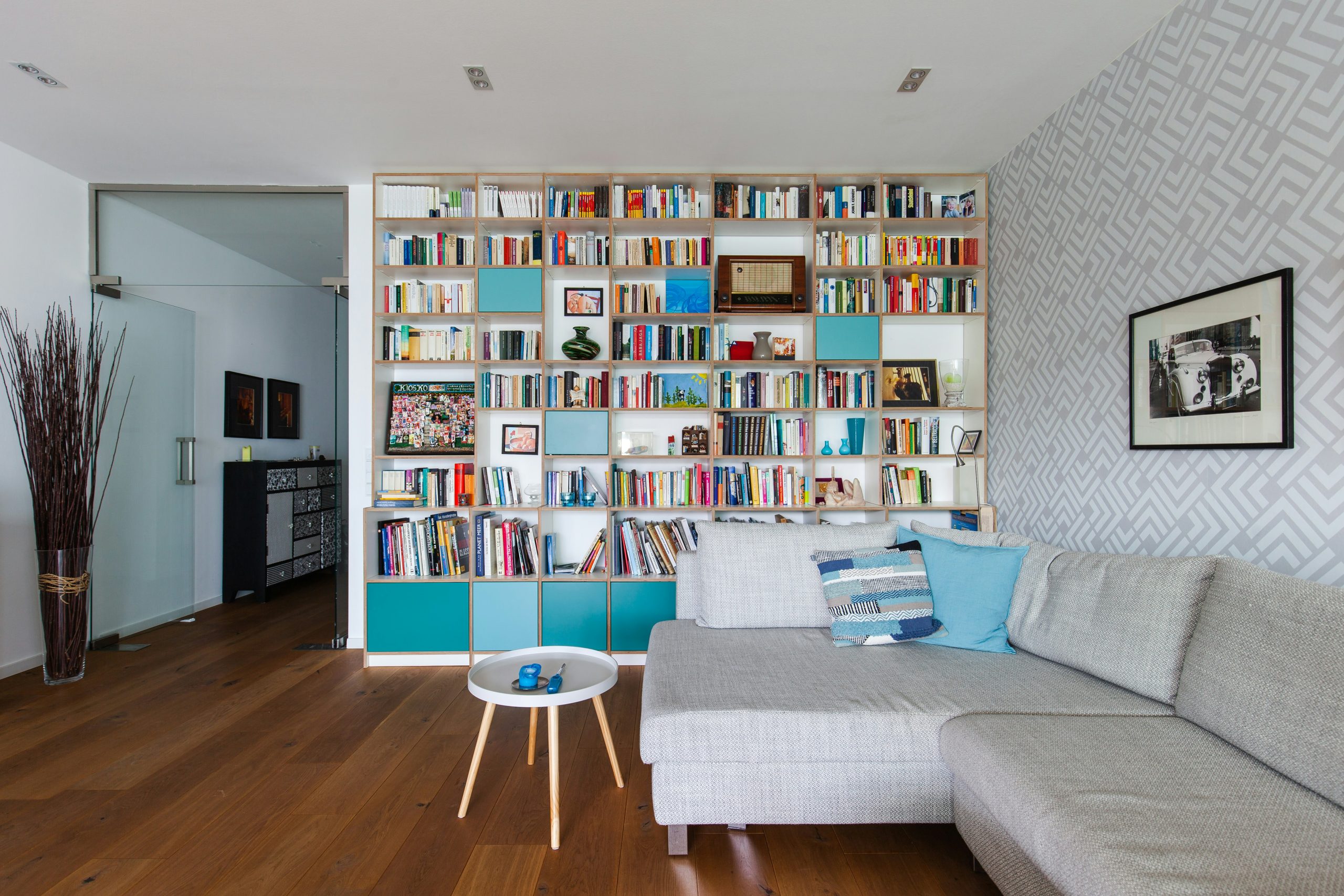
This is a custom or semi-custom look, so the investment is higher, but the payoff is huge in terms of storage and style. The integration of closed cabinets in bold teal is what makes this system feel designed and unique.
⭐ The One Thing
- Custom or Semi-Custom Shelving Unit: $4,000 – $12,000
- Professional Installation: $800 – $2,500
- Decorative Objects & Books: $500 – $1,500
- Paint for Accent Panels (if DIY): $50 – $100
- TOTAL: $5,350 – $16,100
- Budget alternative: Recreate the look for about 40% less using multiple IKEA BILLY or KALLAX units, painting the back panels or door fronts yourself.
Want to add a pop of color to your own existing bookshelf? Here’s a quick guide to painting the back panel for a high-impact update.
- Time Estimate: 3-4 hours (plus drying time)
- Materials: Sandpaper (120-grit), primer, interior paint sample pot, small roller or brush, painter’s tape.
- Step 1: Empty and clean your bookshelf. If the back panel is removable, take it out. If not, use painter’s tape to protect the shelf edges.
- Step 2: Lightly scuff the back panel with sandpaper to help the primer adhere. Wipe away dust.
- Step 3: Apply one even coat of primer. Let it dry completely (check can for times).
- Step 4: Apply your chosen color. A small roller will give you the smoothest finish. Apply a second coat if needed. Let it cure for at least 24 hours before reassembling or restyling.
5. Punch Up White Shelves with Pops of Orange and Green
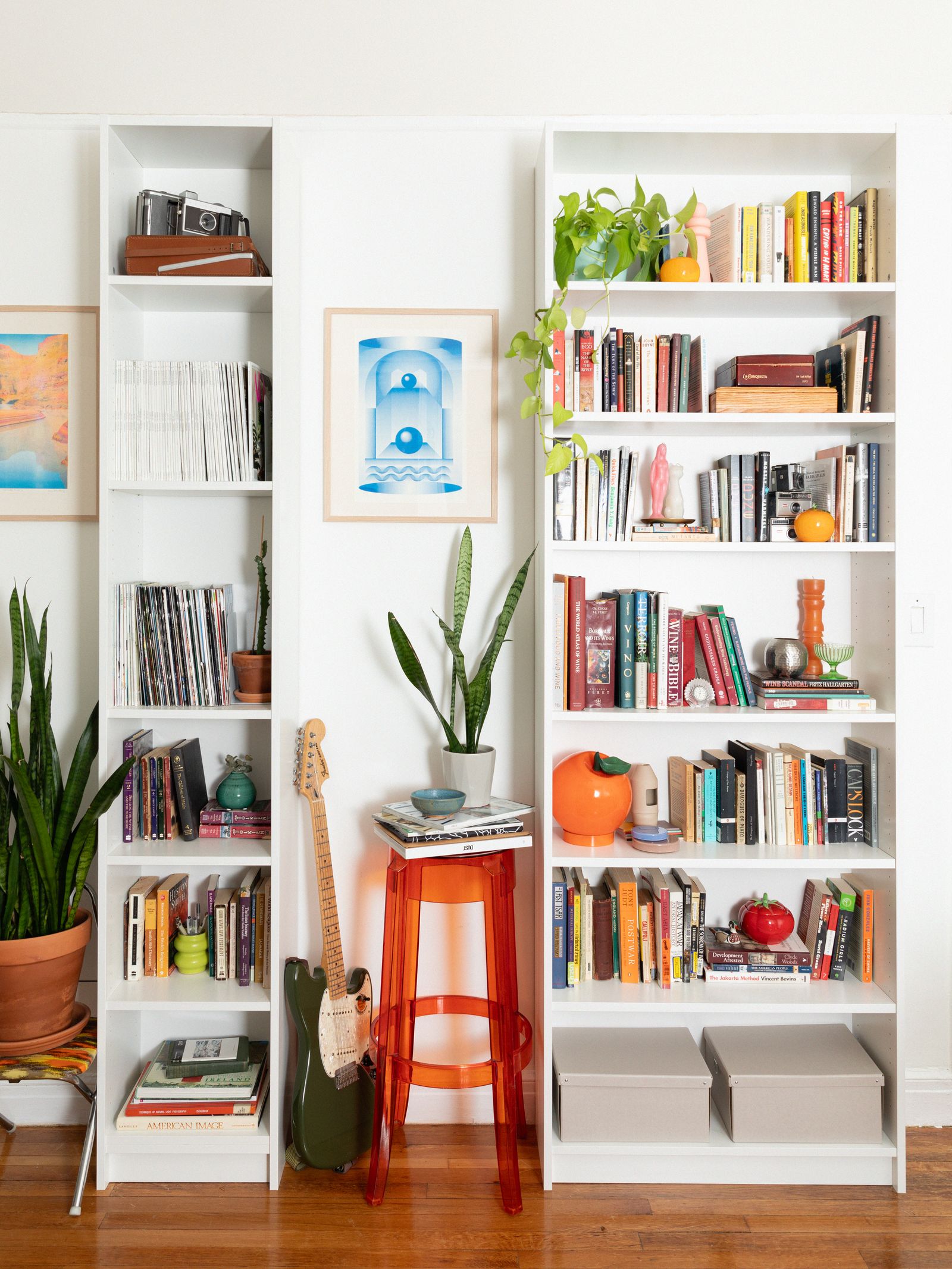
This setup works because it perfectly balances a neutral foundation with high-energy accents. The white bookshelves are simple, affordable, and provide a clean backdrop that makes the curated chaos of books and plants feel organized. The real genius lies in the choice of a few, very deliberate, colorful pieces. The translucent orange stool and the olive electric guitar aren’t just random objects; they are sculptural, colorful, and deeply personal, turning a simple storage unit into a reflection of the owner’s personality.
✅ Before You Start
You don’t need expensive pieces to achieve this personalized, eclectic vibe. This look is essentially the budget-friendly cousin of the custom unit in Idea #4. Start with basic white bookshelves from IKEA (the BILLY is a classic for a reason) or Target. Scour Facebook Marketplace or thrift stores for a quirky side chair or stool that you can paint a vibrant color. The key is to find items with interesting shapes. An old guitar, a vintage record player, or even a collection of colorful glass bottles can provide that same punch of personality for a fraction of the cost.
6. Sophisticated Layers: Dark Wood, Animal Print, and Modern Art
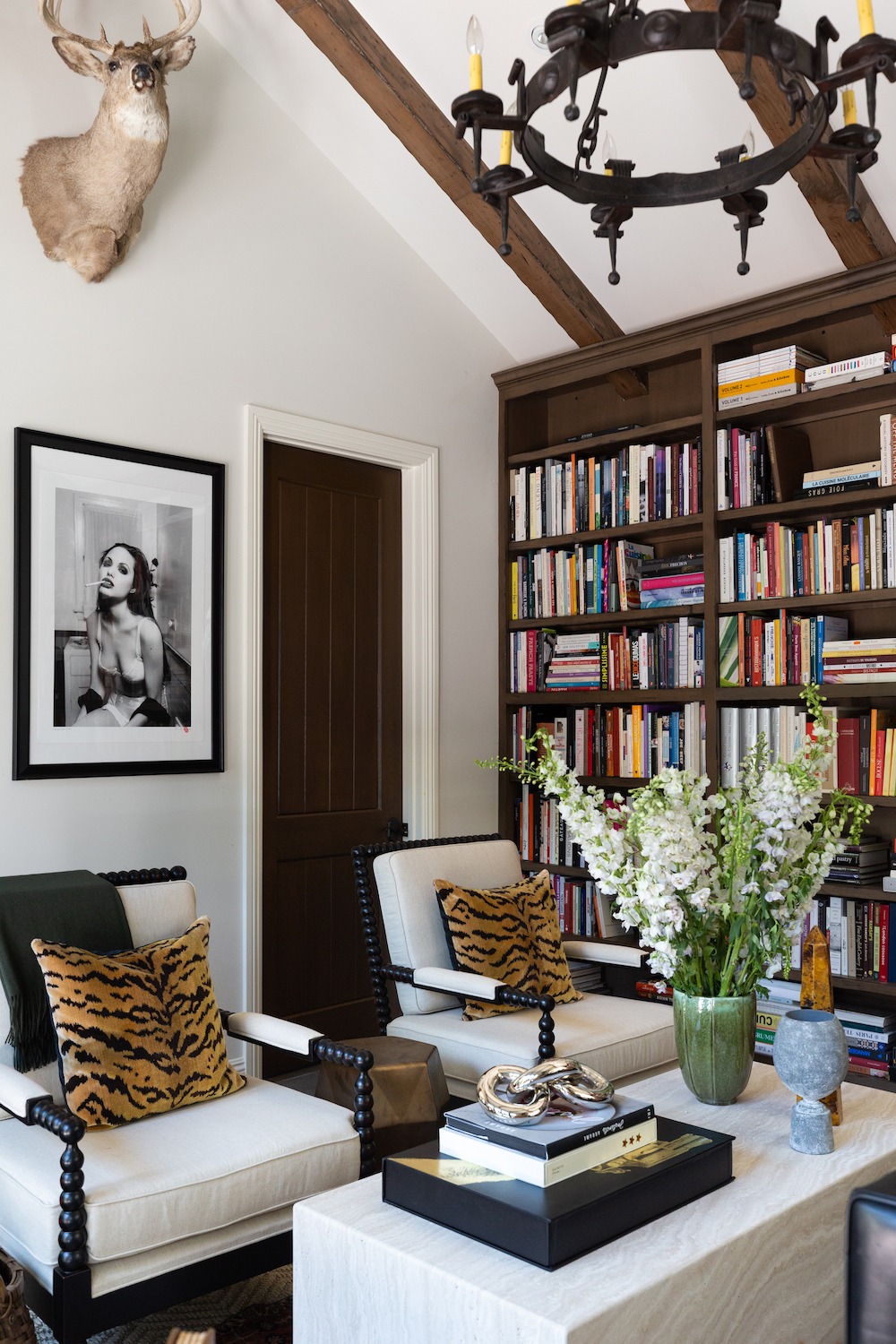
This look is a masterclass in the
7. Traditional Dark Wood Bookcase with a Rolling Ladder
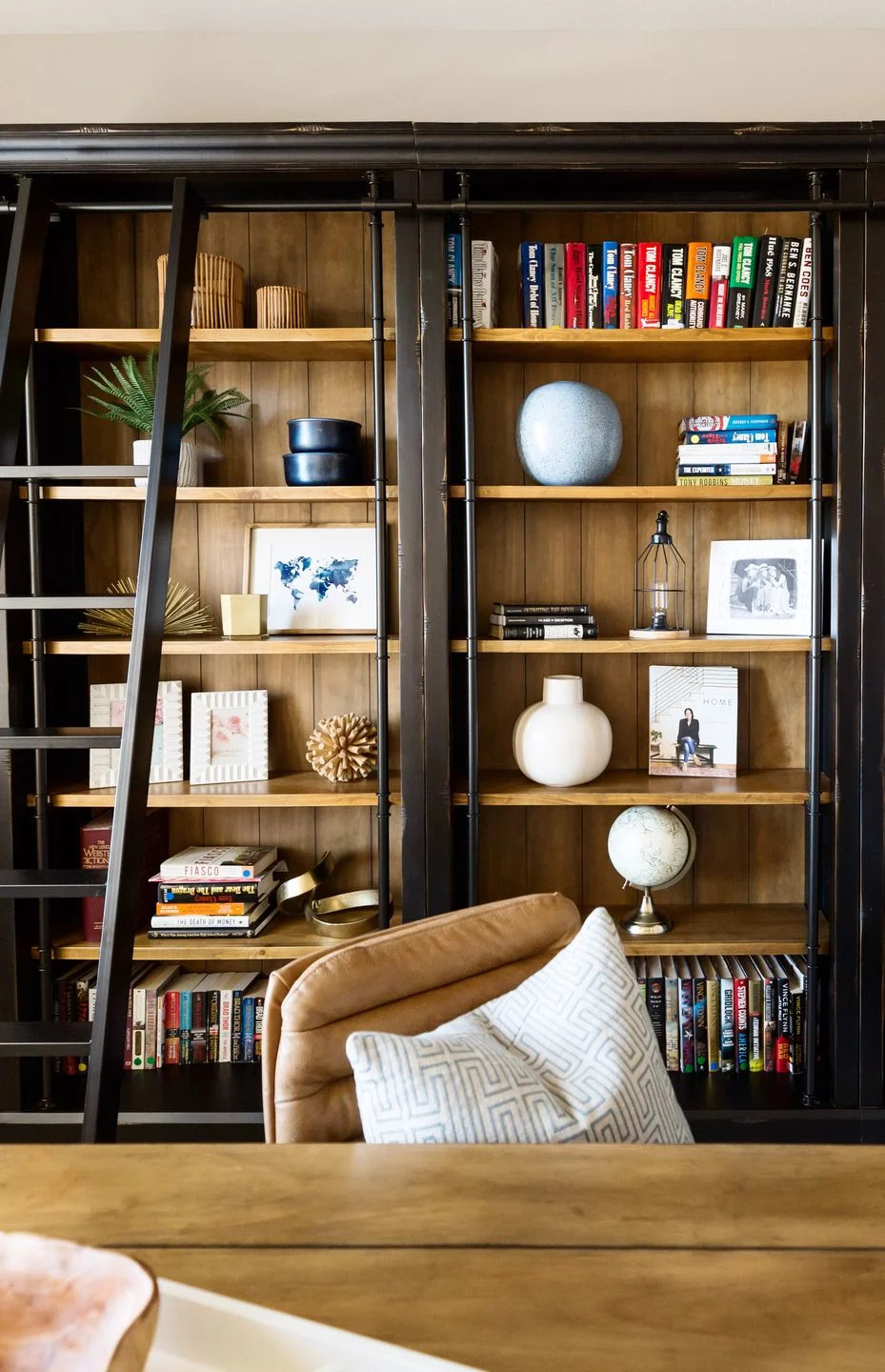
The single element that elevates this entire setup from a simple bookshelf to a
8. Eclectic Heights: A Stepped Bookshelf with Tropical Flair
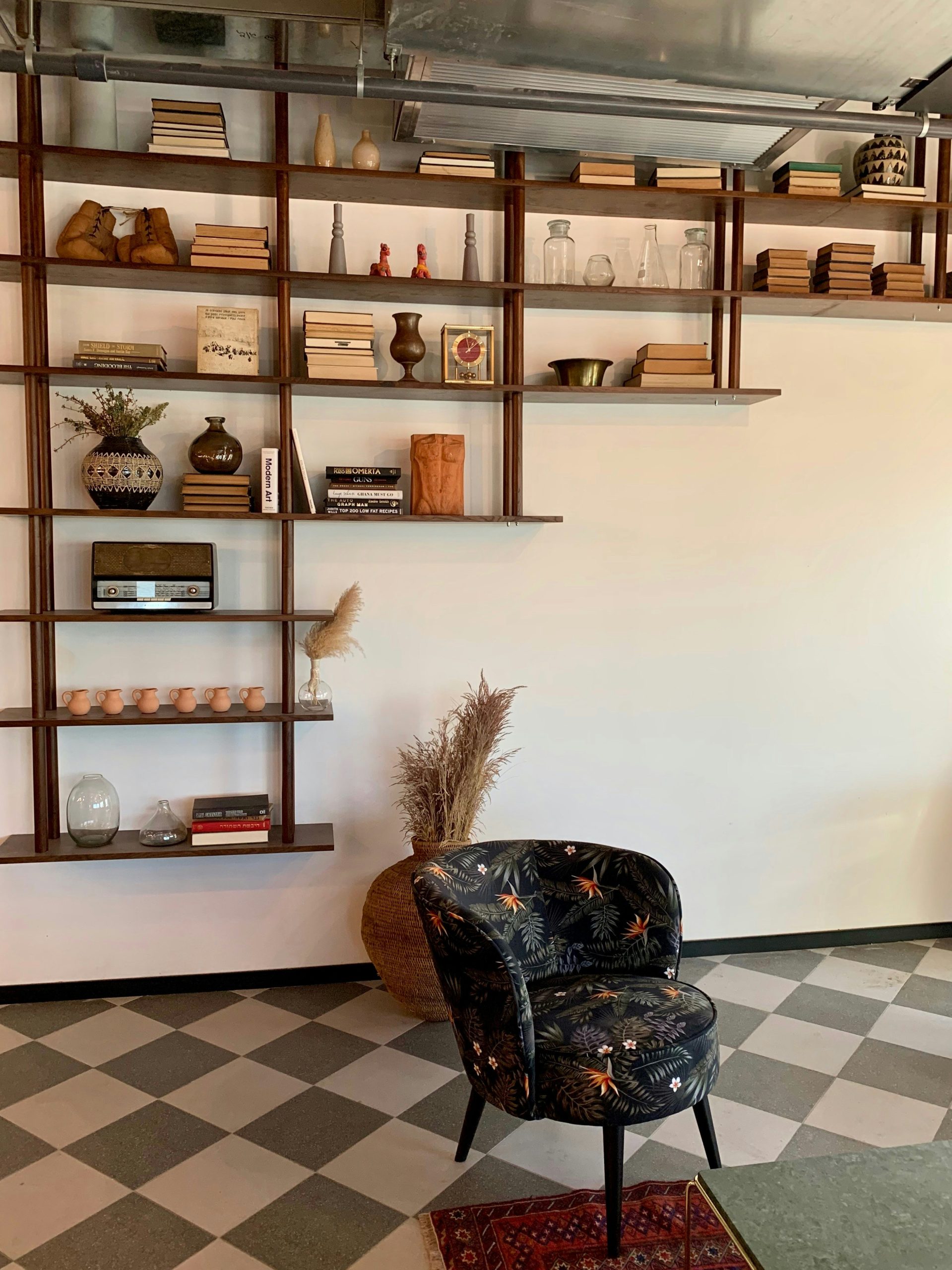
The visual formula here is all about controlled asymmetry: 50% structured book storage + 30% organic, eclectic decor + 20% bold pattern. The stair-step design of the bookshelf is inherently dynamic, creating varied pockets of space. Filling about half of that with neat stacks of books provides a sense of order. The other half is then free for a playful mix of vases and objects. The final, crucial 20% is the tropical print chair, which acts as a soft, patterned anchor to the hard lines and varied heights of the shelving unit.
🧹 Maintenance Reality
A bookshelf with this much open, varied styling is a dust magnet. The different levels, the mix of objects, and the empty spaces all create surfaces for dust to settle and become highly visible, especially on the dark wood. You’ll need to commit to a weekly dusting routine. A microfiber duster or a vacuum with a soft brush attachment will be your best allies. Be prepared to remove all the objects for a deeper clean at least once a month. If that sounds like too much work, this might not be the style for you.
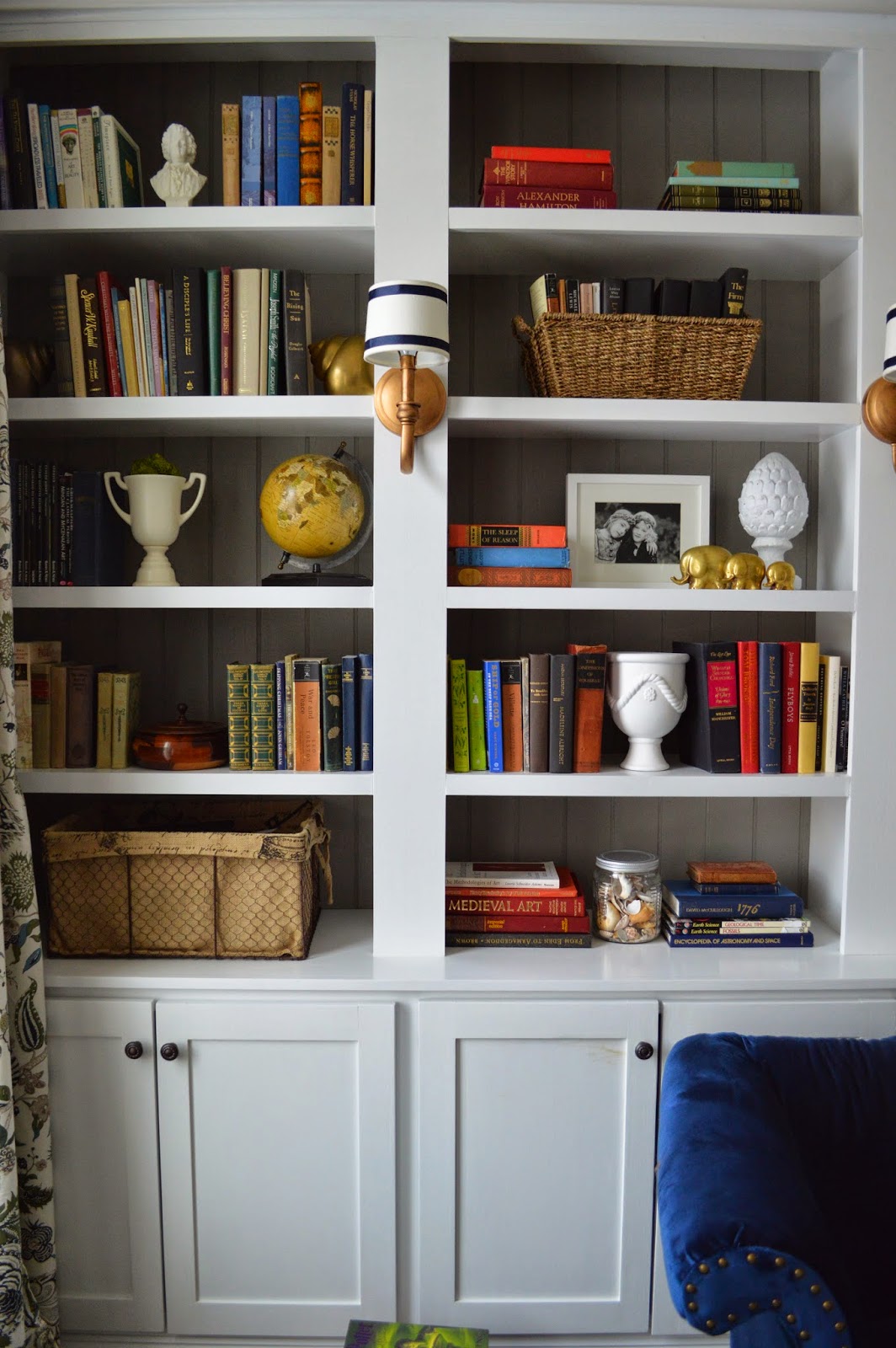
9. Traditional Elegance: White Built-ins with Brass Sconces
This design feels so classic and right because of its smart use of layering and contrast. The light gray vertical paneling at the back of the shelves provides a subtle, textural contrast to the crisp white of the shelves themselves, making the displayed objects pop. The warm brass of the sconces adds a layer of metallic shimmer and historical character, a welcome juxtaposition against the more modern, clean lines of the cabinetry. Finally, the varied arrangement—mixing books, globes, and baskets—creates visual rhythm and a
10. Minimalist Styling with Backward-Facing Books
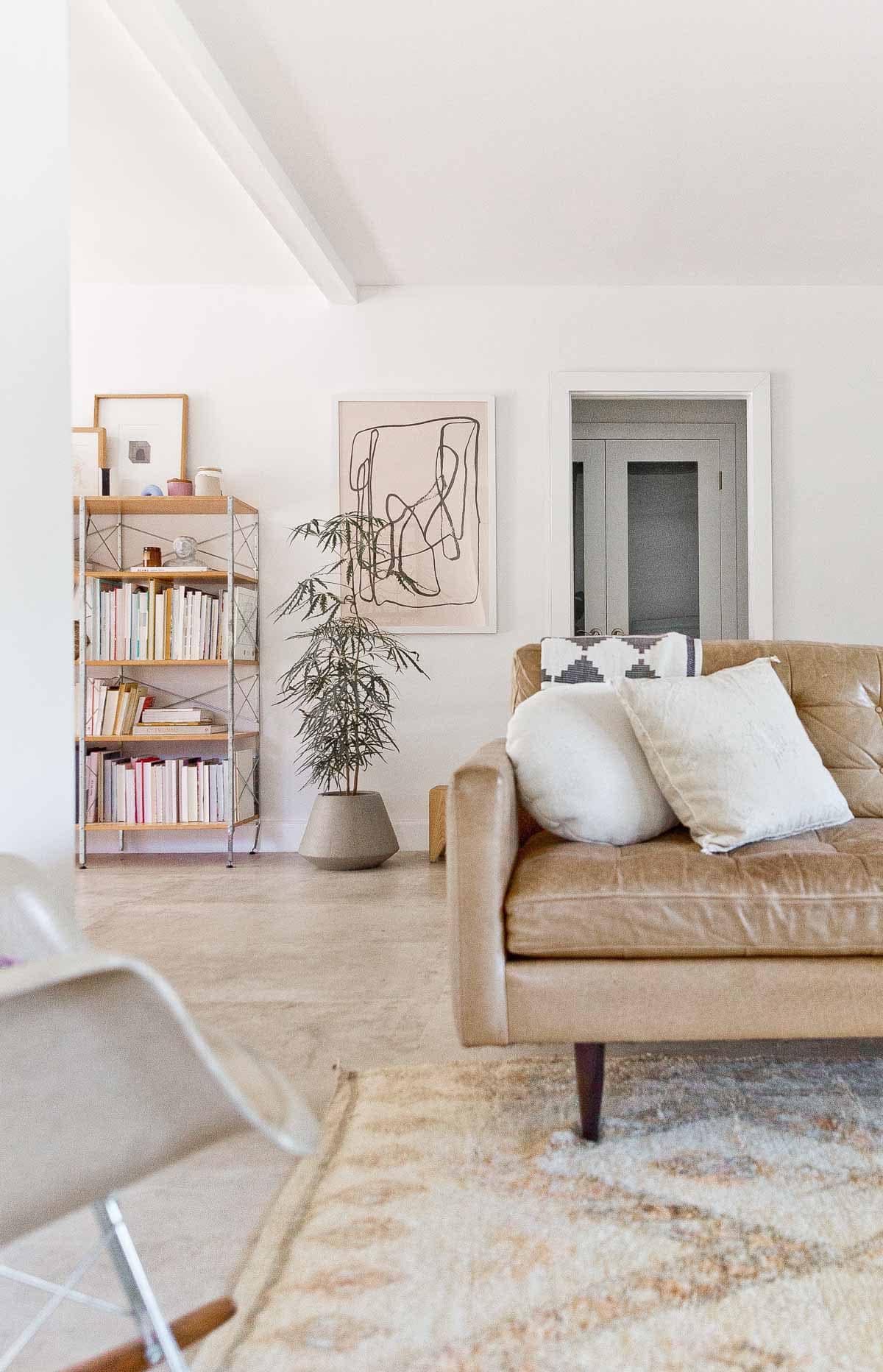
The key to making the backward-book trend look intentional and not like you’ve made a bizarre mistake is texture and tone. Don’t just turn any books around. Curate them. Select books whose pages have a similar creamy, off-white, or tan tone to create a cohesive, neutral palette. The goal is to create a textural backdrop, not a chaotic jumble of different paper qualities and ages. Mix these reversed books with a few intentionally placed forward-facing books that have neutral, graphic spines to break the uniformity.
📐 Style Math
Okay, let’s have a frank conversation. Styling your books with the spines facing inward is purely an aesthetic choice, and it comes at a significant functional cost. You will not be able to find a specific book without pulling out multiple volumes. This is a terrible idea for shelves you access frequently. It’s best reserved for a purely decorative shelf, or for storing books you’ve already read and don’t need to reference often. If you’re an avid reader who loves to grab and go, this trend will drive you absolutely insane.
11. A Plant-Lover’s Window Nook with Dark Shelving
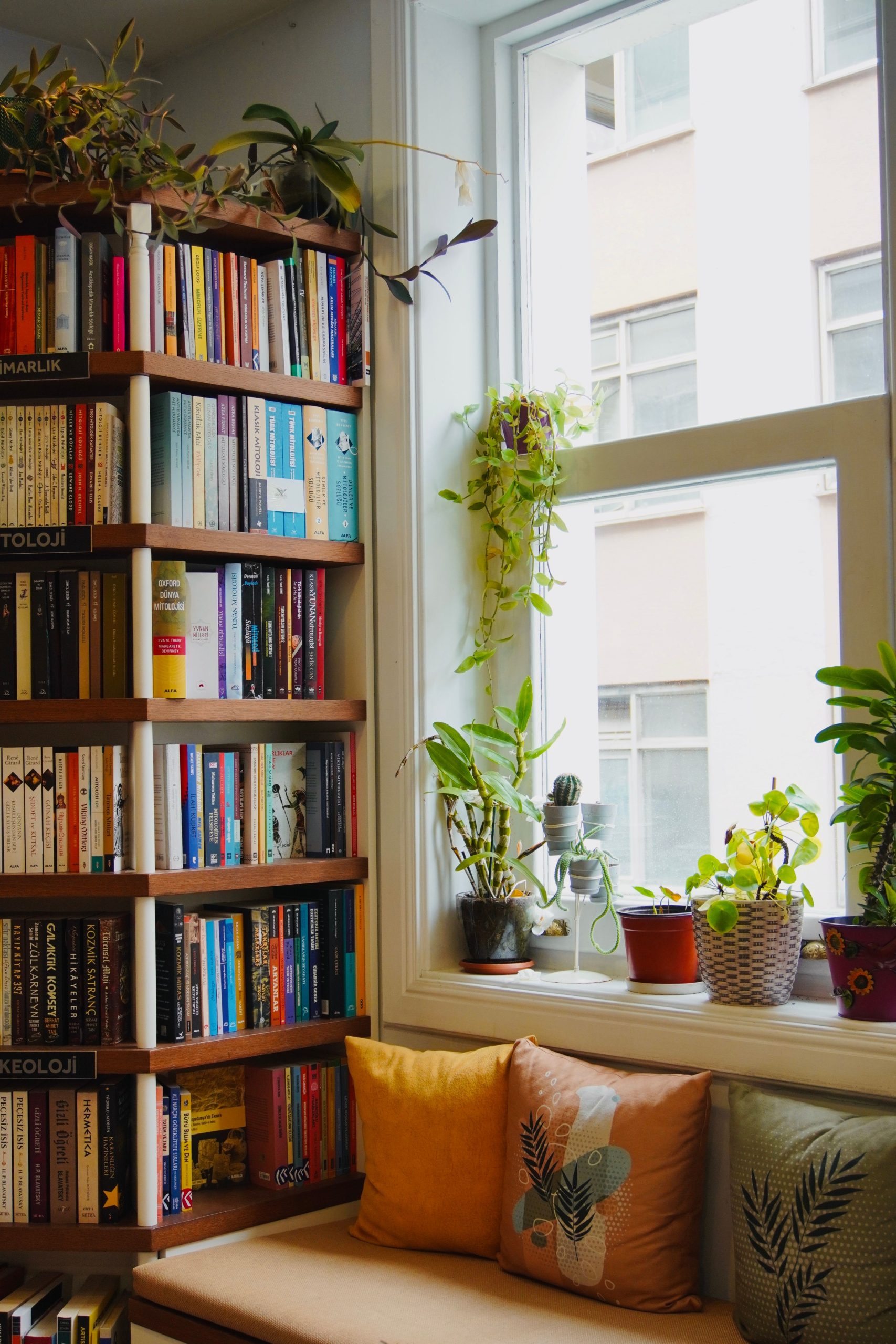
that makes this nook so captivating is the sheer abundance of life. It’s not just a bookshelf and a window seat; it’s a miniature, thriving greenhouse. The dense collection of potted plants on the windowsill, basking in the natural light, creates a lush, living curtain that contrasts beautifully with the dark, static bookshelf filled with books. Without this explosion of greenery, the nook would still be nice, but it wouldn’t have that vibrant, ‘secret garden’ feeling. It’s proof that sometimes, more is more. Compare this with the cozier, but less plant-heavy nook in Idea #3.
🔥 Trending Context
This idea is perfectly suited for a room that has a deep-set window or an existing window seat. You need a sill or ledge that is at least 8-10 inches deep to accommodate a good variety of pots without them looking precarious. The ideal width is at least 4 feet, giving you enough room to create a dense, layered look. This works best in rooms with south or west-facing windows that provide the bright, indirect light most houseplants crave. If you don’t have a deep window, you can achieve a similar effect with tiered plant stands placed *in front* of a sunny window.
12. Classic Charm: White Built-ins with Grid-Patterned Glass Doors
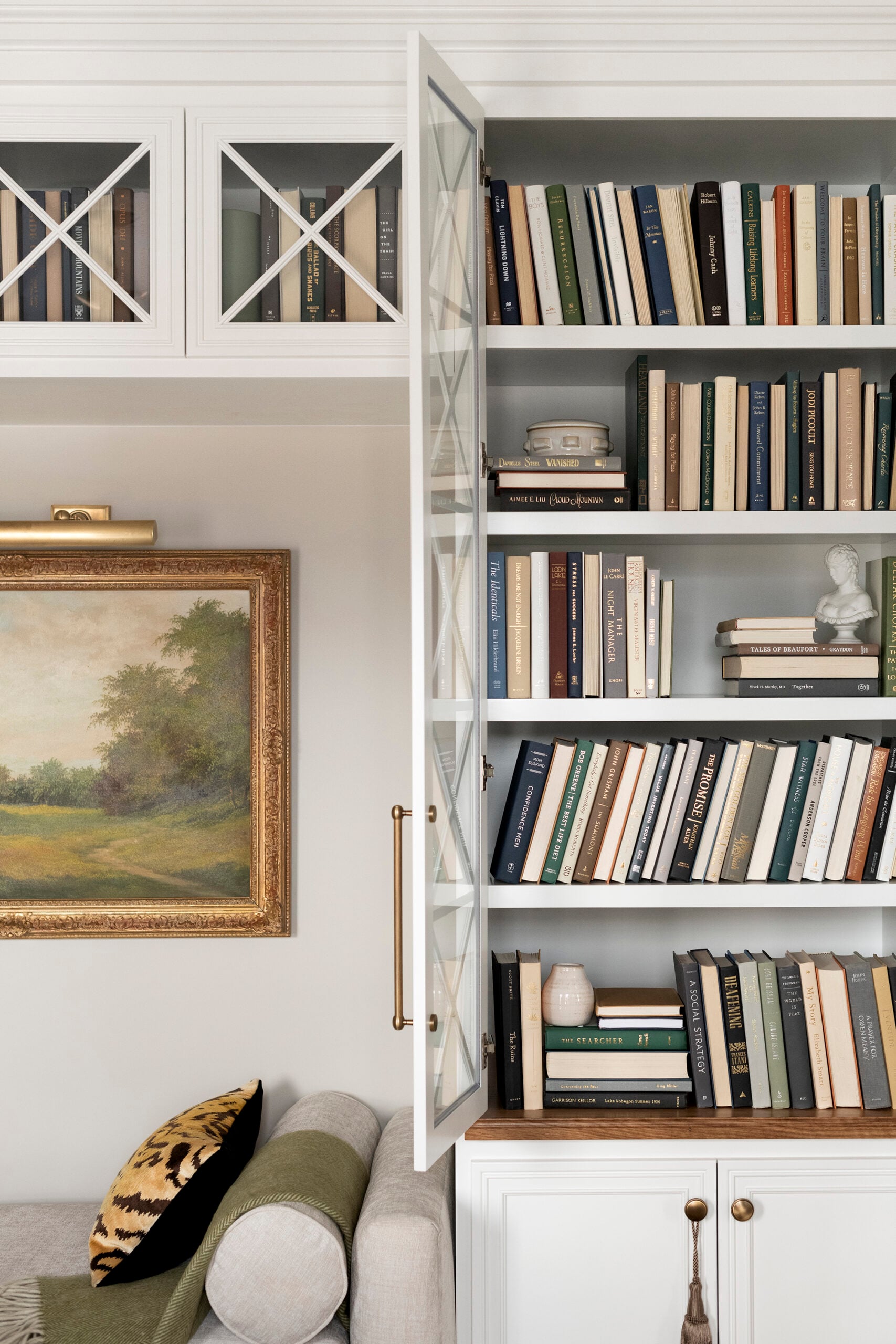
This look succeeds by striking a perfect balance between display and concealment. The grid pattern on the glass doors adds a layer of architectural detail that immediately elevates the built-ins from basic to bespoke. This mullion detail partially obscures the contents, so the books behind them contribute color and texture without creating visual clutter. It’s a clever way to keep your book collection visible while maintaining a very tidy and refined appearance. The gold picture light above the adjacent painting reinforces the classic, gallery-like feel.
💸 Get This Look For Less
Glass doors, especially ones with a decorative grid, are beautiful but they essentially double your cleaning workload. Not only do you have the shelves and books inside to keep tidy, but the glass itself will need regular attention. Fingerprints, smudges, and dust are much more visible on glass than on a solid door. The little corners and edges of the grid pattern are particularly notorious for trapping dust. A weekly wipe-down with glass cleaner and a microfiber cloth is a must to keep them looking pristine and clear.
13. Curating Calm with Neutral Textures and Objects
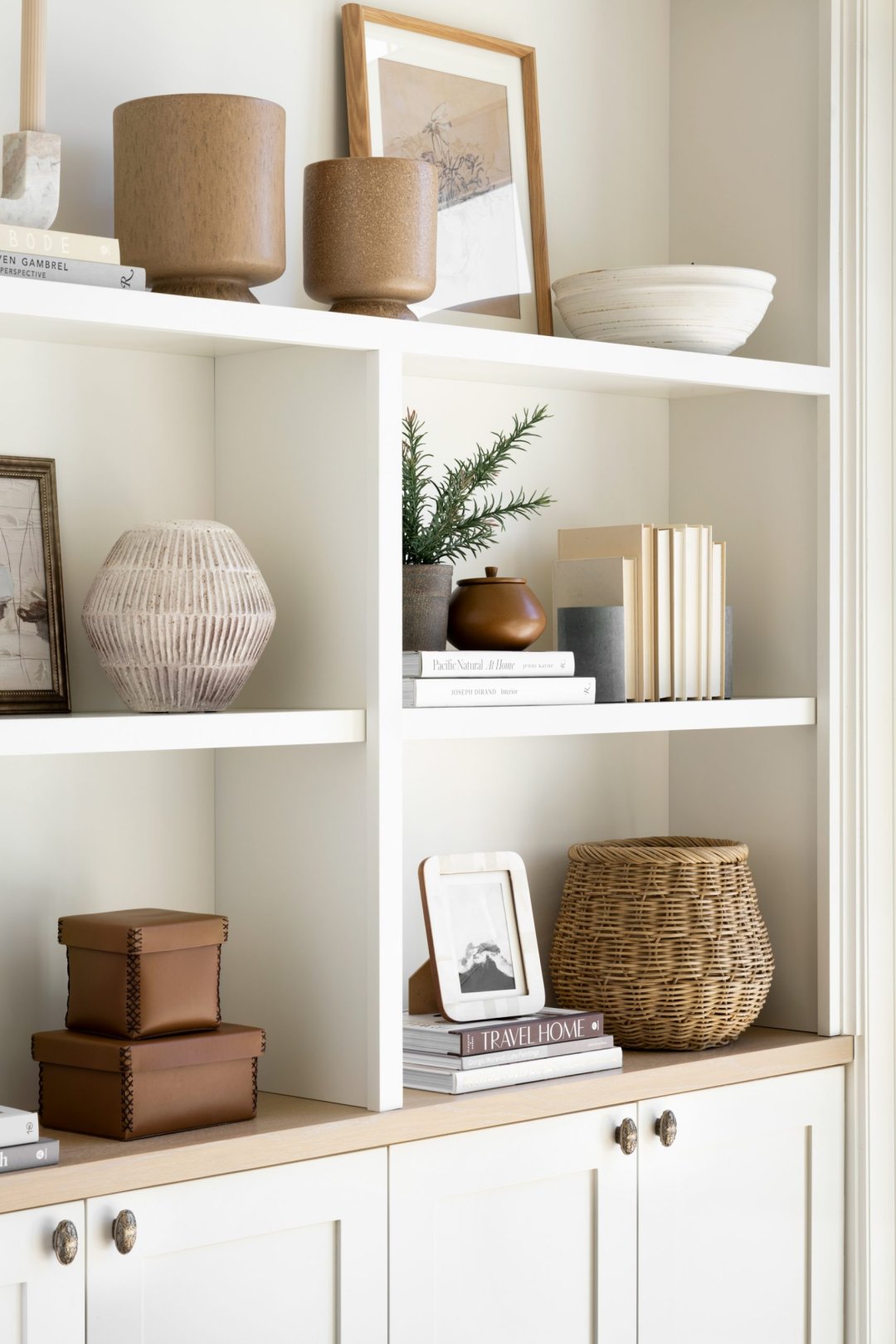
The formula for this serene look is a study in subtlety: 70% neutral palette (whites, creams, beiges) + 20% natural textures (woven rattan, wood, leather) + 10% curated color (from book spines and artwork). The dominance of the neutral base creates a calm visual field, while the varied textures prevent it from feeling flat or boring. The small, controlled pops of color are then able to stand out as thoughtful accents rather than overwhelming noise. You could easily warm this up by swapping the rattan for dark leather, or cool it down by emphasizing concrete and grey tones. For a similar but more organic take, see Idea #14.
💡 Designer Tip
When styling with exclusively neutral objects, the key is to create contrast through shape and form. Place a tall, slender vase next to a low, wide bowl. Position a round, organic-shaped object against a stack of sharp, rectangular books. It’s this interplay of silhouettes that creates visual interest when you aren’t relying on color. Aim for a mix of at least three different heights and three different shapes within each cubby or on each shelf to create a dynamic, yet balanced composition.
14. Organic Modern: Styling with Earthenware and Woven Baskets
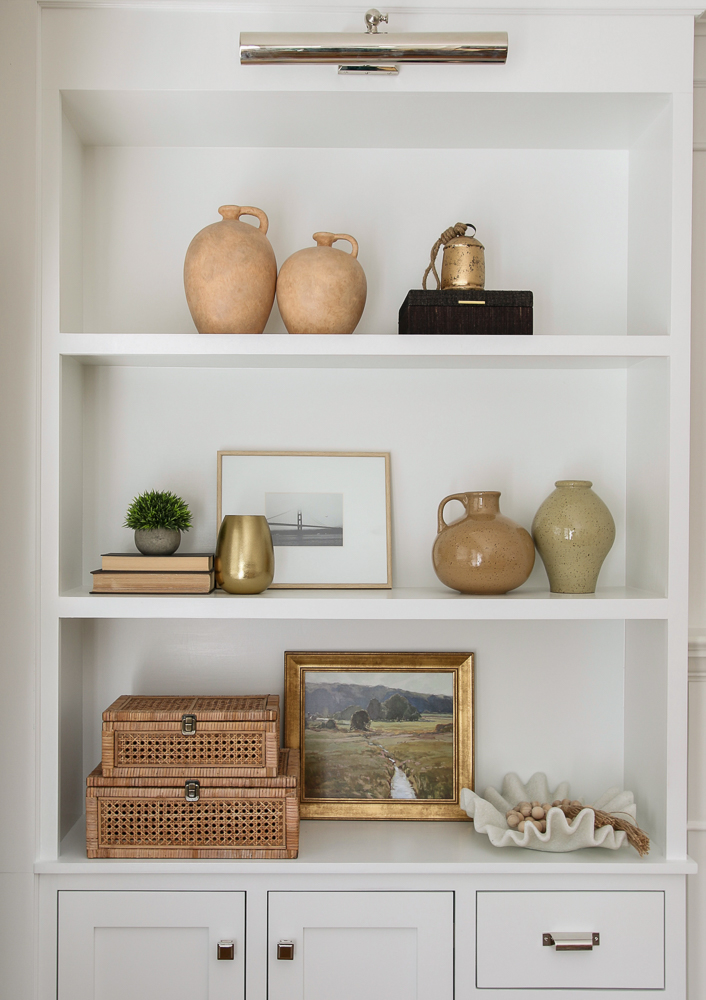
The soul of this design is its celebration of raw, natural texture. If you took away the earthenware vessels and woven rattan boxes, you’d be left with a perfectly nice but generic bookshelf. It’s the tactile quality of these pieces—the slightly rough surface of the terracotta, the intricate weave of the rattan—that gives the arrangement its warmth and character. These objects connect the clean, modern lines of the built-in to the natural world, creating a look that feels both curated and grounded. They prove that you don’t need bright color to make a statement.
🔧 How-To Brief
High-end, artisan-made ceramics and storage boxes can be pricey, but you can get this organic, textural look for much less. HomeGoods, Target (the Studio McGee and Jungalow collections are great for this), and even IKEA are fantastic sources for affordable earthenware-style vases and woven baskets. Don’t be afraid to hit up a thrift store, either. Look for interesting shapes and textures, even if the color is wrong. A quick coat of textured spray paint (like a stone or terracotta finish) can transform a dated $3 vase into a piece that looks like it came from a high-end boutique.
15. The “Library Stack” Look with Mercury Glass Accents
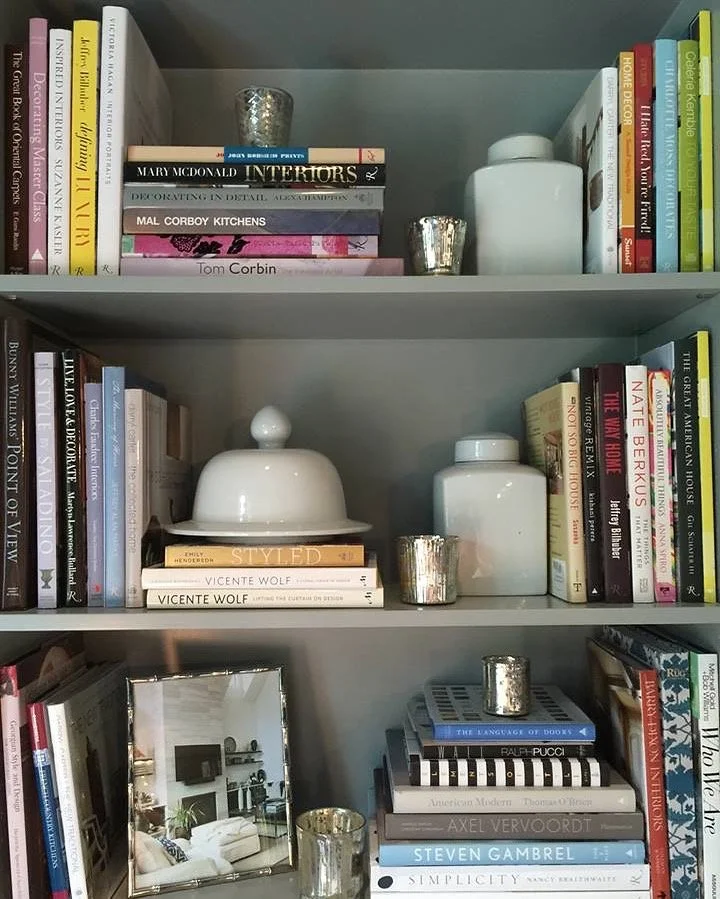
Creating the perfect horizontal book stack is an art. It’s not just a pile of books; it’s a foundation.
🎯 What Makes It Work
- Time Estimate: 15 minutes per shelf
- Materials: Your books, a level (optional, but helpful!).
- Step 1: Select 3 to 5 books. The most visually stable stacks use a larger, heavier book as the base.
- Step 2: Vary the sizes, placing them in descending order of size (largest on the bottom).
- Step 3: Align the spines perfectly. This is a small detail that makes a huge difference and looks much tidier.
- Step 4: Use the stack as a pedestal to elevate a decorative object, like one of the mercury glass candle holders shown here. This gives the object more presence.
- Step 5: Step back and check your work. The stack should feel balanced, not like it’s about to topple.
A shelf styled this densely with a mix of vertical and horizontal books can be a bit of a pain if you actually want to *read* the books. The ones at the bottom of a stack are effectively out of commission unless you’re willing to disassemble your carefully crafted vignette. This styling technique is best suited for decorative books or books you’ve already read. If your library is in constant rotation, opt for more vertical storage and use only one or two small horizontal stacks for decor.
16. Moody Academia: A Dark Bookshelf with Vintage Ephemera
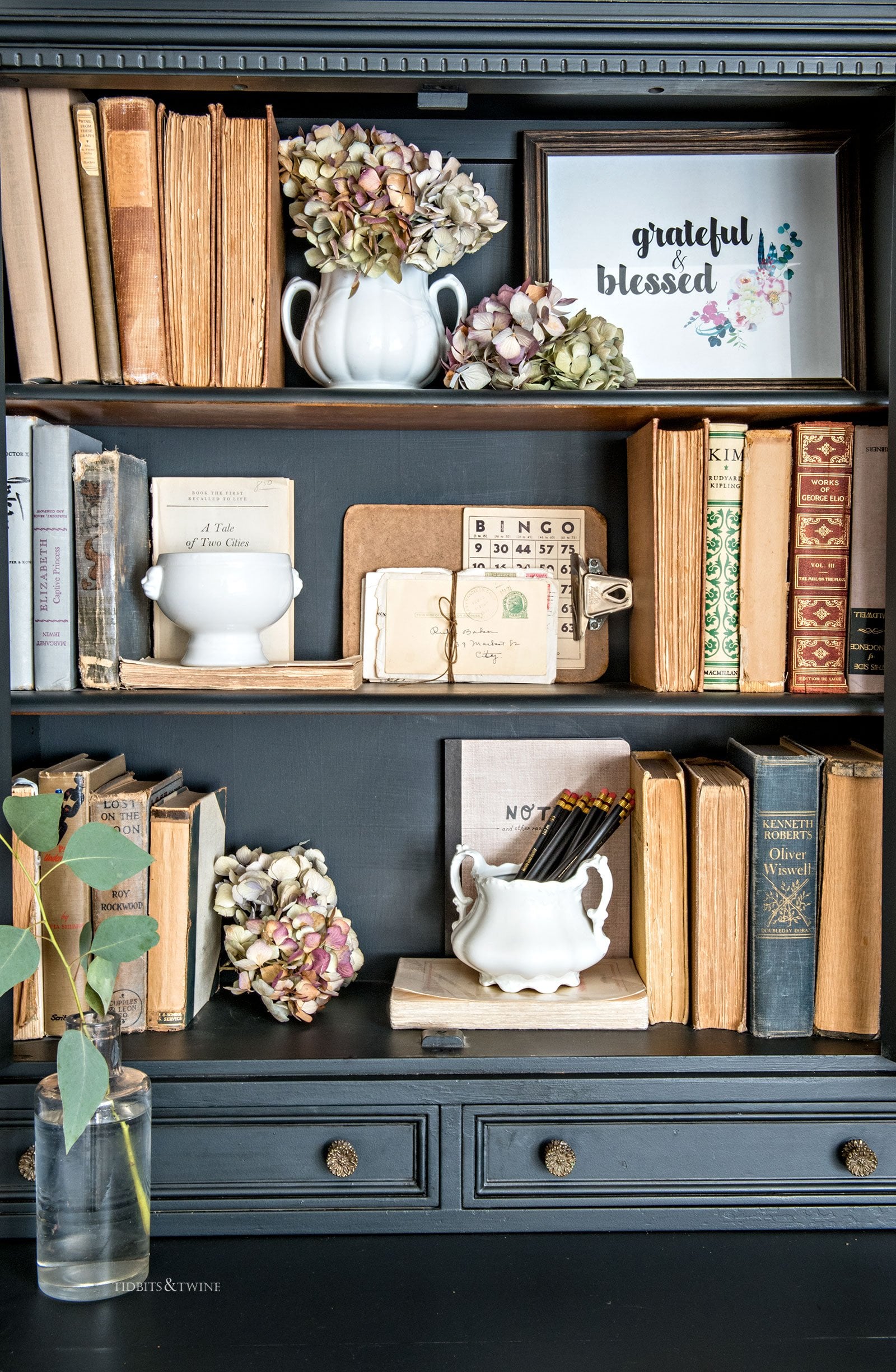
This look is incredibly budget-friendly if you know where to look. The foundation is a simple dark shelving unit—you can find these at thrift stores or on Facebook Marketplace for under $50, or give an old one a dramatic makeover with a can of charcoal or navy chalk paint. The soul of the look—the vintage books and ephemera—can be found for pennies at flea markets, estate sales, and antique shops. Look for books with interesting, aged covers and paper. Old letters, postcards, and even vintage game pieces can be framed or simply propped up for that authentic, collected-over-time feel.
⭐ The One Thing
The ‘Dark Academia’ aesthetic continues to be a major force on Pinterest and Instagram, and this bookshelf is a perfect example of why. As our lives become more digital, there’s a growing romanticism for the tangible, intellectual world of worn books, handwritten letters, and classic decor. This style isn’t about looking new and shiny; it’s about feeling smart, cozy, and connected to history. It has staying power because it’s rooted in a feeling of nostalgia and comfort, creating a little scholarly sanctuary in a fast-paced world.
17. Sophisticated Neutrals with a Touch of Gold
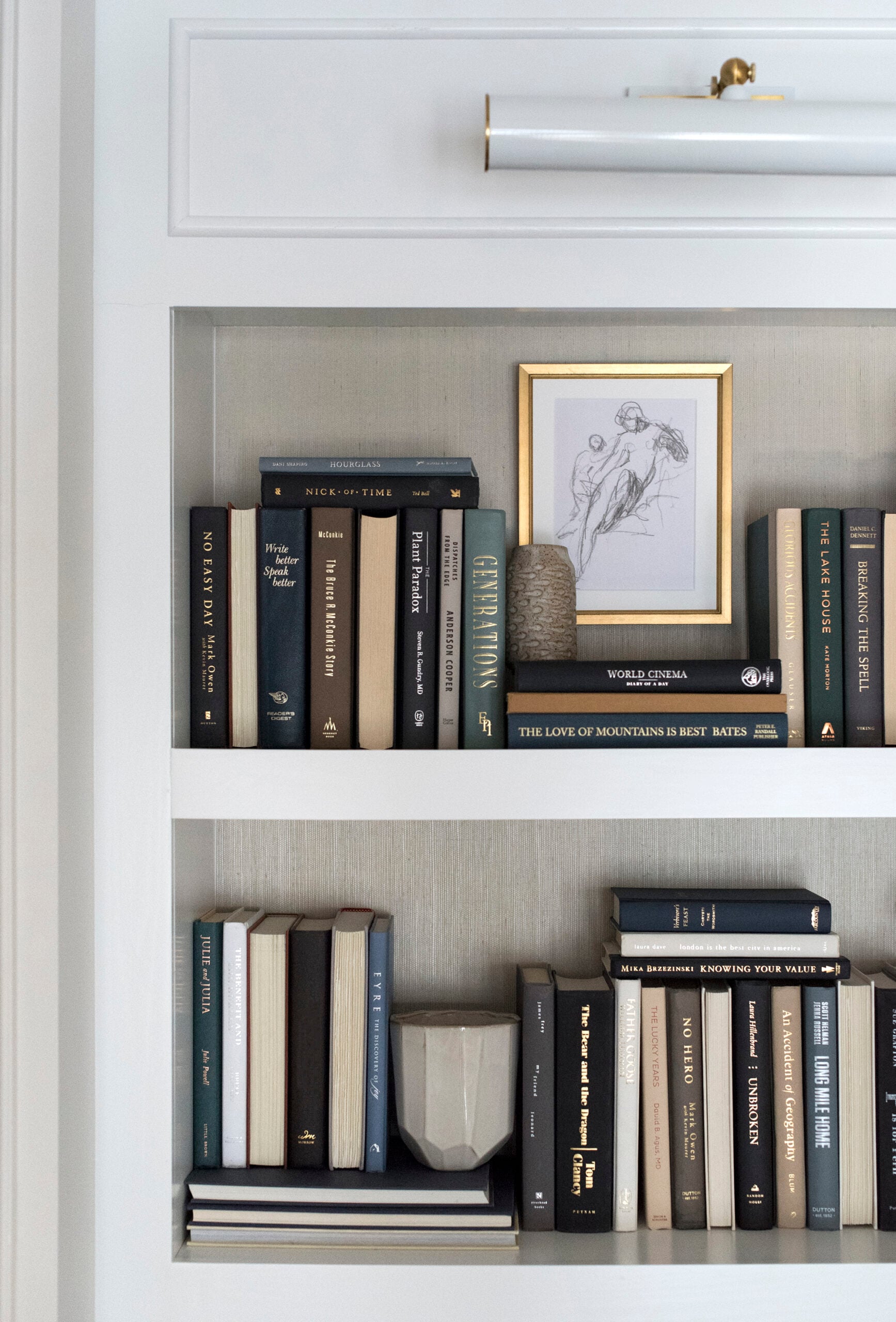
This shelf arrangement feels so calming and sophisticated because it strictly adheres to a limited color palette while maximizing textural variety. The backdrop of subtle, textured gray wallpaper behind the white shelves is a pro move; it adds depth without shouting. The books themselves are curated for their neutral spines—creams, whites, grays, and deep blues—creating a cohesive block of color. The key that unlocks it all is the single piece of framed line art with its delicate gold frame, which provides a focal point and a touch of warmth. It’s a lesson in restraint. Compare the quiet mood here to the more minimalist, but similar, vibe of Idea #10.
✅ Before You Start
When styling with neutral books, create visual interest by varying their orientation. On one shelf, stand them all vertically. On the next, create a few horizontal stacks of varying heights. On another, lean a small stack against a vertical row. This simple trick prevents the monochrome palette from feeling flat or boring. It creates rhythm and movement, guiding the eye around the composition and giving the arrangement a dynamic, professionally styled quality.
18. Mixing Materials: Light Wood Shelves and Cool Gray Cabinets
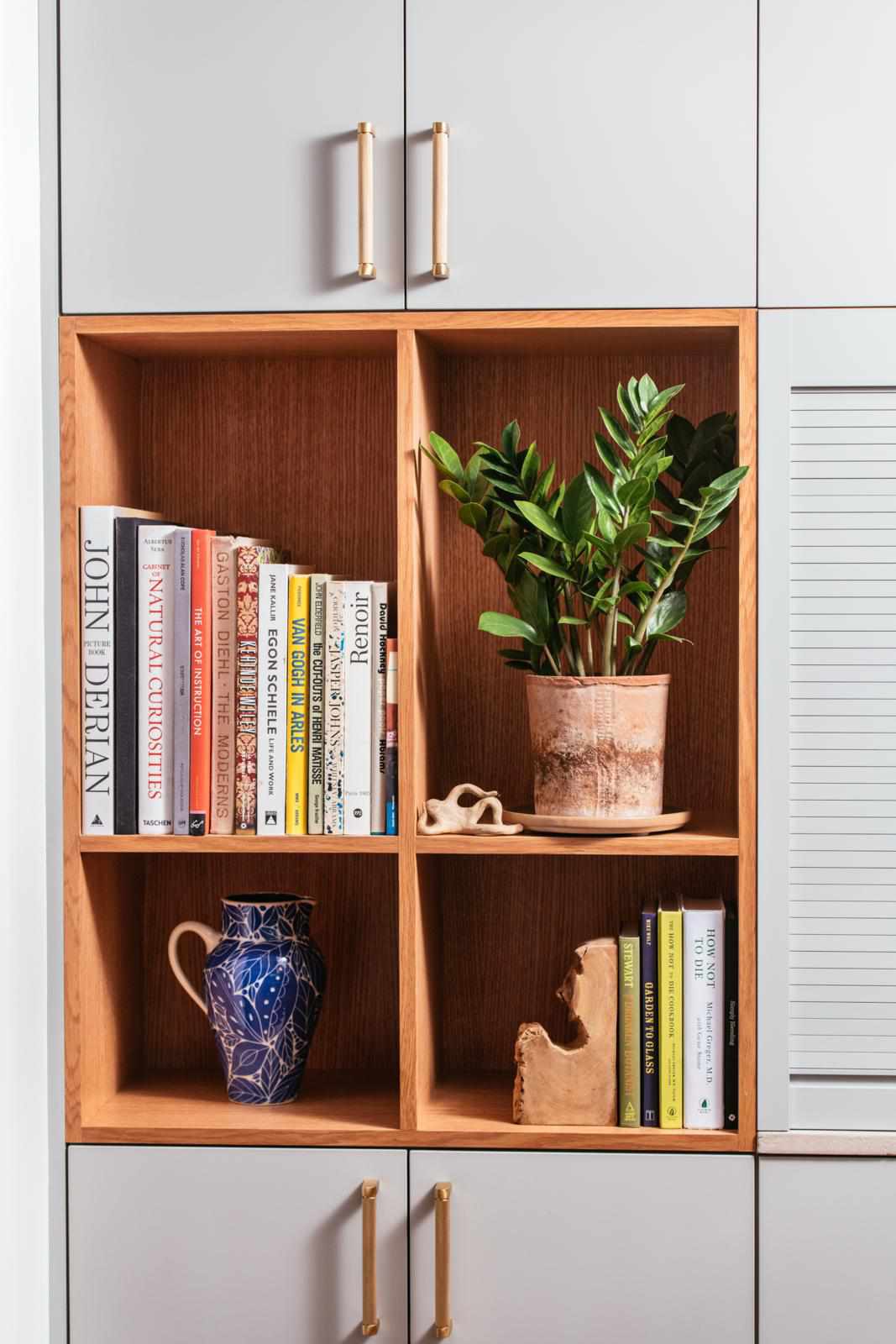
The winning equation here is about balancing temperatures: 50% warm material (the light wood) + 40% cool material (the light gray cabinets) + 10% metallic accent (the brass pulls). The natural warmth of the wood shelves prevents the cool gray of the surrounding cabinetry from feeling sterile. The brass hardware acts as the perfect bridge, its warm metallic tone tying the wood and the gray together. This principle of mixing warm and cool tones is a cornerstone of good design, creating a space that feels balanced and layered, not one-note.
📏 Scale Guide
This modular, integrated look is fantastic for multi-purpose rooms. It works best on a wall that is at least 8 to 10 feet wide, which allows for a combination of open shelving for display and closed cabinetry for hiding clutter. The depth of the units should be relatively shallow, around 12-15 inches, so it doesn’t overwhelm the room. This concept is incredibly versatile; it can be scaled up for a large living room or scaled down to create a stylish and functional storage wall in a home office or dining area.
19. A Bold Statement with a Red-Backed Bookshelf
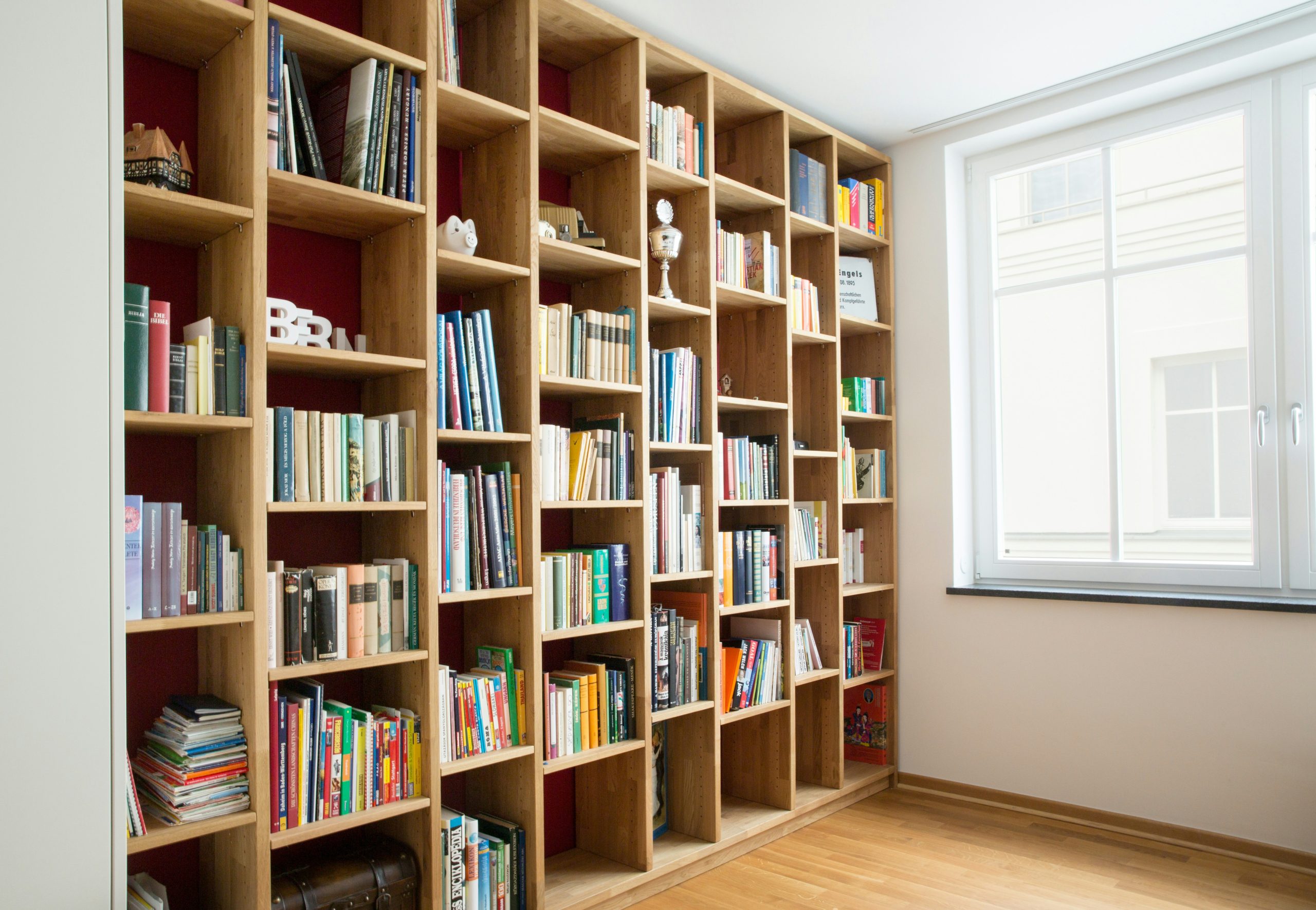
The deep red back panel is, without a doubt, the hero of this entire room. It’s a single, bold design choice that transforms a standard wooden bookshelf from a functional piece of furniture into a show-stopping architectural feature. It provides an unexpected jolt of energy and warmth, and makes everything placed on the shelves—from the simplest paperback to a small decorative object—pop with contrast. If you replaced the red with a neutral color, the bookshelf would simply fade into the background. Here, it demands attention in the best way possible.
💰 Budget Breakdown
A color this strong is a major commitment. That deep red will dictate a lot of your other decor choices in the room. You’ll need to consider how it pairs with your sofa, rugs, and artwork. While it looks fantastic here with the light wood and white walls, it could easily feel overwhelming or clash in a room with other strong colors. Also, be prepared for this to be a focal point forever. If you’re someone who likes to change up your decor style every year, painting the back of a large, built-in-style bookshelf is not a simple or quick thing to reverse.
20. Grand Library Dreams: Floor-to-Ceiling Shelves with a Ladder
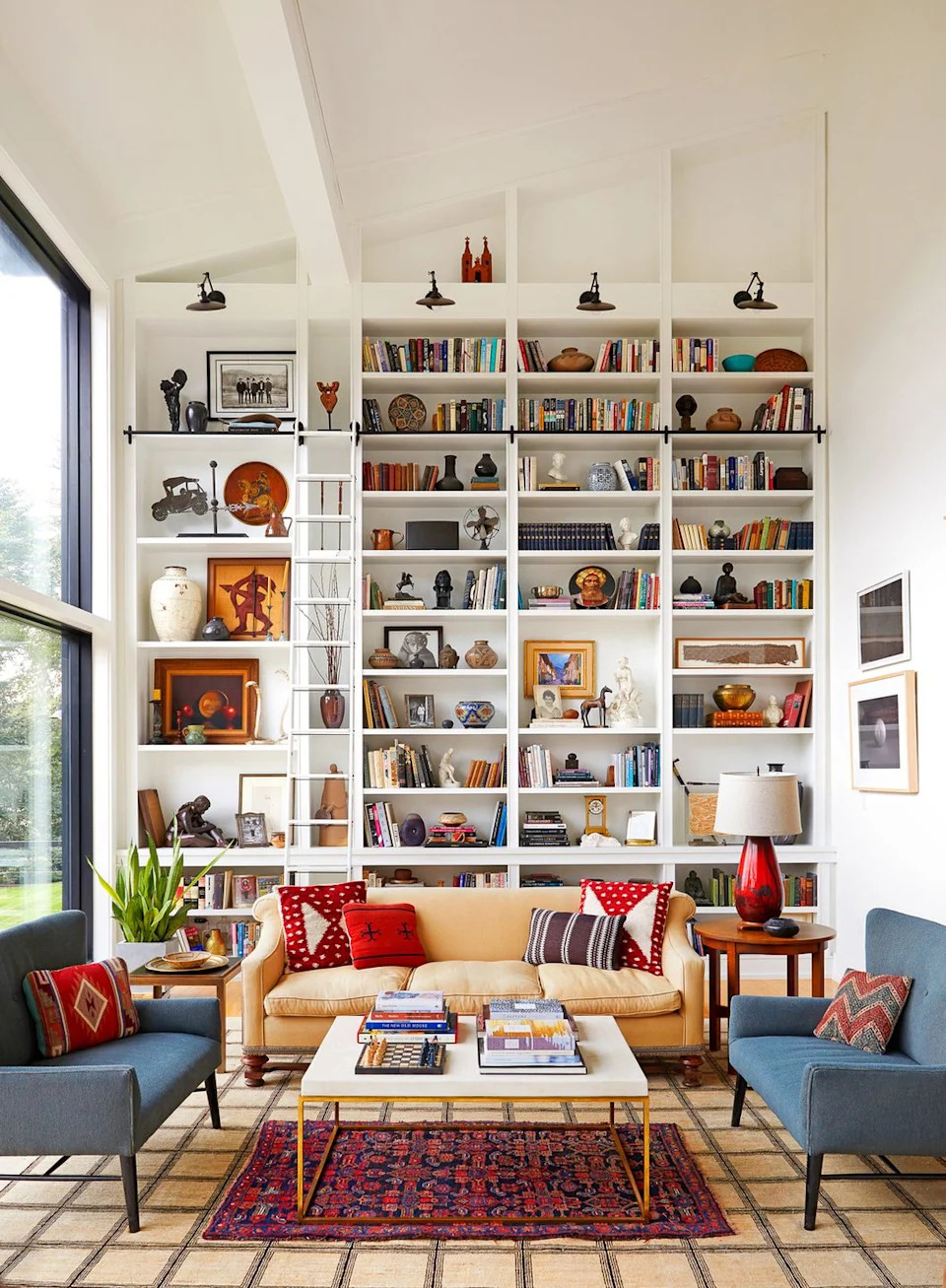
Achieving this kind of grand, built-in library look is a significant investment, but it completely defines a space. This isn’t just furniture; it’s architecture.
🧹 Maintenance Reality
- Custom Built-in Bookcases: $8,000 – $25,000+ (depending on size, materials, and lighting)
- Rolling Library Ladder and Hardware: $1,500 – $4,000
- Professional Design & Installation: $2,000 – $6,000
- Recessed Lighting Installation: $500 – $1,500
- TOTAL: $12,000 – $36,500+
- Budget alternative: Get a similar feeling for less by placing multiple tall (90″+) IKEA BILLY bookcases side-by-side with height extension units and adding a decorative (non-functional) ladder. This can give you 80% of the look for 20% of the cost. A more modest, but still classic, ladder look is seen in Idea #7.
To make a large wall of shelves feel collected and not cluttered, use the ‘checkerboard’ principle. Don’t style every single cubby. Alternate between densely packed cubbies (filled with books) and more sparsely styled ‘display’ cubbies (featuring a single large art piece or a small grouping of objects). This creates visual breathing room and allows the eye to rest, making the entire wall feel more curated and less overwhelming. Also, pull your larger decorative objects forward to the front edge of the shelf to give them more presence.
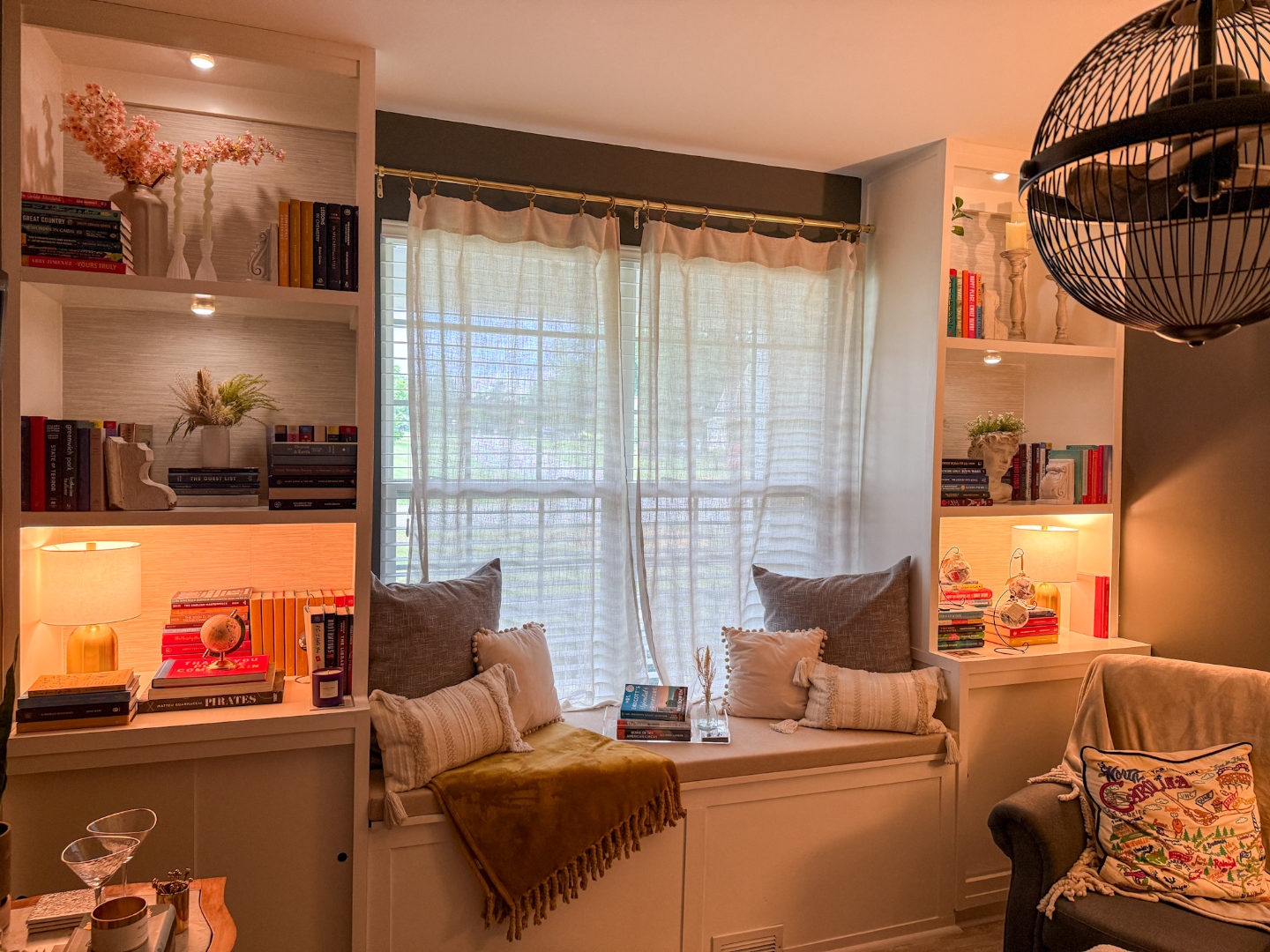
21. Your Weekend Project: The Quintessential Eclectic Shelf Restyle
Ready to finally tackle those messy shelves? Here’s a tried-and-true method to get that perfectly eclectic, ‘styled-but-not-staged’ look in an afternoon.
⚠️ Real Talk
- Time Estimate: 2-4 hours
- Materials: Your books and decor, cleaning cloths, and a fresh eye.
- Step 1: The Clean Slate. Take EVERYTHING off your shelves. Yes, everything. Dust the shelves thoroughly.
- Step 2: Sort and Edit. Group your items: books, framed art, vases, objects, plants. Be ruthless. Is there anything you don’t truly love? Put it in a donation box.
- Step 3: The Foundation. Start with the books. Place about 60-70% of your books back, varying their orientation. Create some vertical rows and some horizontal stacks.
- Step 4: Add Large Objects. Now, place your largest decorative items (big vases, artwork). Don’t center them. Place them to one side of a cubby to create nice asymmetry.
- Step 5: Layer in the Smalls. Use your smaller objects to style on top of book stacks or next to larger objects. Create little ‘vignettes’ of 2-3 items.
- Step 6: Step Back and Tweak. Walk away for 5 minutes, then come back. What feels off? Is one shelf too crowded? One too empty? Adjust until it feels balanced.
Don’t begin your shelf restyle without a plan. Before you even take a single book off the shelf, do this quick check:
- Measure your shelf heights and depths. Do you have room for that tall vase you love?
- Take a ‘before’ photo. It helps you see what wasn’t working and appreciate the ‘after’.
- Gather all your potential styling objects from around the house. You might be surprised what treasures you have hiding in other rooms.
- Establish your ‘no’ pile from the start. A donation box for items you know you’re ready to part with will make the editing process much easier.
22. Refined Details: Patterned Glass Doors and Gilded Art
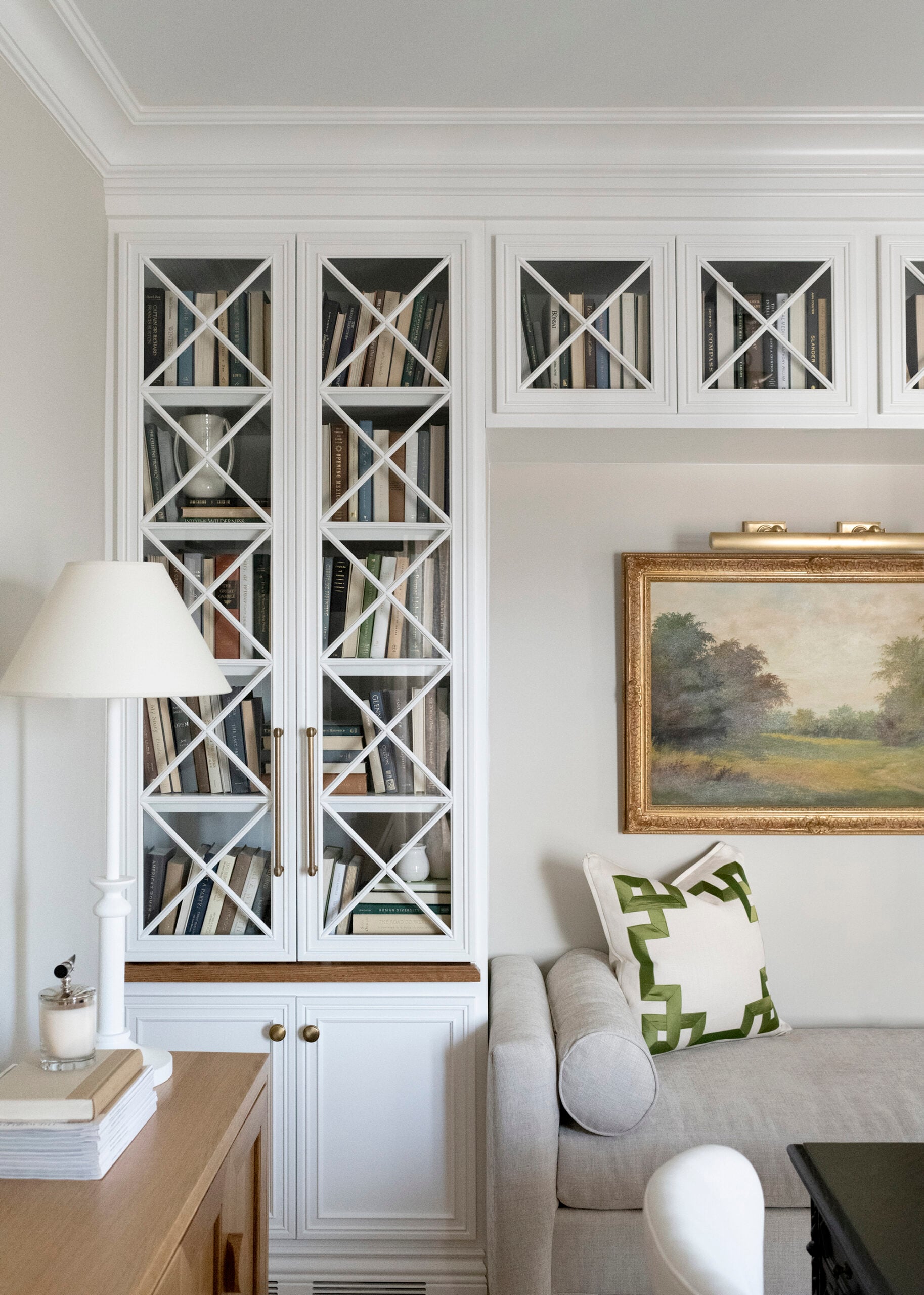
The elegance of this design lies in its repetition of sophisticated motifs. The diagonal lattice on the glass doors creates a sense of bespoke craftsmanship. This geometric detail is beautifully echoed in the delicate pattern of the green and white decorative pillow on the sofa. The second key to its success is the consistent use of gold. The picture light, the ornate frame on the painting, and even the warm tones within the landscape art itself create a cohesive and warm metallic story. It feels intentional, layered, and expensive.
📐 Style Math
A picture light, while incredibly chic, adds another layer to your cleaning routine. The metal housing and arm will gather dust, and because it’s often a focal point, that dust is noticeable. You’ll need to dust it weekly. Furthermore, be mindful of the heat output of the bulb you choose. An incandescent or halogen bulb can, over many years, potentially cause slight discoloration to the top of a painted white bookshelf. Using a cooler-running LED bulb is a smarter long-term choice to preserve the pristine white finish.
23. Cornering the Market on Greenery: A Plant-Filled Corner Shelf
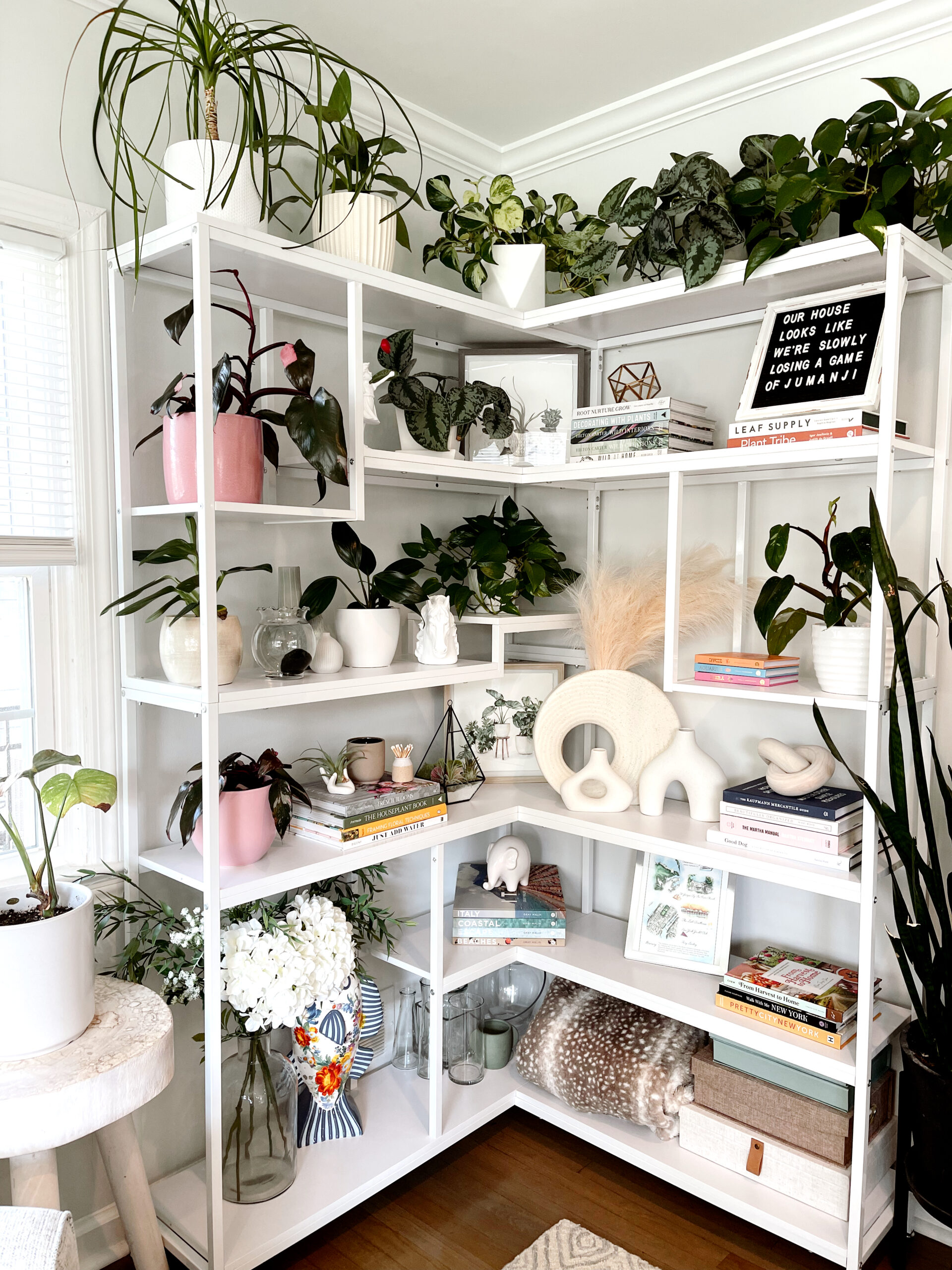
This lush corner follows a simple but effective formula: 50% plants + 30% books + 20% decorative objects. The plants are the undeniable star of the show, creating a vibrant, living wall of green. The books, neatly stacked, provide structure and a grounding element amidst the organic shapes of the foliage. The remaining 20% is where the personality shines through—the playful letter board, the ceramic animal figures, and shapely vases. This ratio ensures the look is lively and full of personality, but still feels organized and not like a messy jungle.
🔥 Trending Context
When styling a corner shelf with this many plants, think in triangles. For each shelf, place your three main points of interest (which could be a tall plant, a stack of books, and a vase) in a triangular formation. This creates a sense of balance and visual flow. Also, vary the foliage. Combine a plant with a trailing habit (like a pothos) with an upright one (like a snake plant) and a bushy one (like a fern) on the same or adjacent shelves to create layers of texture and interest.
24. Architecturally Integrated Shelving with a View
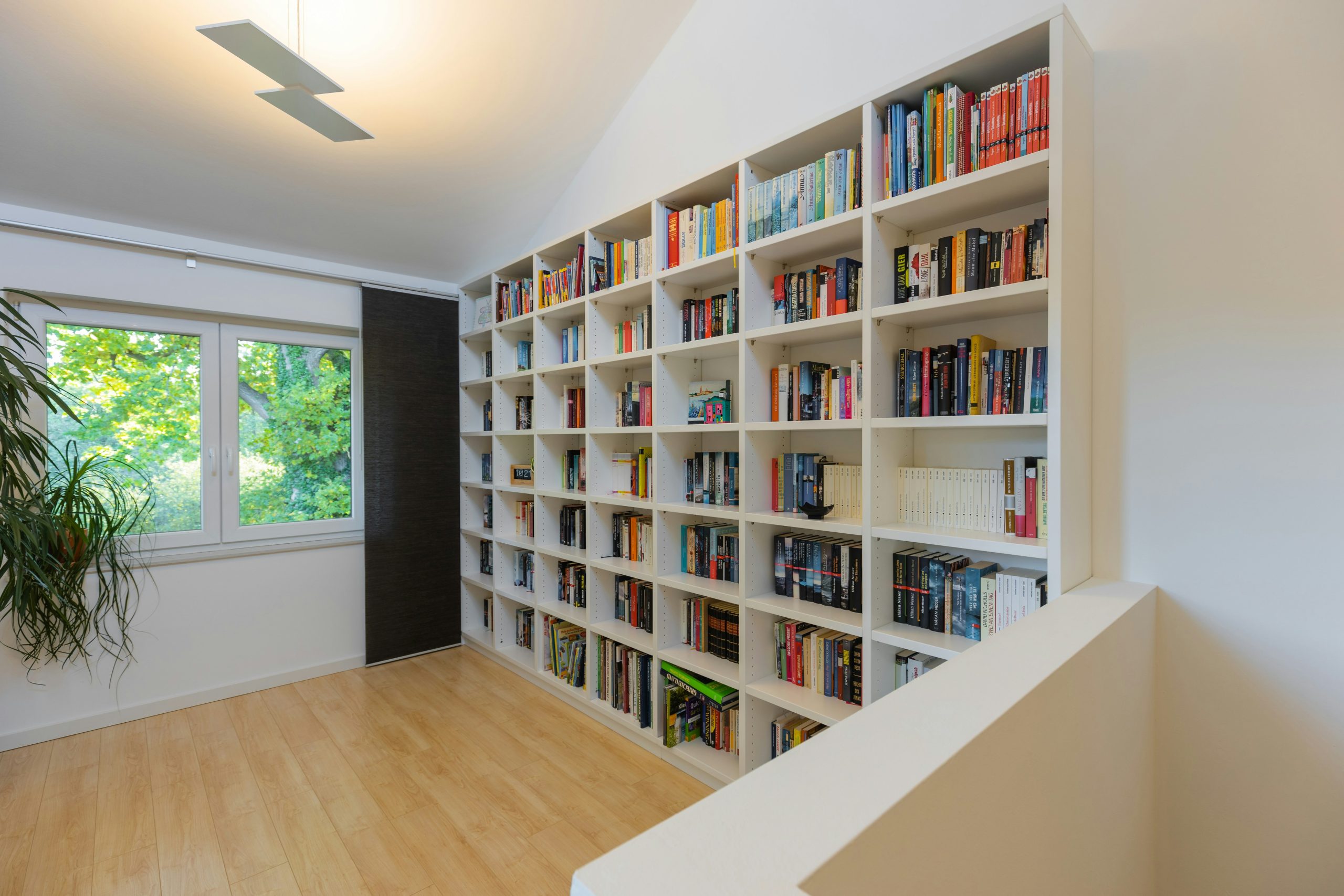
The single most important element here isn’t on the shelves—it’s the view *beyond* them. The massive window, with its lush green vista, acts as living art. The bookshelf is intentionally simple and white, designed not to compete with the window, but to frame it and be in dialogue with it. The pops of color from the book spines connect to the vibrancy of the foliage outside, making the entire wall feel like a cohesive indoor-outdoor experience. Without that spectacular connection to the outdoors, the bookshelf would just be a nice, functional storage unit.
💸 Get This Look For Less
This floor-to-ceiling, fully integrated style is perfect for rooms with high or vaulted ceilings, as seen here. It requires a minimum ceiling height of 9-10 feet to achieve this sense of grandeur without feeling cramped. The wall itself should be substantial, at least 12 feet wide, to allow the bookshelf to feel expansive rather than squeezed in. This look is particularly effective in living rooms or studies where the bookshelf can be a major architectural feature, defining the character of the space. It’s less suited for small bedrooms where it could feel overwhelming.
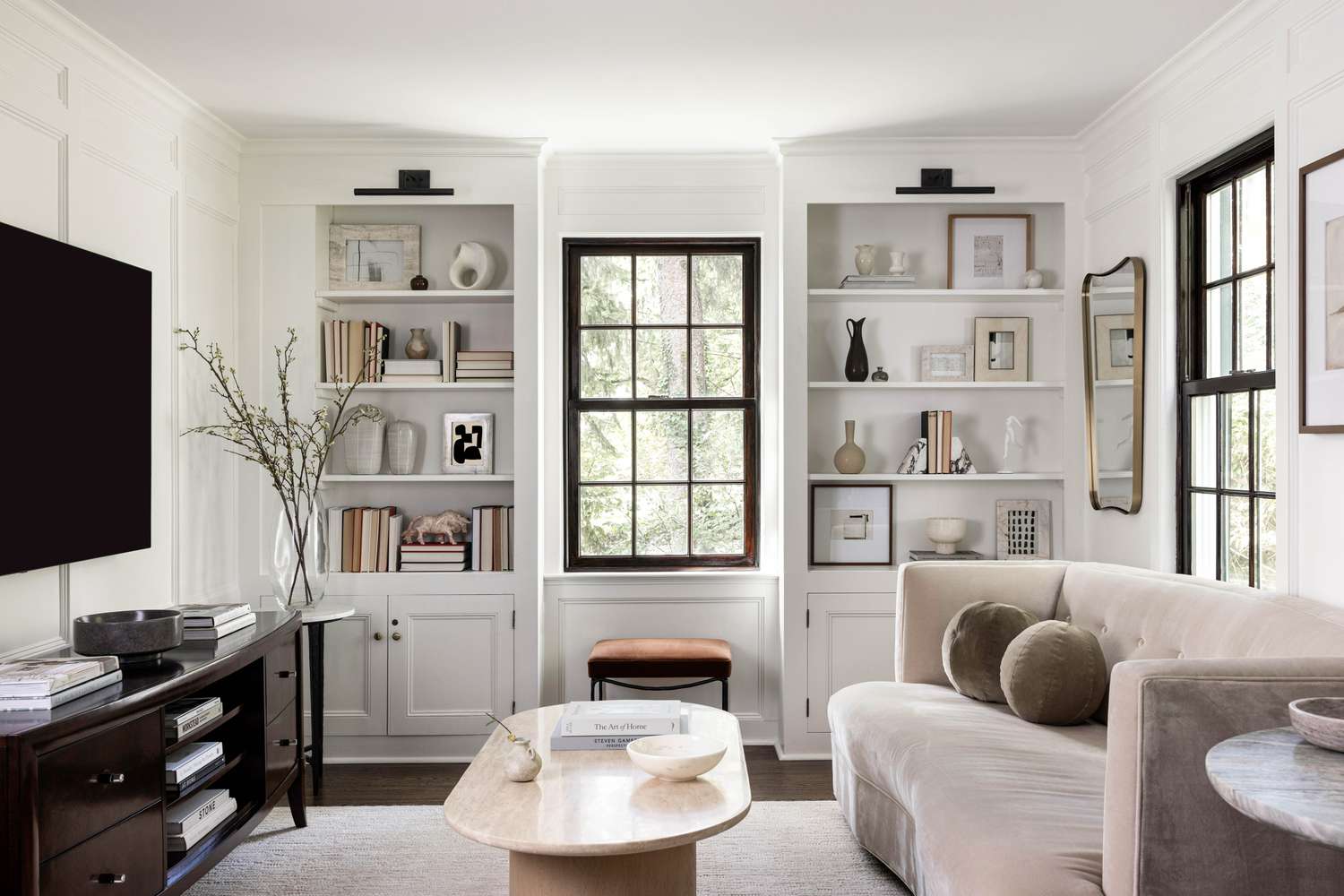
25. Symmetrical and Serene: Flanking a Window with Built-ins
The calming effect of this design comes from its powerful use of symmetry. By placing two identical built-in bookshelves on either side of the central window, the composition feels balanced, stable, and incredibly intentional. The eye immediately understands the logic of the space. The dark window frame and the matching black picture lights act as strong, grounding accents that punctuate the sea of white, adding a touch of graphic contrast. This isn’t a design that shouts; it whispers confidence and order.
💡 Designer Tip
This look is beautiful, but it requires a very specific architectural setup. You need a centered window with enough wall space on both sides to accommodate bookshelves that feel substantial (at least 30-36 inches wide each). If your window is off-center, attempting this symmetrical look will always feel awkward and unbalanced. You also have to consider light; shelves packed with books can make a room feel darker, which might be an issue if this is one of your primary natural light sources. It’s a look you have to design the room *for*, it’s not easily retro-fitted.
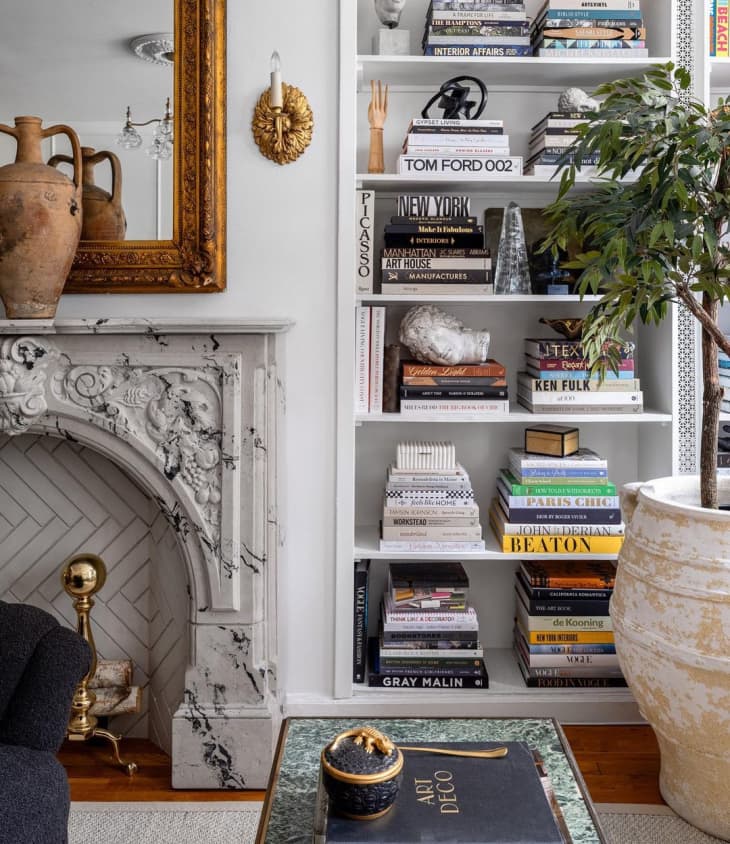
26. When Bookshelves Meet Architecture: Styling Around a Marble Mantel
We’re seeing a huge trend towards ‘feature blending’ in 2026, where distinct architectural elements are designed to flow into one another. This space is a prime example. The bookshelf isn’t just placed *next* to the fireplace; it feels like it grew out of the same wall. This integration of storage and architectural focus (the marble mantel) creates a cohesive, high-end look. It suggests that the home’s design was considered holistically, rather than as a collection of separate pieces. It’s a move away from standalone furniture and towards a more built-in, custom feel.
🔧 How-To Brief
When your bookshelf is adjacent to a powerful feature like this ornate marble mantel, the shelf styling should play a supporting role, not compete for the lead. The key is to be subtle. Notice how the shelves are filled primarily with books, creating a textural but visually quiet backdrop. The few decorative objects are minimal. To tie the two elements together, pull a color or material from the dominant feature onto the shelves. Here, the black book covers and the dark soil of the plant subtly echo the black veining in the marble, creating a smart, cohesive link.
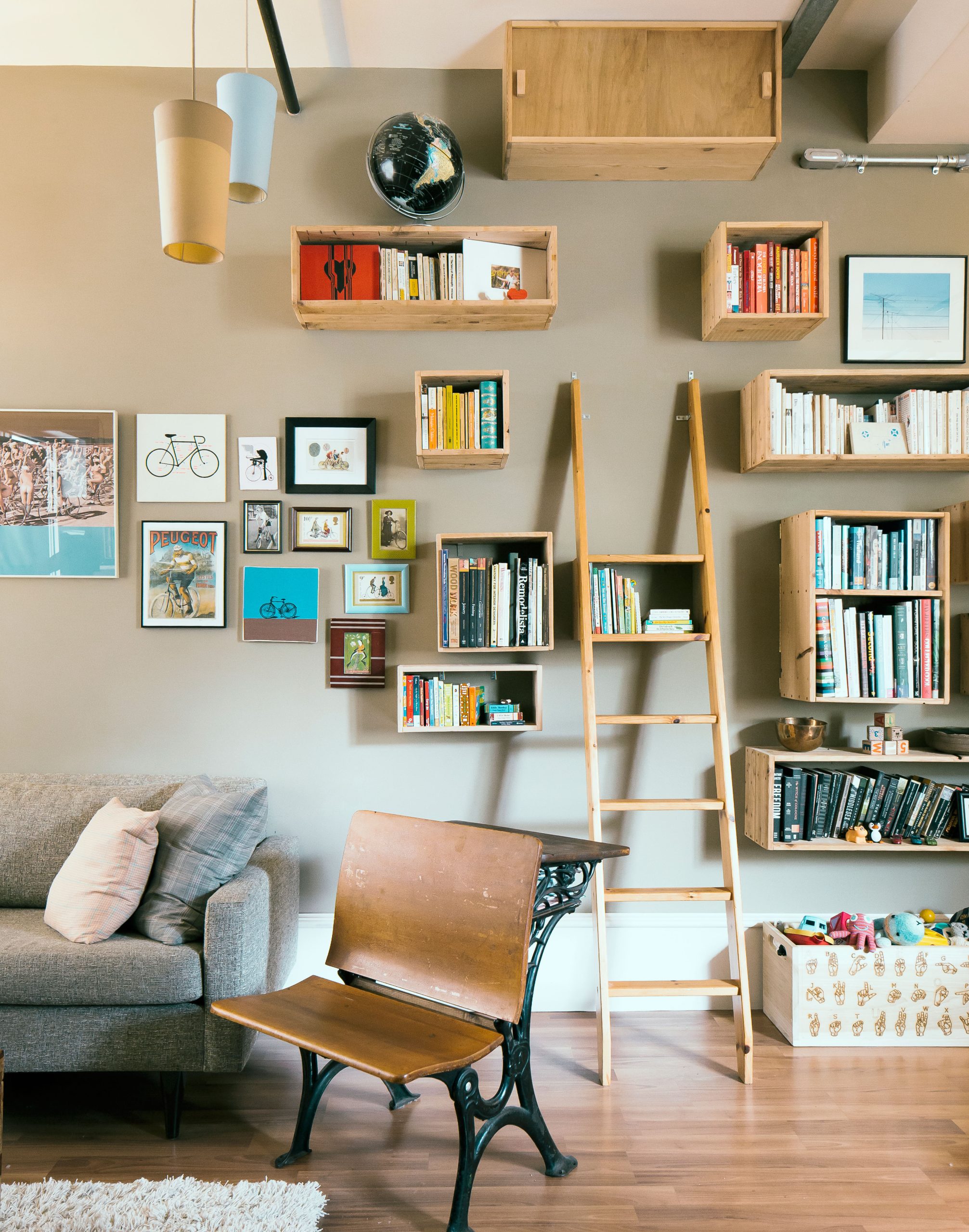
27. A Modular Approach with Cube Shelves and a Gallery Wall
The secret recipe for this playful, collected look is: 40% modular shelving + 40% gallery wall + 20% iconic furniture. The cube shelves, arranged in a slightly asymmetrical pattern, provide functional, grid-like storage. The extensive gallery wall, with its unifying bicycle theme, brings in personality and fills the negative space. The final 20%—the comfy grey sofa and vintage-style desk—grounds the whole arrangement and makes it feel like a livable home, not just a storage warehouse. The result is energetic, personal, and endlessly adaptable.
🎯 What Makes It Work
This is a fantastic budget-friendly alternative to expensive, custom built-ins, as seen in looks like Idea #4. Start with basic wood cube shelves from a store like The Container Store or even Walmart. You can buy them over time and add to your collection. The gallery wall can be built with affordable frames from IKEA or thrift stores, filled with personal photos, prints from Etsy, or even interesting pages torn from magazines. The key is to maintain a consistent theme or color palette to make the collection of cheap frames feel like a cohesive, expensive art installation.
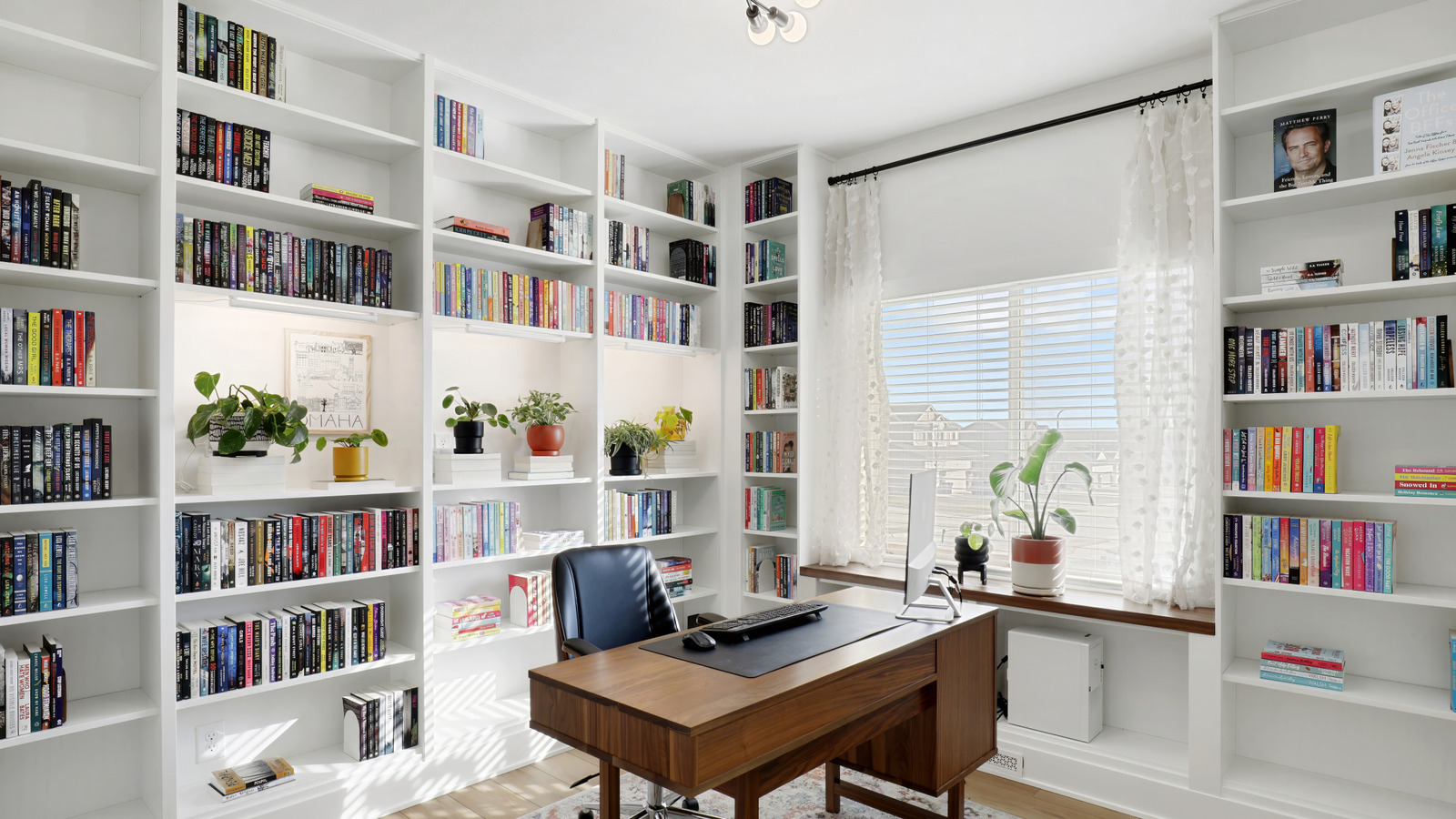
28. The Ultimate Home Office: A Wall of Books with an Integrated Desk
This design is so successful because it truly commits. It dedicates an entire wall to storage, transforming it into a powerful, functional, and beautiful architectural statement. By painting the shelves the same white as the walls, the massive unit feels integrated and less bulky, preventing it from overwhelming the room. The wooden desk, nestled into the window nook, provides a warm, organic contrast to the crisp white grid, clearly defining the ‘work’ zone within the ‘storage’ zone. It’s the perfect marriage of form and function.
⭐ The One Thing
A full wall of bookshelves is an amazing solution for a dedicated home office or study. This idea works best in a room that is at least 10 feet by 12 feet. This size allows the shelving unit (typically 12-15 inches deep) to line one wall without making the room feel narrow or cramped. The integrated desk nook requires a window to feel airy and pleasant, not like a dark cave. If you don’t have a window, you can replicate the ‘nook’ feel by leaving a 4-5 foot gap in the shelving at desk height and installing good task lighting underneath the shelf above.
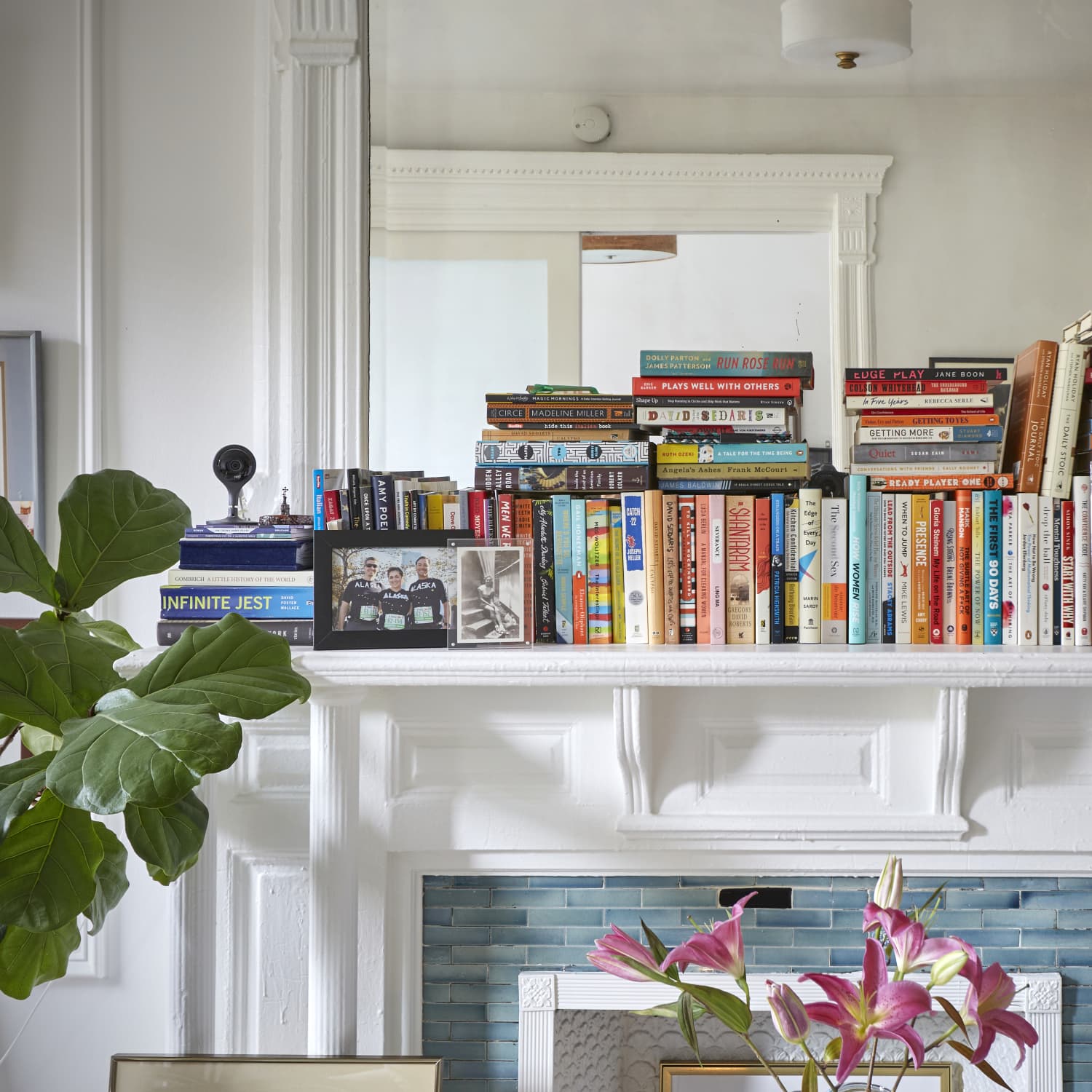
29. The Un-Bookshelf: Styling a Mantelpiece with Books and Florals
The single element that makes this arrangement so charming and unique is its relaxed, almost irreverent approach to book placement. These books aren’t just stored; they are actively used as styling props. Stacking them horizontally, leaning them, and mixing them with photos and plants on a mantel—a place traditionally reserved for candlesticks and clocks—turns them into art. It suggests a home where books are loved, lived with, and part of the everyday fabric of life, not just kept neatly on a shelf. It’s the delightful chaos that makes it feel authentic.
✅ Before You Start
Before you get too excited, a fireplace mantel is not a great place for your rare first editions or precious photo albums. The heat rising from a frequently used fireplace can dry out and damage paper and book bindings over time. Likewise, soot and dust from a wood-burning fireplace can settle on the books and be difficult to clean. This idea is best for a non-functional or rarely used fireplace, or for displaying books that are easily replaceable. Always be mindful of placing flammable materials too close to an open flame.
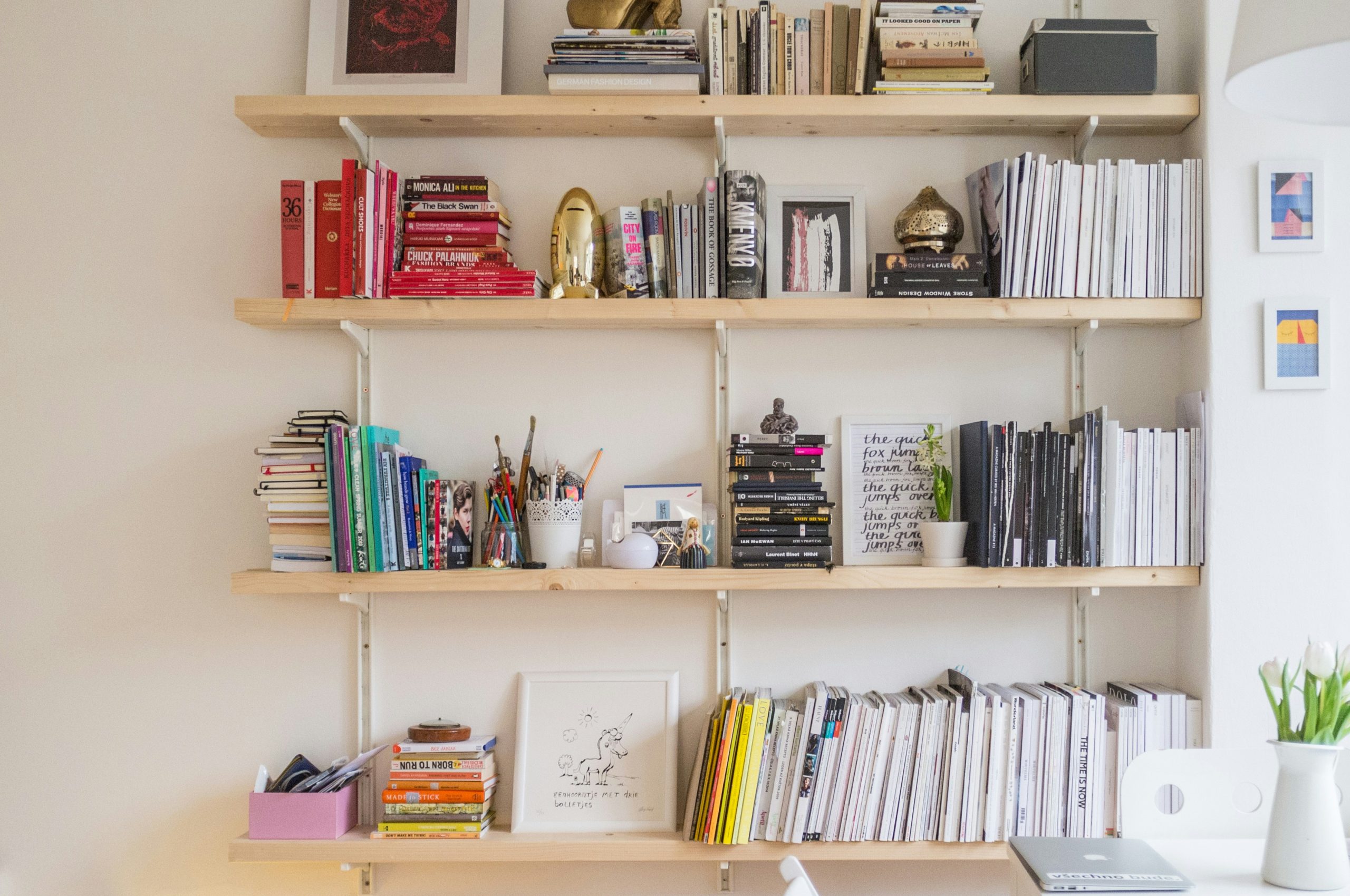
30. Casual and Collected: Open Wood Shelving with White Brackets
Achieving this dense, eclectic look without it descending into chaos requires a bit of strategy. Here’s how you get that ‘effortlessly cool’ vibe.
📏 Scale Guide
- Time: 1 hour per shelf
- Materials: Books, small art, objects, a good eye.
- Step 1: Anchor with Art. Instead of placing books first, start by leaning a few small, framed art pieces against the wall on each shelf. This immediately creates focal points.
- Step 2: Bookend with Books. Place your vertical books on either side of the artwork, acting like bookends themselves. This grounds the art.
- Step 3: Stack Horizontally. Now, add your horizontal stacks. Slide them underneath the leaning art, or next to a vertical row to create varied height.
- Step 4: Fill the Gaps. This is where you add your small decorative objects and plants. Place them in the little nooks and on top of the horizontal stacks. Don’t be afraid to let things touch and overlap; that’s what makes it feel ‘collected’.
For open shelving like this, the choice of bracket is almost as important as the shelf itself. Don’t just grab the cheapest option. The white metal brackets seen here are a deliberate choice. They are visually light and almost disappear against a light-colored wall, which makes the wooden shelves and the objects on them the main focus. If you have dark walls, black brackets would have the same effect. The bracket style should support your overall aesthetic—be it industrial, modern, or traditional—not detract from it.
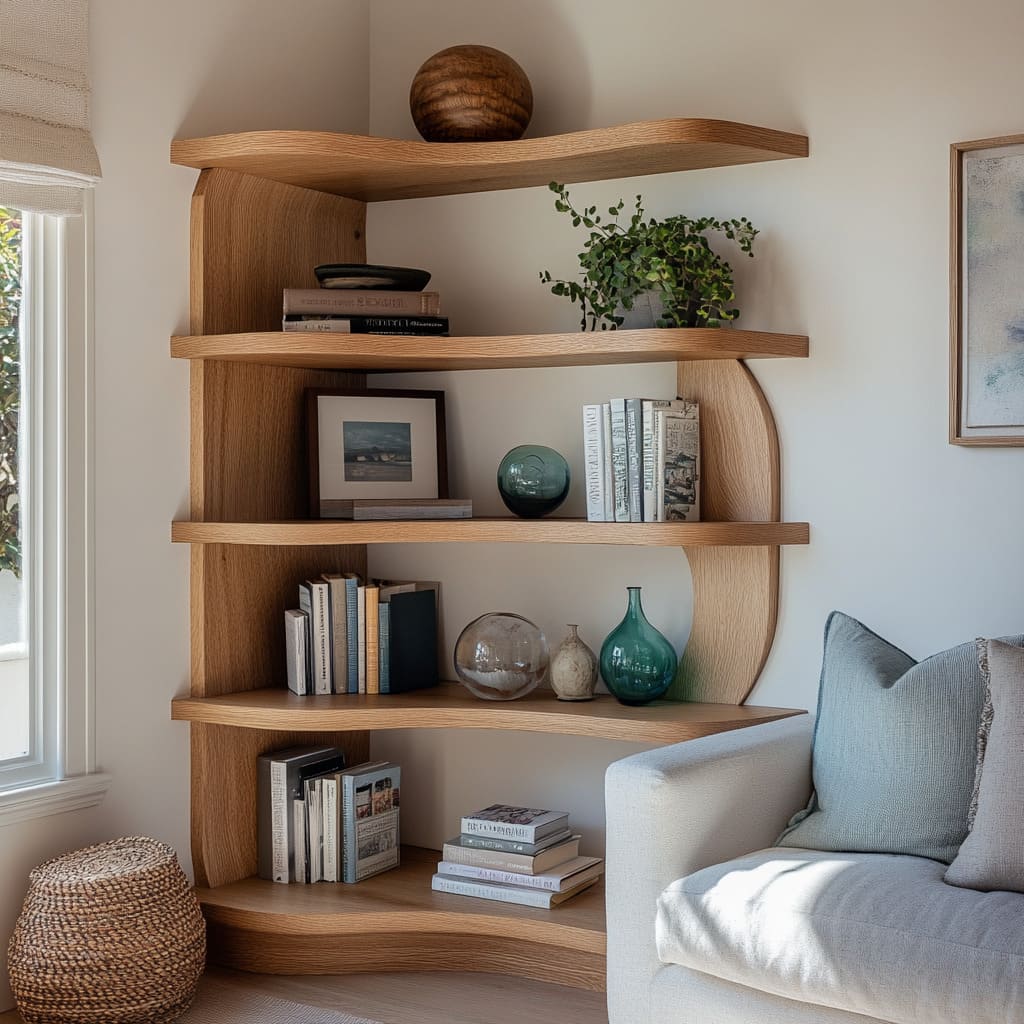
31. Softening the Edges with Curved Corner Oak Shelves
This design is so successful because the curved shelves create a gentle, uninterrupted flow around the corner. Standard corner shelves often meet at a harsh right angle, which can visually halt the eye. Here, the soft, continuous curve guides your gaze smoothly from one wall to the next, making the room feel larger and more fluid. This organic shape, combined with the warm, light oak and the natural light from the window, fosters a sense of calm and serenity. It’s a brilliant way to turn a potentially awkward corner into a graceful feature.
💰 Budget Breakdown
Curved shelves are beautiful, but they can be tricky to style effectively. The concave shape means that standard rectangular objects, like books and picture frames, won’t sit flush against the back. You have to embrace this. Instead of trying to force things into the corner, pull them forward. Style your objects in small groupings toward the front edge of the shelf. Use the curved back as negative space. Round or organically shaped objects, like the woven pouf and potted plants seen here, are a natural fit for these shelves as they complement the curved geometry.
Turn the Page on Your Old Shelf Style
Think of your shelves as the most personal page in your home’s story. Don’t be afraid to experiment, move things around, and let them evolve with you. The best designs are the ones that feel like home. Now, which idea will you be starting with?
Ready for more inspiration? Follow us on Pinterest for daily tips and tours of beautifully styled homes!