32 Jaw-Dropping Modern Farmhouse Exterior Ideas for 2026 You Need to See

There’s a reason you can’t stop pinning modern farmhouse exteriors. More than just a trend, this style perfectly captures that elusive blend of clean, contemporary lines and warm, welcoming vibes. But with so many variations out there, how do you nail the look for your own home in 2026? We’ve done the heavy lifting, sorting through hundreds of designs to bring you 32 distinct, achievable ideas that define the modern farmhouse aesthetic today.
This isn’t just another scrollable feed; it’s a curated guide with real-world advice. We’re breaking down everything from siding and stone combinations to the specific lighting and door styles that pull it all together. And stay until the end — we break down the most common mistakes that can ruin these looks.
📌 Save this to Pinterest for later — you’ll want to revisit these ideas.
1. Classic White Farmhouse with a Pop of Red
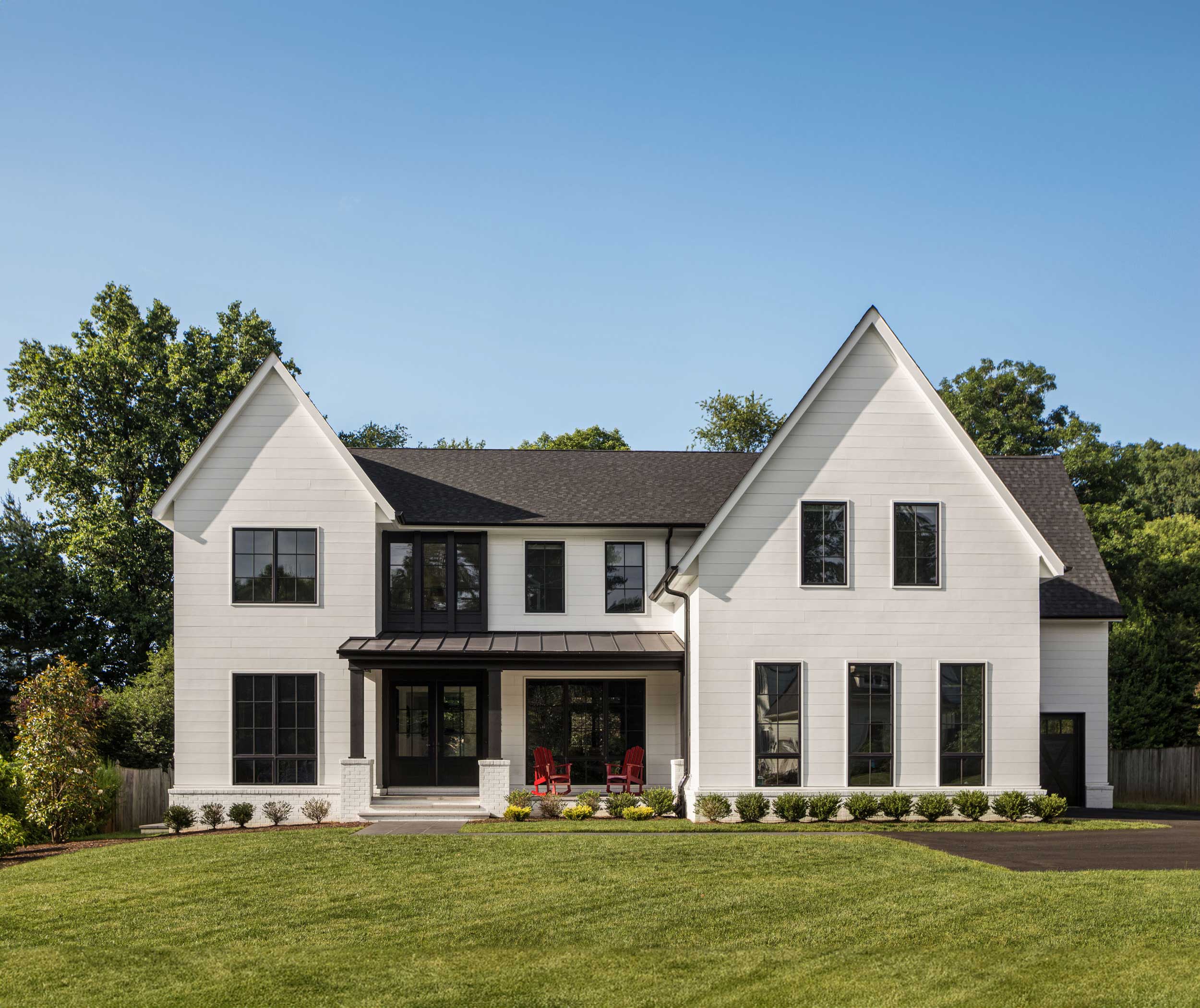
The enduring appeal of this look comes down to a powerful use of contrast. The crisp white horizontal siding creates a bright, clean canvas, while the black-framed windows, doors, and porch pillars act as strong graphic elements that define the architecture. This high-contrast palette is a hallmark of the modern farmhouse style, giving it a sharp, updated feel compared to more traditional, monochromatic country homes. The symmetry of the gables and the centered entryway provides a sense of order and balance that is inherently pleasing to the eye.
⚠️ Real Talk
It’s all about the red Adirondack chairs. Remove them, and you have a beautiful, but standard, black-and-white farmhouse. With them, the entire home feels instantly more welcoming and personal. That splash of bold, primary color against the neutral backdrop is a masterclass in focal points. It tells a story, suggesting this is a home for relaxing and enjoying the outdoors. It proves that you don’t need a massive design gesture to inject personality into your exterior.
2. Crisp Board-and-Batten with a Statement Cupola
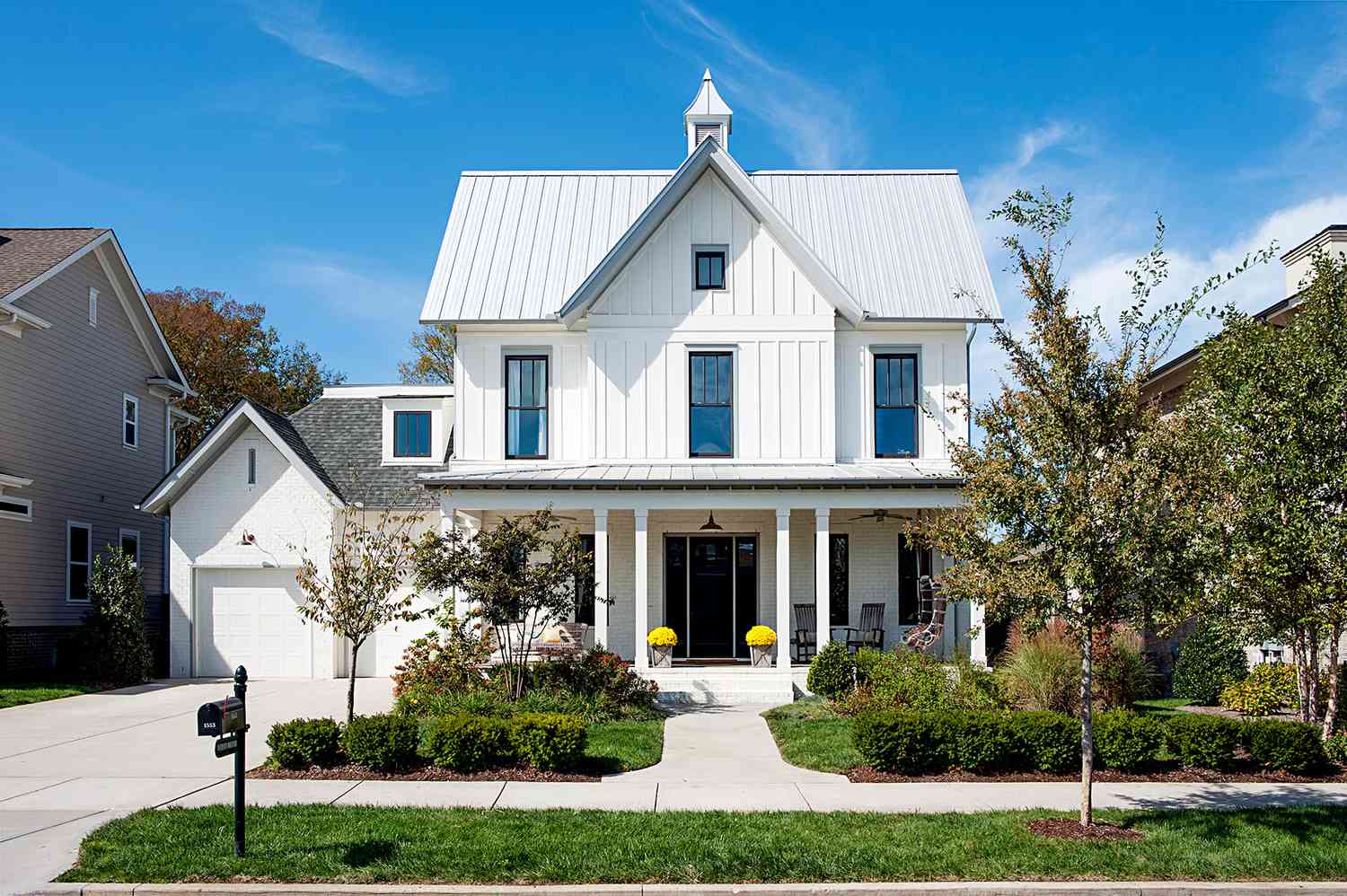
When using board-and-batten siding, the rhythm matters. For a modern look, keep the battens (the thin vertical strips) spaced between 16 and 24 inches on center. A wider spacing can look more traditional, while a narrower spacing can feel too busy. Also, consider the batten width itself. A 2.5-inch batten provides a clean, substantial line without appearing chunky. Pay close attention to your window and door trim—ensure the siding terminates cleanly into the trim for a professional, high-end finish.
✅ Before You Start
A cupola adds verticality and character, making it ideal for a two-story home with a footprint of at least 2,500 square feet. On a smaller, single-story ranch, it can feel comically oversized. The key is that the cupola’s scale should match the roofline’s mass, not just the building’s width. This design, with its attached two-car garage, balances the vertical lift of the cupola, making it feel integrated. If your home is smaller, consider the more grounded look of Idea #20 instead.
3. A Fresh Take with a Light Green Front Door
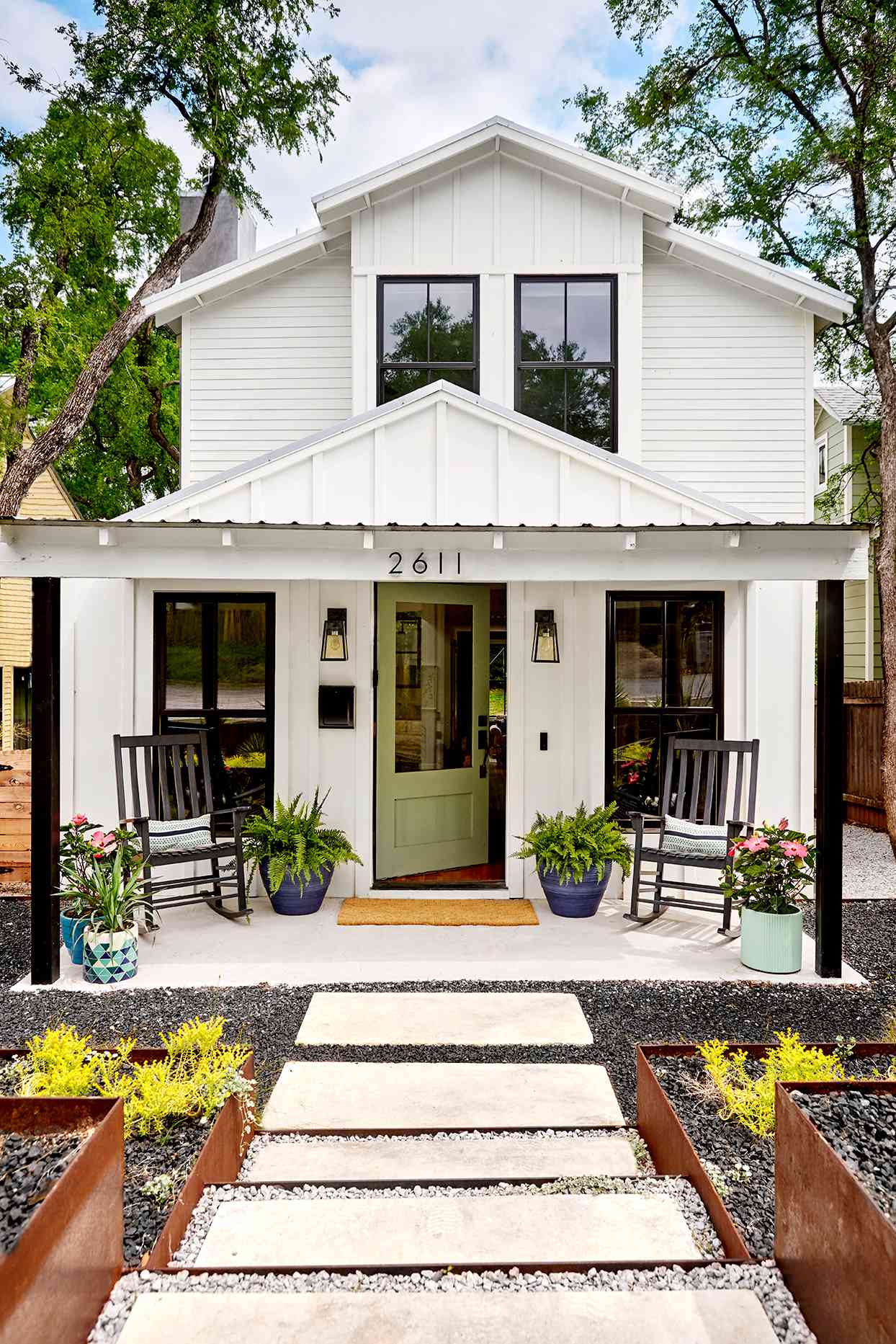
The formula here is simple but effective: 70% classic monochrome + 20% natural texture + 10% personality color. The white board-and-batten siding and black window frames provide the strong, neutral base. The dark gray gravel and rust-colored planters introduce earthy, grounding textures. Finally, that 10% of light green on the front door completely transforms the mood from stark to uniquely charming. You could swap the green for a soft blue, a cheerful yellow, or even a bold terracotta while keeping the same successful formula.
🔧 How-To Brief
A gravel yard is a fantastic, low-water alternative to a traditional lawn, but it’s not a ‘set it and forget it’ solution. Be prepared for some upkeep. Weeds will inevitably try to poke through, so a high-quality landscape fabric underneath is non-negotiable. Leaves and other debris will also need to be blown or raked off regularly to keep it looking sharp. And if you have kids or pets who love to run, know that the gravel will get displaced and may need to be raked back into place periodically.
4. Warmth Through Natural Wood Soffits and Accents
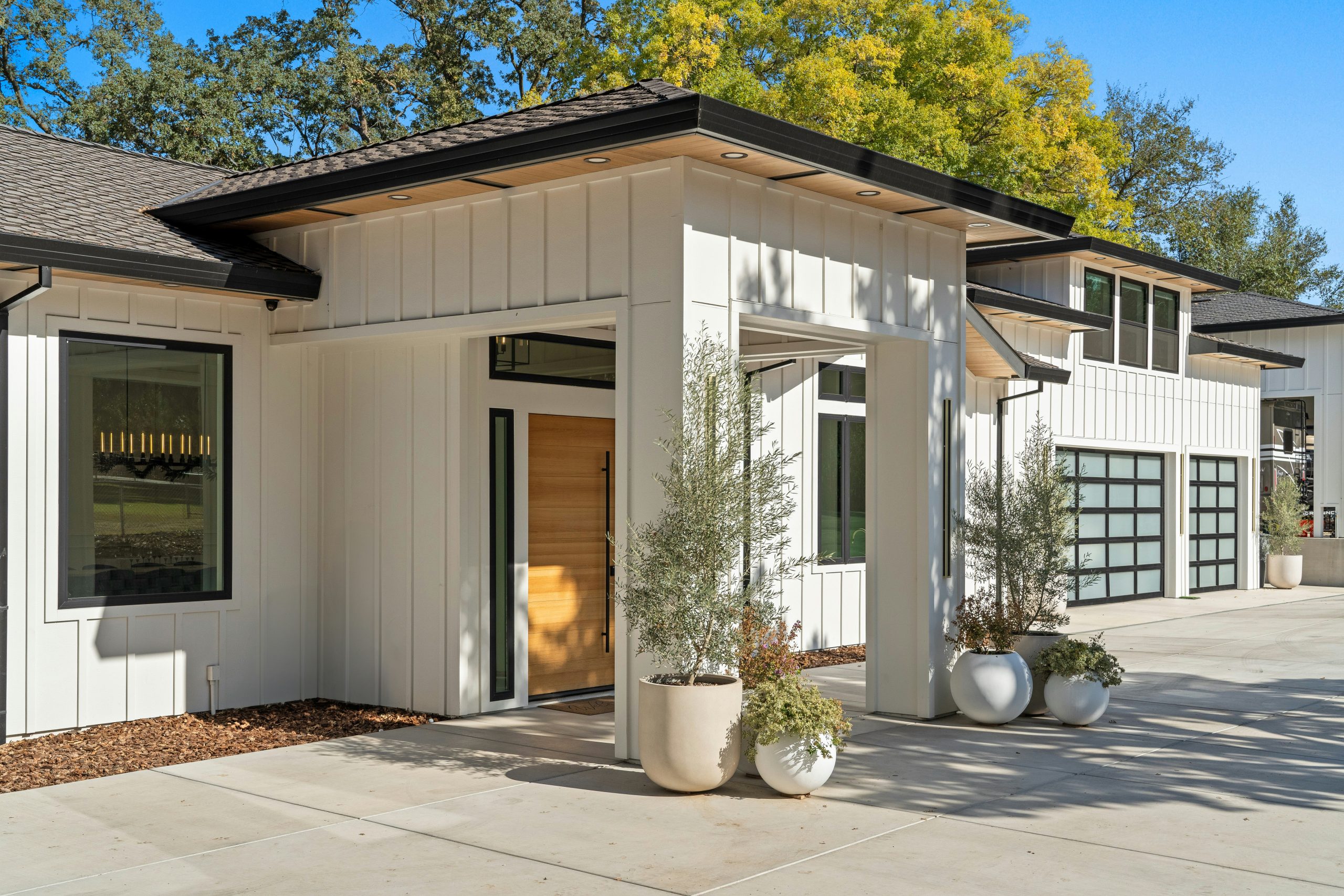
The natural wood soffits are the single most important element in this design. Without them, this would be a very handsome but typical black-and-white modern farmhouse. The wood introduces a layer of organic warmth and texture that elevates the entire exterior. It’s an unexpected touch that draws the eye upward and breaks up the potential monotony of the siding, creating a link between the clean lines of the house and the natural environment around it. The matching wood front door is the perfect finishing touch that ties it all together.
📏 Scale Guide
Natural wood accents like these require more love than vinyl or aluminum. To keep that beautiful, warm tone, you’ll need to re-stain and seal the wood every 2-4 years, depending on your climate and sun exposure. Failure to maintain the finish can lead to graying, water damage, or even rot. The annual cost is minimal if you DIY (around $100-$200 for stain and supplies), but hiring a professional can cost $500-$1000. An alternative is a composite material that mimics wood, offering a similar look with significantly less upkeep.
5. Layered Siding and a Wooden Pergola
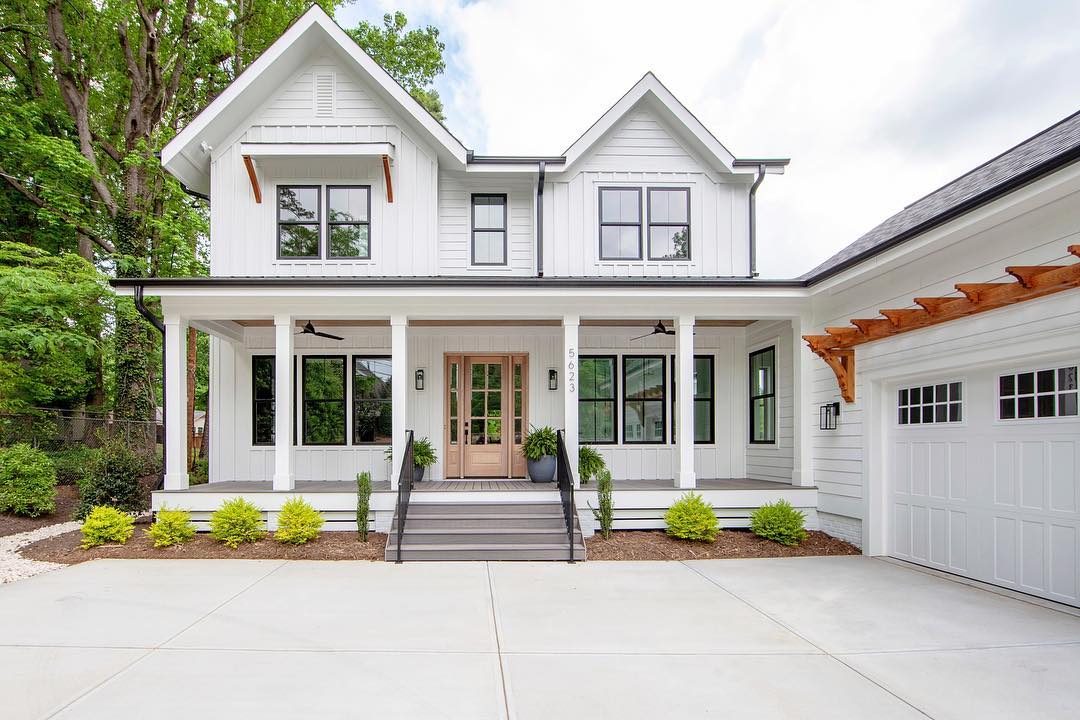
This exterior masters the principle of repetition with variation. The strong vertical lines of the board-and-batten siding are repeated in the smaller-scale vertical lines of the porch railings and window mullions, creating a cohesive rhythm. However, this is balanced by the use of horizontal lap siding on other sections, preventing the look from becoming too one-note. The warmth of the light wood front door is echoed in the pergola and decorative brackets, ensuring the accent material feels intentional and integrated, not random.
🧹 Maintenance Reality
You can achieve this high-contrast, warm-accent look without a custom build budget. For the siding, look at options from big-box stores like Lowe’s or The Home Depot. The real savings come from the accents. A simple weekend warrior can build a cosmetic pergola over the garage for a few hundred dollars using standard lumber. For the front door, you can get the look for less by painting your existing door a warm wood tone or even finding a solid wood door on Facebook Marketplace and refinishing it yourself for under $200.
6. Styling Your Modern Farmhouse Front Porch
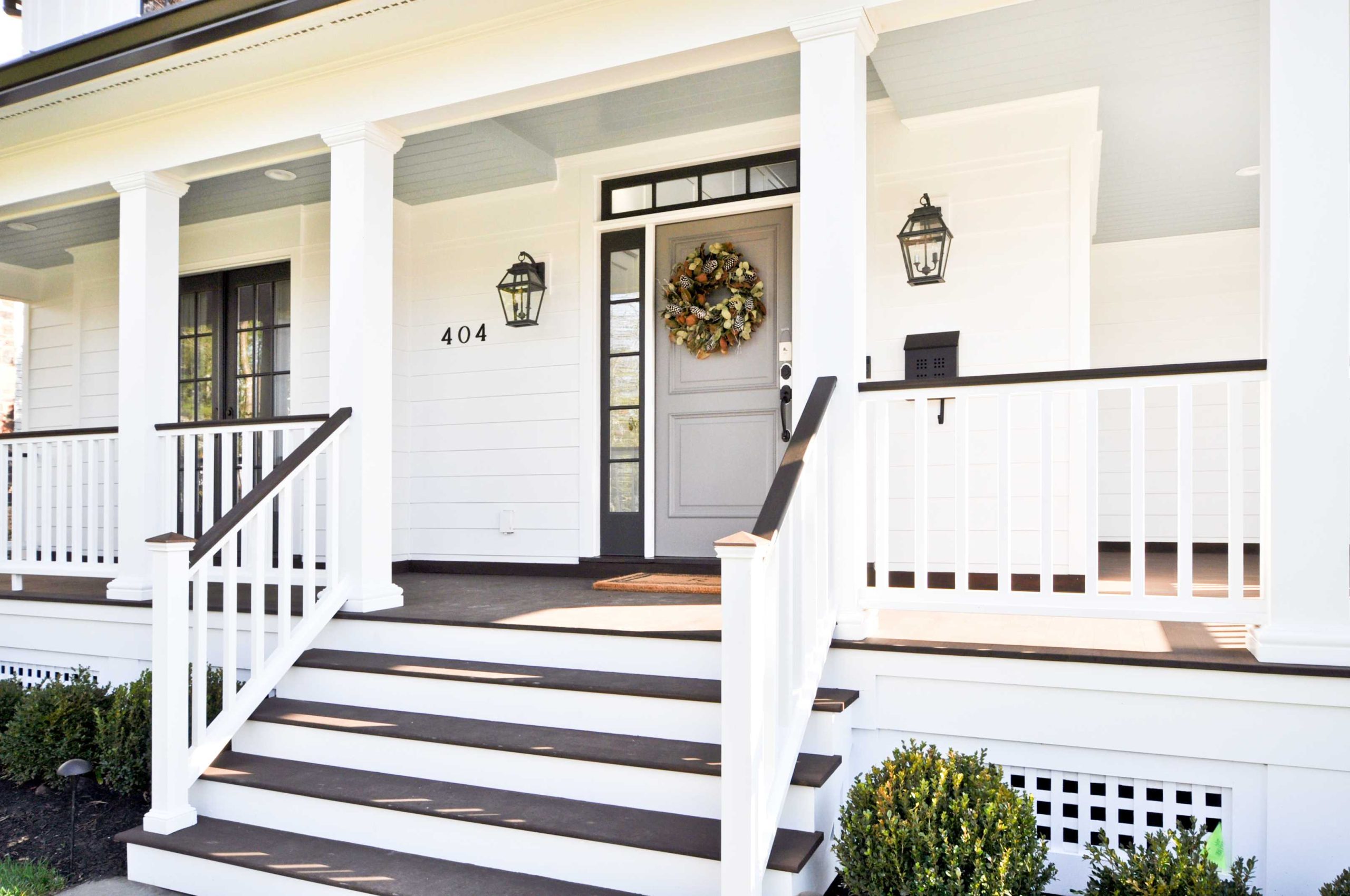
Porch lighting is jewelry for your home’s exterior, so choose wisely. For a classic farmhouse look, gooseneck or barn-style sconces are perfect. The rule of thumb for sizing is that each fixture should be about one-third the height of the front door. If you have a grand, eight-foot door, your sconces should be around 32 inches tall. For a standard door, 24-inch fixtures work well. Always opt for a warm white bulb (2700K) to create an inviting glow rather than a harsh, blue-toned light.
🔥 Trending Context
Before you commit to a full porch makeover, run through this quick checklist to ensure your plan will work in the real world. A well-styled porch is more than just pretty furniture; it has to be functional for your life and proportionate to your home.
- Measure the space: Will your desired chairs and tables fit without blocking the walkway to the front door? You need at least 36 inches of clear passage.
- Check your lighting: Is there an existing electrical box for a sconce or overhead light? If not, factor in the cost of an electrician.
- Evaluate sun exposure: Will direct afternoon sun bake your seating (and you)? You might need to prioritize outdoor fabrics with high UV resistance.
7. Elevating the Porch with a Wood Slat Ceiling
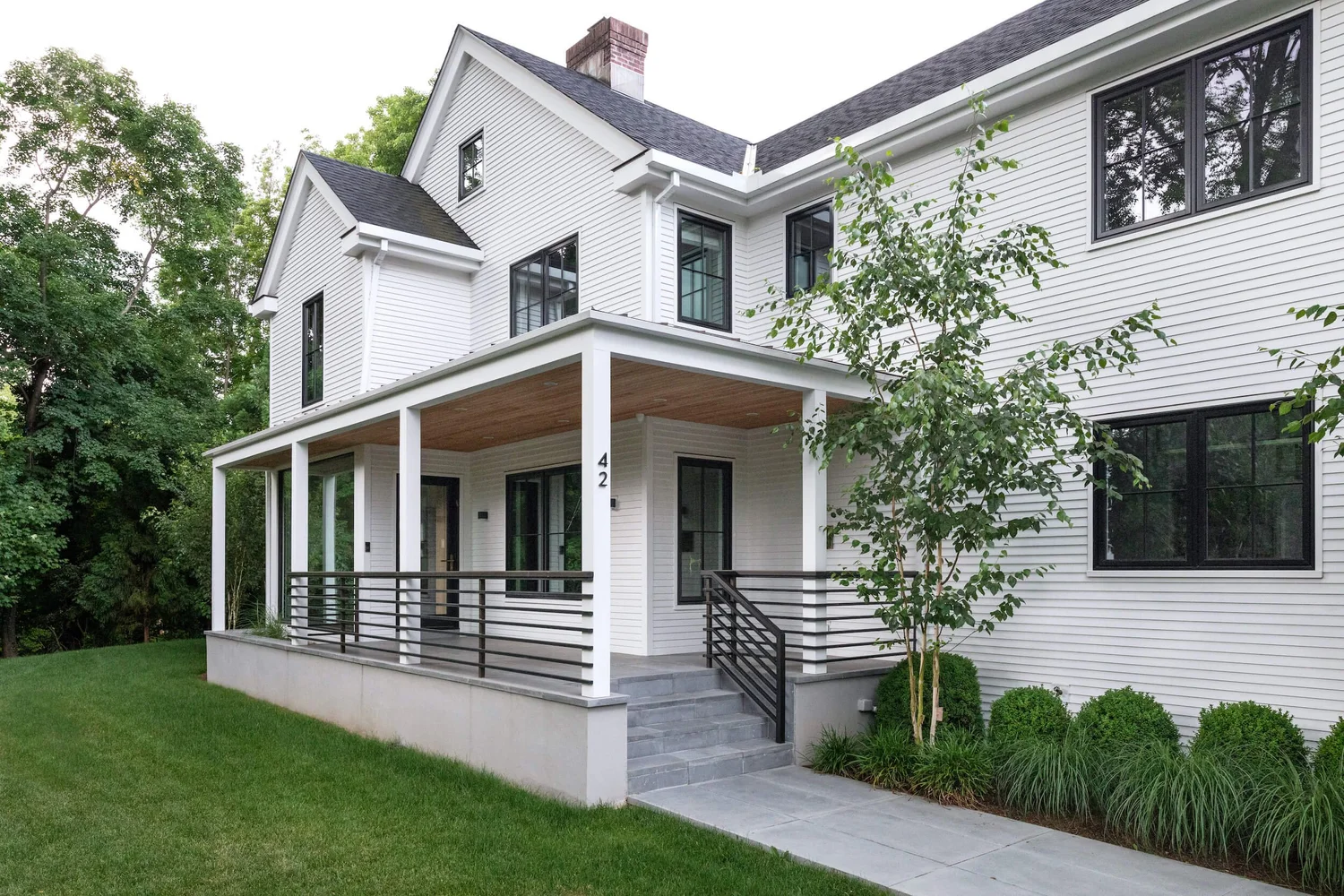
The natural wood slat ceiling on the porch is the game-changing detail here. It adds a layer of custom-looking sophistication and warmth that you just don’t get with a standard painted porch ceiling. It draws the eye up, creates an intimate, room-like feeling, and provides a beautiful organic contrast to the crisp white siding and cool gray stone steps. This single element transforms the porch from a simple entryway into a true outdoor living space. It’s a detail that feels luxurious and thoughtfully designed.
💰 Budget Breakdown
Installing a wood slat ceiling is a manageable DIY project that makes a huge impact.
- Time Estimate: 1-2 weekends. Material Cost: $400 – $900.
- Measure your porch ceiling area and purchase 1×4 or 1×6 cedar or pine boards, plus 1-inch thick furring strips.
- Stain and seal all your boards on the ground first. This is much easier than doing it overhead.
- Attach the furring strips to the ceiling joists, perpendicular to the direction you want your slats to run.
- Using a brad nailer, attach your stained slats to the furring strips, using a small spacer (like a paint stir stick) to ensure even gaps.
- Finish with any necessary trim pieces to hide the edges for a professional look.
8. The Enduring Charm of a White Brick Farmhouse
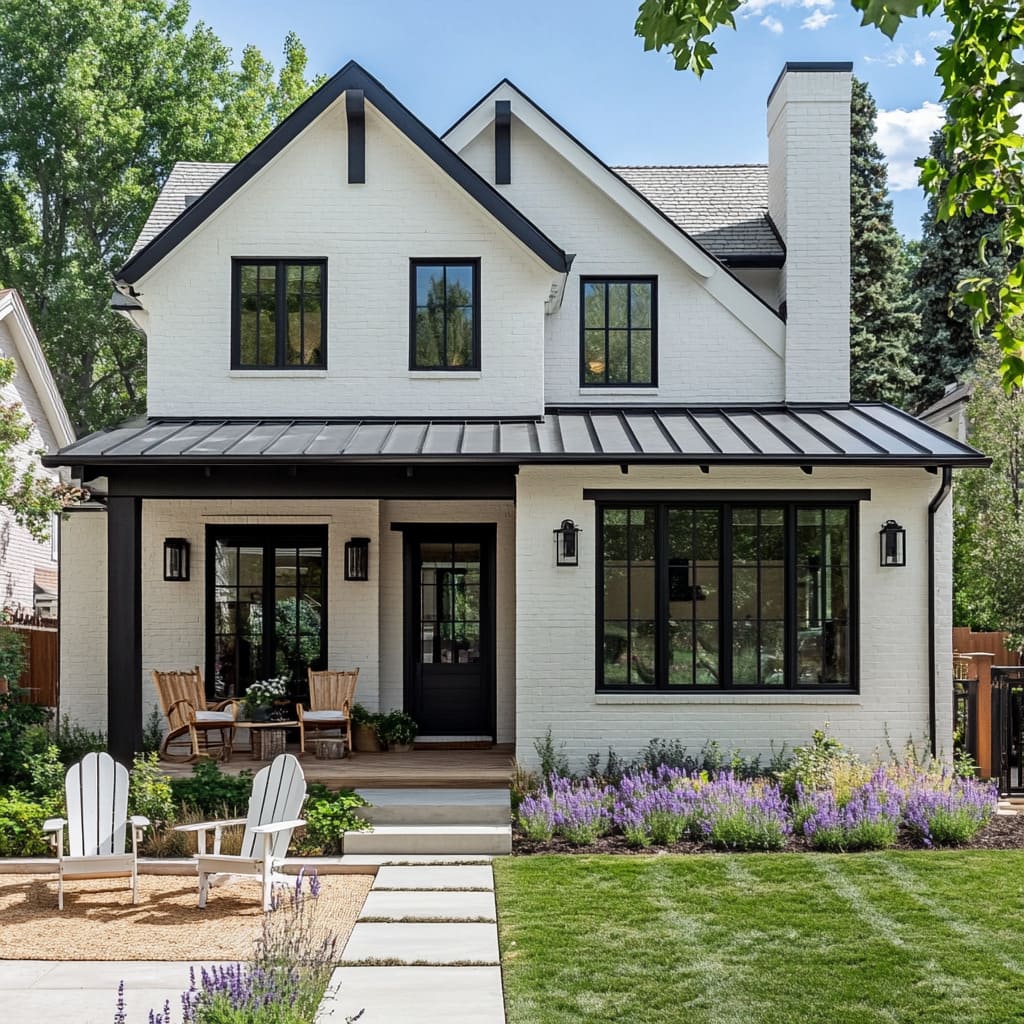
Texture is the hero of this design. The painted white brick provides a subtle, tactile quality that flat siding can’t replicate. It catches the light in a unique way, creating soft shadows that add depth and character. This textural base is then contrasted with the smooth, clean lines of the black metal roof and window frames. The result is a look that feels both classic and substantial, grounded by the brick’s inherent sense of permanence, yet updated by the modern, high-contrast trim.
🎯 What Makes It Work
Painted brick is gorgeous, but it’s a commitment. Unlike plain brick, which is virtually maintenance-free, painted brick needs to be looked after. You’ll likely need to repaint every 7-10 years to keep it looking fresh. Power washing should be done gently to avoid chipping the paint. It’s also crucial that the brick is properly prepped and primed with a breathable masonry paint; trapping moisture can cause the paint to peel and can even damage the brick itself over time. For a lower-maintenance alternative, consider a limewash finish.
9. Rustic Meets Refined with a Wood Shingle Roof
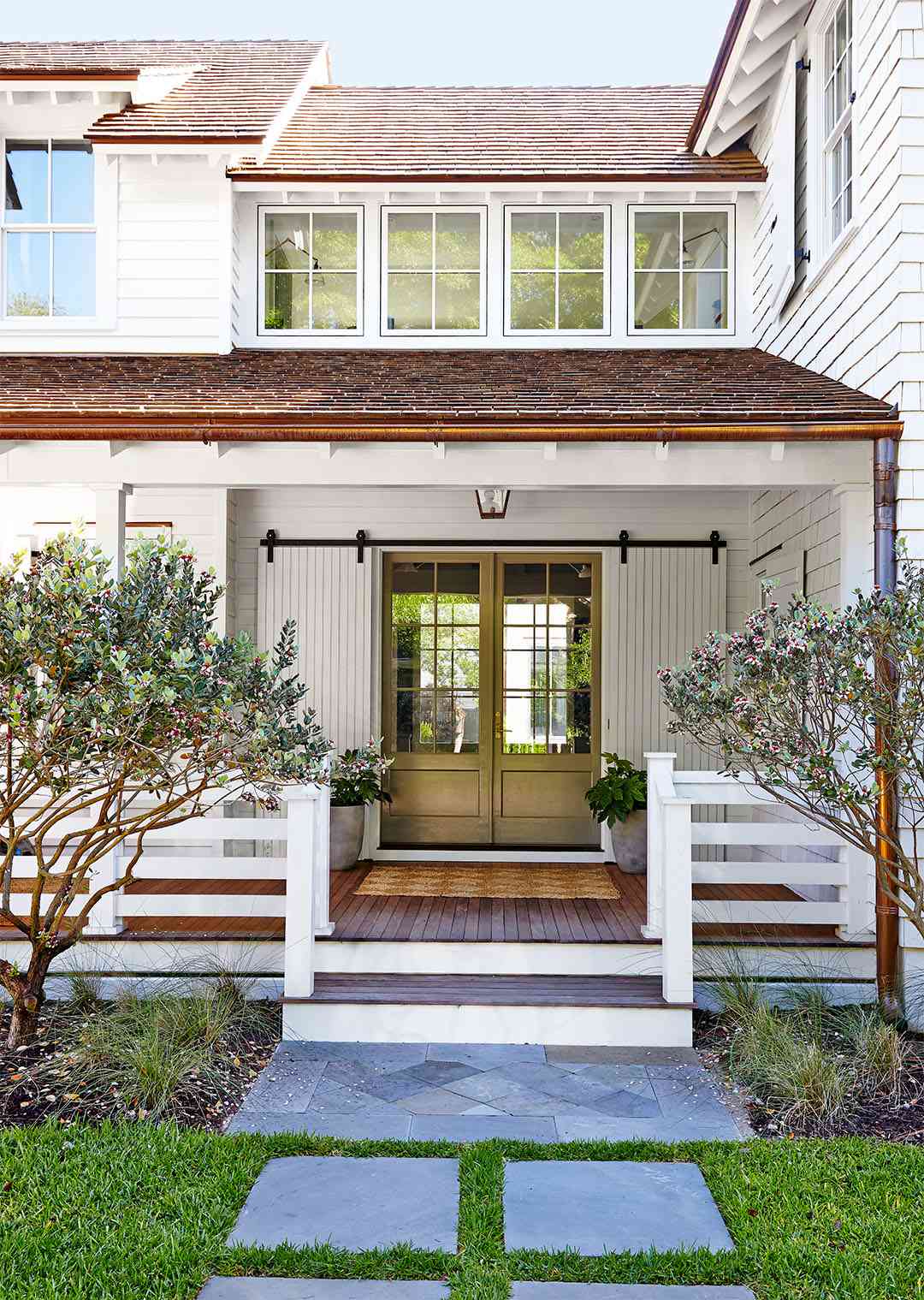
We’re seeing a shift away from the purely black-and-white farmhouse towards looks that incorporate more natural, rustic materials. A wood shingle roof is a perfect example of this trend. It adds a layer of warmth and texture that feels authentic and timeless. Paired with modern elements like the clean white siding and the sleek black barn door hardware, it strikes a balance between cozy-rustic and clean-contemporary that is very appealing for 2026. It’s for homeowners who want character without sacrificing modern sensibilities.
💸 Get This Look For Less
A real wood shingle or shake roof is undeniably beautiful, but it comes with a significant price tag and high maintenance. They are one of the most expensive roofing options and require periodic cleaning to prevent moss and algae growth, as well as checking for and replacing split or cracked shingles. They are also more susceptible to fire damage, which can increase your homeowner’s insurance premiums. There are some excellent asphalt and composite shingles designed to mimic the look of wood shakes for a fraction of the cost and worry.
10. High-Contrast Porch with Stained Wood Columns
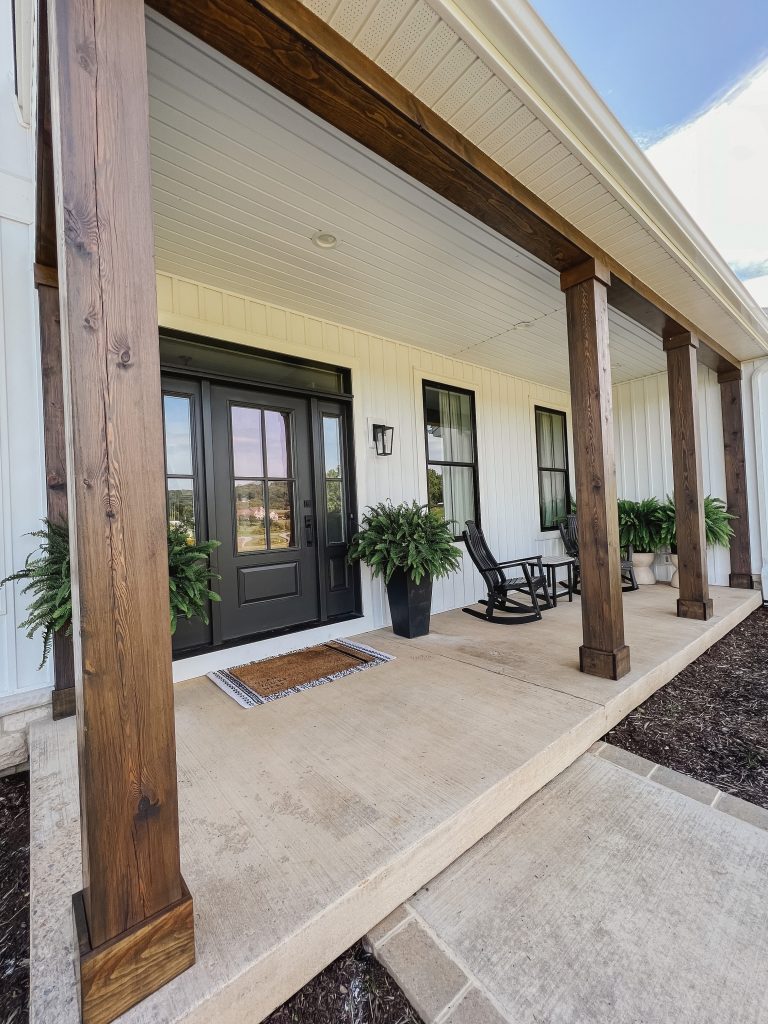
This striking porch follows a confident design recipe: 50% crisp white + 30% dramatic black + 20% rustic wood. The white board-and-batten siding provides a bright, reflective backdrop. The black double doors, window frames, and rocking chairs create bold, graphic anchor points. Finally, the stained wooden columns and beams inject a rich, organic warmth that bridges the gap between modern and rustic. This balance is key; remove the wood, and the look could feel too sterile. Remove the black, and it would lose its modern edge. Compare this to the lighter wood and siding in Idea #12.
💡 Designer Tip
You can get this look without springing for custom-milled cedar posts. Head to a lumber yard and ask for standard pressure-treated 6×6 posts. With a little bit of sanding and a high-quality exterior stain in a dark walnut or espresso finish, you can achieve a very similar look for about $100-$150 per post, including supplies. For the doors, a few coats of a premium black exterior paint like Sherwin-Williams’ Tricorn Black can transform your existing doors for under $100, giving you that dramatic, high-impact focal point.
11. Modern Entry with Bluestone and Brick Steps
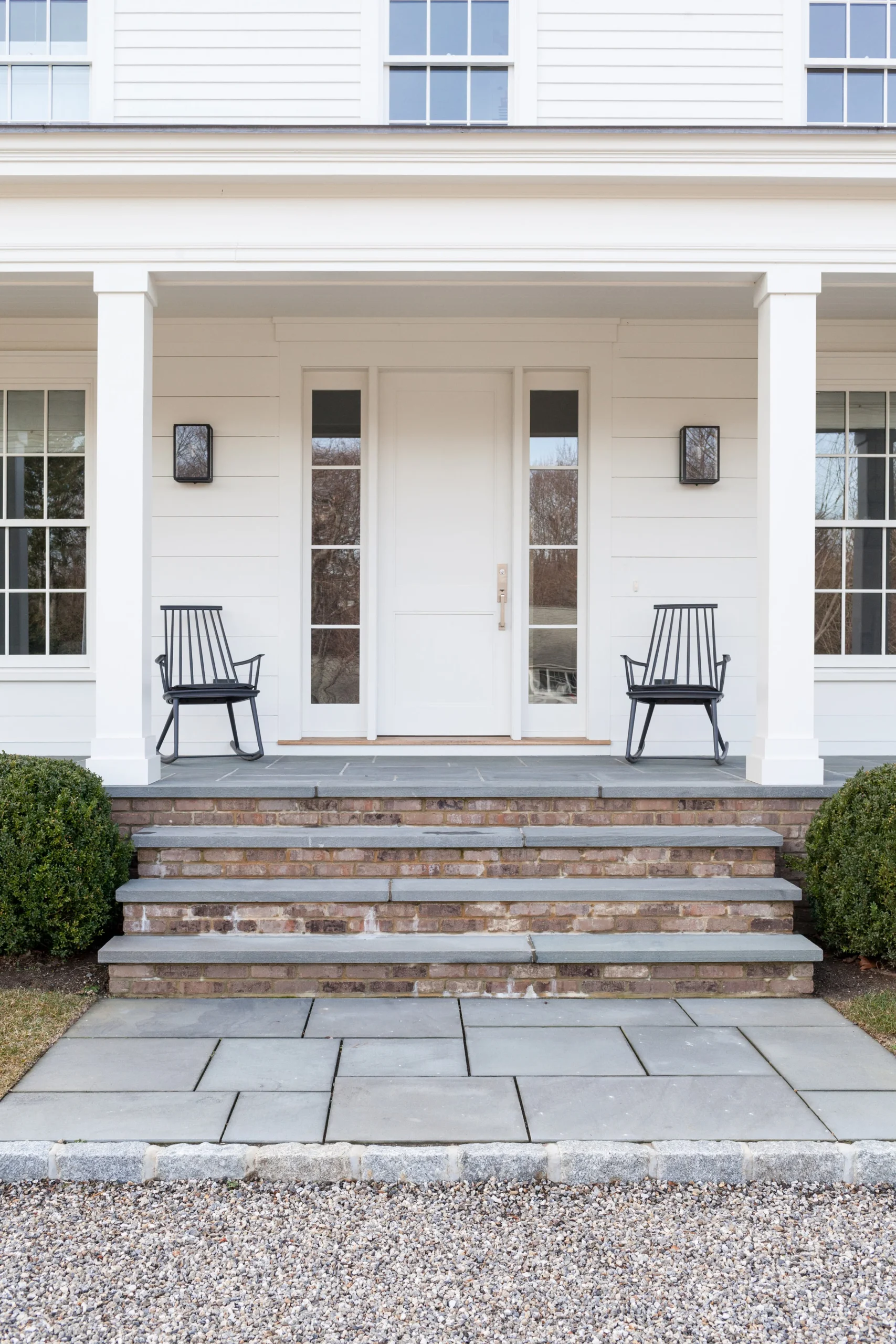
This entryway works because it’s a masterclass in material layering. The design starts with a familiar, textural red brick base, grounding the entrance with a traditional feel. Then, it layers on cool, smooth bluestone for the treads and porch floor, introducing a more modern, sophisticated element. Finally, the crisp white wood siding and sharp black accents of the chairs and sconces complete the transition to contemporary. Each material has its own character, but they work together to create a journey from classic to modern as you approach the door.
📐 Style Math
When choosing outdoor lighting, think about function as much as form. The rectangular sconces here are a great example of ‘dark sky’ friendly fixtures. They direct light downwards onto the porch and steps where it’s needed, rather than creating glare or light pollution upwards into the night sky. This is not only more considerate to your neighbors and local wildlife, but it also creates a more pleasant, atmospheric effect for your own home. Look for fixtures that are hooded or have the bulb recessed.
12. Golden Wood Beams Meet a Cool Metal Roof
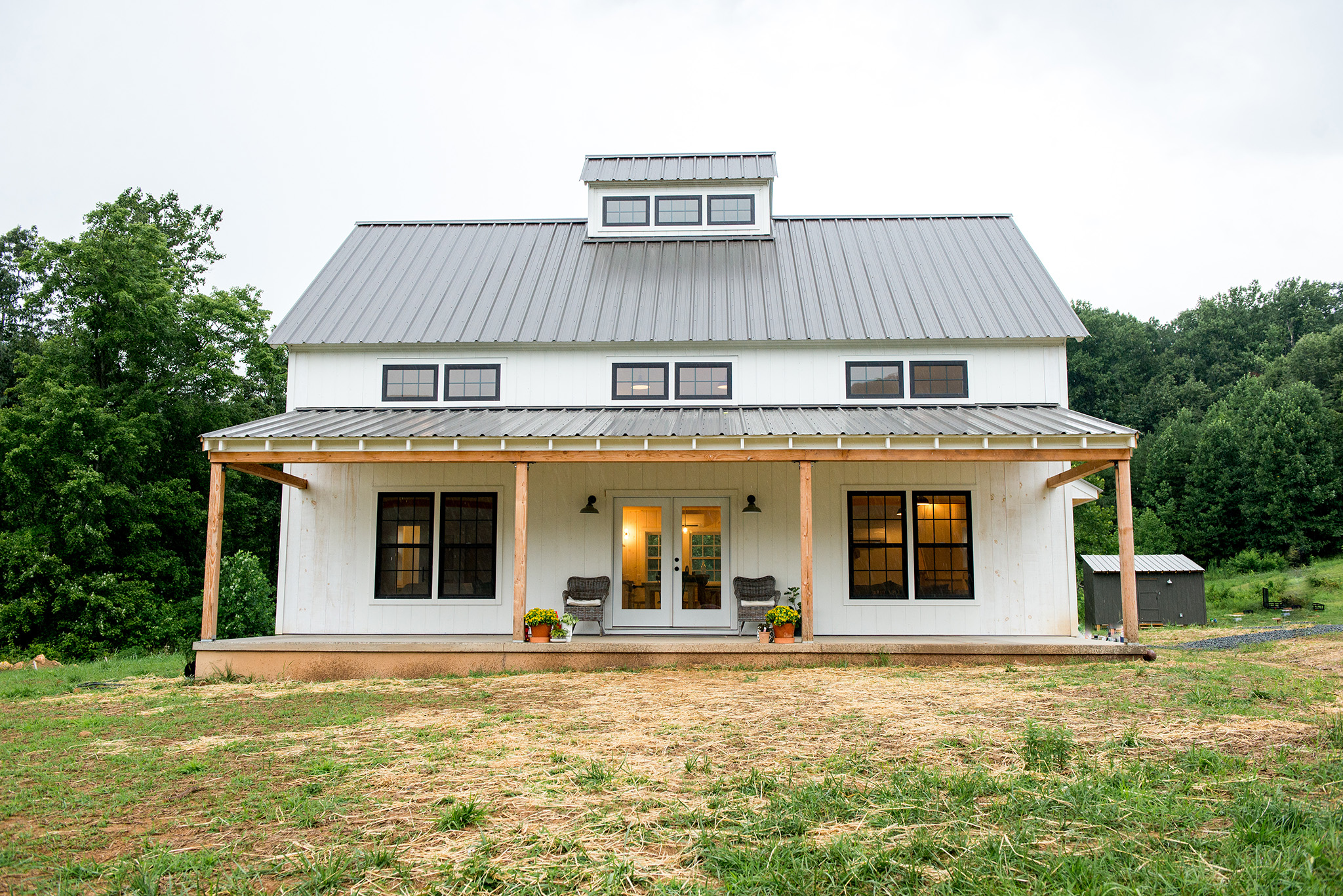
The defining feature here is the tension between the warm, rustic porch structure and the cool, industrial metal roof. The golden-toned wood posts and beams feel organic and welcoming, suggesting a traditional barn or lodge. In contrast, the dark gray corrugated metal roof is sleek, modern, and utilitarian. It’s this unexpected pairing of opposites—warm vs. cool, rustic vs. modern—that makes the design so dynamic and memorable. It confidently says you don’t have to choose just one style.
⭐ The One Thing
A full-width front porch like this is a defining feature that works best on a home with a wide, linear facade, typically at least 50-60 feet across. This allows the porch to feel generous and integrated, rather than tacked on. The ceiling height under the porch should be at least 8 feet to avoid feeling cramped, with 9 or 10 feet being ideal. For narrower lots, a smaller, more focused portico like the one in Idea #20 is often a better-proportioned choice that won’t overwhelm the main house.
13. Exposed Wood Beams on a Concrete Porch
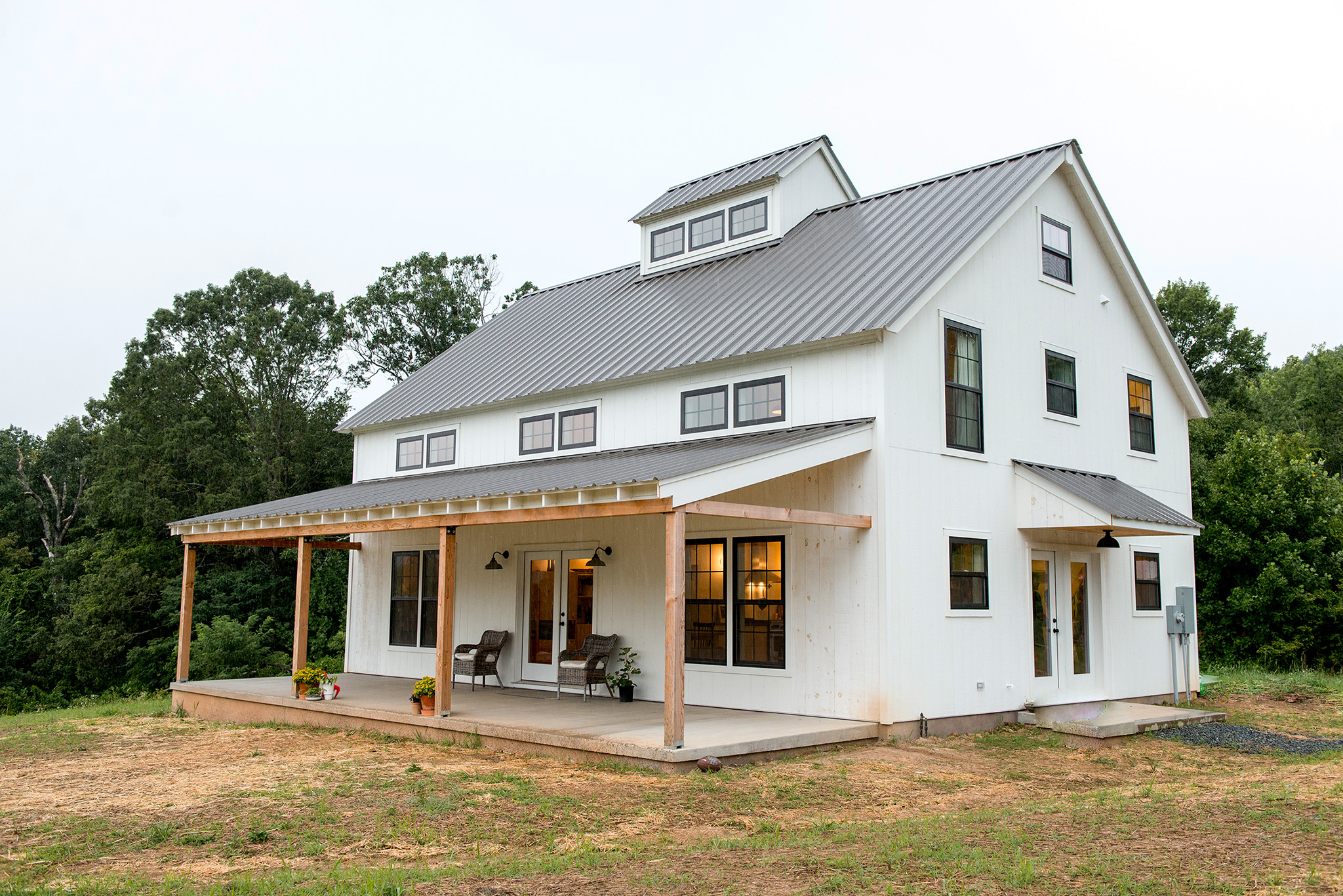
A concrete porch is a durable, modern choice, but it can feel cold and industrial on its own. It’s also prone to showing dirt and can stain if spills aren’t cleaned up quickly. Sealing the concrete every few years is essential to protect it and make cleaning easier. Also, be aware that hairline cracks can develop over time due to settling or temperature changes. While usually not a structural issue, they are a cosmetic reality of working with this material.
⚠️ Real Talk
This design succeeds by expertly mixing material temperatures. The cool gray tones of the metal roof and concrete porch floor are intentionally balanced by the warm, natural wood of the exposed beams and pillars. This is a crucial design principle: when you use a lot of a ‘cool’ material (like gray concrete), you need to introduce a ‘warm’ material (like wood) to keep the space from feeling sterile and uninviting. The crisp white siding acts as a neutral bridge between the two, allowing both the warm and cool elements to shine.
14. Grand Scale Farmhouse with Stone and Wood Details
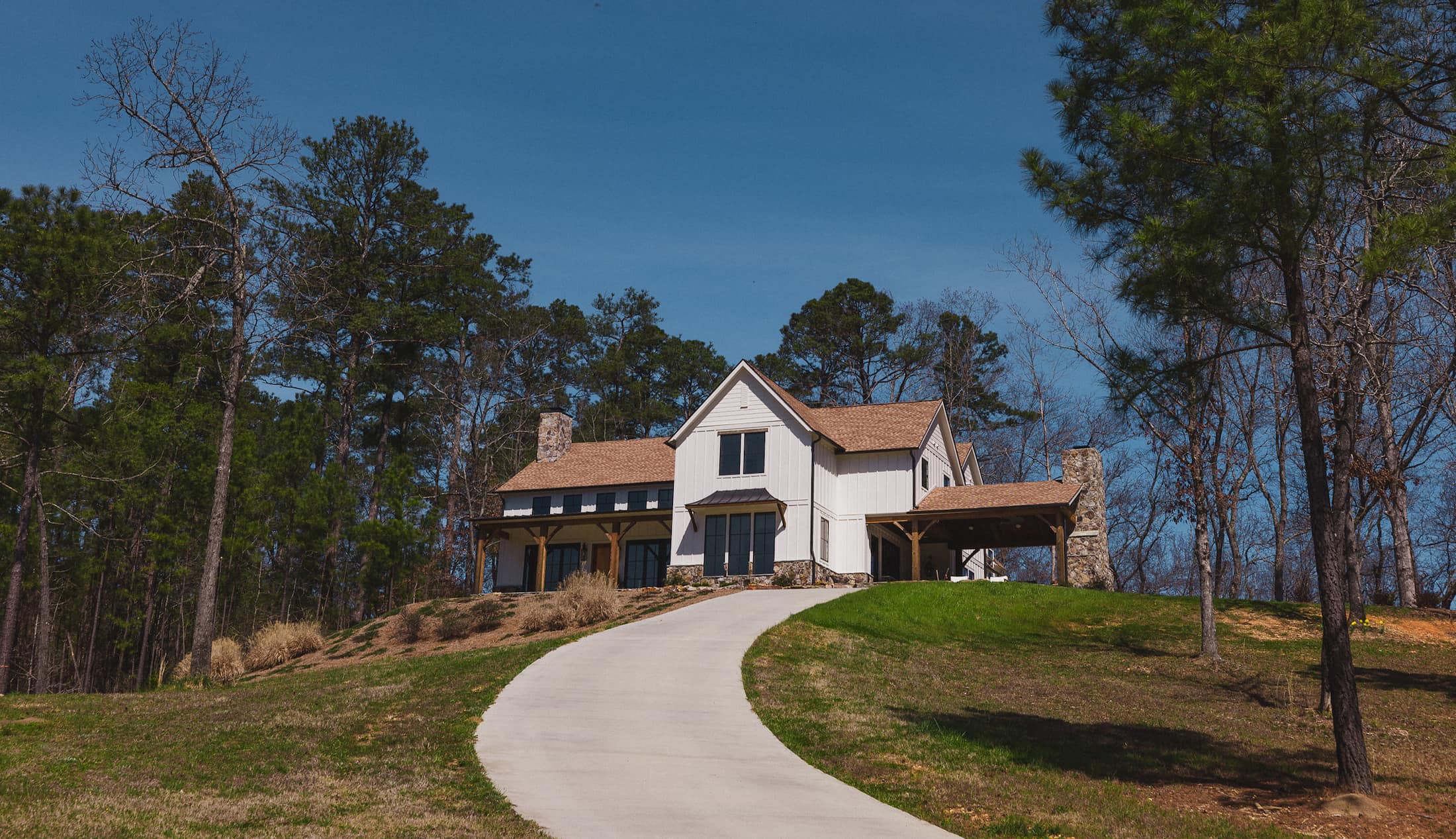
Recreating this grand, multi-material look is a significant investment, driven by the custom stonework and extensive footprint.
- Main Structure & Siding: $90,000 – $150,000
- Roofing (Asphalt Shingle): $25,000 – $40,000
- Windows & Doors: $30,000 – $55,000
- Stone & Masonry Work: $40,000 – $75,000
- Wood Beams & Porch Supports: $10,000 – $18,000
- TOTAL: $195,000 – $338,000
Budget alternative: Use manufactured stone veneer instead of full-bed stone, and opt for smaller-scale composite wood-look beams to capture the essence for 40-50% less.
✅ Before You Start
This style of architecture, with its multiple gables, varied materials, and sprawling footprint, demands a large lot. You need a property of at least one acre to prevent the house from feeling cramped and overbearing. The grandeur of the design is meant to be appreciated from a distance, with a winding driveway and generous landscaping to frame it. On a standard suburban quarter-acre lot, this home would look out of place and lose its serene, stately quality. For smaller lots, a more compact design like Idea #27 is more appropriate.
15. Deciphering White Siding for Farmhouse Exteriors
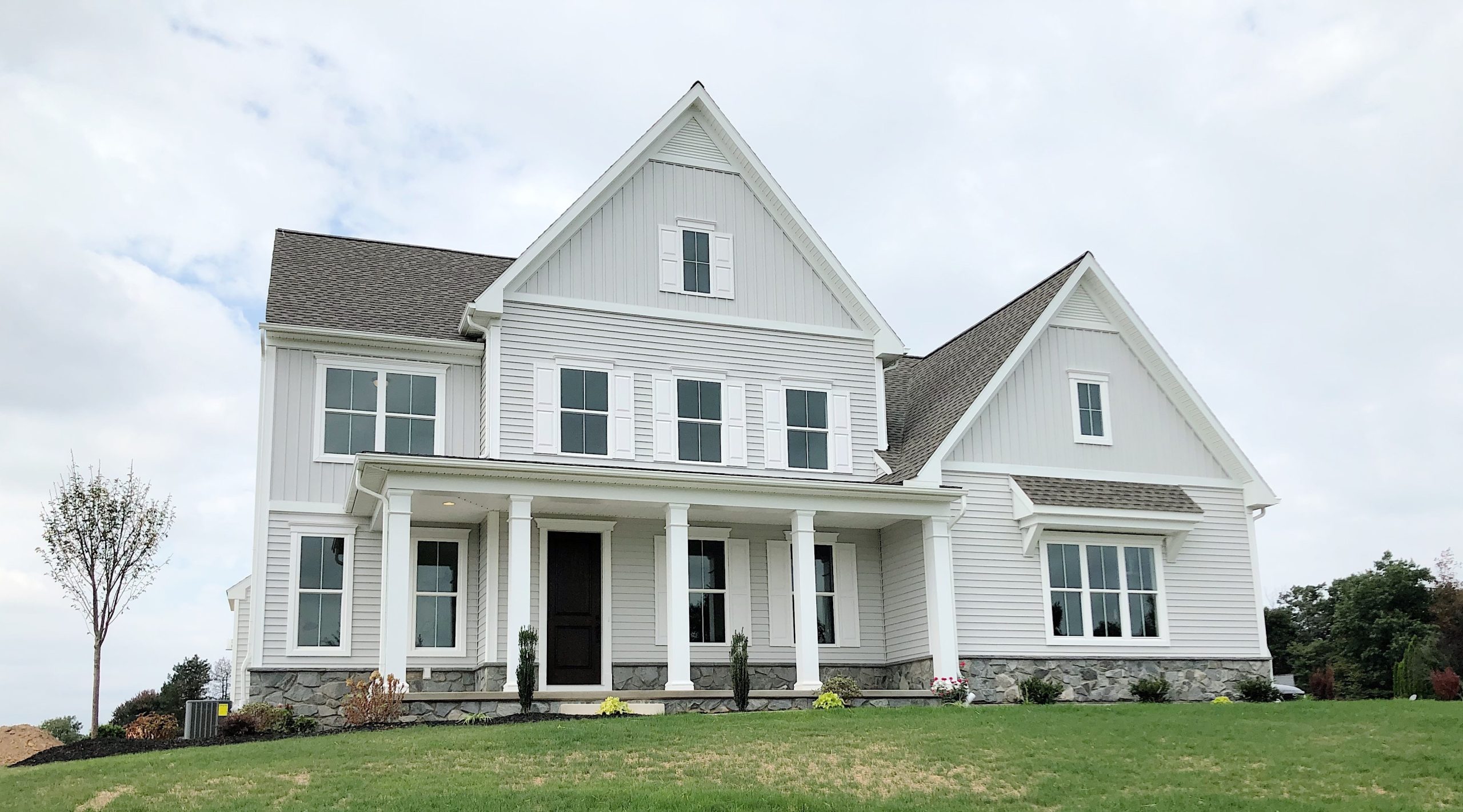
Not all white paints are created equal, especially on an exterior. Avoid stark, blue-toned whites which can look sterile and glaring in bright sunlight. Instead, opt for a slightly softer, warmer white. Some go-to designer favorites for modern farmhouses are Sherwin-Williams’ ‘Pure White’ (SW 7005) or Benjamin Moore’s ‘White Dove’ (OC-17). They have just enough warmth to feel inviting without looking yellow or creamy. Always get a sample and paint it on a large board to see how it looks in different light throughout the day before committing.
🔧 How-To Brief
White siding is a classic choice for a reason, but it is the least forgiving color when it comes to dirt, mildew, and grime. Expect to pressure wash your home’s exterior annually to keep it looking crisp, especially on the north side where mildew is more likely to grow. The cost can range from $300-$700 for a professional service. Also, be mindful of ‘red clay stain’ in southern regions, which can splash up from the foundation and be difficult to remove. Strategic landscaping around the base of the house can help minimize this.
16. Mixing Light Stone and Board-and-Batten Siding
This exterior feels both modern and grounded because of its clever use of visual weight. The light beige brick/stone on the lower half of the house provides a strong, textural anchor, making the home feel substantial and connected to the landscape. In contrast, the crisp white board-and-batten siding on the upper gables feels lighter and more airy. This placement—heavy on the bottom, light on top—is a classic architectural principle that creates a sense of stability and height.
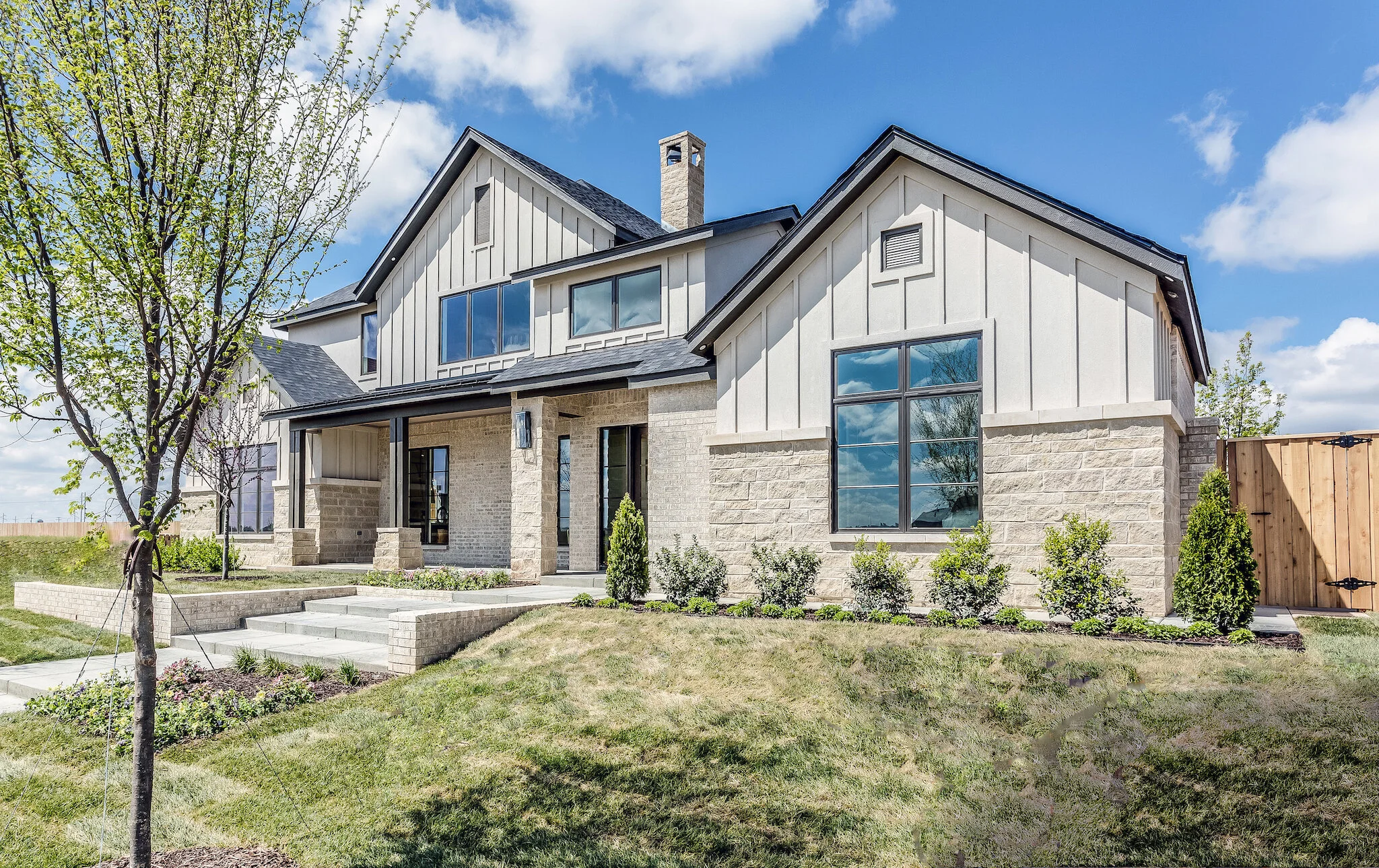
📏 Scale Guide
Before you commit to a two-material facade, consider these crucial points.
- Check the Transition: How will the siding meet the stone? A clean transition is key. A simple flashing and drip cap is standard, but you might consider a small horizontal trim piece to create a more defined line.
- Order Samples: Never choose stone from a brochure. Get physical samples of both your chosen stone and your siding color and look at them together, outdoors, in both direct sun and shade.
- Budget for Masonry: Remember that even stone veneer is significantly more expensive to install than siding. Get a detailed quote that includes labor, materials, and any necessary structural support or water-management systems.
17. Contemporary Farmhouse with Multiple Gables and Stone
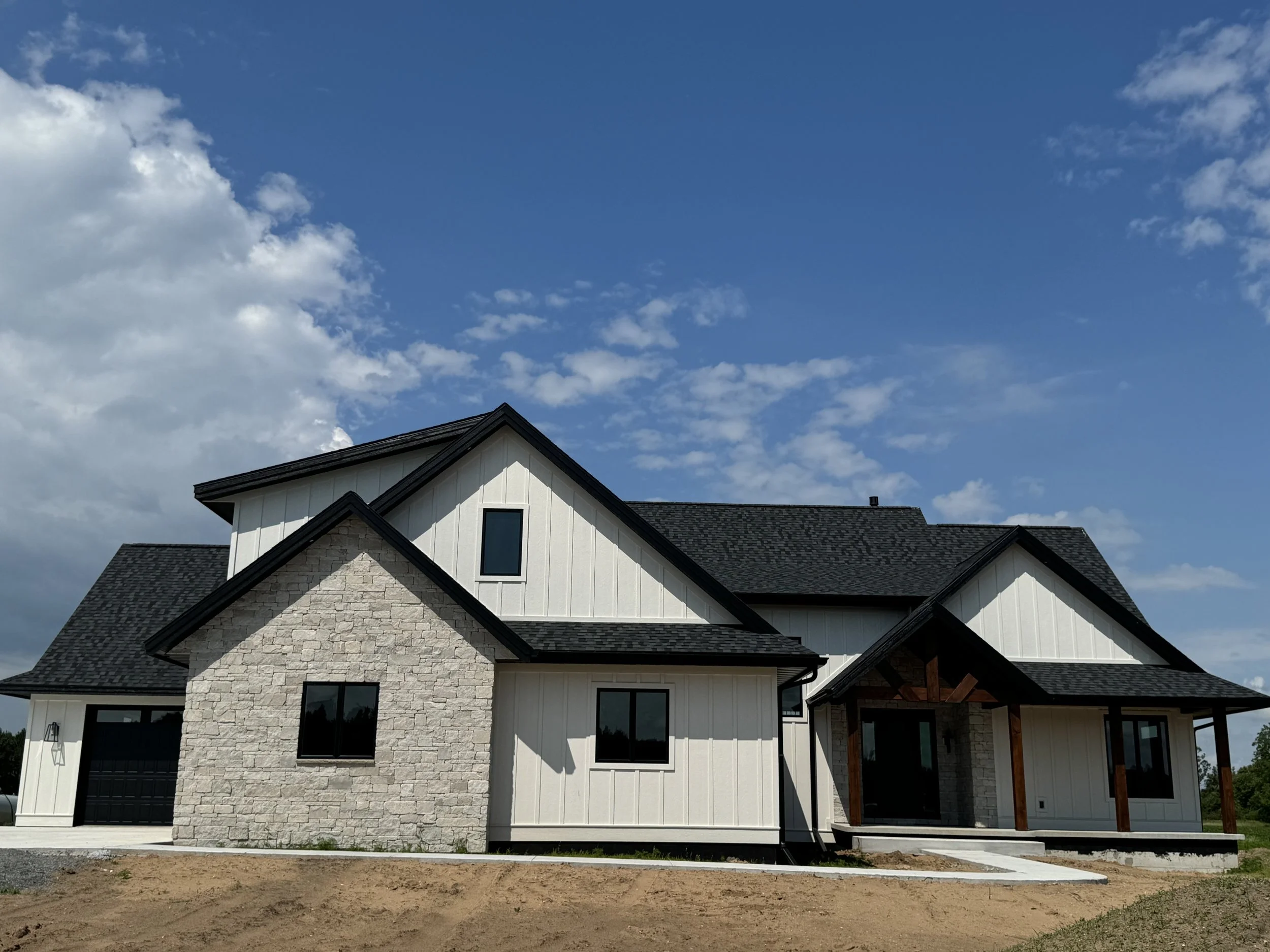
Think of this design as a balance of three core components: 40% clean white siding + 30% rustic texture + 30% sharp, dark accents. The white vertical siding provides the dominant modern farmhouse element. The light gray stone veneer and natural wood beams introduce the necessary rustic, tactile quality. Finally, the black window frames, garage door, and dark shingle roof cut through with strong, contemporary lines. Maintaining this approximate ratio is key to achieving the same balanced, sophisticated look.
🧹 Maintenance Reality
The exposed natural wood beams on the front porch are the detail that truly makes this design sing. They prevent the facade from feeling flat by adding a layer of structural and visual depth. This touch of rustic, heavy timber against the clean white siding and sleek black windows is the perfect distillation of the ‘modern farmhouse’ concept. Without them, the house would still be nice, but it would lose that crucial piece of architectural character that sets it apart.
18. Sophisticated Farmhouse with Mixed Siding Styles
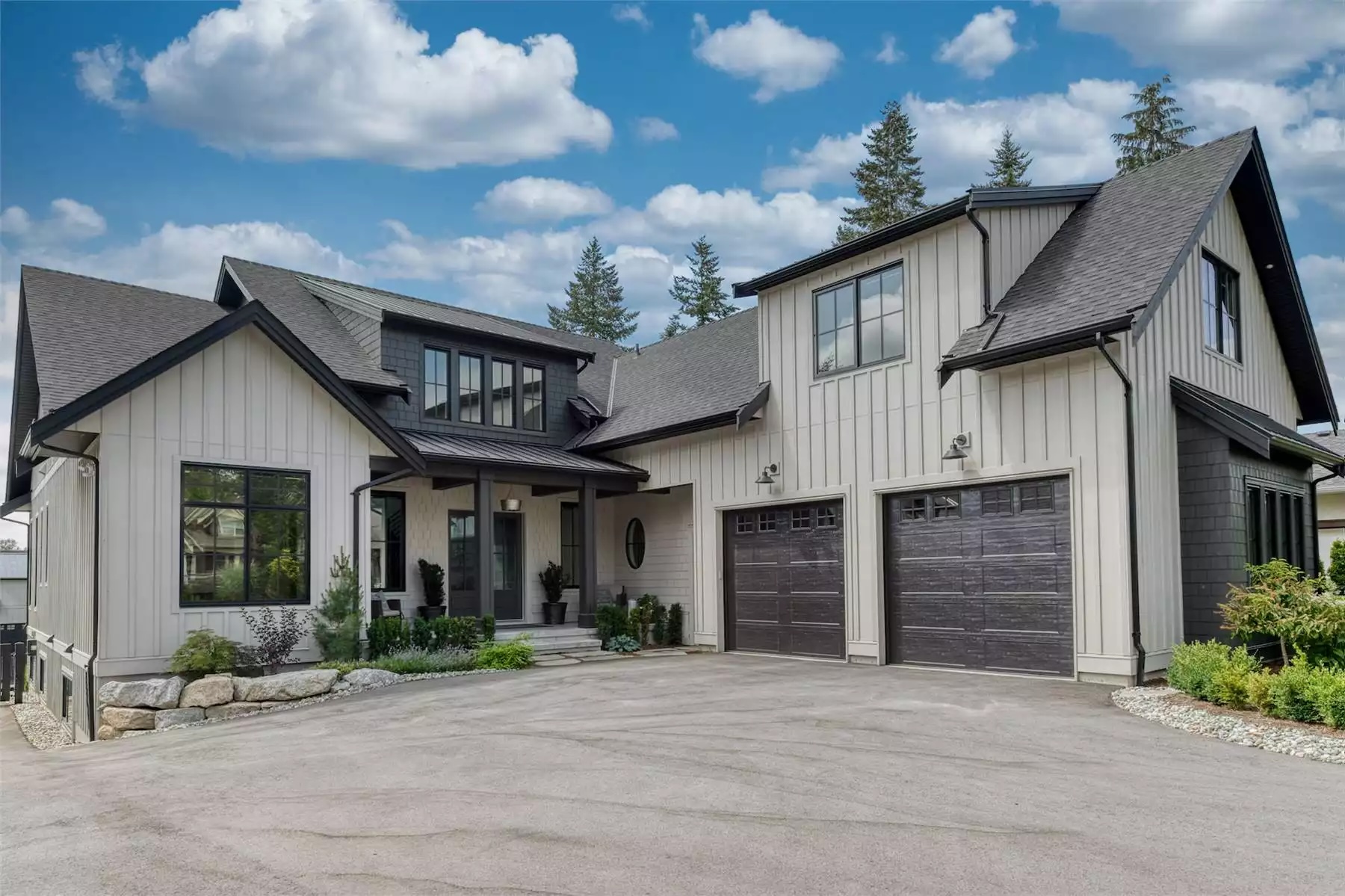
When mixing different siding styles, like the light board-and-batten and darker horizontal panels here, the key is to have them on different planes of the house. Use one style for the primary walls and the other for recessed or projecting sections, like the upper floor or entryway. This creates a clear visual hierarchy and makes the choice look intentional and architectural, rather than random. Using a darker color for the recessed or upper portions can also add visual depth and interest.
🔥 Trending Context
This design works because it uses color to emphasize its architectural form. The main body of the house is a light, grayish-white, which makes it feel expansive. The upper floor and entryway, however, are clad in a darker charcoal and are also physically set back from the main facade. This color and plane shift does two things: it breaks up what could have been a monolithic wall, and it creates intriguing shadow lines that change throughout the day, adding a dynamic quality to the home’s exterior.
19. L-Shaped Farmhouse with Pool and Pergolas
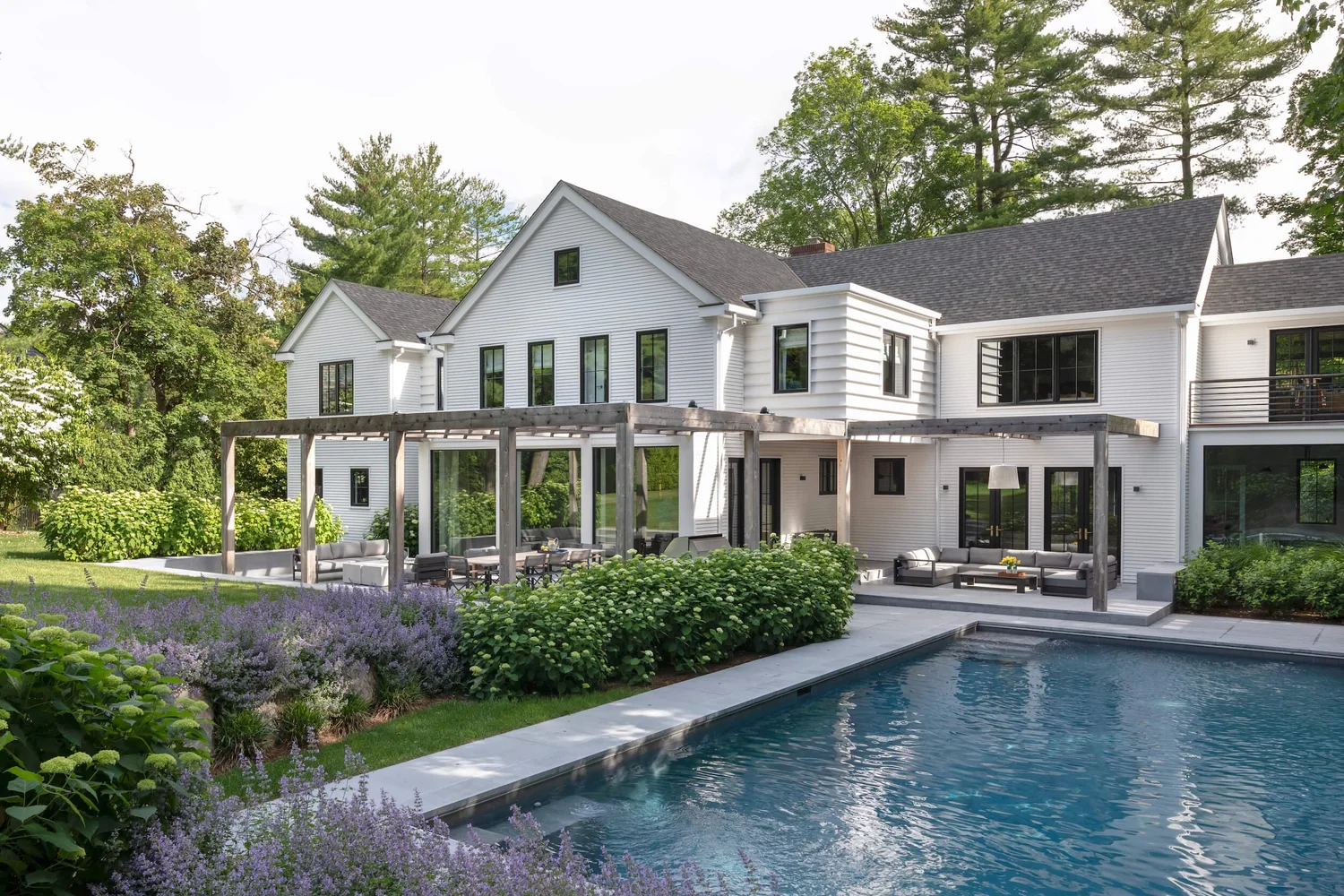
An extensive, resort-like backyard like this is a dream, but it’s also a serious commitment of time and money. Pool maintenance alone can cost several hundred dollars a month. The large paved patios will require regular sweeping and occasional power washing to prevent mildew. And those beautiful wooden pergolas? They’ll need to be re-stained or sealed every few years to protect them from the elements. This isn’t a low-maintenance setup; it’s a lifestyle choice that requires an ongoing budget for upkeep.
💰 Budget Breakdown
This expansive, L-shaped layout is designed to create a private outdoor oasis, making it ideal for wider lots where the home can wrap around the pool and patio area. You need a minimum lot width of 80-100 feet to pull this off without the space feeling cramped. The design leverages the home’s own footprint to provide privacy and shelter for the outdoor living spaces. This concept would not work on a narrow, deep lot; there, you’d be better served by a design that focuses on a backyard that extends straight out from the rear of the house.
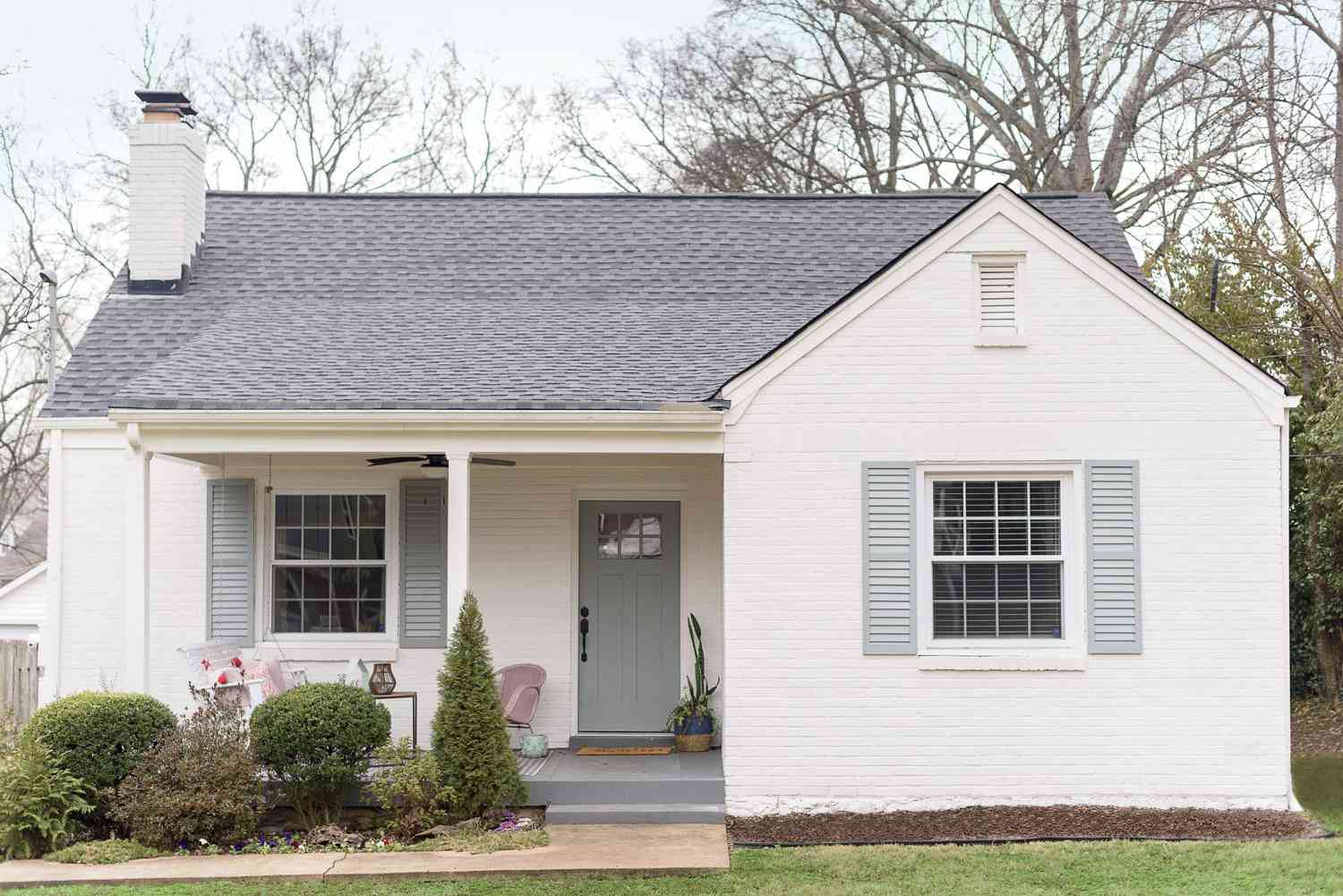
20. Suburban Charm: White Brick with Gray Shutters
This is a perfect example of how classic, accessible elements can create a beautiful and inviting home. Painted brick provides a timeless texture. The gray shutters and matching front door can be a simple DIY paint job, using an affordable quart of exterior paint from Target or Walmart. The simple white columns and porch swing are staples of American design, available at any major home improvement store. This look proves you don’t need a massive budget or avant-garde materials to have wonderful curb appeal. It’s an honest, charming look that feels like home.
🎯 What Makes It Work
Painting your front door is one of the fastest, most impactful upgrades you can make. Here’s how to do it in an afternoon.
- Time Estimate: 4-6 hours. Material Cost: $50 – $80.
- Clean the door thoroughly with a degreasing cleaner.
- Lightly sand the entire surface with 120-grit sandpaper to give the new paint something to grip. Wipe away all dust.
- Tape off any hardware, windows, and the door frame with painter’s tape.
- Apply one thin coat of a high-quality exterior primer. Let it dry completely.
- Using a small roller for flat areas and a brush for crevices, apply your chosen color. Two thin coats are always better than one thick one.
21. The Quintessential White Board-and-Batten Look
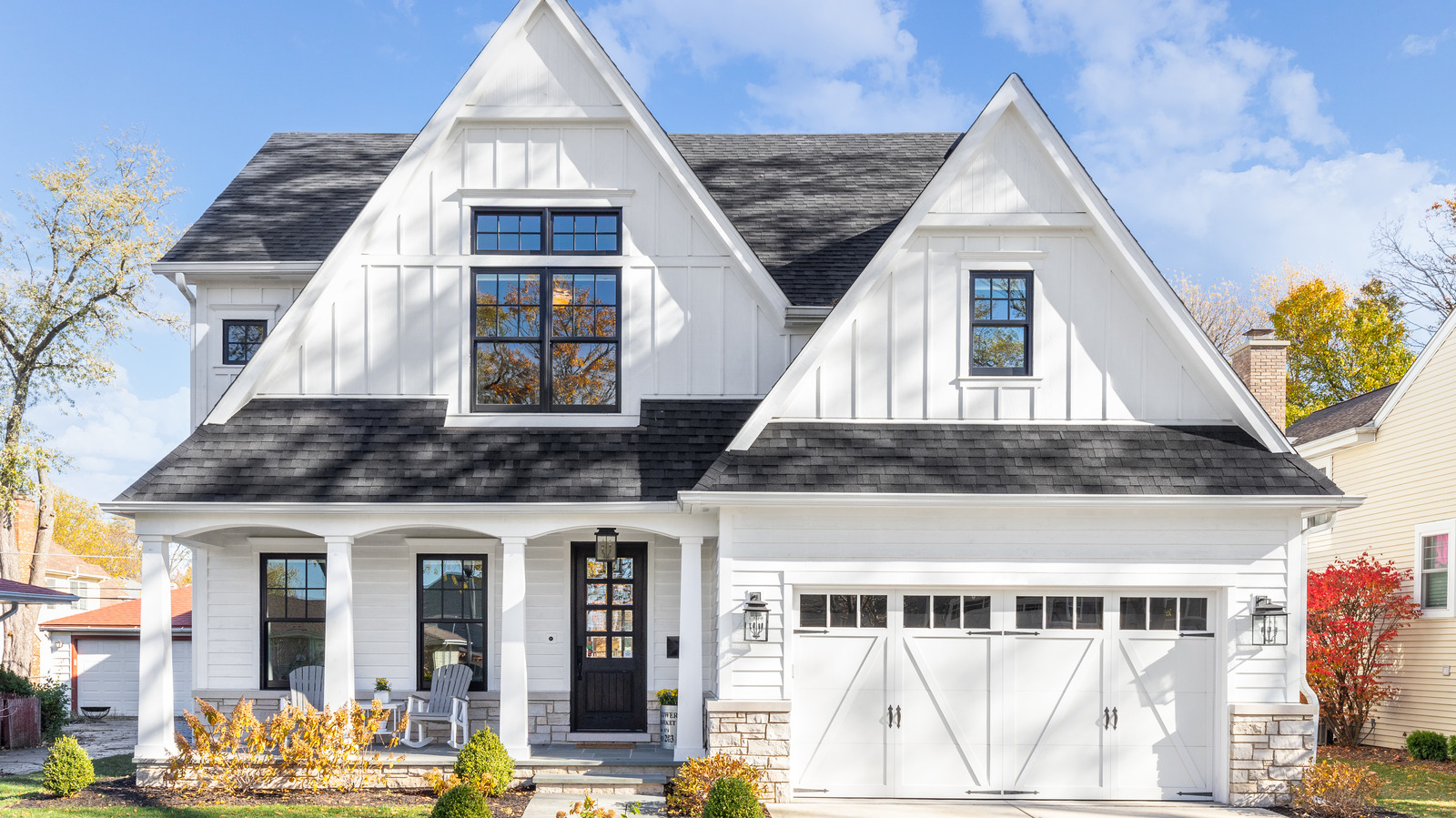
The key to making the classic white board-and-batten look feel ‘modern’ is the disciplined use of black accents. Notice how the window frames, front door, and light fixtures are all a simple, clean black. Avoid ornate or traditional fixture styles. The garage door hardware is another key detail—the simple, graphic black handles and hinges are a deliberate nod to barn hardware, which is the historical root of this style. This keeps the look crisp, graphic, and intentional. A more classic, but less modern version, can be seen in Idea #22.
💸 Get This Look For Less
The visual recipe for this popular style is about 60% white siding, 20% dark gray roof, 15% light stone, and 5% black accents. The white siding is the main event, creating a bright and clean feel. The dark roof provides a necessary cap and sense of gravity. The light-colored stacked stone foundation adds texture and a feeling of permanence without weighing down the overall look. Finally, the small but mighty 5% of black on the windows, door, and hardware provides the essential graphic ‘pop’ that makes it modern.
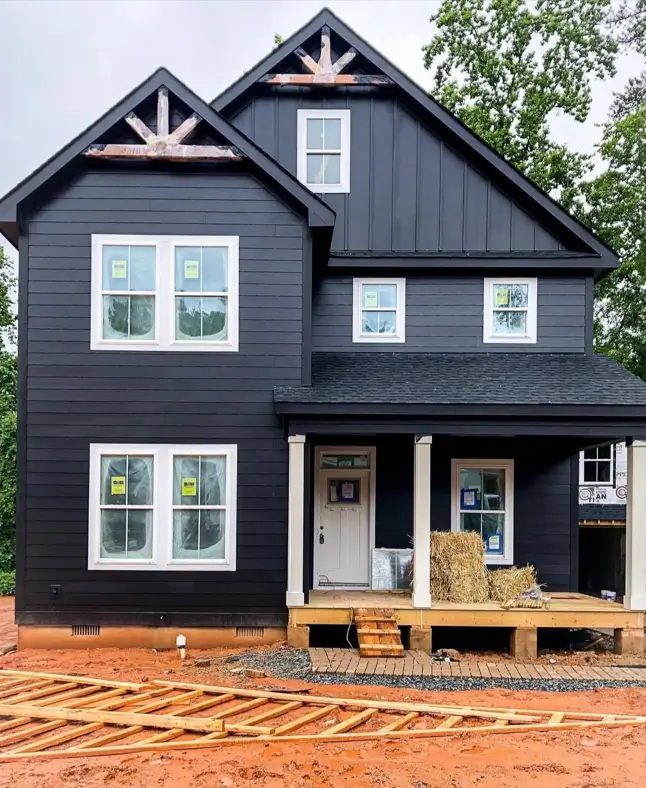
22. Dark Siding with Contrasting White Trim
This design is a reversal of the typical modern farmhouse palette, and that’s why it’s so effective. By using dark charcoal siding as the main color and crisp white as the accent, the trim becomes the primary architectural feature. The white porch columns and window frames pop, clearly outlining the home’s structure and details. This technique, known as ‘revealing the line,’ uses contrast to celebrate the form of the house itself. The decorative wooden brackets in the gables add a final touch of craftsmanship.
💡 Designer Tip
A dark exterior is undeniably dramatic and chic, but it comes with a few considerations. Dark colors absorb more heat than light colors, which can lead to slightly higher cooling costs in hot, sunny climates. Also, some siding materials, particularly vinyl, can be more prone to warping or fading when they are dark colors. If you love the dark look, consider fiber cement siding, which holds up better to heat and holds paint longer. Lastly, scuffs and scratches can be more visible on a dark surface.
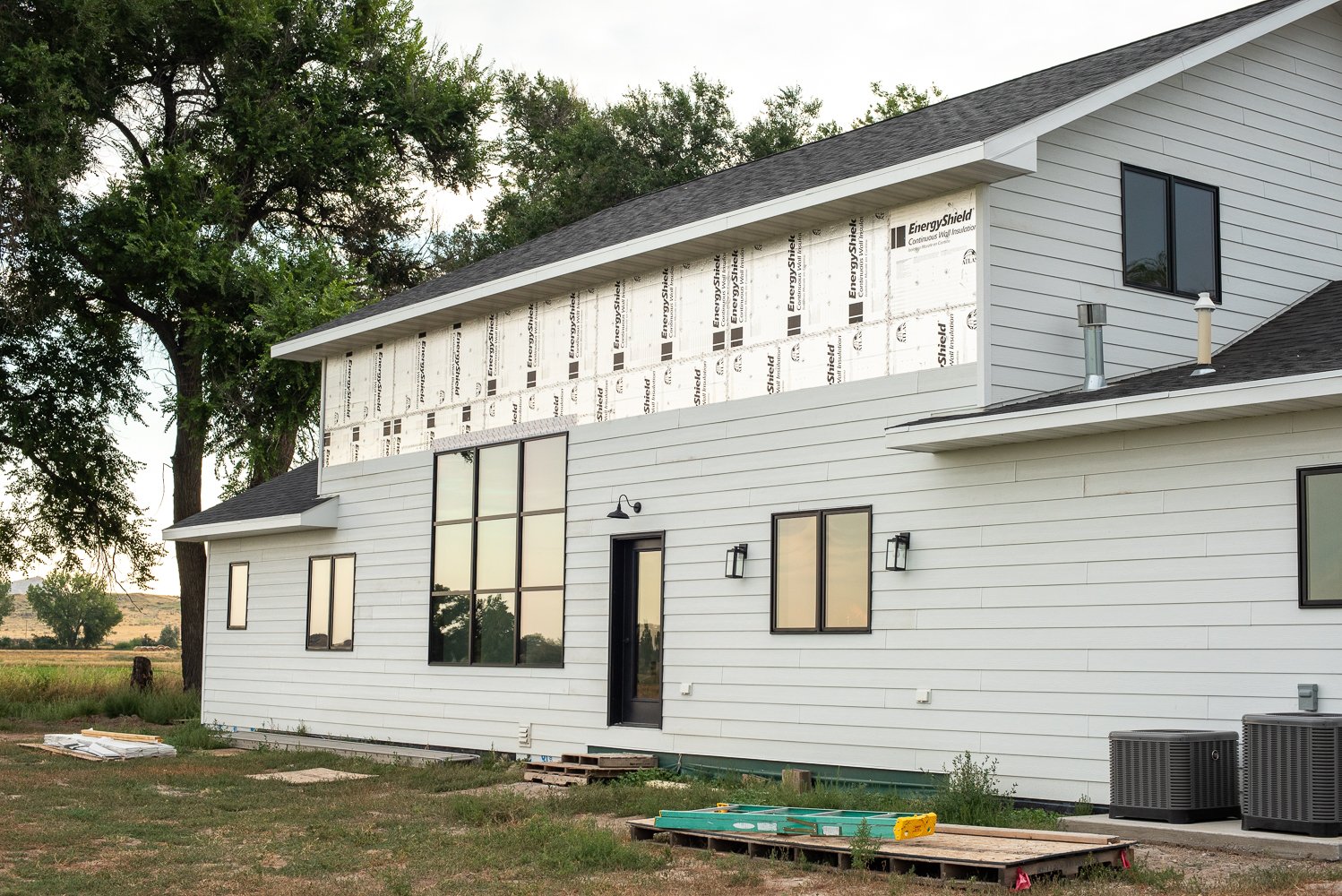
23. Anatomy of a Modern Farmhouse in Progress
Seeing a house mid-construction is a great reminder of how many layers are involved. Before you get to the pretty finishes, there are some essential checkpoints.
- Verify Window & Door Placement: Are the openings exactly where they are on the plan? Now is the last easy chance to make a change before siding goes on.
- Check Electrical for Exteriors: Confirm the locations for all your exterior lights, outlets, and any future needs (like for holiday lights or a sprinkler system).
- Inspect the Water Barrier: That visible house wrap is your home’s raincoat. Ensure it’s properly installed, taped at the seams, and integrated with window flashing to prevent future water issues.
📐 Style Math
The most critical element to get right at this stage is the lighting selection. The black gooseneck barn light and the rectangular sconces aren’t just slapped on at the end; they define the home’s style before the siding is even complete. Their shape, scale, and placement are fundamental to the modern farmhouse aesthetic. Choosing them early and installing the electrical boxes in the perfect spots is crucial. Badly scaled or poorly placed lighting can undermine the entire design, no matter how nice the siding is.
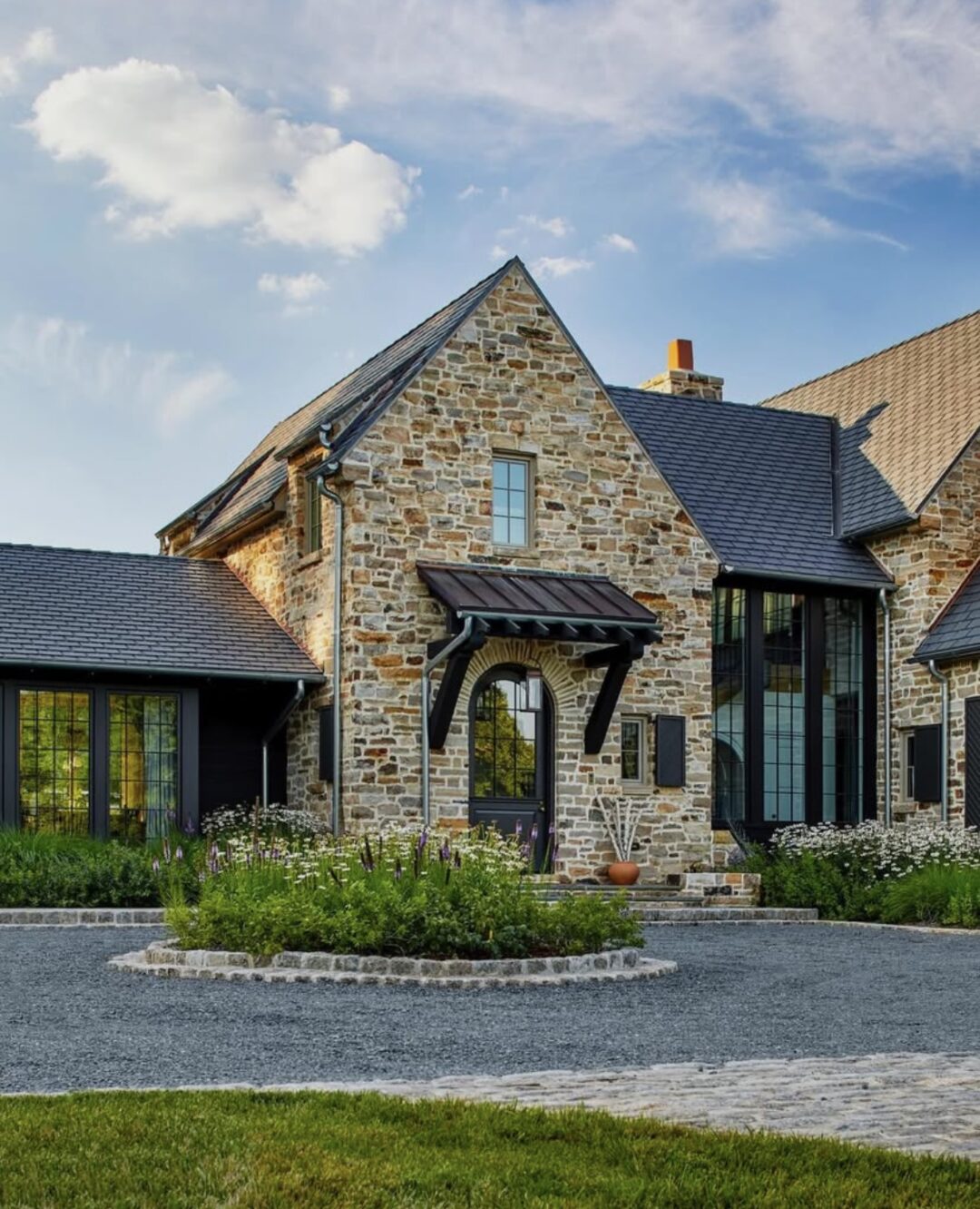
24. Stately Stone Exterior with Dark Charcoal Accents
A full stone exterior like this is one of the most durable and lowest-maintenance siding options available. Natural stone is impervious to rot, insects, and fire. Your primary upkeep will be an annual inspection of the mortar joints. Look for any cracks or gaps where water could penetrate. Repointing, or repairing mortar, is a specialized skill, but it’s typically only needed every 20-30 years in small sections. The gravel driveway will require more frequent attention, needing occasional raking and top-ups to keep it looking full and even.
⭐ The One Thing
This look represents a move towards a more ‘Euro-country’ interpretation of the farmhouse style. It shares the same high-contrast principles as the white-and-black American farmhouse but trades siding for stone, lending it a sense of permanence and old-world gravitas. With its gabled roofs and arched entryway, it feels rooted in European country traditions, yet the clean lines of the black-framed windows and metal awning keep it firmly in the contemporary design world. It’s a sophisticated, worldly take on rustic living.
25. Classic Gabled Farmhouse with a Black Metal Porch Roof
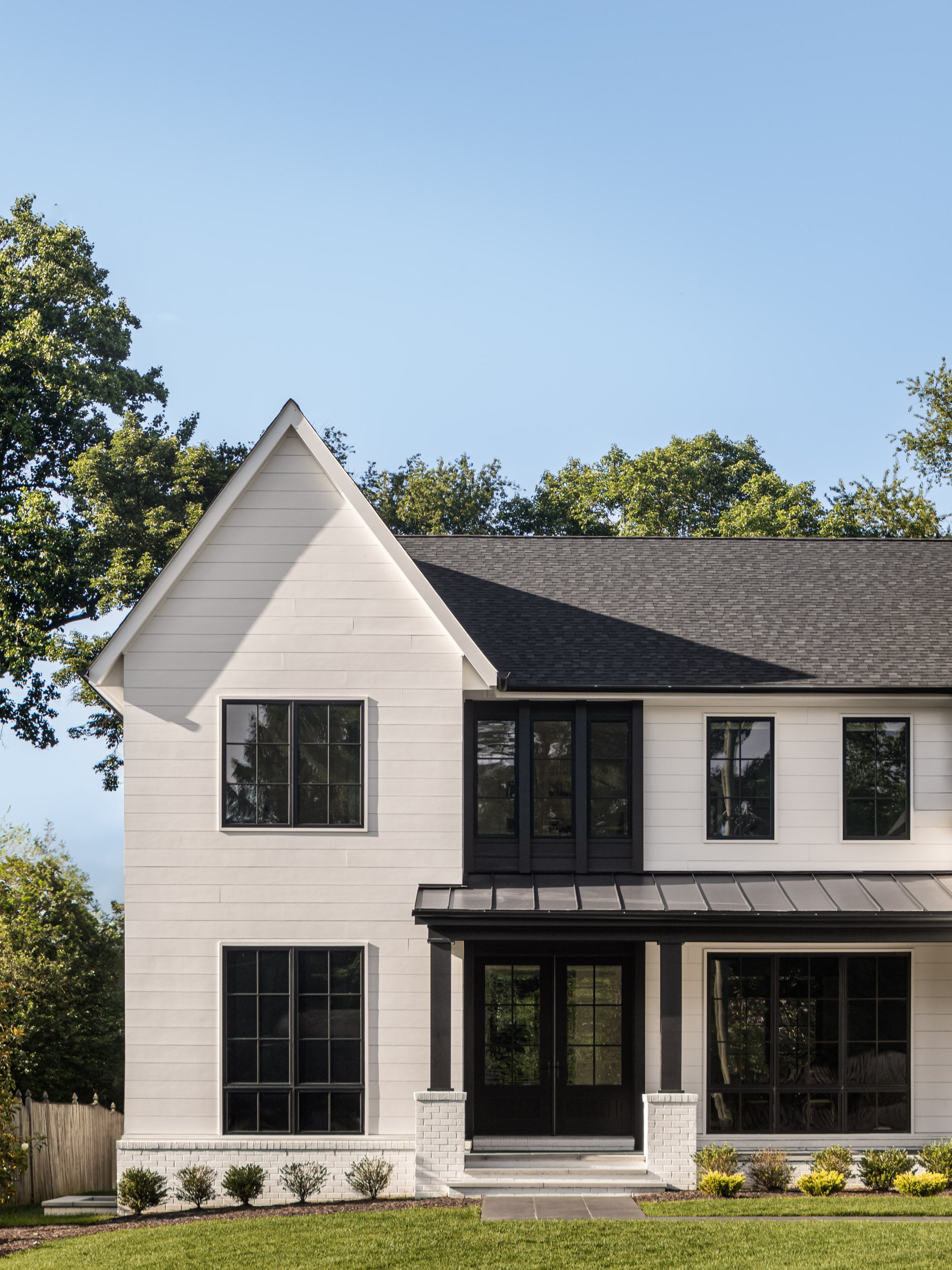
This design’s success lies in its confident blend of traditional forms and modern materials. The overall shape—a two-story house with a prominent central gable—is a classic American archetype. The white horizontal siding and gridded windows reinforce this traditional feel. However, the introduction of the standing-seam black metal roof over the porch injects a sharp, contemporary edge. It’s this juxtaposition of a familiar, friendly shape with a sleek, industrial material that defines the modern farmhouse aesthetic.
⚠️ Real Talk
Adding a metal accent roof is a fantastic way to get a modern look without the expense of a full metal roof. For maximum impact, use it on a prominent architectural feature like a front porch, a dormer, or a bay window. The standing seam profile (with the vertical ribs) provides a cleaner, more modern look than corrugated metal. And don’t be afraid of color! While black is a classic choice, a dark bronze or charcoal gray can offer a slightly softer but equally sophisticated contrast.
26. Navy Blue Siding with Warm Stone and Wood
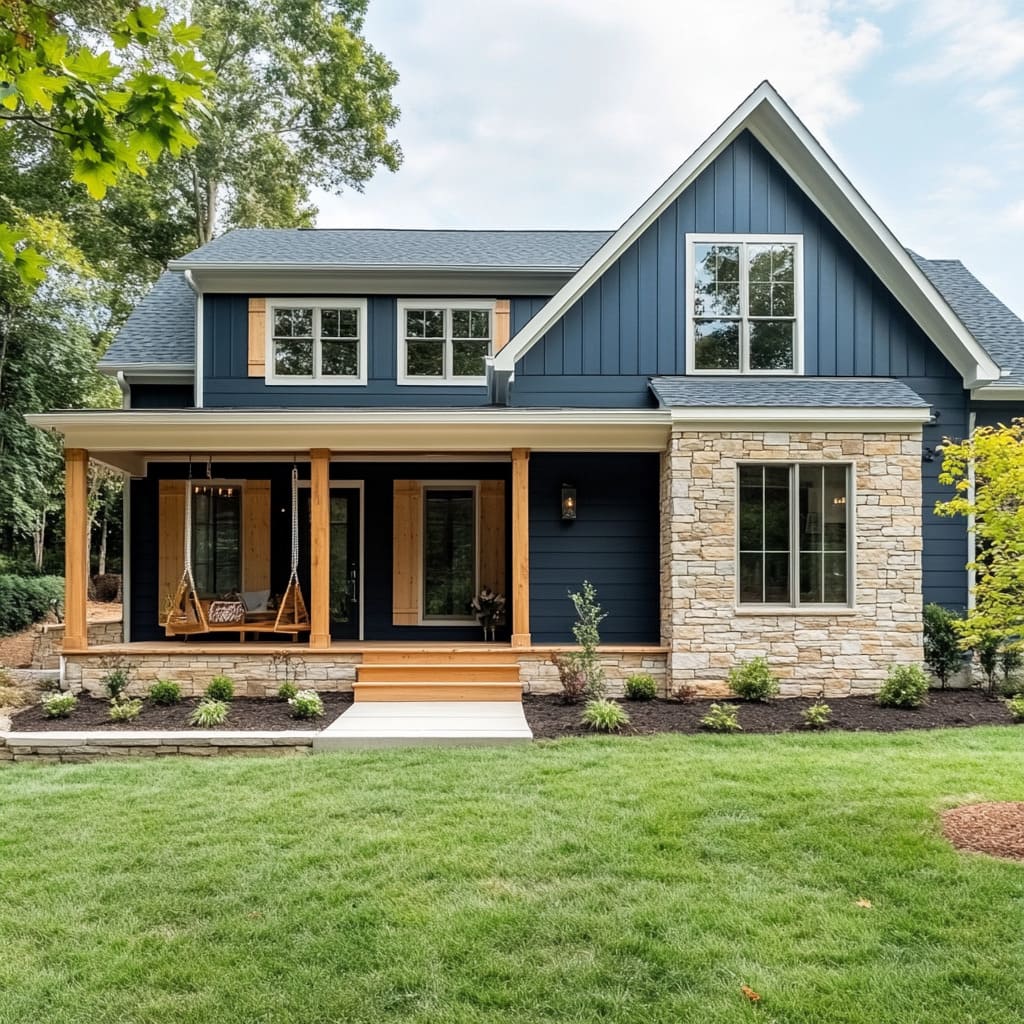
Breaking away from the all-white standard, this look uses a formula of 60% cool color + 20% warm texture + 20% light neutral. The navy blue siding provides a moody, sophisticated base that is unexpected and chic. The natural wood porch posts, swing, and shutters, along with the light-toned stone, introduce essential warmth and prevent the blue from feeling cold. Finally, the white trim provides a crisp, clean outline that makes all the other colors pop. This is a much more colorful approach than the sage green in Idea #29.
✅ Before You Start
A deep, rich color like navy blue will show fading from direct sun exposure more quickly than a lighter color. To combat this, it’s worth investing in a high-quality paint with UV inhibitors. Also, be aware that dark colors can make a small house feel even smaller. This look is most successful on a medium to large home with plenty of surrounding green space to balance the dark facade. Ensure you have crisp white or light-colored trim to provide contrast and keep the look from becoming gloomy.
27. Modern Farmhouse with Mixed Siding and Stone Veneer
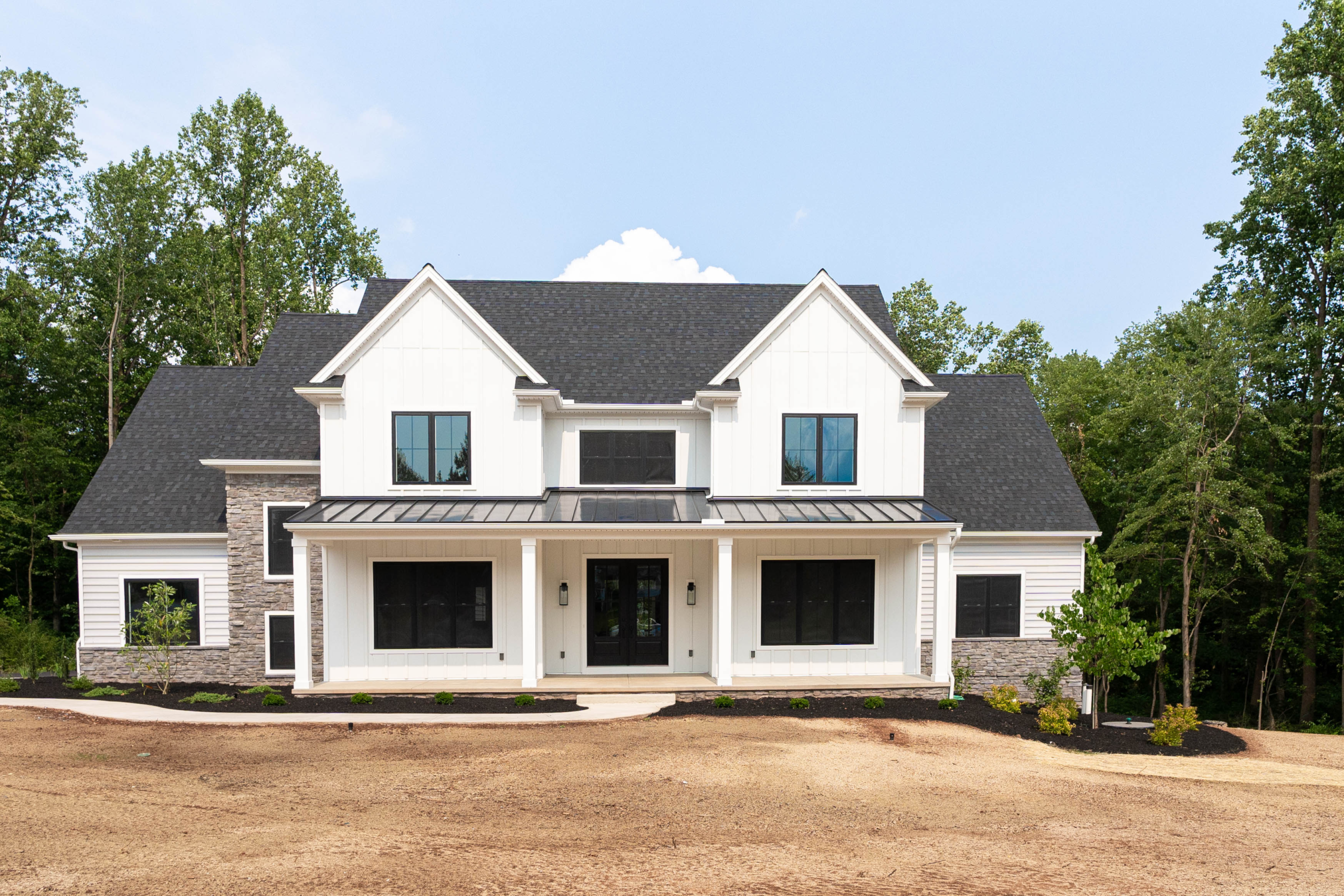
This design successfully avoids looking too busy by sticking to a highly disciplined color palette. Even though it uses three different exterior materials (horizontal siding, vertical siding, and stone veneer), they are all unified by the color white or light grey. This monochromatic approach allows the different *textures* to become the main point of interest, rather than different colors competing for attention. The only color contrast comes from the black windows and dark roof, which serves to sharpen and define the overall look.
🔧 How-To Brief
The use of both vertical board-and-batten and horizontal lap siding is the key detail that elevates this design. It’s a subtle but effective way to add architectural interest without adding more color or materials. The vertical siding on the gables draws the eye upward, emphasizing the height and classic farmhouse roofline. The horizontal siding on the main body of the house gives it a sense of grounded stability. This intentional variation makes the house feel more custom and thoughtfully designed. This is a more complex version of the simple siding in Idea #15.
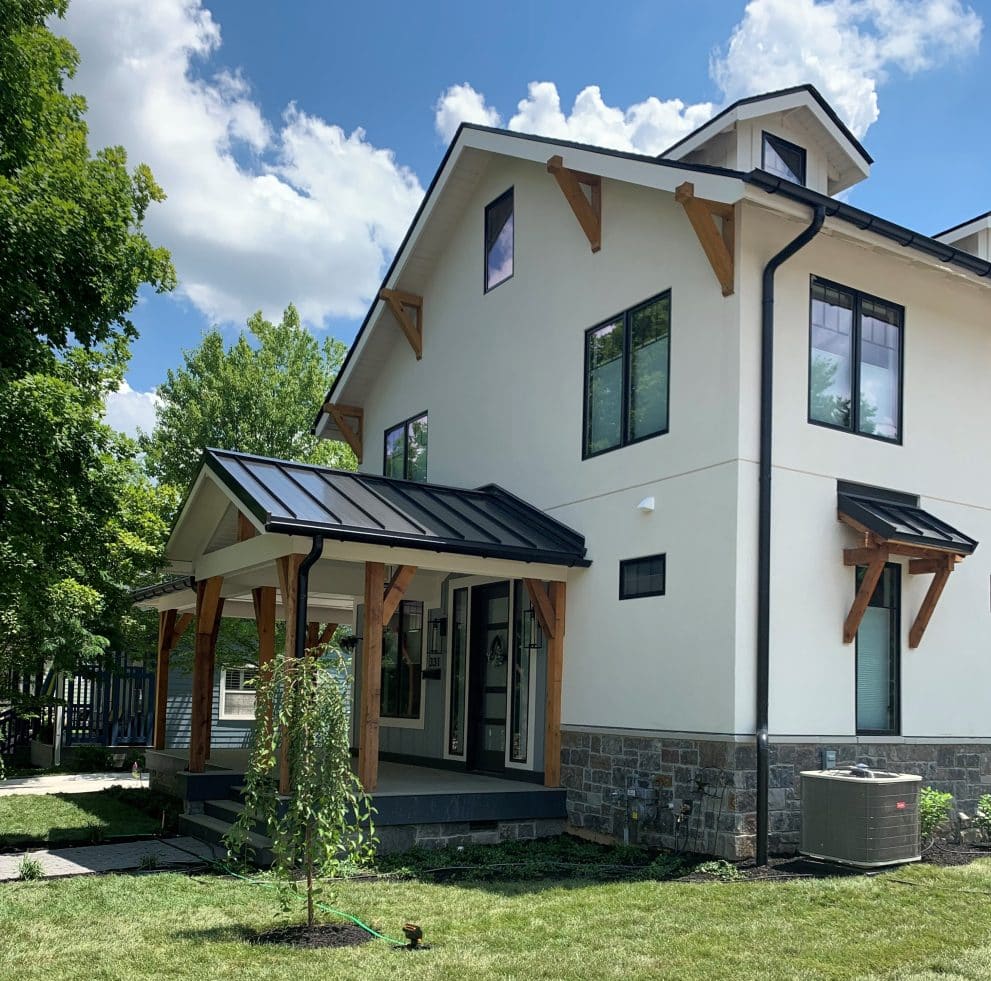
28. White Stucco Farmhouse with Rustic Wood Beams
Stucco offers a beautiful, smooth, and modern finish, but it requires some specific care. It’s a rigid material, so hairline cracks can appear as the house settles over time; these should be sealed to prevent water intrusion. In wet climates, it’s essential to ensure the stucco system includes a proper drainage plane to let moisture escape. Cleaning should be done with a gentle wash, as a high-pressure washer can damage the surface. The exposed natural wood beams will need to be re-sealed every 2-4 years to maintain their color and protect against weather.
📏 Scale Guide
This high-end look combines several premium materials, which drives up the cost compared to a standard siding-and-shingle home.
- Stucco Finish (3-coat system): $30,000 – $50,000
- Standing Seam Metal Roof: $35,000 – $60,000
- Exposed Heavy Timber Wood Beams: $15,000 – $25,000
- Stacked Stone Foundation: $10,000 – $18,000
- Windows & Doors: $25,000 – $45,000
- TOTAL: $115,000 – $198,000
Budget alternative: Use a synthetic stucco finish (EIFS), faux stone veneer, and smaller-scale composite beams to get a similar vibe for 40-60% less.
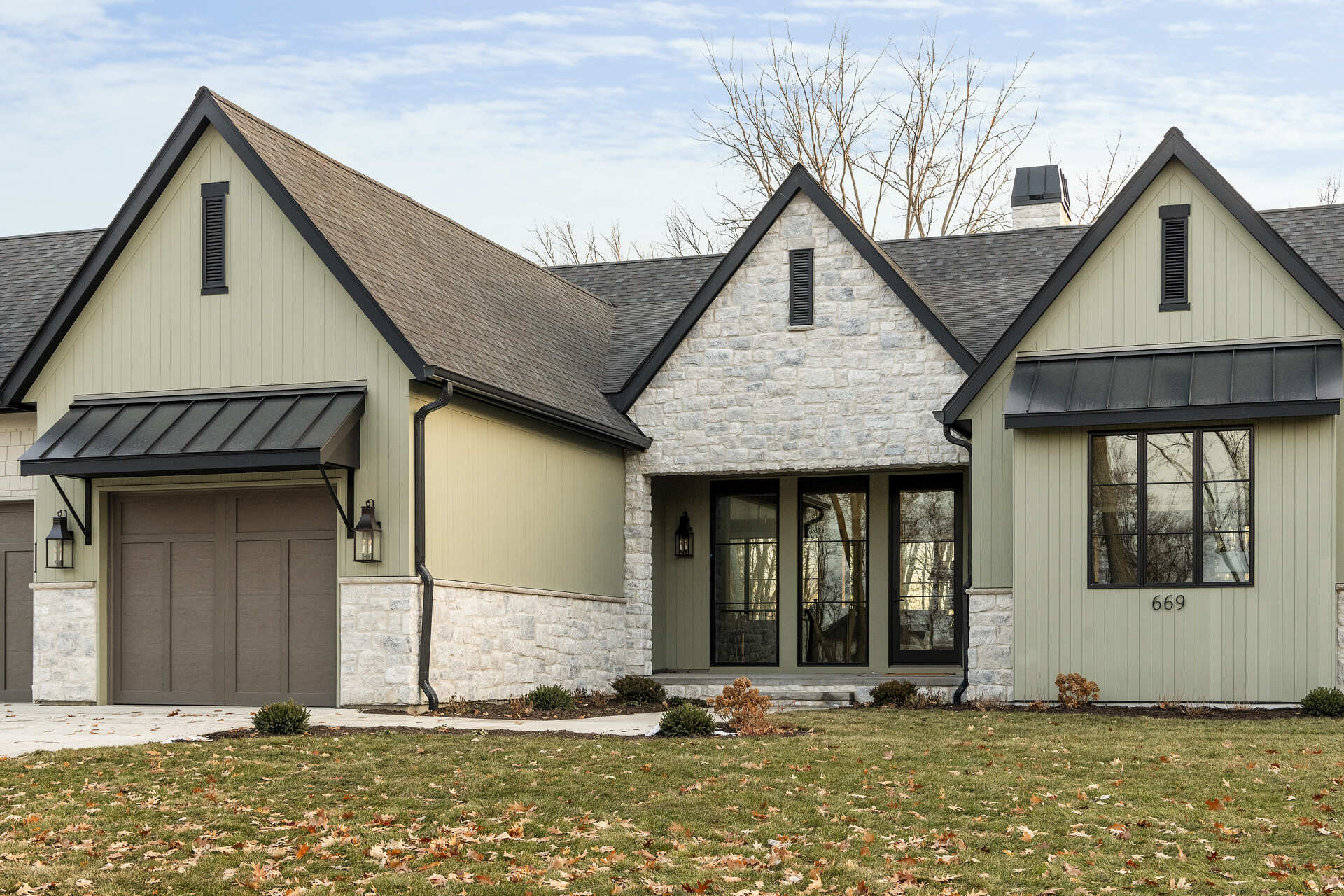
29. Sage Green and Natural Stone Farmhouse
The success of this design lies in its confident, high-contrast palette. It fearlessly commits to three distinct elements: the soft, earthy sage green siding; the rugged, multi-toned natural stone; and the stark, graphic black trim. There is no ambiguity. The black metal acts as a crisp frame for all the windows, doors, and rooflines, which keeps the look feeling incredibly sharp and modern. The stone provides a grounding, textural anchor, while the sage green offers a touch of color that is sophisticated and connected to nature. It’s a bold yet balanced composition.
🧹 Maintenance Reality
Green is having a major moment in home design, and this exterior is a perfect example of why. As people look to create homes that feel like a sanctuary, nature-inspired colors like sage, olive, and forest green are becoming increasingly popular. This color trend is a reaction against the stark black-and-white palettes that have dominated for years. It offers a way to have a colorful home that still feels serene, sophisticated, and timeless. This is a trend with serious staying power.
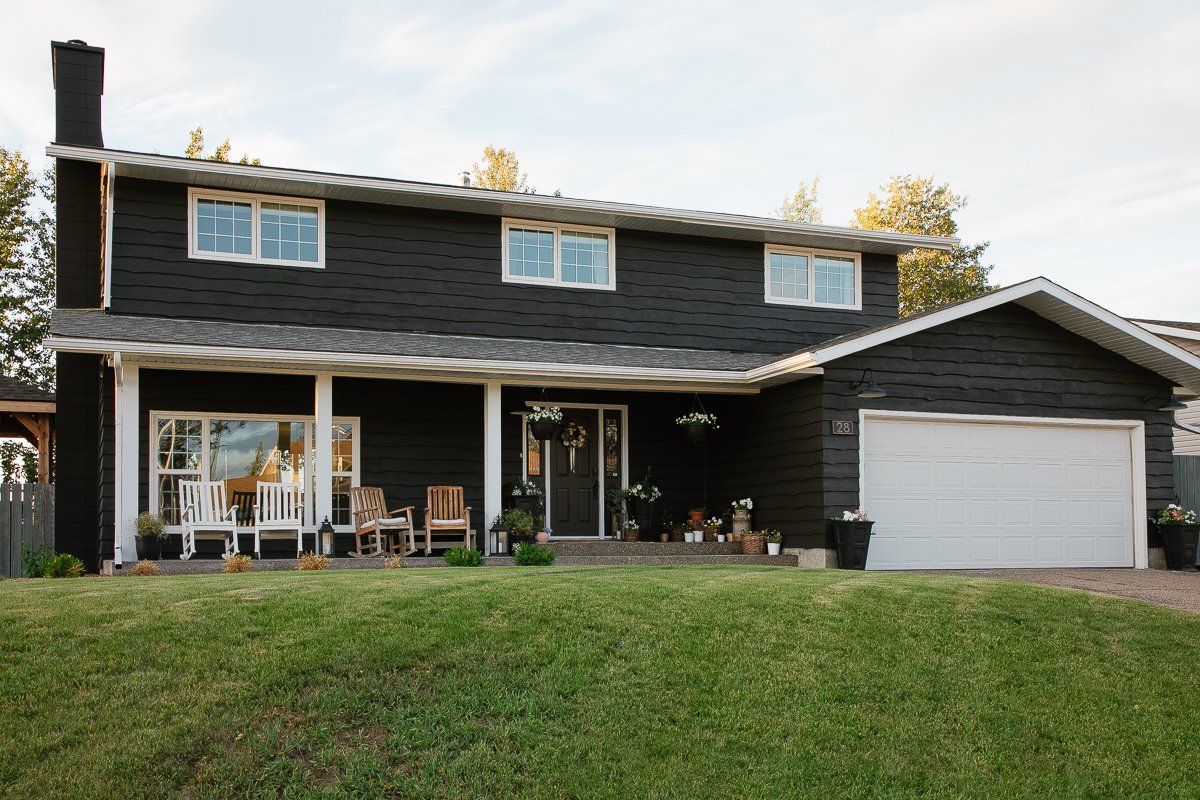
30. Welcoming Dark Farmhouse with an Expansive Porch
The single element that makes this house so incredibly inviting is the generously styled front porch. It’s not just an entryway; it’s a fully furnished outdoor room. The rocking chairs, side tables, and profusion of potted plants and hanging baskets send a clear message: this is a home that is lived in and loved. It transforms the potentially imposing dark siding into a backdrop for a cozy, welcoming scene. Without the porch styling, it would be a handsome house; with it, it’s a home you want to visit. The dark siding is a beautiful contrast similar to Idea #22 but the porch makes this one feel more complete.
🔥 Trending Context
You don’t need a custom build to get this cozy, lived-in porch vibe. The key is layering affordable elements. Rocking chairs can be found for under $150 at places like Target or Walmart, or even for a steal at a thrift store. Terracotta pots are inexpensive, and filling them with seasonal flowers or simple greenery adds life and color. A welcoming doormat and a few well-placed lanterns can complete the look. The goal is to create a density of charming details, which you can build up over time without a large initial investment.
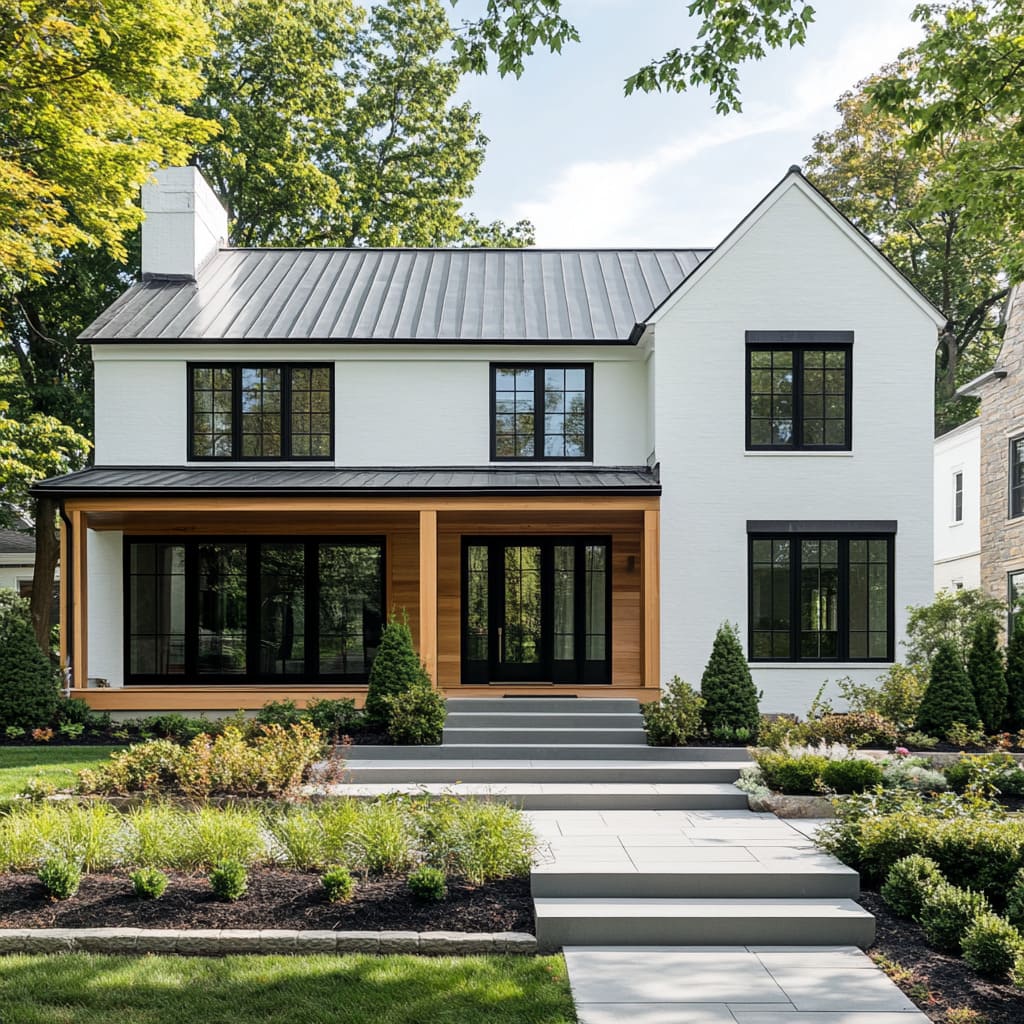
31. Sophisticated White Brick with a Wood-Paneled Porch
The power of this design comes from its strict symmetry and the creation of a ‘room within a room’. The house itself is beautifully balanced, with the enclosed porch centered perfectly. The pathway leading to the entrance reinforces this formal symmetry. Within that structure, the porch acts as a distinct space, defined by the shift in material from white brick to warm, natural wood siding. This change creates an intimate, jewel-box effect, making the entrance feel special and drawing you in. The black window frames provide the final, graphic punch. For a different take on white brick see Idea #8.
💰 Budget Breakdown
When you have a very clean, symmetrical design like this, the details have to be perfect. Pay extra attention to the scale of your light fixtures. The sconces flanking the doorway should be substantial enough to hold their own against the large windows and double doors—aim for fixtures that are about one-quarter to one-third the height of the door. Also, ensure your pathway material is high quality. The clean lines of the light grey concrete pavers here continue the sophisticated, geometric feel of the home itself.
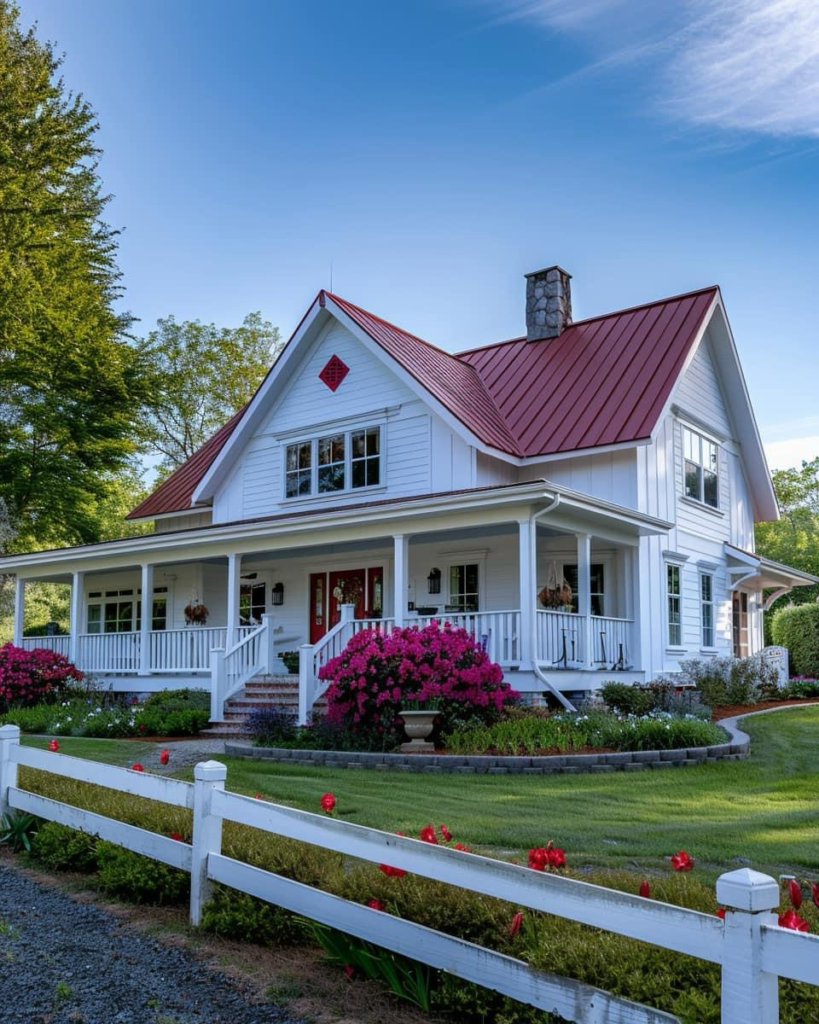
32. Cheery White Farmhouse with a Bright Red Roof
A bright red roof is a bold, joyful statement, but it’s a choice you need to be 100% sure about. This is not a color you can easily paint over next year. It will absolutely be the main event of your home’s exterior, so every other choice—from trim color to landscaping—will need to support it. It can also impact resale value, as it will appeal strongly to some buyers and be an immediate ‘no’ for others. If you love it, go for it! But understand it’s a high-commitment, high-personality decision.
🎯 What Makes It Work
This look is part of a growing ‘new nostalgia’ trend. It’s a cheerful, almost playful throwback to classic, rural American farmhouses, but updated with modern materials like the standing-seam metal roof and clean white railings. After years of serious and moody color palettes, there’s a renewed interest in homes that simply make you smile. This design feels optimistic and confident. It’s less about following a strict set of ‘modern farmhouse’ rules and more about creating a home with vibrant, personal character.
Your Modern Farmhouse Story Begins Here
With so much inspiration, the key is to identify the elements that truly resonate with you. Is it the crisp contrast of black and white, the warmth of natural wood, or a bold splash of color? Think of these ideas as a starting point for crafting an exterior that is uniquely yours. The perfect modern farmhouse is one that feels like home the moment you pull into the driveway.
Start gathering your favorite looks, and don’t forget to save this guide to your Pinterest board to bring your vision to life when you’re ready!