
You know that feeling when you finally find the *perfect* shade of green for your kitchen, the one you keep saving on Pinterest? But then the doubt creeps in. Will it work in *your* space? Will it still look good in 2026? We get it. After filtering through hundreds of options from high-end showrooms to budget-friendly finds at IKEA and Target, we’ve narrowed it down to the 29 most inspiring green kitchen designs that are built to last. Inside, you’ll find everything from rich, dark olive to light, airy sage, covering styles like modern farmhouse, sleek contemporary, and warm traditional. As we head into 2026, the trend is all about creating a sanctuary at home, using earthy, nature-inspired colors to make the kitchen feel both grounded and refreshing. And stay until the end — we break down the most common mistakes that can ruin these looks. 📌 Save this to Pinterest for later — you’ll want to revisit these ideas.
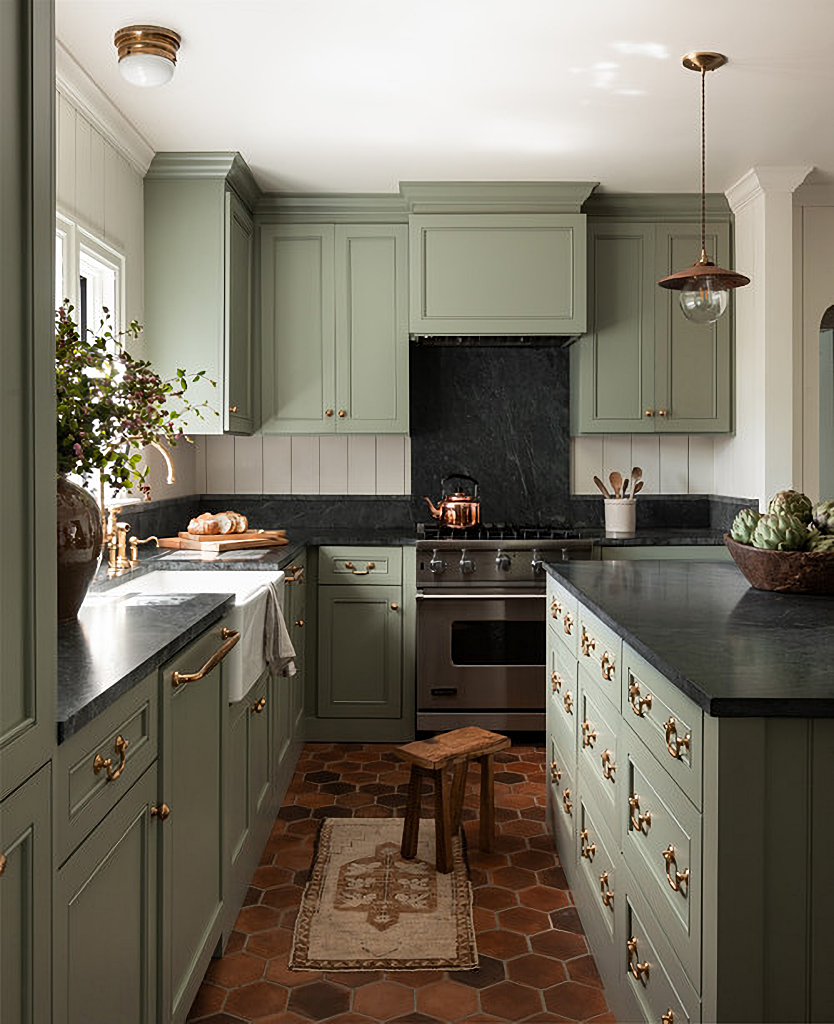
1. Sage Green Cabinets Meet Rustic Terracotta Floors
There’s a beautiful harmony in the way this kitchen blends warm and cool tones. The sage green cabinets have a soft, cool quality that feels very calming, but the hexagonal terracotta floor tiles bring in a rustic, earthy warmth. It’s this balance that makes the space feel so inviting and timeless. The dark gray countertops act as a perfect neutral anchor, grounding the lighter elements, while the brass hardware provides just the right amount of metallic warmth to tie it all together, echoing the tones in the floor.
🧹 Maintenance Reality
Here’s a look at what it might cost to bring this warm, traditional style home. Prices are estimates for a medium-sized kitchen.
- Shaker-style Cabinets: $7,000 – $15,000
- Dark Natural Stone Countertops: $4,000 – $8,000
- Terracotta Floor Tiles: $2,000 – $5,000
- Fixtures (Brass Faucet, Hardware): $800 – $2,000
- TOTAL: $13,800 – $30,000
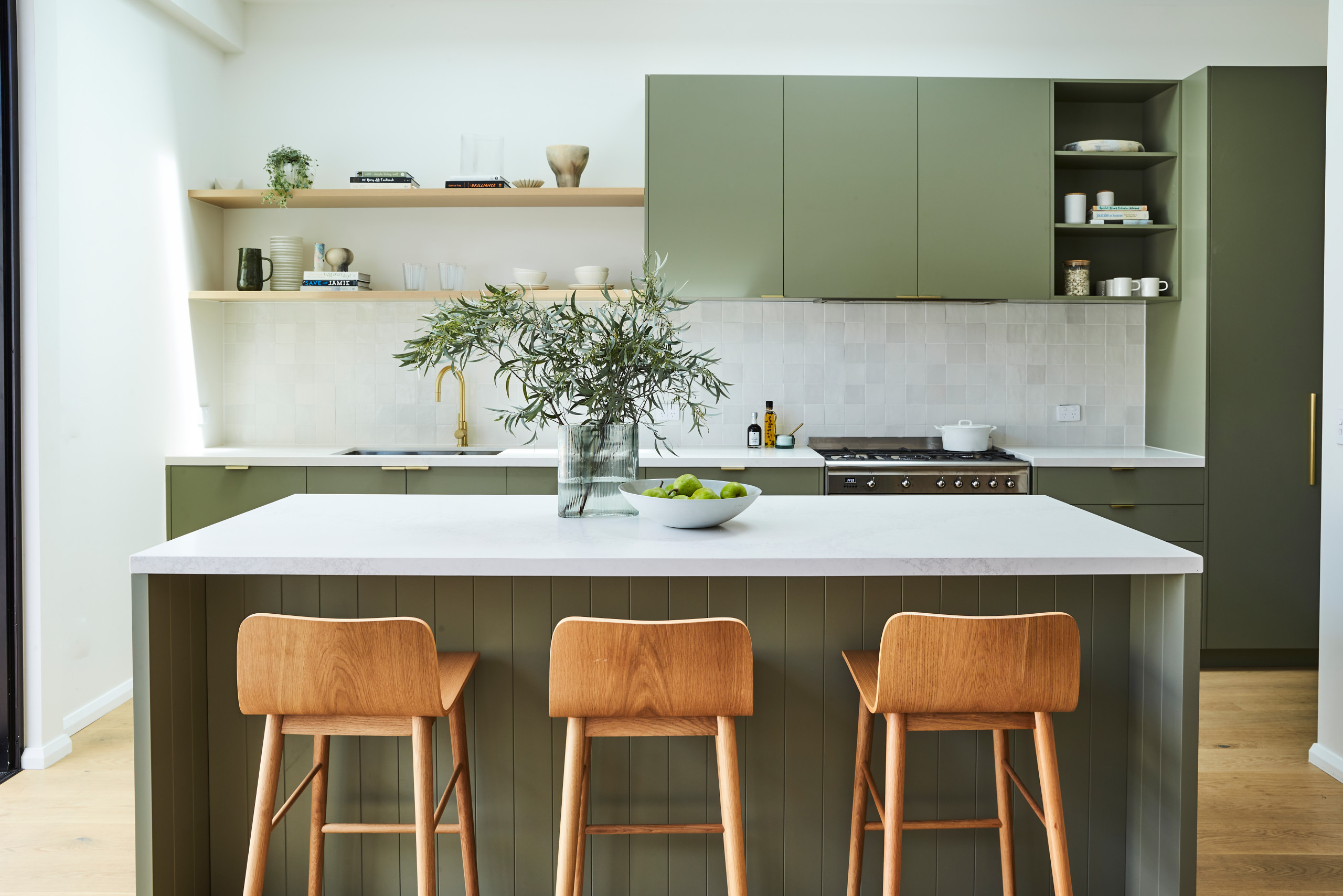
2. Calm Sage Kitchen with Modern Wood Shelving
When incorporating open shelving, the key is to prevent visual clutter. For shelves that are 10-12 inches deep, arrange items in a “one forward, one back” pattern. Place larger, functional items like stacks of plates toward the back, and smaller, more decorative pieces like mugs or small plants in front of them. This creates depth and keeps the look curated, not chaotic. For the calm aesthetic seen here, limit the decorative palette to three colors—here it’s green, white, and natural wood—to maintain serenity.
💡 Designer Tip
This design works beautifully in small to medium-sized kitchens, from 120 to 220 square feet. The combination of enclosed lower cabinets and open upper shelving prevents the room from feeling top-heavy, which is a great strategy for spaces with standard 8-foot ceilings. The light color palette also helps to make a smaller footprint feel more expansive and airy. If you have a larger kitchen, consider extending the design with a larger island, like the one seen in Idea #12.
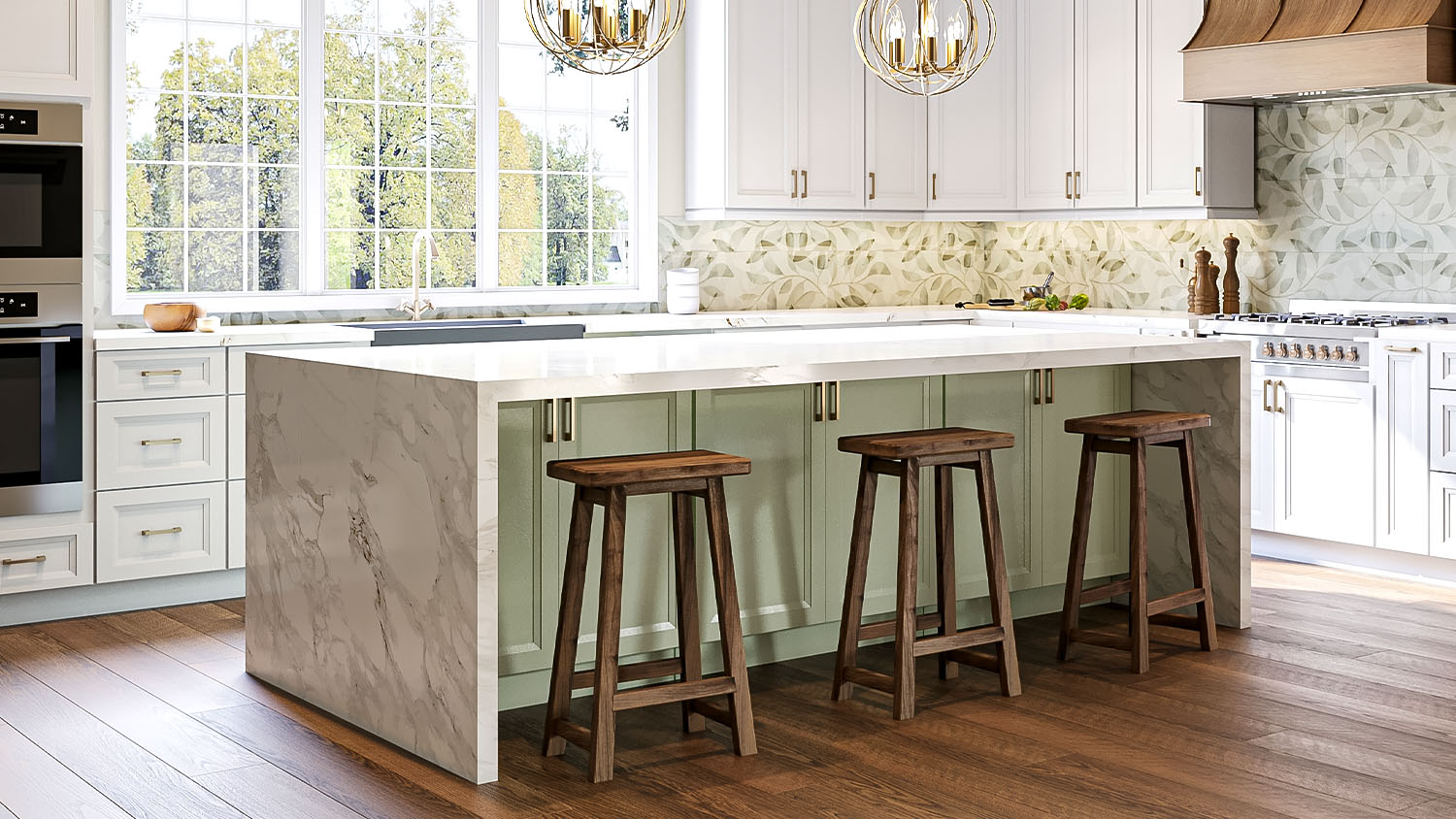
3. A Statement Island in Sage with a Leaf-Patterned Backsplash
The single element that defines this kitchen is undoubtedly the waterfall island. It’s not just the lovely sage green base, but the way the marbled white countertop cascades down the sides. This feature transforms the island from a purely functional workspace into a sculptural centerpiece. It elevates the entire design, making it feel luxurious and thoughtfully planned. Without the waterfall edge, it would be a nice island, but with it, it becomes a true statement piece that anchors the entire room.
💰 Budget Breakdown
This look is all about a refined balance of materials. Think of it as a formula: 50% clean neutrals (the white cabinets and light wood floors), 30% soft color (the sage green island), 10% subtle pattern (the leaf-motif backsplash), and 10% metallic glam (the gold hardware and fixtures). You could swap the sage for a soft blue or trade the gold for matte black, and the sophisticated formula would still work perfectly, proving how versatile this balanced approach is.
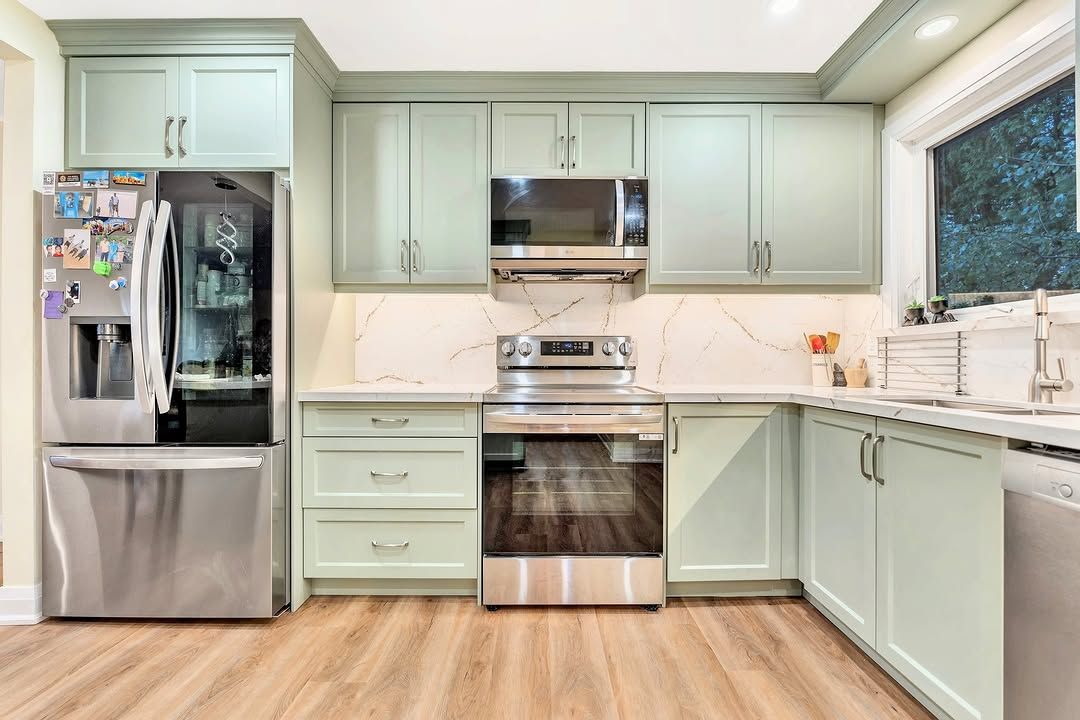
4. Fresh Sage Green Paired with a Veined Marble-Look Backsplash
A full wall of sage green cabinets is a gorgeous commitment, but be mindful of your home’s natural light. The specific shade of sage you choose can look dramatically different in a north-facing room (cooler, more gray) versus a south-facing room (warmer, more yellow). Before you order thousands of dollars in cabinetry, get multiple sample doors. Paint a large board in your chosen color and move it around the kitchen at different times of day to ensure you love how it looks in all conditions.
⚠️ Real Talk
While a marble-look backsplash is stunning, be aware of what you’re choosing. If you opt for real marble, it’s a porous stone susceptible to staining from acids like lemon juice or wine, and it requires regular sealing (at least once a year). For the same look with less worry, consider a quartz or porcelain slab with marble-like veining. These non-porous materials are practically bulletproof against stains and require nothing more than a simple wipe-down with soap and water, making them ideal for a busy kitchen.
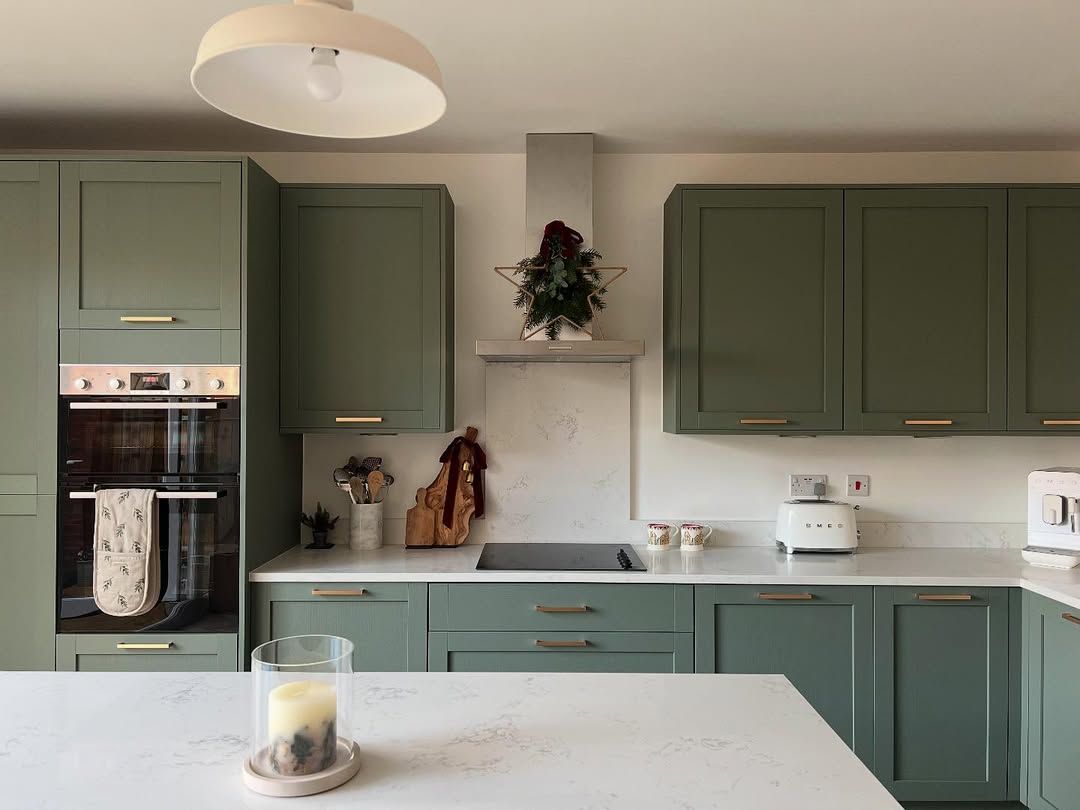
5. Streamlined Sage Shaker Cabinets with Integrated Ovens
This kitchen design works so well because of its commitment to clean lines and a cohesive color story. The sage green shaker cabinets provide a touch of classic texture, but the overall feeling is modern due to the integrated appliances and simple gold bar pulls. By hiding the microwave and ovens within the cabinetry, the design avoids visual disruption. The light speckled countertop and off-white walls create a soft, low-contrast backdrop that allows the beautiful green and gold combination to be the star without overwhelming the space.
📐 Style Math
You don’t need custom cabinetry to achieve this streamlined aesthetic. Get this look for less by using IKEA’s SEKTION cabinet frames with their green BODARP flat-panel doors for a similar vibe. Source stylish gold hardware from places like Amazon or CB2 for as little as $5-$10 per pull. For the countertop, a high-quality laminate like Formica’s “Calacatta Marble” can give you the light, speckled look for a fraction of the price of quartz, bringing the total for a major part of this kitchen down to around $4,000-$7,000.
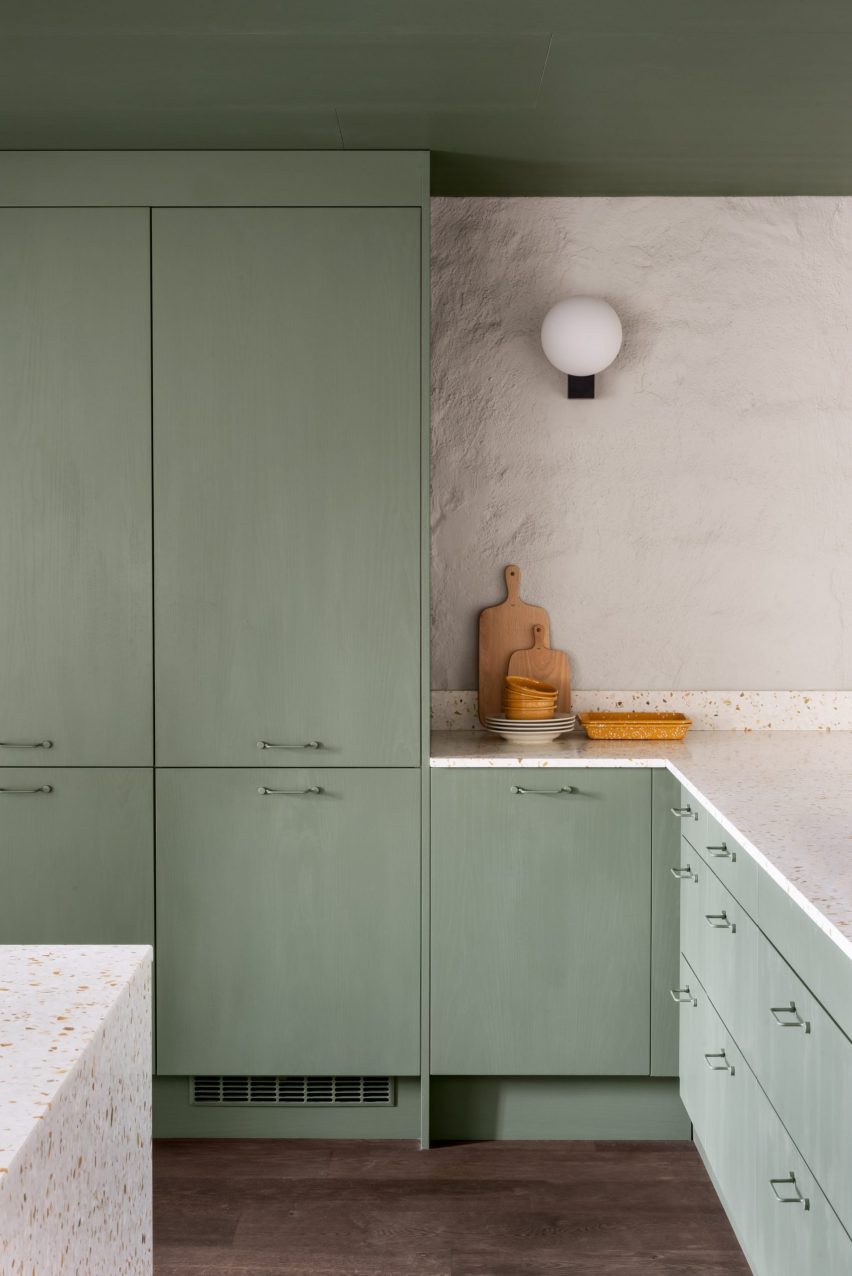
6. Textural Contrast with Sage Cabinets and Rough Gray Walls
The move toward using materials in their more raw, natural state is a trend we’re seeing a lot of, and this kitchen is a perfect example. The pairing of sleek, flat-front sage cabinets with a rough, almost industrial-looking textured gray wall is a masterclass in contrast. This textural play is gaining popularity as a reaction against years of perfectly smooth, one-dimensional surfaces. It adds depth, character, and a tactile quality that makes a room feel curated and unique. The terrazzo countertop bridges the two textures beautifully.
💸 Get This Look For Less
You can recreate that textured wall finish with Roman clay or limewash paint. Here’s a quick guide:
- Prep: Start with a clean, primed wall. Tape off your ceiling, trim, and cabinets.
- First Coat: Apply the Roman clay with a large putty knife or trowel in wide, sweeping, overlapping arcs. Don’t aim for perfection; variation is key.
- Dry Time: Let it dry for 3-5 hours. It will look chalky and uneven. This is normal.
- Second Coat: Apply a second, thinner coat with the same technique, filling in gaps and building up texture.
- Burnish: Once dry to the touch but not fully cured, use the clean edge of your trowel at a low angle to gently smooth or “burnish” the surface to your desired sheen.
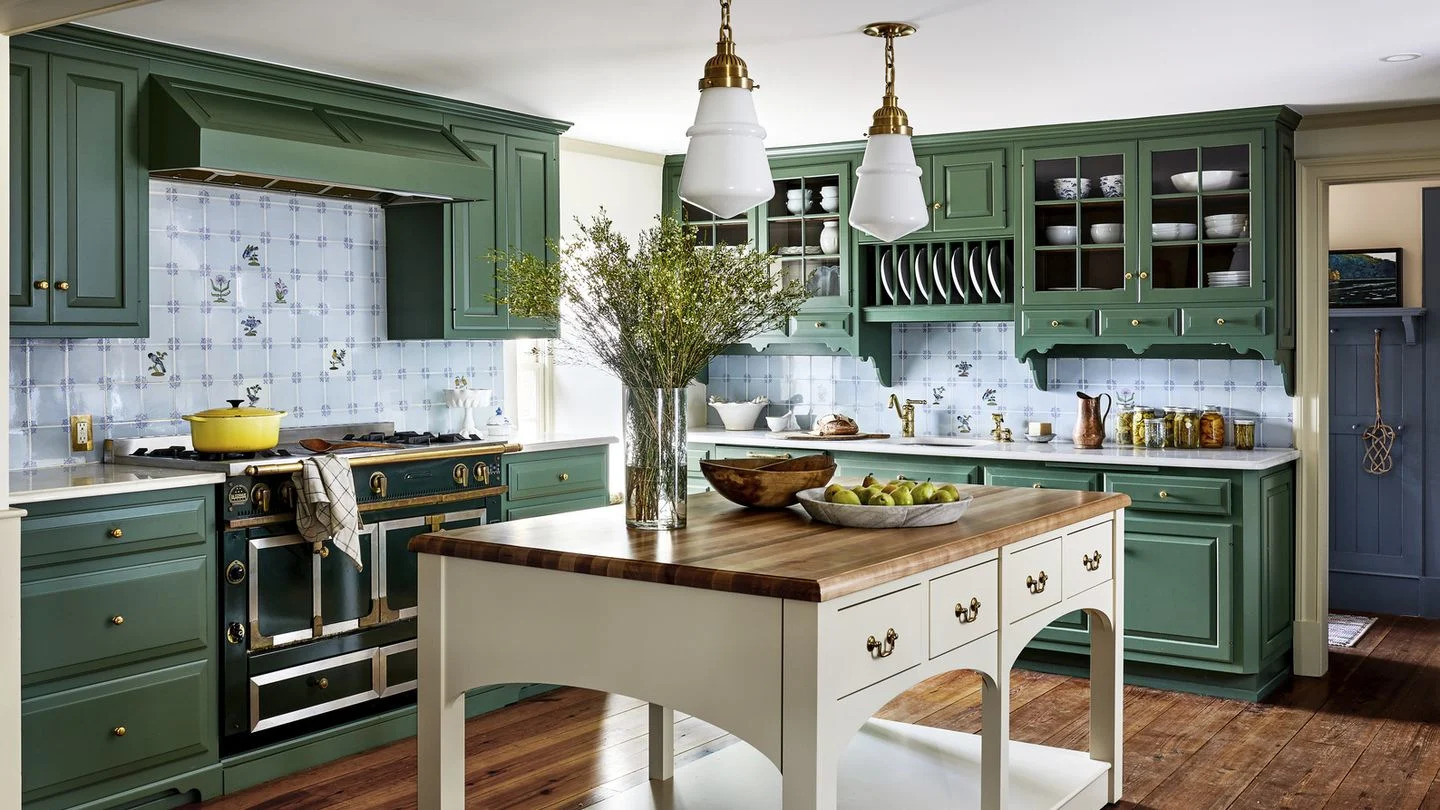
7. Traditional Green Kitchen with a Bold Patterned Blue Backsplash
When mixing strong colors and patterns, choose one lead and one supporting actor. Here, the rich green cabinetry is the clear lead. The blue patterned backsplash is the supporting actor. To make this pairing successful, the designer kept the pattern’s color palette simple (just blue and white) and the scale of the tile relatively small. This prevents the backsplash from fighting for attention with the cabinets. A larger, multi-colored tile pattern would have created visual chaos. Keep countertops and other finishes quiet to let the two main elements shine.
📏 Scale Guide
that makes this kitchen unforgettable is the patterned tile backsplash. Remove it, and you have a lovely, classic green kitchen. But with the tile, the room has a distinct personality and a story to tell. It introduces a vibrant, almost Mediterranean energy that contrasts beautifully with the traditional English feel of the shaker cabinets and the substantial black stove. It’s a confident design choice that shows how a single, bold element can define an entire space.
8. Farmhouse Kitchen with Distressed Green Cabinetry and Wood Beams
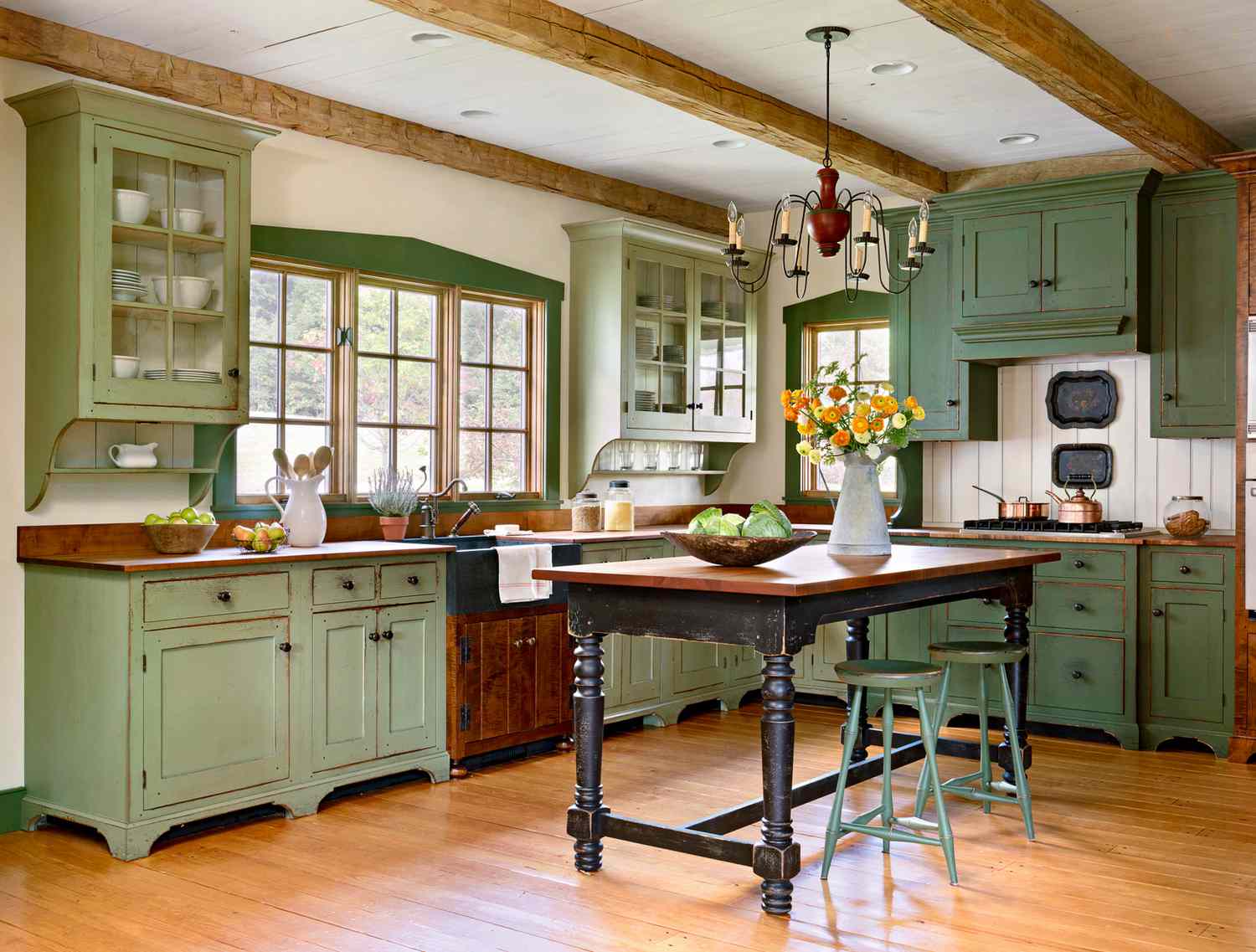
This kitchen is a masterclass in creating a lived-in, rustic feel through layering and texture. The magic is in the imperfection. The distressed finish on the green cabinets tells a story, suggesting they’ve been loved for years. The exposed wooden beams overhead and the substantial central island add architectural weight and authenticity. The variety in cabinet styles—some solid, some glass-front—breaks up the monotony and contributes to the collected-over-time charm that is the heart of farmhouse style.
🔧 How-To Brief
Achieving a genuinely “distressed” cabinet finish is harder than it looks. If not done well, it can look fake and trendy rather than authentically aged. This is a look best left to professionals or practiced DIYers. Also, be aware that the crevices and worn spots that make this finish charming are also prime spots for dust and kitchen grime to collect, so it may require more detailed cleaning than a smooth, modern cabinet front. That bold red chandelier is a stunner, but make sure you have the ceiling height to pull it off without it feeling intrusive.
9. Deep Green Shaker Cabinets with a Pop of Red
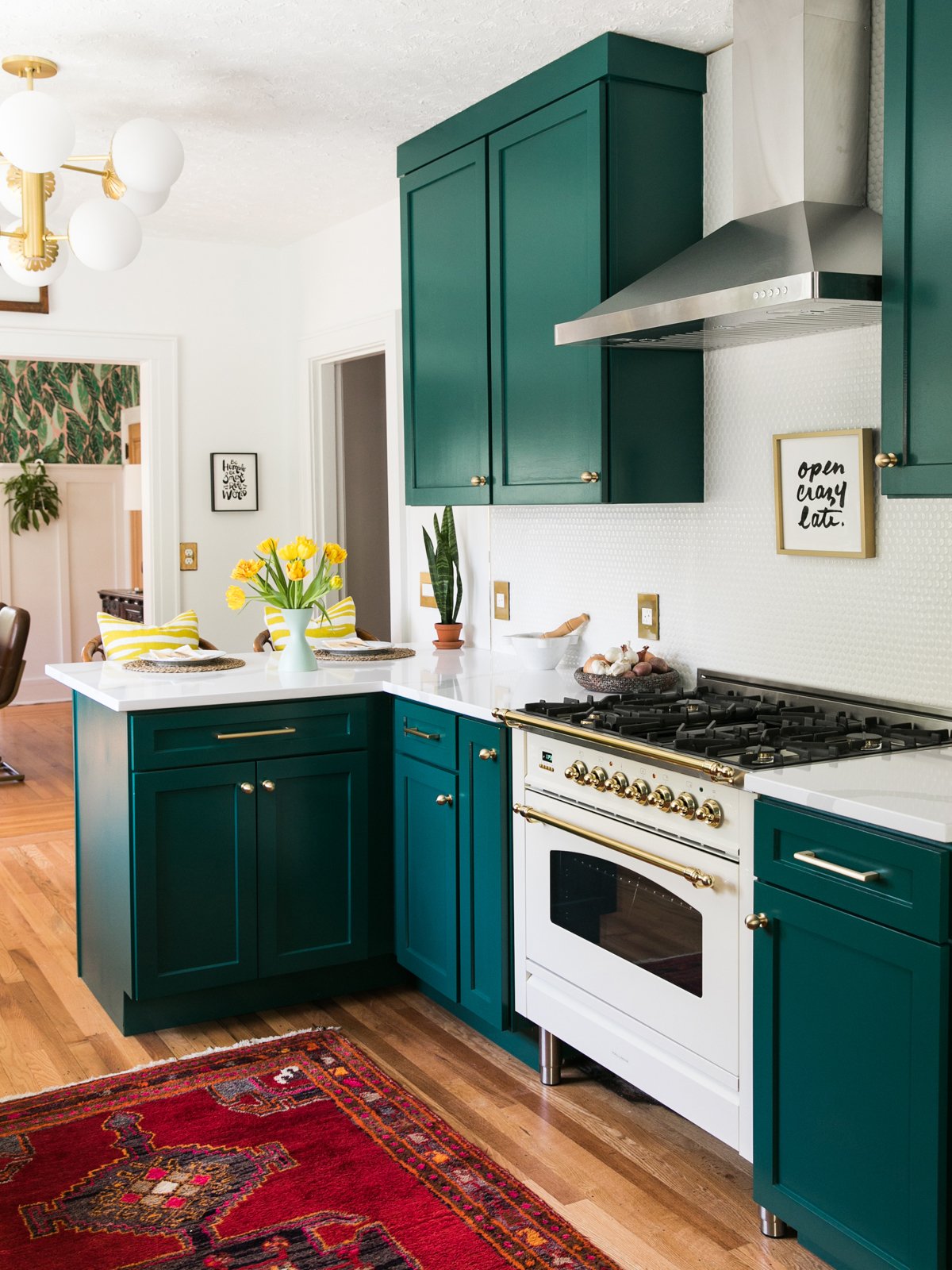
Here’s the formula for this eclectic-classic look: 60% deep, traditional color (the green shaker cabinets), 30% crisp neutral (the white countertops and textured backsplash), and 10% bold, unexpected accent (the vibrant red rug and brass details). The deep green and white provide a timeless foundation, while the flash of red adds personality and energy. This structure allows you to inject your own character without undermining the kitchen’s elegant bones. It’s a recipe for a space that feels both classic and uniquely personal.
🔥 Trending Context
You can get this high-character look on a much smaller budget. Start with stock cabinets from Home Depot and paint them a deep green like Sherwin-Williams’ “Rockwood Shutter Green.” A simple white subway tile backsplash is incredibly affordable, often under $5 per square foot. The key is to splurge selectively. Invest in a quality brass faucet, but save on hardware by finding vintage-style knobs on Etsy. The real secret weapon? A vibrant runner from a store like Wayfair or even Facebook Marketplace can add that essential pop of color for under $100.
10. Serene Sage Kitchen with a Fluted Wood Coffee Nook
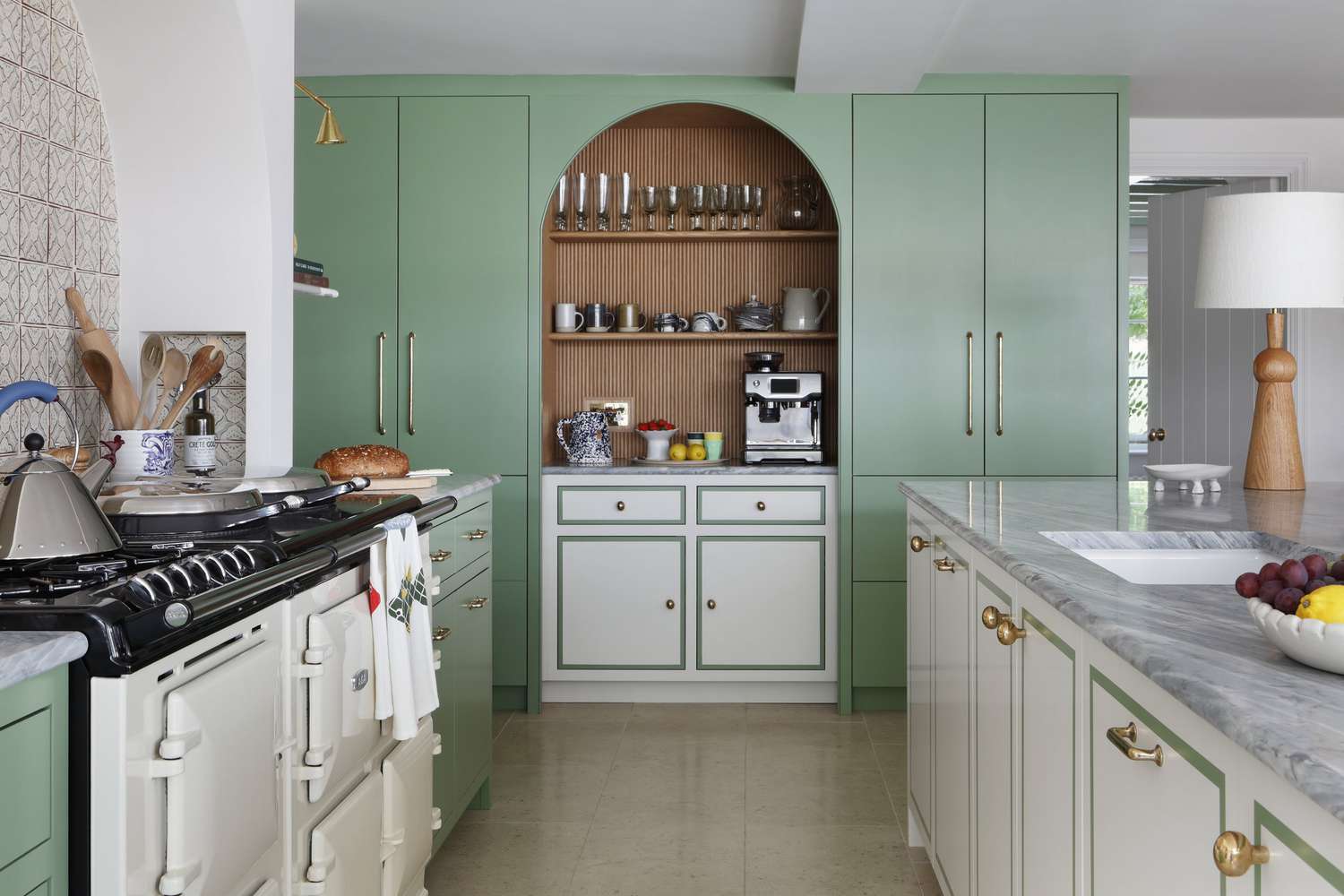
The absolute star of this kitchen is the arched, fluted wood coffee nook. In a space defined by serene green and clean marble, this feature introduces incredible warmth, texture, and architectural interest. It elevates a simple utility area into a deliberate design moment. It’s a perfect example of “secret luxury”—a detail that might not be obvious at first glance but adds immense character and a bespoke feel to the entire room. Without it, the kitchen would be beautiful, but this nook makes it truly special.
🎯 What Makes It Work
Creating a dedicated coffee station transforms a daily ritual into a small luxury. Here’s a quick guide to setting one up:
- Define Your Zone: Choose a countertop spot with an outlet nearby. The space under an upper cabinet is ideal.
- Gather Your Gear: Place your coffee maker, grinder, and any other essentials.
- Organize Supplies: Use an attractive tray to corral mugs, a sugar bowl, and a container for pods or beans. This prevents clutter.
- Add a Personal Touch: A small plant, a piece of art, or stylish canisters can make the space feel intentional. Under-cabinet lighting, as seen here, is a fantastic final touch.
11. Earthy Olive Green Cabinets with a Marble Backsplash
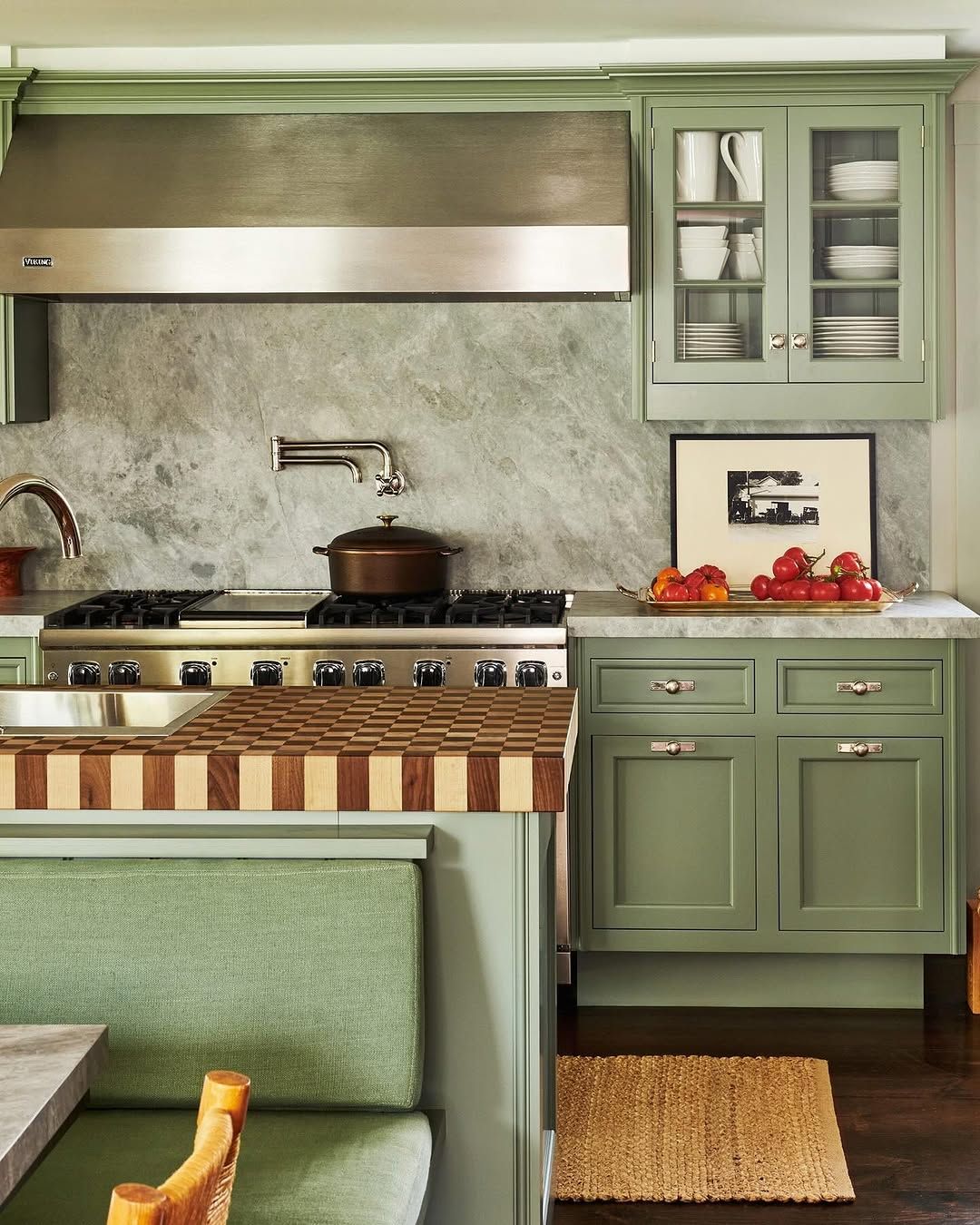
This design succeeds by masterfully blending traditional forms with earthy materials. The paneled cabinetry and built-in banquette have a classic, almost formal structure. However, the choice of a deep olive green, paired with the organic movement of the gray-veined marble, keeps the space from feeling stiff. The integration of a thick wood butcher block on the island adds another layer of natural texture and warmth, creating a kitchen that feels both sophisticated and deeply inviting—a perfect spot for both cooking and gathering.
⭐ The One Thing
Before you commit to a built-in banquette, here’s a quick checklist:
- Measure for Comfort: Is there at least 48 inches of clearance between the edge of the banquette and the opposing counter or wall? Anything less will feel cramped.
- Check Seating Depth: Standard banquette seat depth is 18-24 inches. Ensure this works with your table size, leaving enough legroom.
- Fabric Choice: Are you choosing a performance fabric? In a kitchen, spills are inevitable. Look for materials that are stain-resistant and easy to clean.
- Access to Storage: If your banquette includes storage, is it easy to access? Hinged tops or pull-out drawers are more user-friendly than designs you have to completely disassemble.
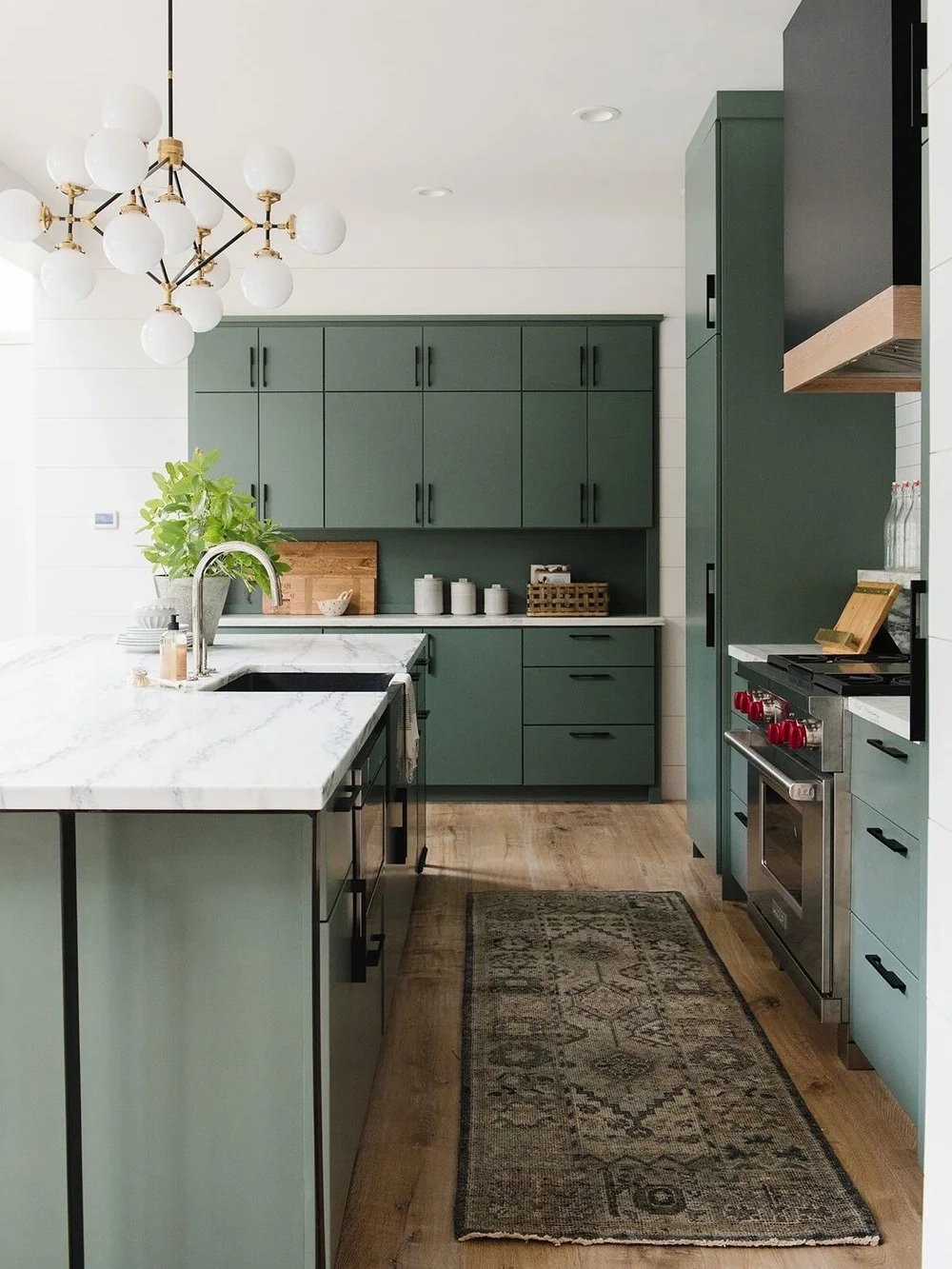
12. Sophisticated Deep Olive with Shiplap Walls
To achieve this high-contrast, modern look, pay close attention to the finish of your materials. The deep olive cabinets here have a matte, almost velvety finish, which absorbs light and makes the color feel richer and more profound. This is contrasted beautifully by the slight sheen of the marble-patterned island and the crisp lines of the white shiplap. Using matte black hardware, rather than a shinier metal, reinforces the modern, understated aesthetic and ties in with the dark sink and chandelier details.
✅ Before You Start
This dramatic, high-contrast style is best suited for medium to large kitchens (180 sq ft and up) that receive a good amount of natural light. The deep olive cabinets require brightness to avoid feeling heavy or dark. The use of white shiplap on the walls and a large, light-colored island is a clever strategy to balance the dark cabinetry and bounce light around the room. For a smaller space, consider a similar look but with a lighter green, as seen in Idea #18.
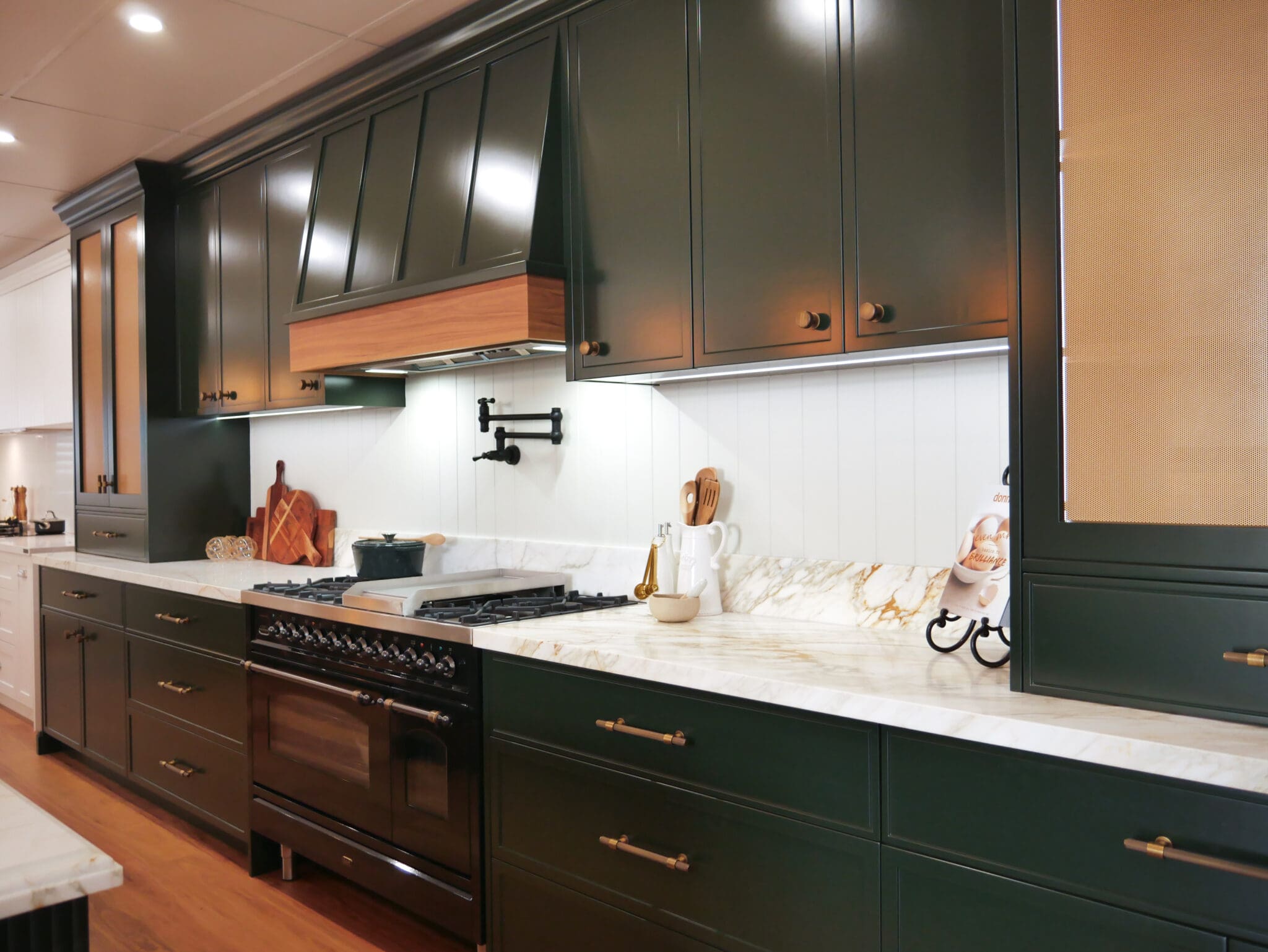
13. Dark Forest Green Kitchen with Gold-Veined Marble
The game-changing element here is the countertop. It’s not just light marble; it’s marble with prominent gold veining that directly echoes the gold-toned cabinet hardware. This intentional coordination between the stone and the metal fixtures creates a cohesive and incredibly luxurious look. It’s a detail that takes the design from “nice green kitchen” to “stunning, designer-grade space.” It demonstrates a commitment to a unified vision and elevates all the surrounding elements.
🧹 Maintenance Reality
A professional-style range with statement hardware is a dream for many home chefs, but they come with practical considerations. The higher BTU output of these ranges often requires a more powerful—and often louder—ventilation hood. Be sure to budget for adequate ventilation, not just the appliance itself. Furthermore, the stainless steel and black surfaces, while handsome, will show every fingerprint and splatter. Keeping it looking pristine requires daily wiping with a microfiber cloth and a gentle cleaner.
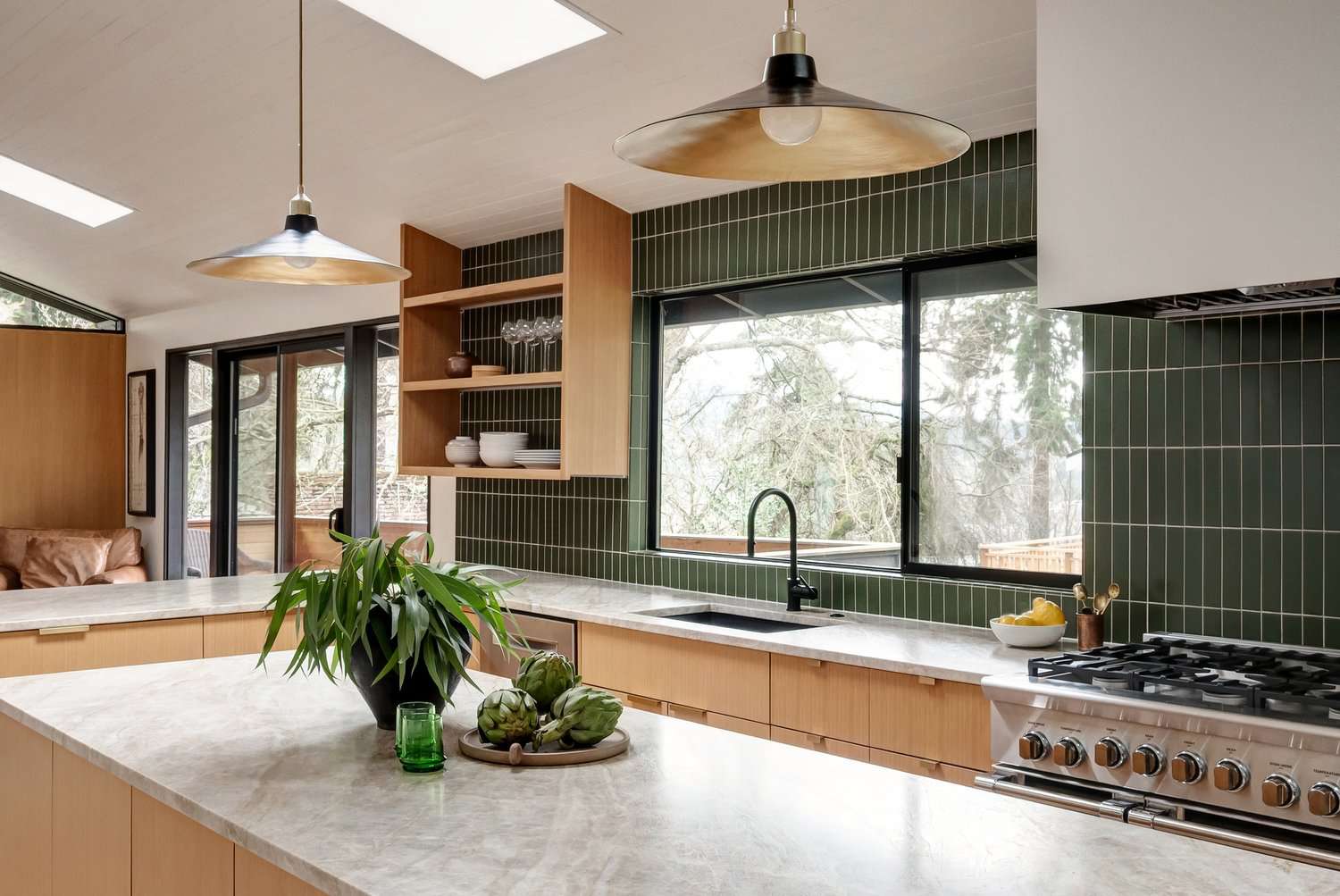
14. Modern Kitchen with Dark Green Vertical Tiles and Wood Cabinetry
The success of this kitchen lies in its bold use of vertical lines. The skinny, dark green backsplash tiles create a sense of height and a dramatic, graphic texture that becomes the room’s focal point. This verticality is subtly balanced by the strong horizontal grain of the warm wood cabinetry. This visual push-and-pull, combined with the clean lines of the flat-panel cabinets and the dark window frames, results in a space that feels both organic and rigorously modern. It’s a sophisticated play on geometry and texture.
💡 Designer Tip
We’re seeing a huge surge in “kit-kat” or skinny vertical tiles on Pinterest and in design magazines, and for good reason. It’s a fresh alternative to the long-reigning subway tile. This style offers texture and color in a contemporary format that feels both architectural and decorative. Its popularity stems from a desire for more personalized, unique details in our homes. While trendy now, its classic, geometric nature gives it real staying power, ensuring it will look current for years to come. This is one trend you can safely invest in.
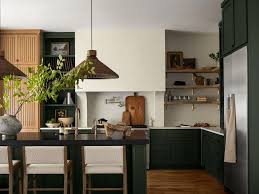
15. Contemporary Fixtures for a Nature-Inspired Green Kitchen
The focus on biophilic design—connecting our living spaces with nature—is stronger than ever, and it’s driving the popularity of green kitchens. This isn’t just about the color; it’s about creating a holistic environment. Contemporary designs are pairing green cabinets with other nature-inspired elements like warm wood tones, stone-look countertops, and large windows that frame outdoor views. The idea is to create a calming, restorative space that feels like a breath of fresh air, even when you’re just doing the dishes.
💰 Budget Breakdown
When selecting your green, consider the “temperature” of your fixtures. If you’ve chosen brushed nickel or stainless steel appliances (cool tones), a cooler sage or mint green will harmonize beautifully. If you’re using brass, gold, or bronze fixtures (warm tones), a warmer olive or forest green with yellow undertones will create a more cohesive look. Holding a hardware sample directly against your cabinet color sample in natural light is the best way to see this relationship clearly.
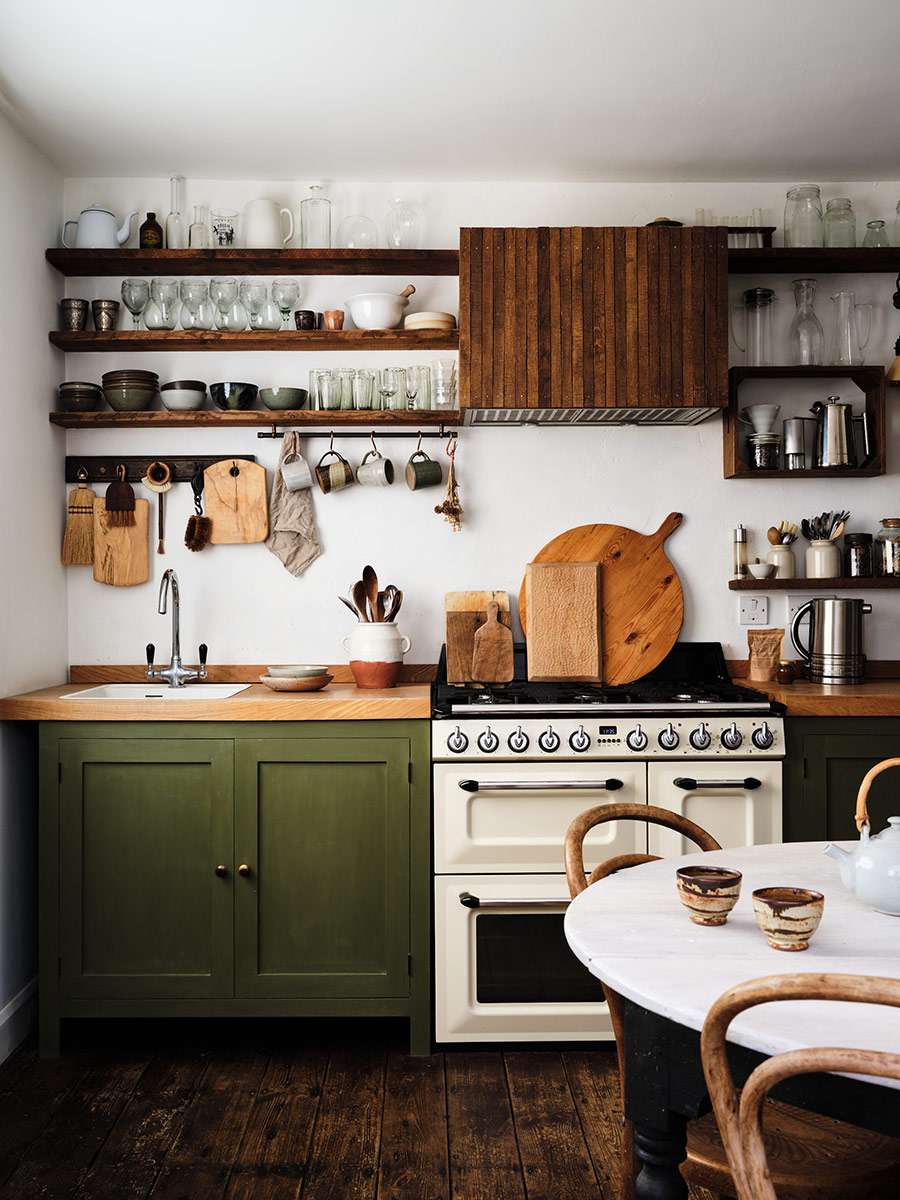
16. Rustic Olive Kitchen with Unfinished Wood Open Shelving
This look is charmingly rustic, but let’s be honest about open shelving in a kitchen: it requires commitment. Dust and airborne cooking grease are a reality. Items you use daily, like plates and glasses, will be fine as they’re washed regularly. However, decorative items will need frequent dusting. The unfinished wood itself also needs care. While beautiful, it’s more susceptible to moisture and stains than a sealed wood. Place a thin, clear acrylic liner on the shelves to protect the wood without sacrificing the look.
⚠️ Real Talk
The formula for this cozy, rustic space is refreshingly simple: 40% earthy color (the olive green lower cabinets), 40% raw natural texture (the unfinished wood shelves and countertops), and 20% classic neutral (the white walls and range cooker). The beauty of this math is its honesty. Nothing is too polished or perfect. You could easily swap the olive for a muted blue or a warm gray and still capture that same relaxed, homely feeling, as long as you maintain the high percentage of natural, unrefined texture.
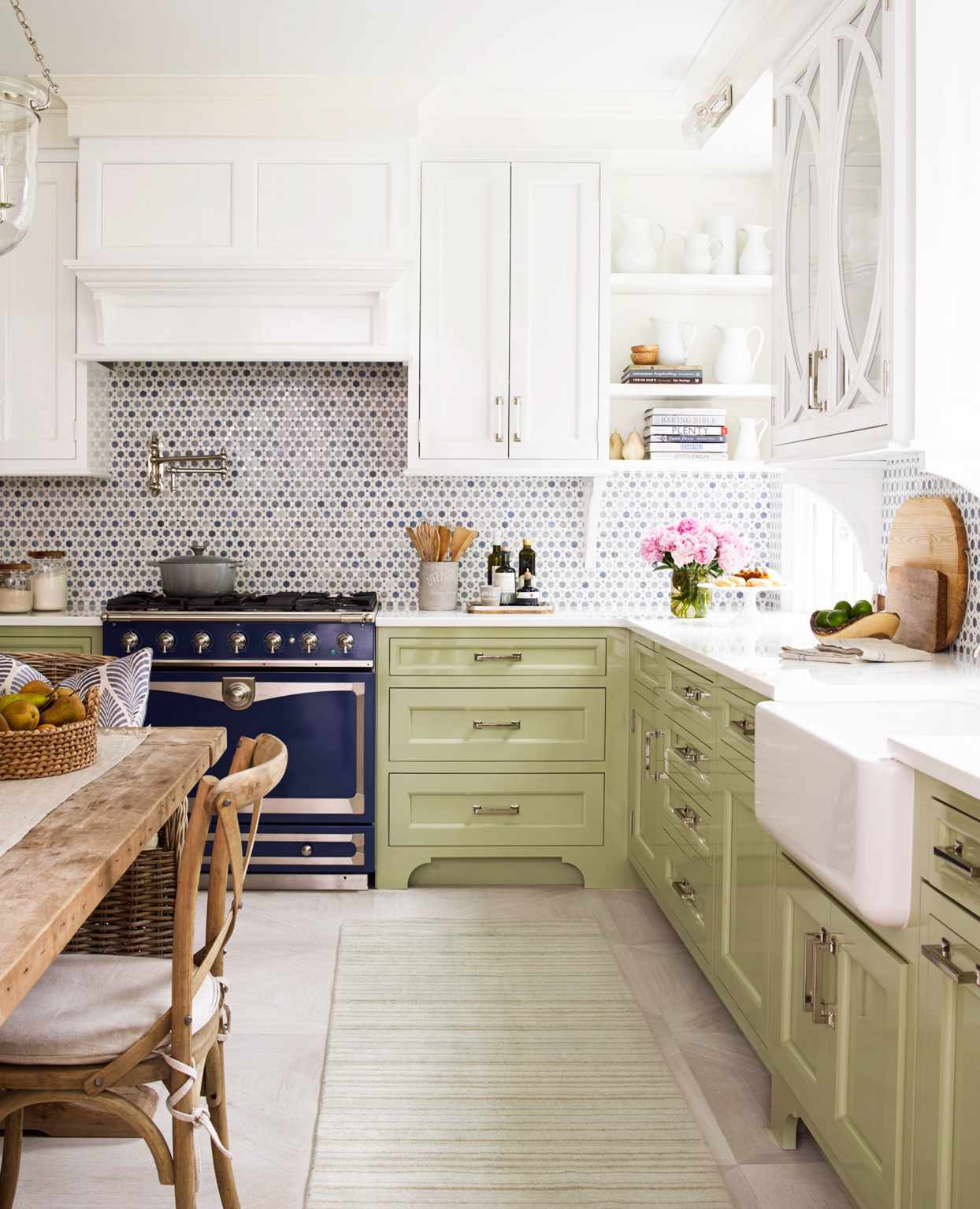
17. Two-Tone Kitchen with Sage Lowers and a Pop of Blue
The single thing that gives this kitchen its unique personality is that stunning dark blue range. In a sea of calm sage green, classic white, and neutral tile, the range is a bold, confident statement. It acts as the undeniable focal point of the room. Taking it away would leave a perfectly pleasant but much more conventional kitchen. Its presence injects a dose of color and British-inspired cool that elevates the entire design from pretty to truly memorable.
📐 Style Math
This design beautifully illustrates the “80/20” rule in practice. About 80% of the kitchen is composed of safe, timeless elements: sage green and white cabinets, white countertops, and a classic farmhouse sink. This creates a solid, appealing foundation. The remaining 20% is where the magic happens—the patterned backsplash and, most notably, the bold blue stove. This allows for a strong expression of personal style without the risk of the whole room feeling dated in a few years. It’s a smart way to be both stylish and safe.
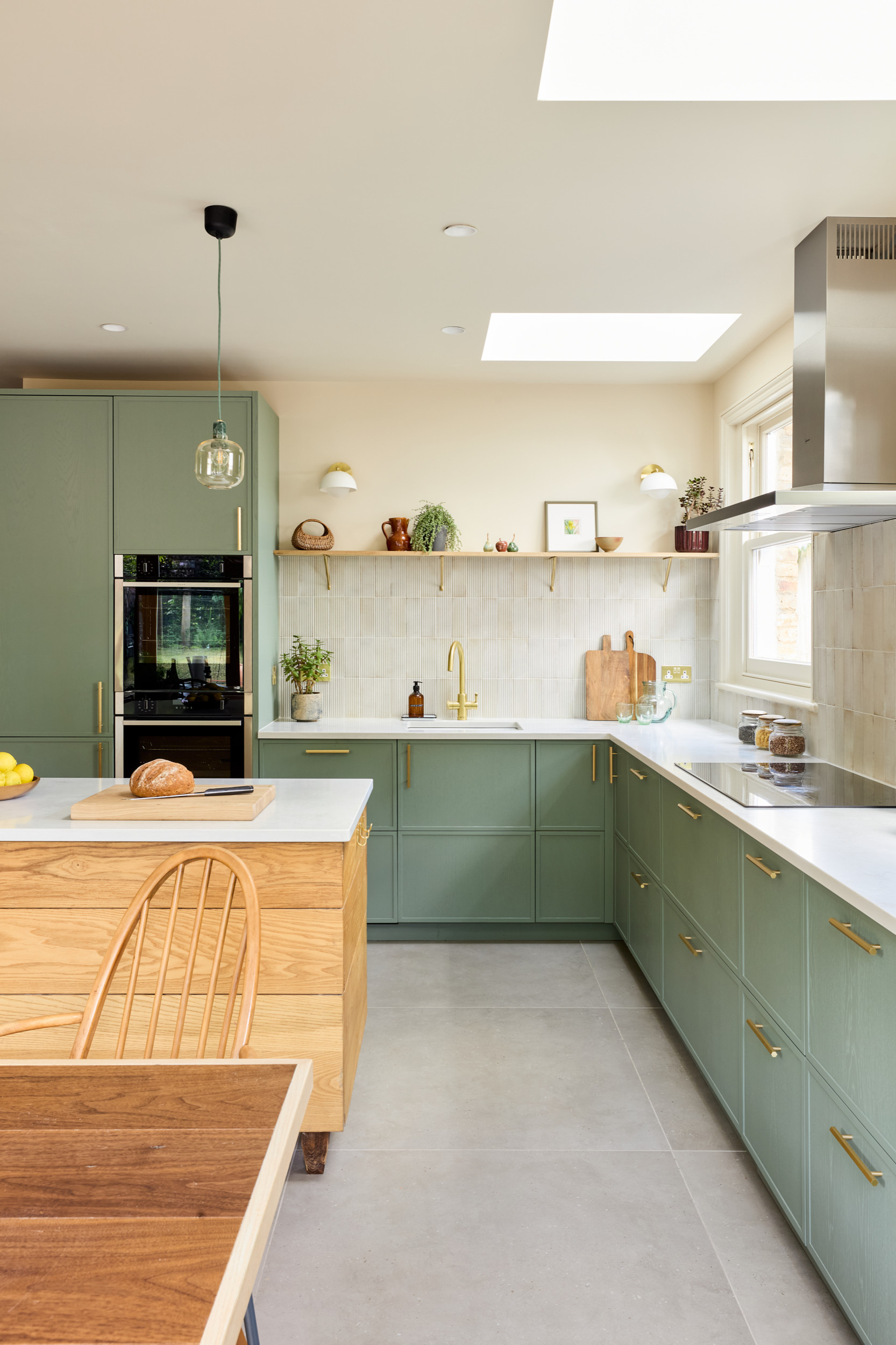
18. Contemporary Sage Kitchen with a Ribbed Tile Backsplash
Texture, texture, texture. That’s the big story for 2026. After years of smooth, flat surfaces, we’re seeing a huge embrace of materials that engage the sense of touch. The vertically ribbed white tiles in this kitchen are a perfect example. They add subtle shadow play and a tactile quality that a flat tile just can’t match. Paired with flat-panel cabinets, the contrast is sophisticated and modern. This move toward more textural, engaging surfaces is a direct response to our screen-filled lives, as we seek more tangible, grounding elements in our homes.
💸 Get This Look For Less
Gold bar pulls add instant warmth and a touch of luxury. Here’s how to install them perfectly:
- Buy a Template: The best $10 you’ll ever spend. A cabinet hardware jig or template ensures every hole is drilled in the exact same spot.
- Measure and Mark: Decide on placement. For modern flat-panel doors, aligning the pull vertically with the edge of the door frame looks clean. Use the jig to mark your drill spots with a pencil.
- Drill a Pilot Hole: Use a drill bit slightly smaller than your screw diameter to drill a shallow pilot hole. This prevents the wood from splitting.
- Drill from the Front: Drill the final hole from the front of the cabinet door, placing a piece of scrap wood on the back to prevent tear-out when the bit exits.
- Install: Screw the pull in from the back of the door.
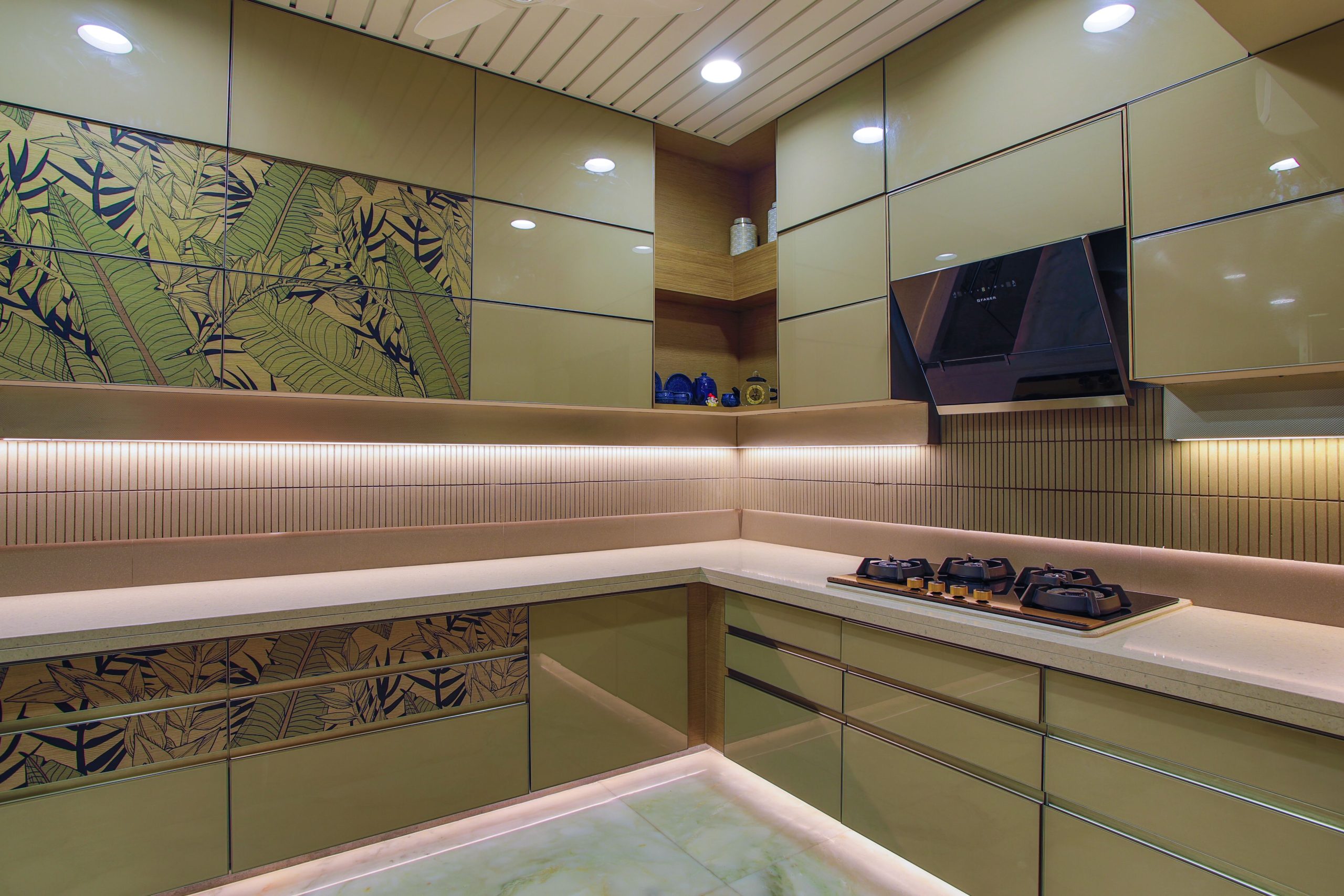
19. Modern Olive Green Kitchen with Tropical Accents
Patterned cabinet fronts are a fantastic way to inject personality, but a little goes a long way. The key to this successful design is restraint. Notice how the tropical leaf-patterned panels are used sparingly, almost like accent art, while the majority of the cabinetry is a solid, glossy olive green. A good rule of thumb is the 1/3 rule: use the pattern on no more than one-third of the total cabinet surface area to keep the look feeling intentional and high-design, rather than busy and overwhelming.
📏 Scale Guide
Glossy cabinet finishes, like the olive green ones here, are pros and cons. Pro: They are incredibly easy to wipe down and are highly resistant to moisture. Con: They show everything. Fingerprints, smudges, and water spots will be much more visible than on a matte or satin finish. If you have kids or are a bit of a perfectionist, be prepared for frequent wipe-downs with a microfiber cloth to keep them looking their best. Under-cabinet lighting is beautiful, but it will also highlight every single speck of dust on your countertop.
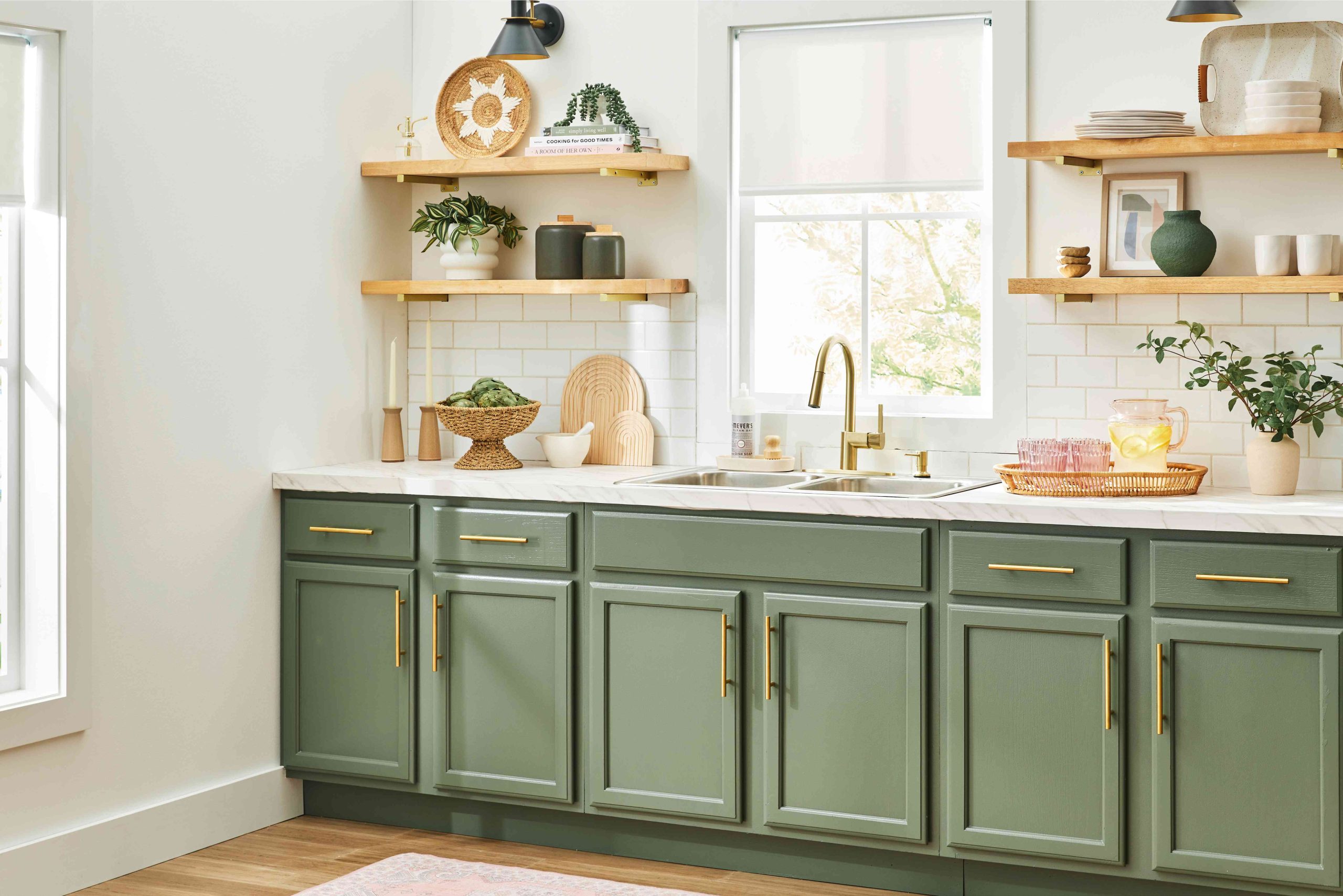
20. Inviting Sage Green Kitchen with Open Wood Shelves
This fresh, natural look is very achievable on a budget. Use stock Shaker base cabinets from a big-box store and paint them a soft sage green. For the open shelving, simple pine boards from Lowe’s or Home Depot, paired with stylish gold brackets found online, can cost less than $150. A classic white subway tile backsplash is a timeless and wallet-friendly choice. The key is spending on the “jewelry”—a beautiful gooseneck faucet like the one shown can be the focal point that makes the whole setup look more expensive than it is. This is a much more affordable approach compared to the custom wood nook of Idea #10.
🔧 How-To Brief
Before you commit to open shelving in the kitchen, run through this quick checklist:
- Inventory Your Items: Do you have dishes, glassware, and decor items that are attractive enough to be on display? Open shelving is not the place for mismatched plastic cups.
- Consider Your Cooking Style: If you do a lot of high-heat, splattery cooking, be aware that items on open shelves near the stove will need more frequent cleaning.
- Check Wall Strength: Ensure the wall where you plan to hang shelves has studs in the right places to support the weight of the shelves plus your heavy dishes. Drywall anchors alone are not sufficient.
- Be Honest About Clutter: Are you naturally a tidy person? Open shelves require regular curating to look good and can quickly become a source of visual stress if you’re not.
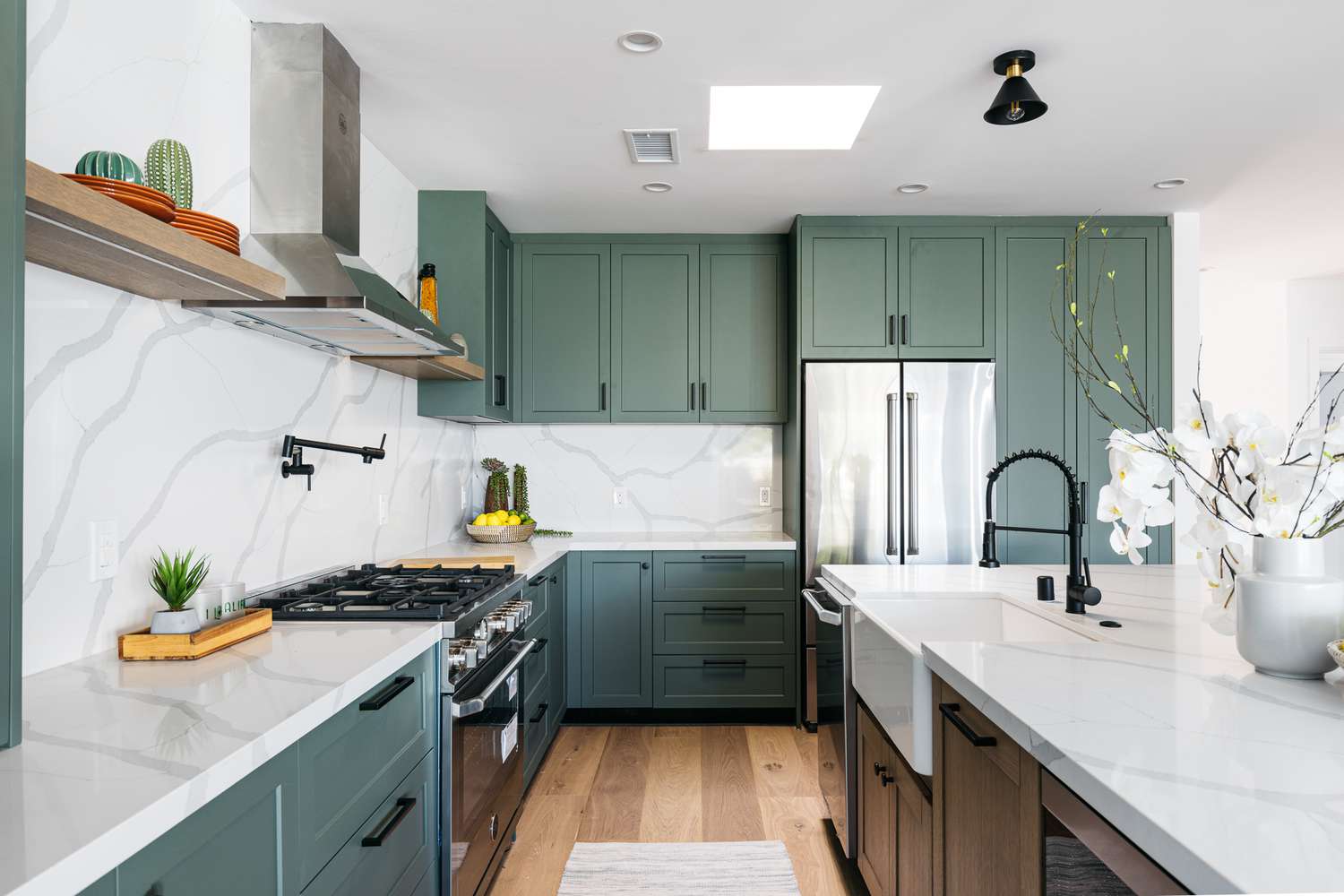
21. Clean and Serene: Sage Green Meets Marble-Look Quartz
This kitchen’s serene atmosphere comes from its low-contrast palette and material consistency. The sage green cabinets, light wood floors, and white quartz are all similar in value (lightness/darkness), creating a soft, blended look. The masterstroke is using the same marble-look quartz for both the countertops and the backsplash. This slab backsplash creates a seamless, continuous surface that is incredibly calming to the eye and makes the space feel cohesive and high-end. The matte black hardware acts as a subtle, grounding accent against the soft backdrop.
🔥 Trending Context
This streamlined, organic-modern aesthetic is incredibly versatile and works well in almost any size kitchen, from a compact 100 sq ft galley to a spacious 300+ sq ft open-plan area. For smaller kitchens, the flat-panel cabinets and light color scheme help maximize the sense of space. In a larger kitchen, the clean lines prevent the design from feeling too busy. Standard 8-foot ceilings are perfectly fine, but the look is particularly stunning with 9-foot or higher ceilings, which would allow for another row of open shelving above the main run.
22. Designs with Staying Power in Green Kitchens
The longevity of the green kitchen trend comes from its connection to nature, a timeless source of inspiration. What gives a design “staying power” isn’t chasing a fleeting trend, but interpreting a classic color in a way that feels both current and personal. Designs that last, like the one hinted at here, typically pair the green with other timeless materials like wood, marble, or classic tile. They focus on good layout, quality materials, and a color that the homeowner genuinely loves, rather than just what’s popular this second.
🎯 What Makes It Work
To ensure your green kitchen has staying power, focus on the undertone. A green with a slightly gray or brown undertone (like sage, olive, or a muted forest green) will feel more sophisticated and have more longevity than a pure, vibrant green (like kelly or lime). These more complex greens act more like neutrals, making them easier to live with for years. They provide color without screaming for attention, ensuring your kitchen feels elegant long after the initial trend has peaked.
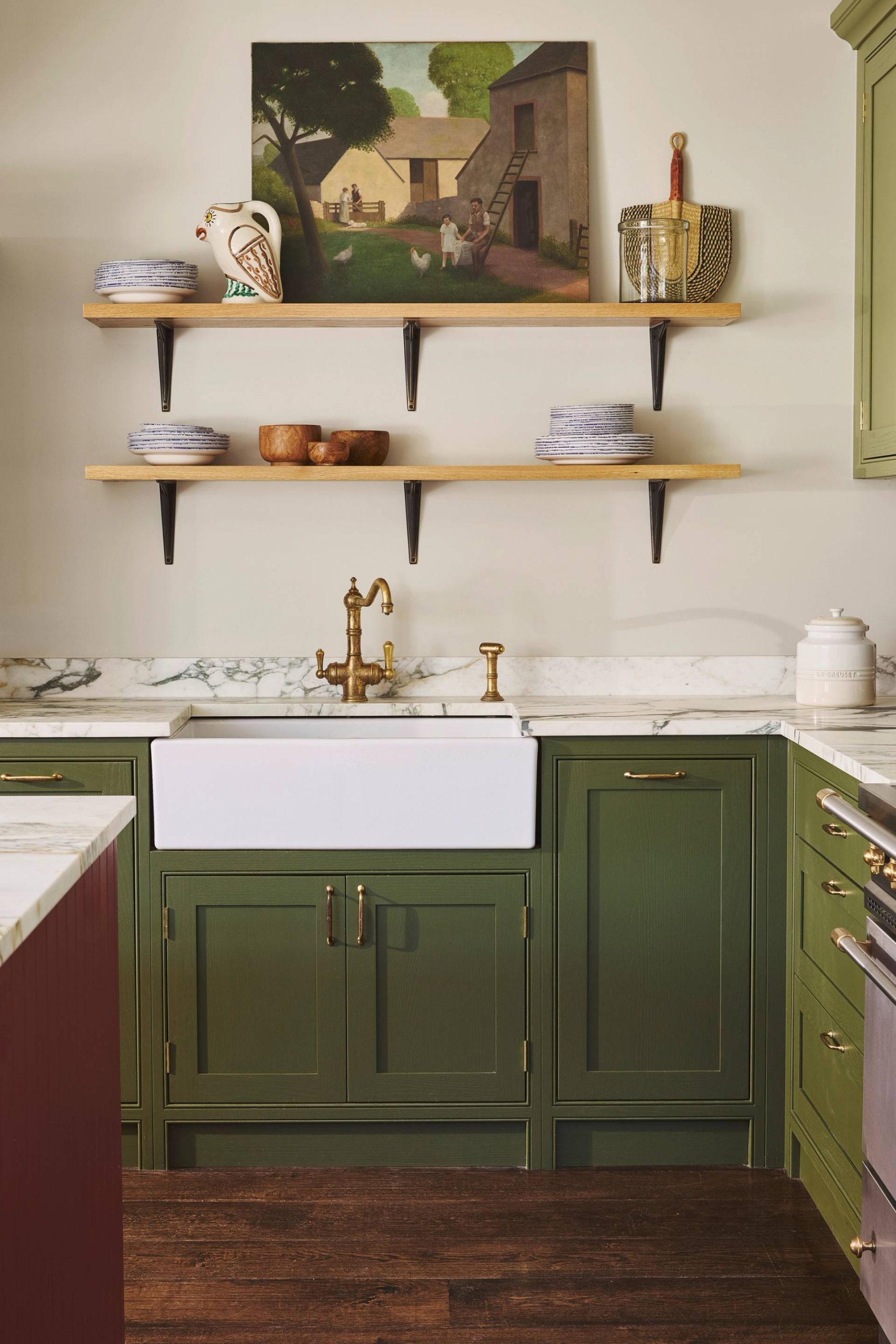
23. Classic Forest Green Paired with a Farmhouse Sink
This traditional, earthy look combines classic elements for a warm, established feel. Here is an estimated budget for a medium kitchen to achieve this style.
- Shaker Cabinets (Forest Green): $8,000 – $16,000
- White Marble Countertops: $5,000 – $10,000
- Farmhouse Sink & Brass Faucet: $1,500 – $3,500
- Floating Shelves & Hardware: $400 – $1,000
- TOTAL: $14,900 – $30,500
⭐ The One Thing
This design is a masterclass in textural balance. The smooth, painted finish of the forest green cabinets provides a solid color base. This is contrasted by the organic, swirling veins of the white marble countertop. The rustic, raw grain of the light wood floating shelves adds another layer of natural texture, while the antiqued brass faucet introduces a warm, metallic patina. Finally, the dark wood floor grounds the entire space. It’s this rich combination of different materials and finishes that makes the room feel so layered and complete.
24. Earthy Olive Green Shaker Kitchen with Gold Hardware
The single element that breathes life into this kitchen is the abundance of natural wood. While the olive green cabinets and white marble are a beautiful, classic pairing, it’s the warm tones of the open shelving and the wood floor that keep the space from feeling too formal or cold. The wood introduces an organic, rustic quality that makes the whole room feel more approachable and lived-in. It bridges the gap between the earthy green and the crisp white, creating a perfectly balanced, refreshing space. Compare this to Idea #21, which uses a similar palette but feels more modern due to the absence of prominent wood tones.
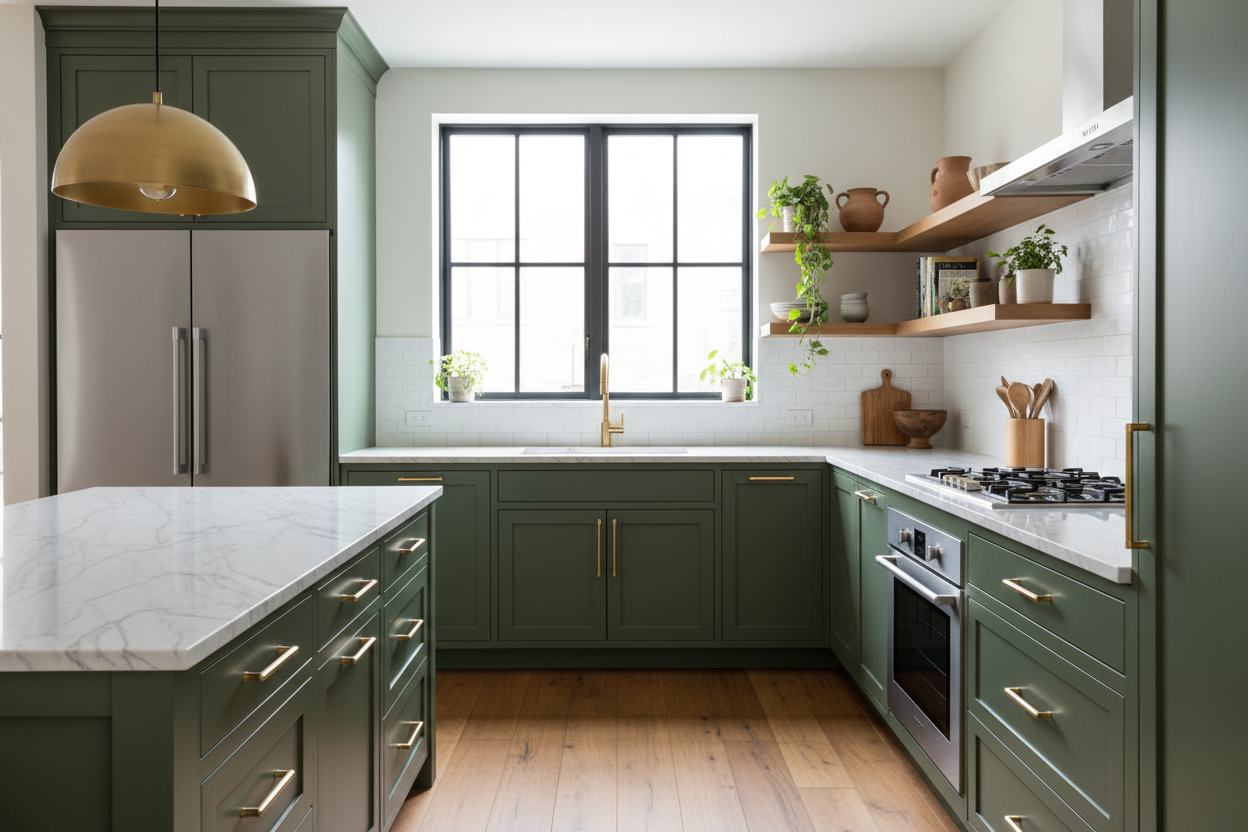
✅ Before You Start
When using open shelving, don’t just line things up. Create visual interest by varying the height and texture of the items on display. Notice how stacks of white dishes are placed next to a taller glass vase, which is next to a small, leafy green plant. This creates a dynamic, layered effect. A good rule of thumb is to vary object heights by at least 3-4 inches and to mix materials—like ceramic, glass, wood, and metal—to create a look that feels collected and curated, not staged.
25. Bright Sage Kitchen with a Marble Mosaic Tile Backsplash
The success of this kitchen lies in its smart use of light and subtle texture. The sage green cabinets provide a soft wash of color, but the design cleverly uses glass-front upper cabinets to break up the color block and reflect light, making the space feel more open. The marble mosaic tile backsplash adds a layer of sophisticated, shimmering texture without introducing a loud pattern. This combination of soft color, reflective surfaces, and subtle texture creates a room that feels bright, clean, and elegantly detailed.
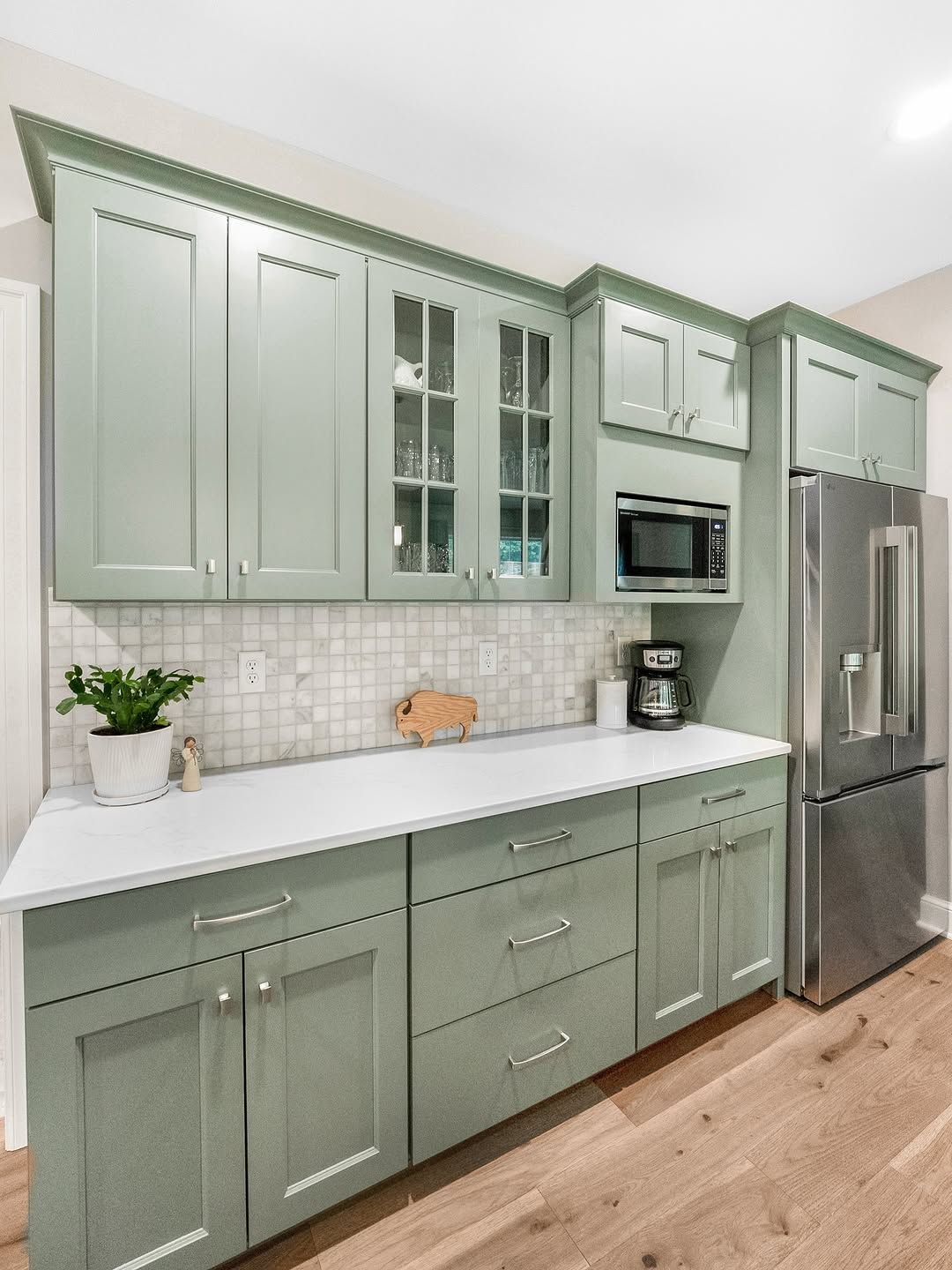
🧹 Maintenance Reality
Glass-front cabinets are beautiful for displaying your favorite dishes, but they require a certain level of tidiness. If you are not committed to keeping the contents neat and curated, they can quickly become a source of visual clutter. Before choosing glass fronts, honestly assess your organizational habits. As for the marble mosaic backsplash, if it’s made of real marble, it will need to be sealed periodically (every 6-12 months) to protect it from stains, especially behind the cooking area.
26. Two-Tone Kitchen with a Geometric Honeycomb Backsplash
This kitchen follows a balanced recipe for a fresh, modern look: 50% soft color (the sage green base cabinets), 40% crisp neutral (the white upper cabinets and countertops), and 10% playful pattern (the honeycomb backsplash and wood shelves). This formula feels grounded yet light. By keeping the darker color on the bottom and the lighter color on top, the design enhances the sense of height and airiness in the room. The wood shelving serves as a warm, organic bridge between the upper and lower halves.
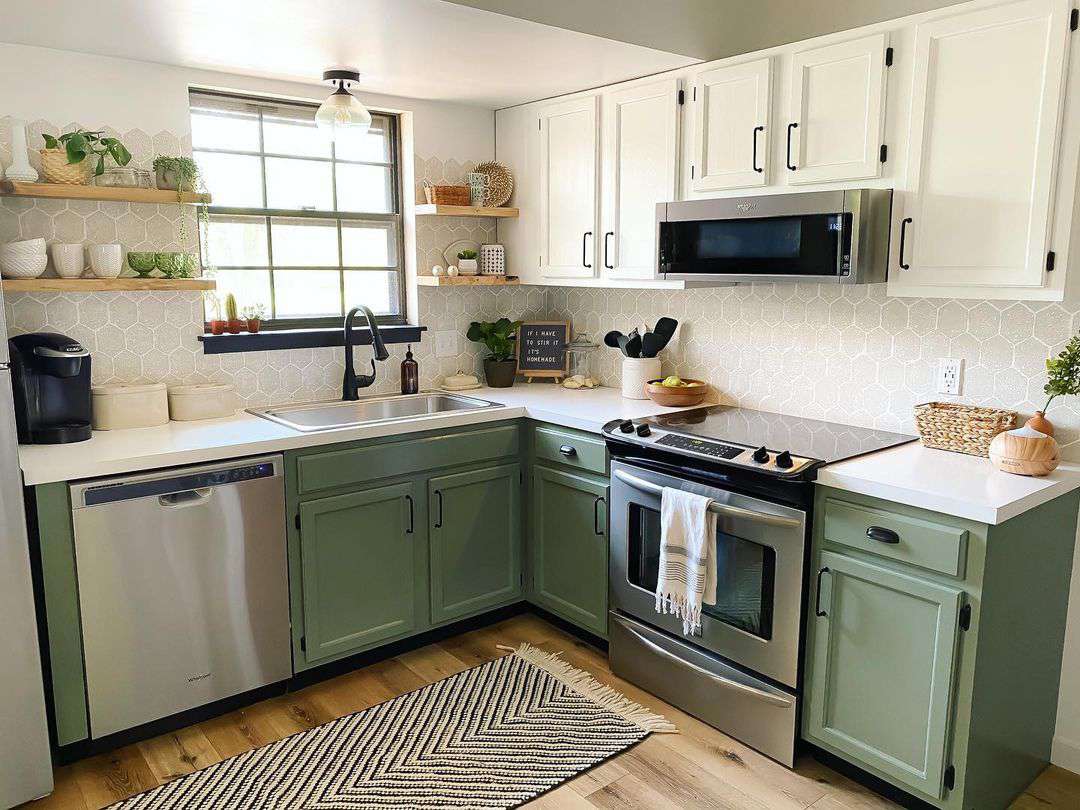
💡 Designer Tip
A two-tone cabinet design is a great way to add interest, but the dividing line is critical. The most foolproof approach is the one shown here: darker color on the bottom, lighter color on top. This grounds the space and feels natural to the eye. Reversing it—with dark cabinets on top—is a much bolder, more top-heavy look that can make a room feel smaller and the ceiling seem lower. It can be done, but it’s a trickier design to get right and works best in rooms with very high ceilings.
27. Understated Sage with Bold Black-and-White Star-Patterned Floor
The floor is, without a doubt, the hero of this kitchen. Everything else—the soft sage shaker cabinets, the simple white subway tile, the plain white countertop—is quiet, classic, and understated. These elements create a perfect neutral stage for the bold, graphic, star-patterned floor tiles to take the spotlight. Without this floor, the kitchen would be lovely but perhaps a bit safe. With it, the room has an injection of personality, confidence, and a touch of playful vintage charm. It’s a brilliant example of using one dynamic element to define a space. This is a more eclectic take on a patterned floor than the rustic version in Idea #1.
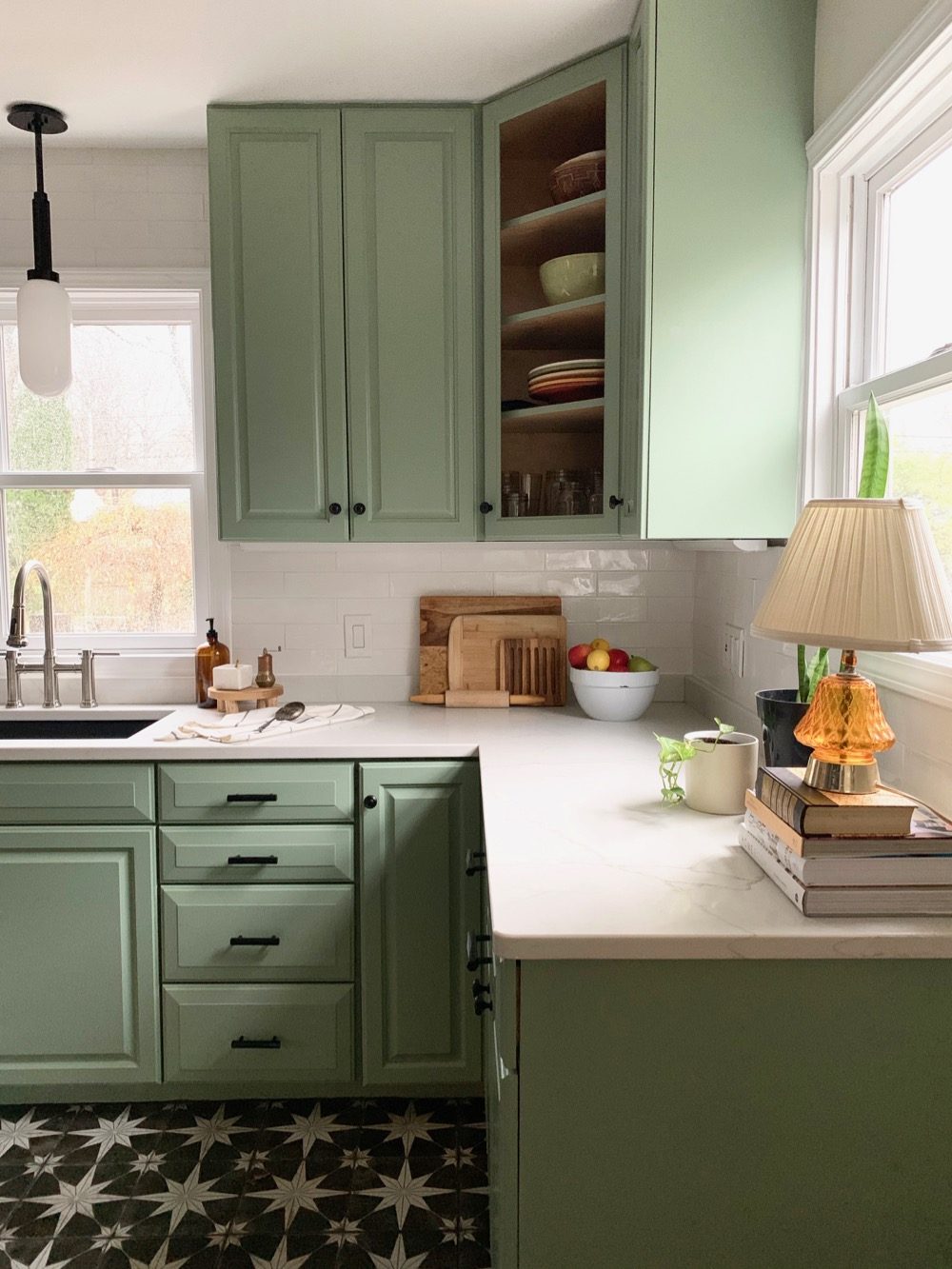
💰 Budget Breakdown
If you’re going to make a bold statement with patterned floor tile, you must commit to keeping the other major elements simple. Let the floor be the star. Trying to pair a floor like this with a busy backsplash, a heavily veined countertop, or dramatic cabinet hardware will result in visual chaos. The calm simplicity of the sage cabinets and white subway tile in this kitchen is not a coincidence; it’s a deliberate and necessary choice to create balance.
28. Cozy Sage Green Shiplap Kitchen with Marble Countertops
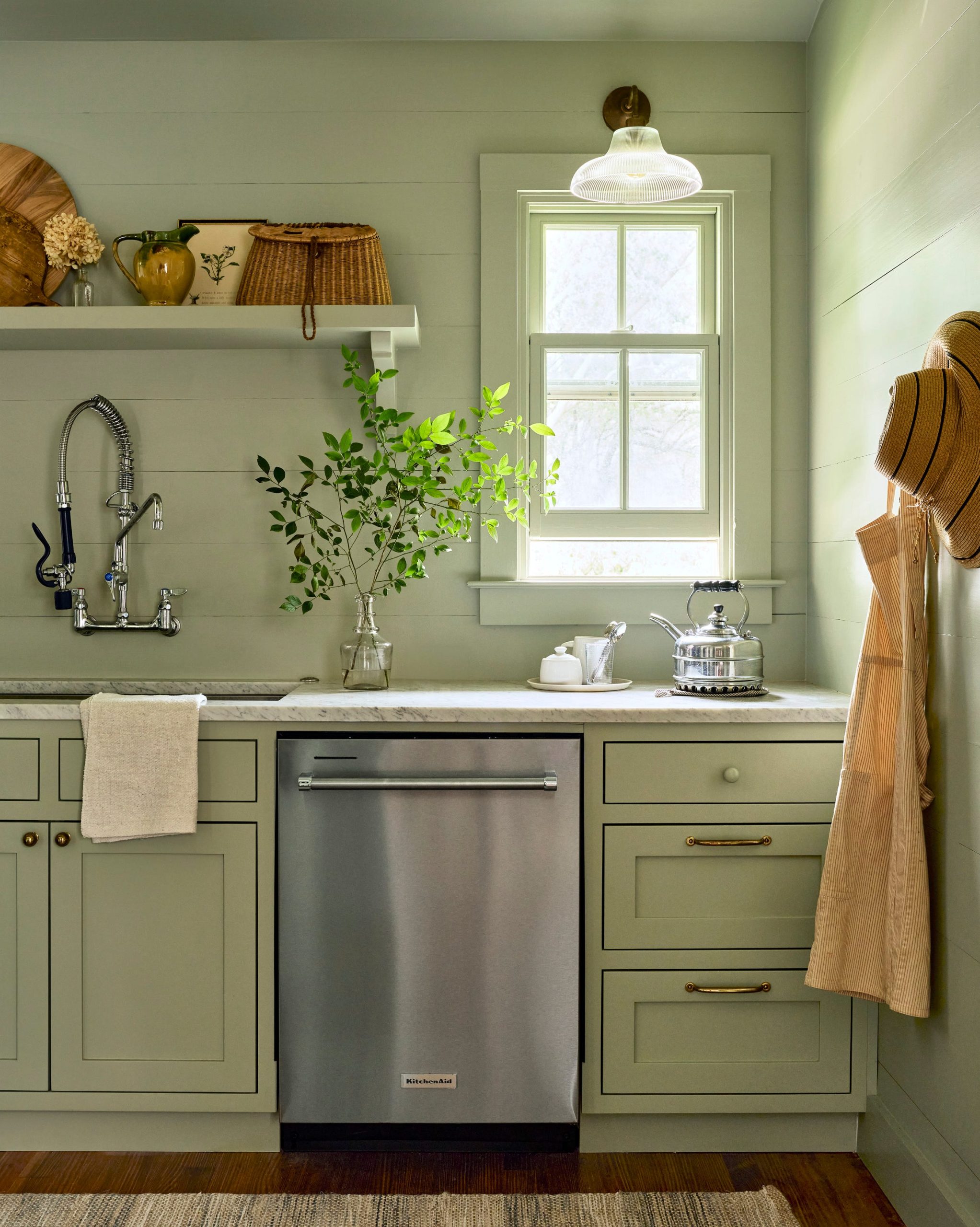
This kitchen is a masterclass in tone-on-tone texture. By painting both the flat-panel cabinets and the shiplap walls in the same shade of sage green, the design creates a deeply calming and cohesive look. Instead of relying on different colors for contrast, it uses the subtle texture of the shiplap’s horizontal lines and the smooth finish of the cabinets to create interest. The white marble countertop then cuts through the green, providing a clean, bright work surface that keeps the monochromatic scheme from feeling overwhelming.
⚠️ Real Talk
Love this cozy, textural look? You can create your own shiplap walls for a surprisingly low cost. Instead of buying pre-made shiplap boards, you can purchase thin sheets of plywood (often called underlayment) from a home improvement store and have them rip the sheets into 6-inch or 8-inch planks for you. Then, simply nail them to the wall, using a nickel as a spacer to get those classic shiplap gaps. A weekend of work and about $200 in materials can create a feature wall that looks like it cost thousands.
29. Traditional Green Kitchen Highlighted by Dark Wood Trim
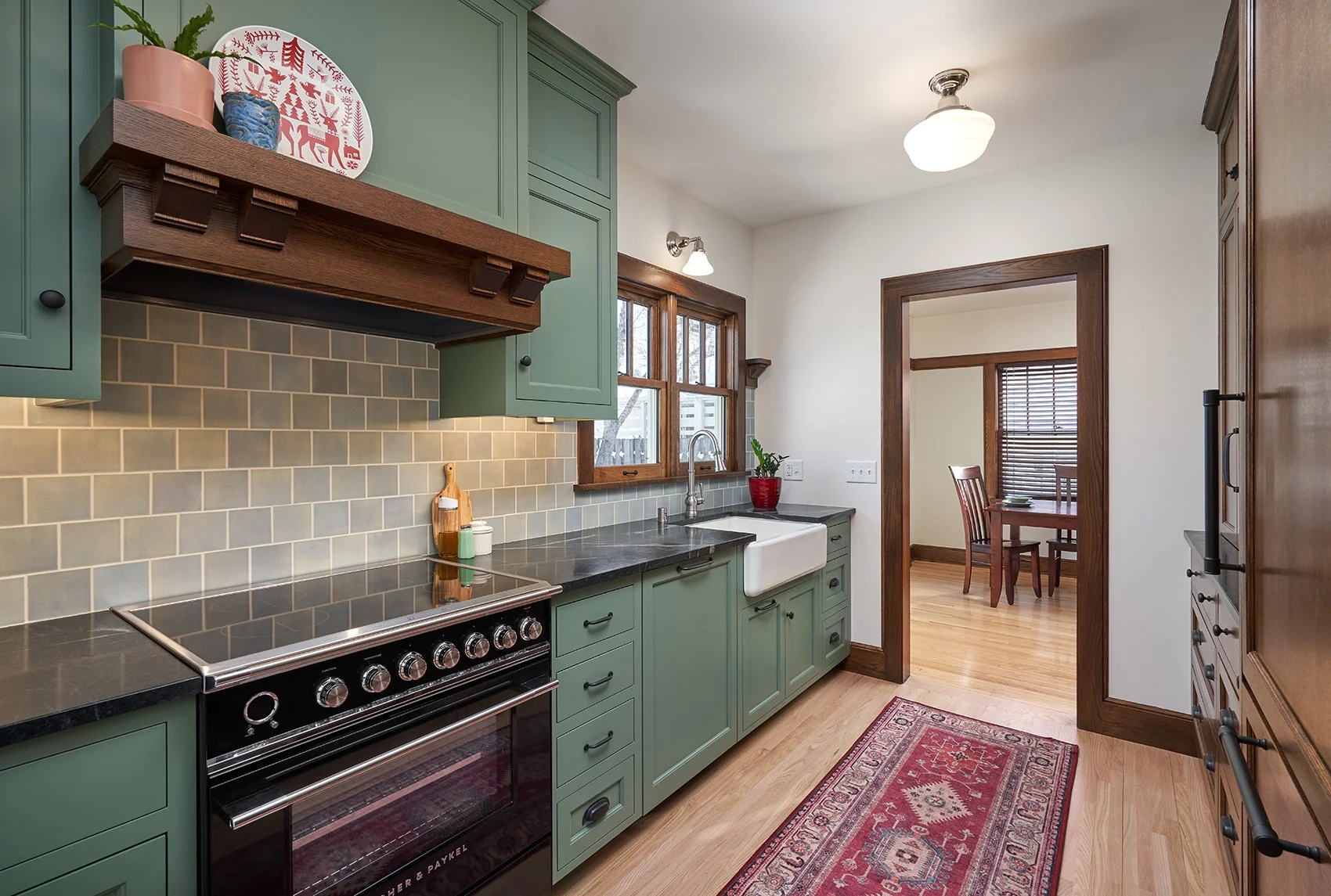
The single element that gives this kitchen its grounded, traditional character is the dark wood trim. Repeating the same dark stain on the custom range hood, the window frames, and the doorway trim creates a strong, cohesive architectural frame for the entire room. It’s a choice that speaks to craftsmanship and a more historic sensibility. While the sage green cabinets are lovely, it’s the rich contrast with this dark wood that provides the visual weight and established, almost heritage feel of the space.
📐 Style Math
This style, with its substantial wood trim and custom range hood, feels most at home in a medium to large kitchen (175-300+ sq ft) with ceilings that are at least 9 feet high. The dark wood elements, while beautiful, can feel heavy and visually lower the ceiling if it’s not high enough. In a smaller kitchen or one with 8-foot ceilings, this much dark trim could feel overpowering. For a lighter interpretation in a smaller space, consider the design in Idea #26.
Time to Find Your Perfect Shade of Green
We hope these 29 distinct green kitchens have sparked some serious inspiration and given you the confidence to go green. From the richest forest green to the most delicate sage, the perfect shade is out there, waiting to transform your space into a room you’ll love for years to come. The key is to trust your own style and build a space that feels like home to you. Now, the fun part begins: creating a kitchen that tells your story. Don’t forget to save your absolute favorites to Pinterest to start building your dream kitchen board!