
You know that feeling when you finally find the sage green kitchen that looks exactly right for your space? That little “aha!” moment when the cabinets, countertops, and hardware all click into place. But then comes the hard part: figuring out how to make that Pin-worthy dream a reality. We spent serious time browsing IKEA, Home Depot, and Rejuvenation to bring you only what’s worth your attention this year. Inside, you’ll find 32 curated ideas covering everything from earthy modern farmhouse styles to elegant designs with marble and brass. In 2026, we’re all craving a little more calm and connection to nature in our homes, and sage green is the perfect color to bring that grounding energy right into the heart of the house. And stay until the end — we break down the most common mistakes that can ruin these looks. 📌 Save this to Pinterest for later — you’ll want to revisit these ideas.
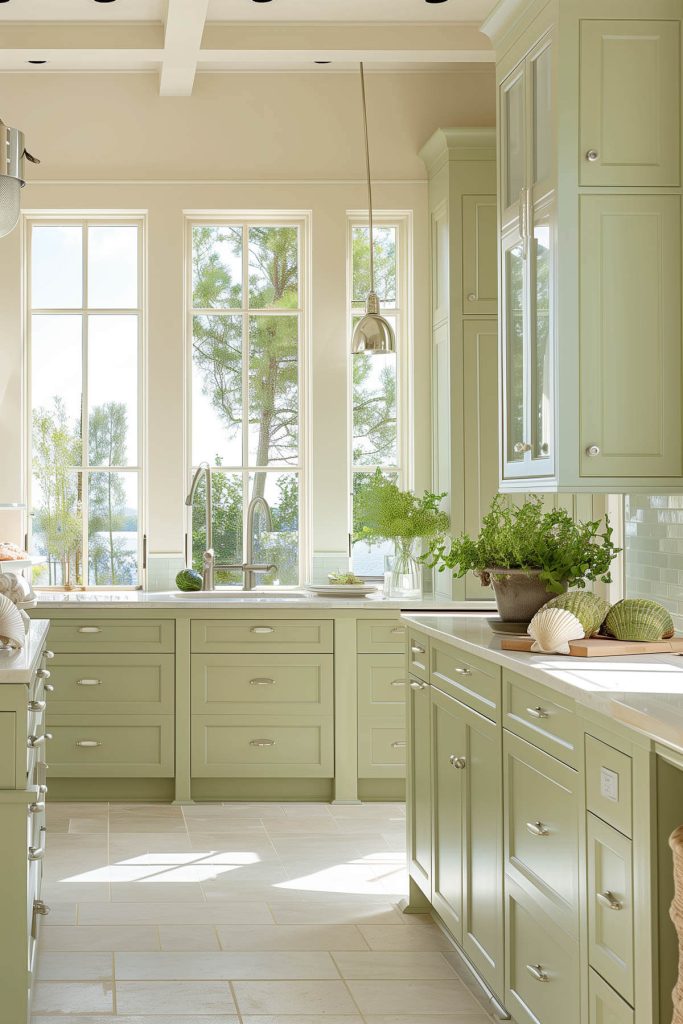
1. Coastal Sage Green Kitchen with Expansive Windows
This kitchen is a masterclass in using color to complement a view. The light sage green of the cabinetry has just enough color to stand out, but it’s soft enough not to compete with the beautiful waterfront scenery outside. The choice of creamy off-white for the countertops and pale green for the backsplash creates a low-contrast, tonal palette. This makes the entire space feel unified and incredibly serene, letting the immense natural light be the star of the show.
⚠️ Real Talk
An idea like this thrives on natural light and benefits from a generous footprint, ideally 120 square feet or more, to avoid feeling cramped. The most crucial element, however, is the window situation. To achieve this bright, airy feel, you need large, tall windows; standard-sized ones won’t have the same impact. A minimum ceiling height of 9 feet is recommended to accommodate the scale of the windows and prevent the room from feeling compressed. If your space is smaller, consider the two-tone approach in Idea #6 to maintain a sense of openness.
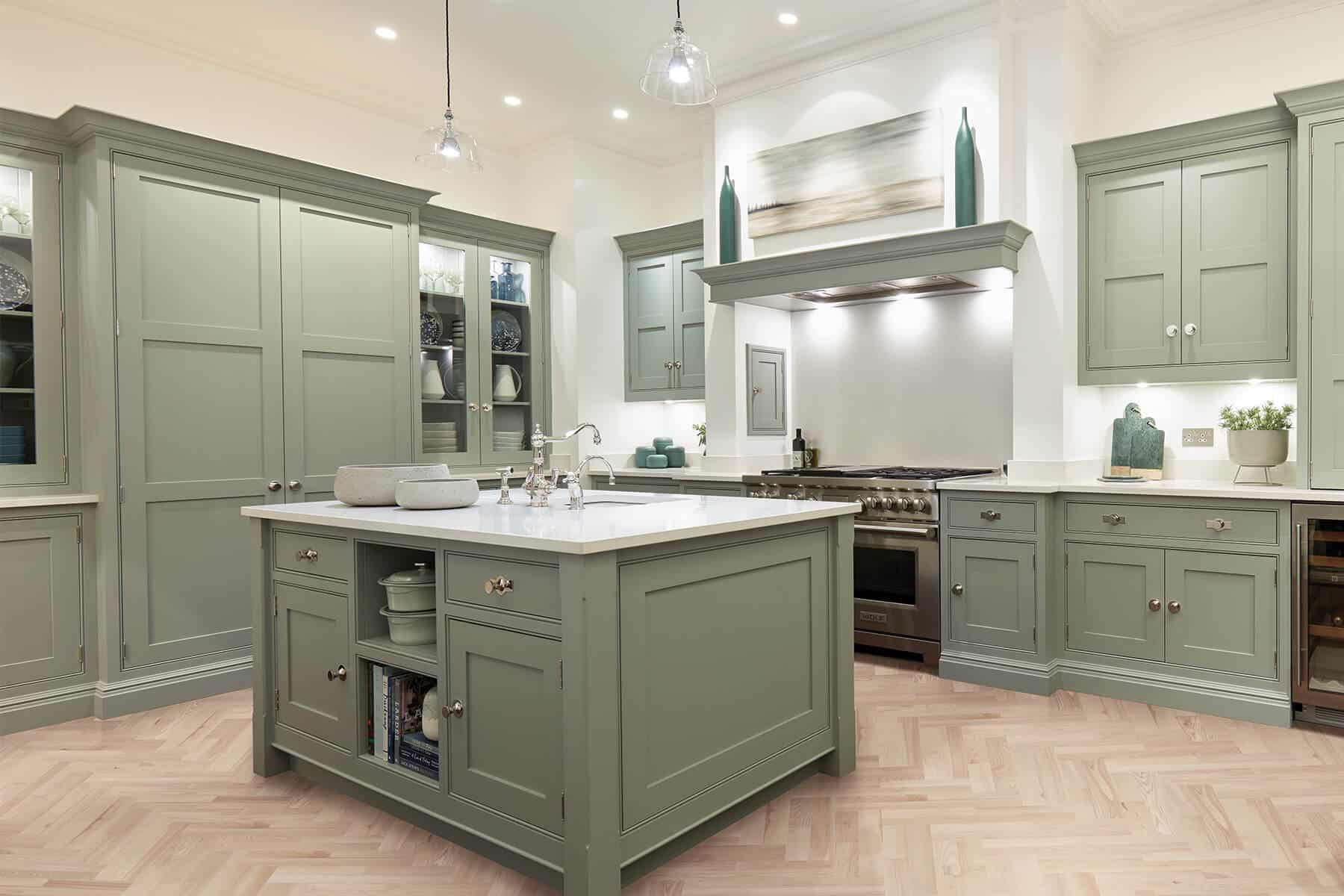
2. Elegant Sage Shaker Kitchen with Light Herringbone Floors
The formula here is all about classic balance with a touch of modern elegance. Think of it as: 50% calming sage green cabinetry + 25% crisp white countertops + 20% warm wood flooring + 5% gleaming stainless steel. This ratio ensures that no single element overpowers the others. The sage provides the personality, the white keeps it bright and clean, the wood adds warmth and texture, and the steel brings a professional touch. You could swap the herringbone wood for a large-format porcelain tile in a light tone and still achieve a similar sophisticated balance.
⭐ The One Thing
When installing herringbone wood floors, the direction of the pattern is critical. For a look that makes the room feel larger, run the points of the herringbone pattern parallel to the longest wall of the kitchen. This creates a visual arrow that draws the eye forward and elongates the space. In a room with a large island like this one, it prevents the pattern from feeling chaotic and instead gives it a clear, intentional direction that complements the clean lines of the cabinetry.
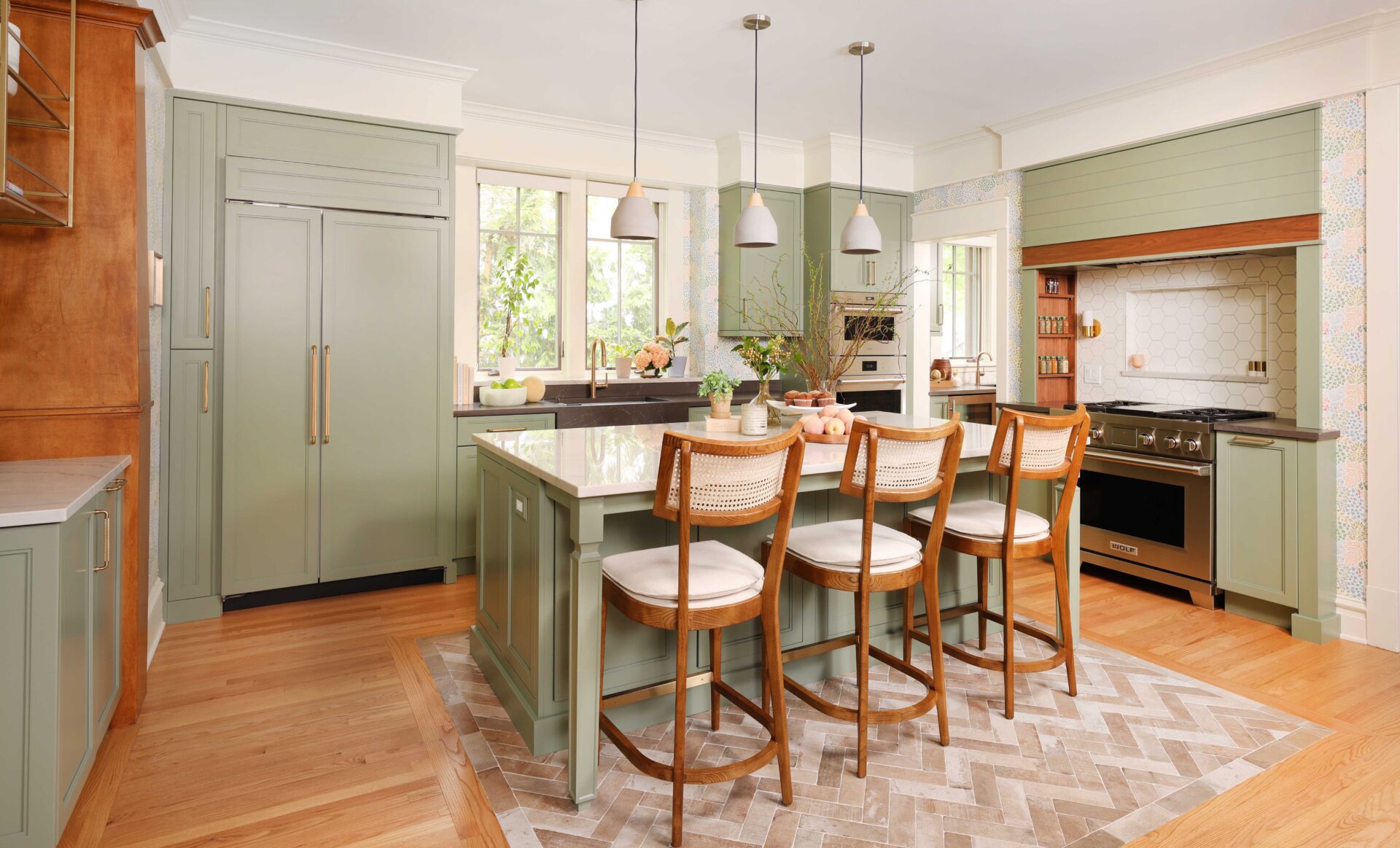
3. Sage Kitchen with a Marble Island and Woven Cane Stools
The single element that elevates this entire kitchen is the choice of natural wood and cane bar stools. Without them, the combination of sage green cabinets, a dramatic marble island, and dark perimeter countertops could feel a bit formal and cool. The stools introduce a vital layer of warmth and texture. Their woven backs and light wood frames bridge the gap between the sleek, polished stone and the earthy green, making the space feel instantly more inviting, relaxed, and thoughtfully layered.
🎯 What Makes It Work
Recreating this layered, multi-material look involves a few key investments. The natural stone and custom cabinetry are the biggest tickets.
- Main Cabinetry: $10,000 – $18,000
- Countertops (Marble Island + Dark Perimeter): $8,000 – $15,000
- Flooring (Wood + Herringbone Tile Inlay): $4,000 – $7,000
- Cane Bar Stools (Set of 3): $750 – $2,000
- Appliances & Fixtures: $5,000 – $9,000
- TOTAL: $27,750 – $51,000
- Budget Alternative: Get this look for less with a high-quality marble-look quartz for the island, dark butcher block for the perimeter, and sourcing vintage cane stools from Facebook Marketplace.
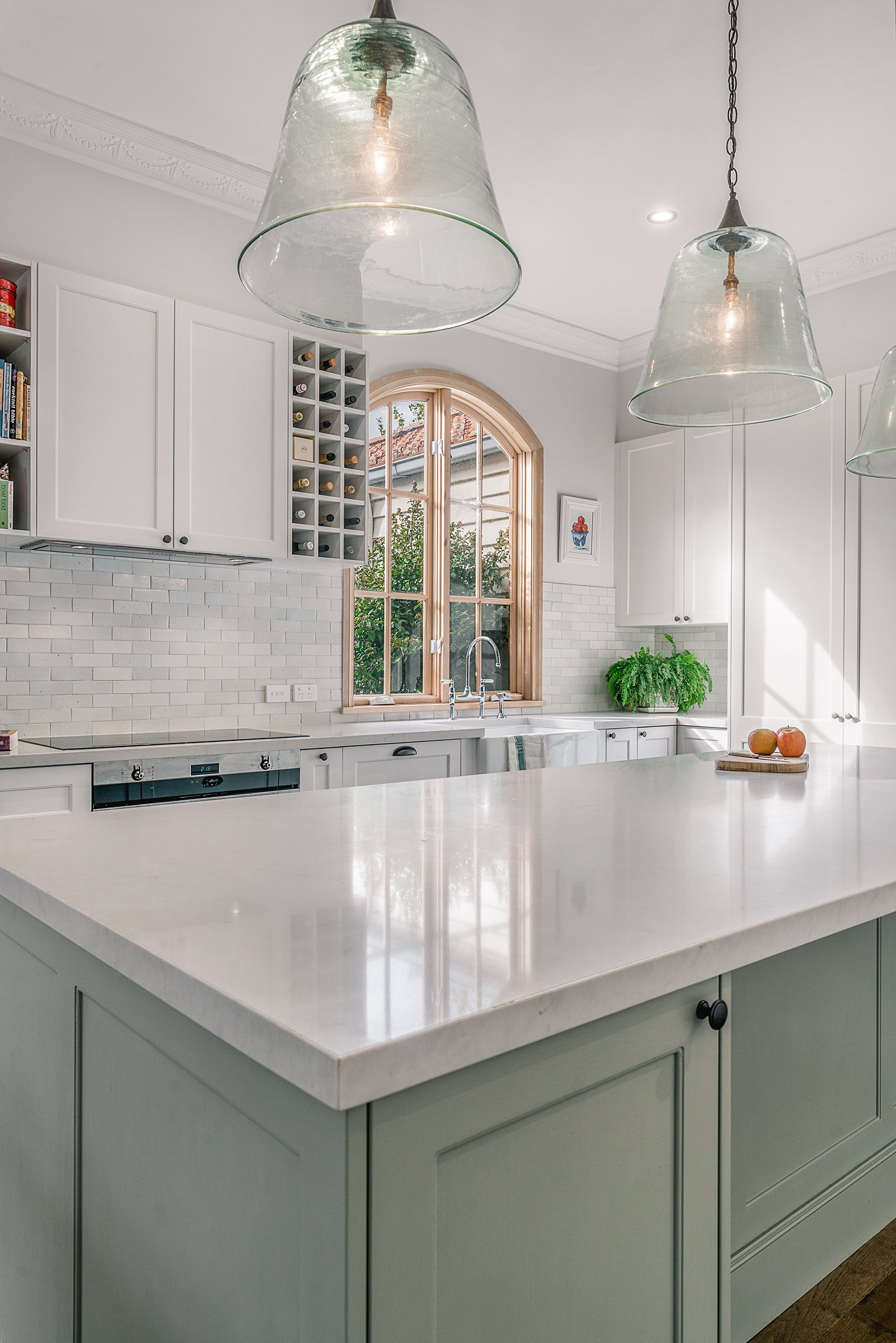
4. Bright Kitchen with Sage Island and Arched Wooden Window
This design succeeds by masterfully balancing color and form. The sage green is confined to the island, making it a strong but not overwhelming focal point. The rest of the cabinetry is crisp white, which bounces light around the room and keeps the space feeling open and airy. The real genius is the repetition of curves: the soft arch of the wooden window is echoed in the bell shape of the large glass pendant lights. This creates a gentle, cohesive rhythm that feels both classic and fresh.
📏 Scale Guide
That stunning arched wooden window is the heart of this kitchen, but it’s also a high-maintenance feature. Wood window frames, especially over a sink where they’re exposed to moisture, require regular sealing—at least once every 1-2 years—to prevent rot, warping, and paint peeling. Be honest with yourself about your commitment to that upkeep. If you love the look but not the work, consider a composite or vinyl window with a realistic wood-look interior finish to get the style without the constant maintenance.
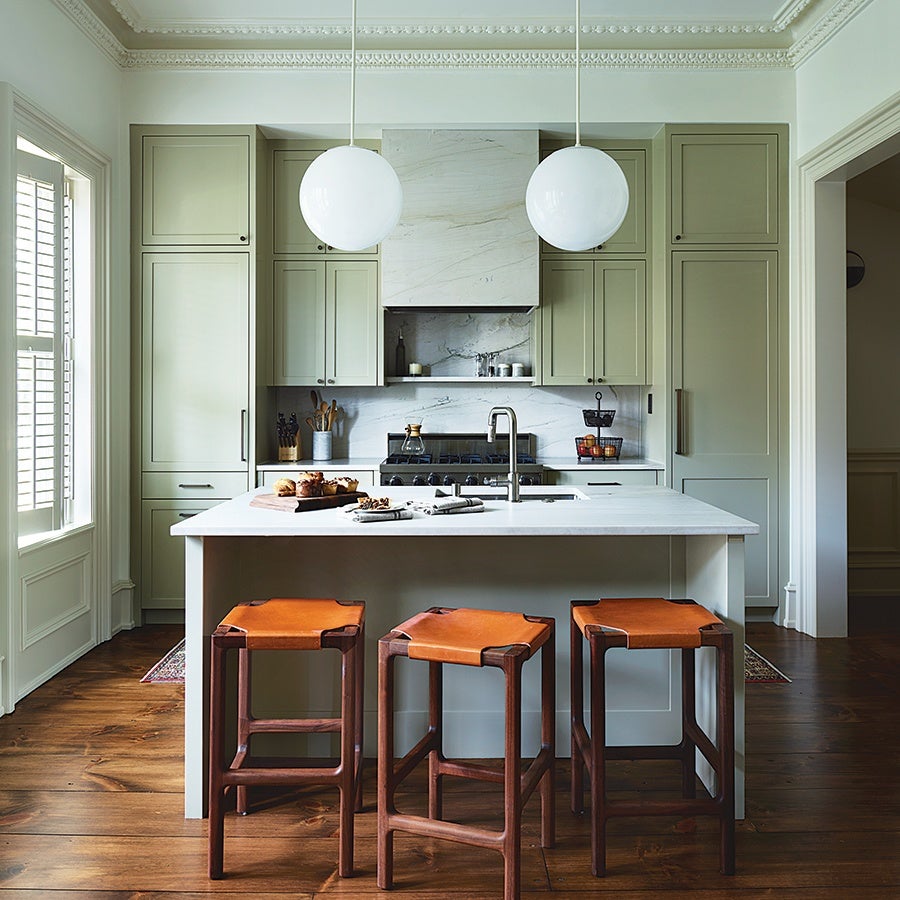
5. Classic Sage Green Kitchen with Marble and Leather Details
This look is a perfect example of the “new traditional” or “modern classic” trend that is dominating high-end design. It takes timeless elements—shaker cabinets, elegant crown molding, dark wood floors—and updates them with a softened color palette and cleaner lines. The sage green is more approachable than a stark white, the marble adds luxury without being gaudy, and the clean-lined leather stools feel more current than something overly ornate. It’s a style with staying power because it feels both established and fresh.
🧹 Maintenance Reality
A full marble slab backsplash is undeniably luxurious, but it’s not for the faint of heart. Marble is a porous natural stone, meaning it can stain easily. Acidic spills like lemon juice, wine, or tomato sauce can etch the surface if not wiped up immediately. It also requires sealing every 6-12 months to protect it. If you’re a messy cook or have a busy family, you might find yourself stressing over every splash. A porcelain slab with a realistic marble print offers a nearly identical look with zero porosity and minimal upkeep.
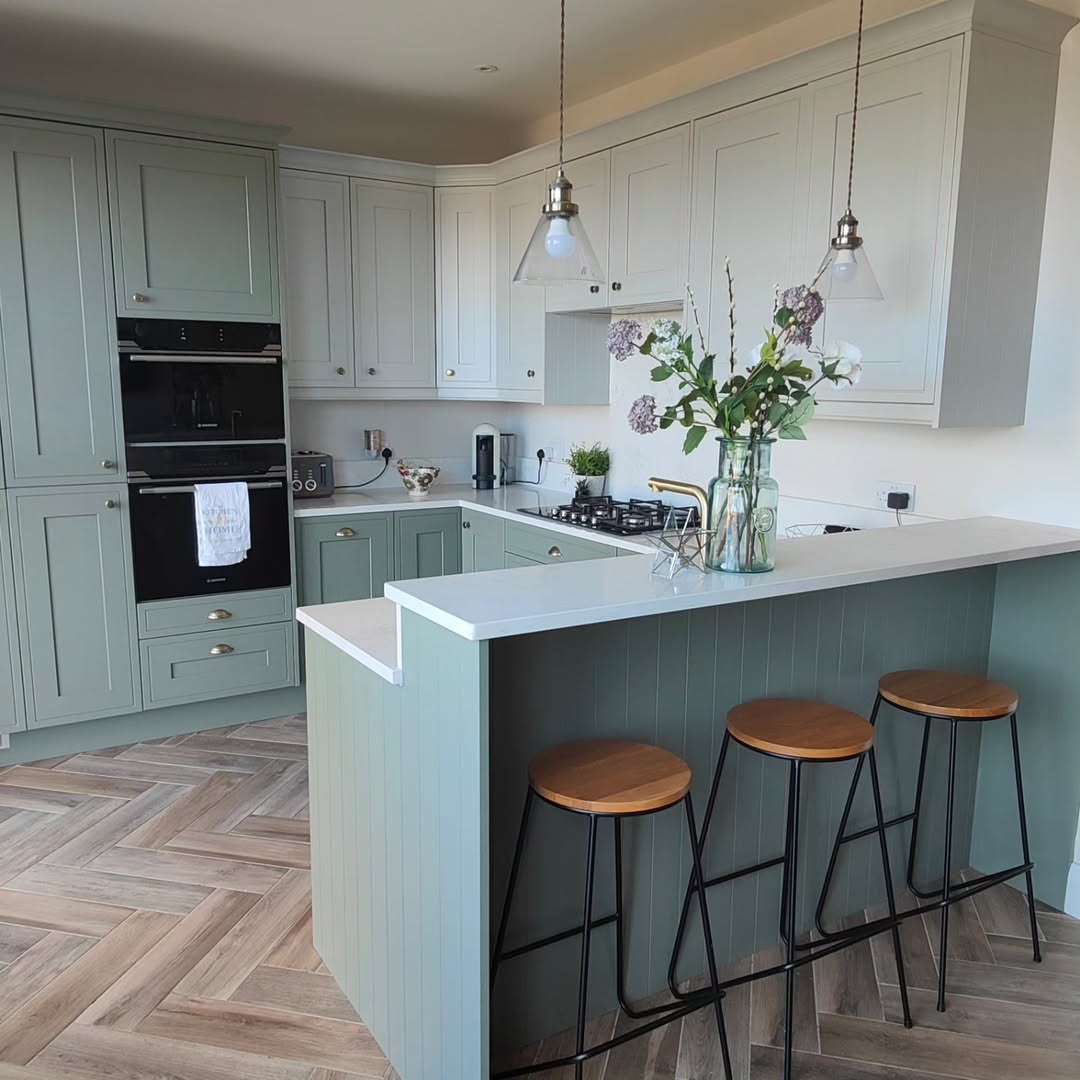
6. Two-Tone Kitchen with Sage Green and Light Gray Cabinets
This room’s serene feeling comes from a carefully considered color ratio: 50% sage green base cabinets, 30% light gray upper cabinets, and 20% crisp white countertops. By keeping the darker color (sage) on the bottom and the lighter colors (gray and white) on top, the kitchen feels grounded but also open and airy. The wood tones in the flooring and black accents in the stools act as punctuation marks. You could swap the light gray for a creamy off-white for an even softer, more traditional feel while keeping the same successful formula.
💸 Get This Look For Less
Installing beadboard paneling on a kitchen island or breakfast bar is a fantastic weekend project that adds instant character. Here’s how:
- Measure and Cut: Measure the height and width of the island sections you want to cover. Cut your beadboard panels to size using a circular saw. (Time: 1 hour, Cost: $50-$100 for panels)
- Find and Mark Studs: Use a stud finder to locate the internal framing of the island and mark the locations.
- Apply Adhesive: Apply construction adhesive to the back of the beadboard panel in a zig-zag pattern.
- Nail in Place: Press the panel onto the island and secure it by nailing into the marked studs with a brad nailer.
- Finish and Paint: Caulk the seams, fill nail holes, and once dry, paint the beadboard to match your decor. (Time: 3-4 hours)
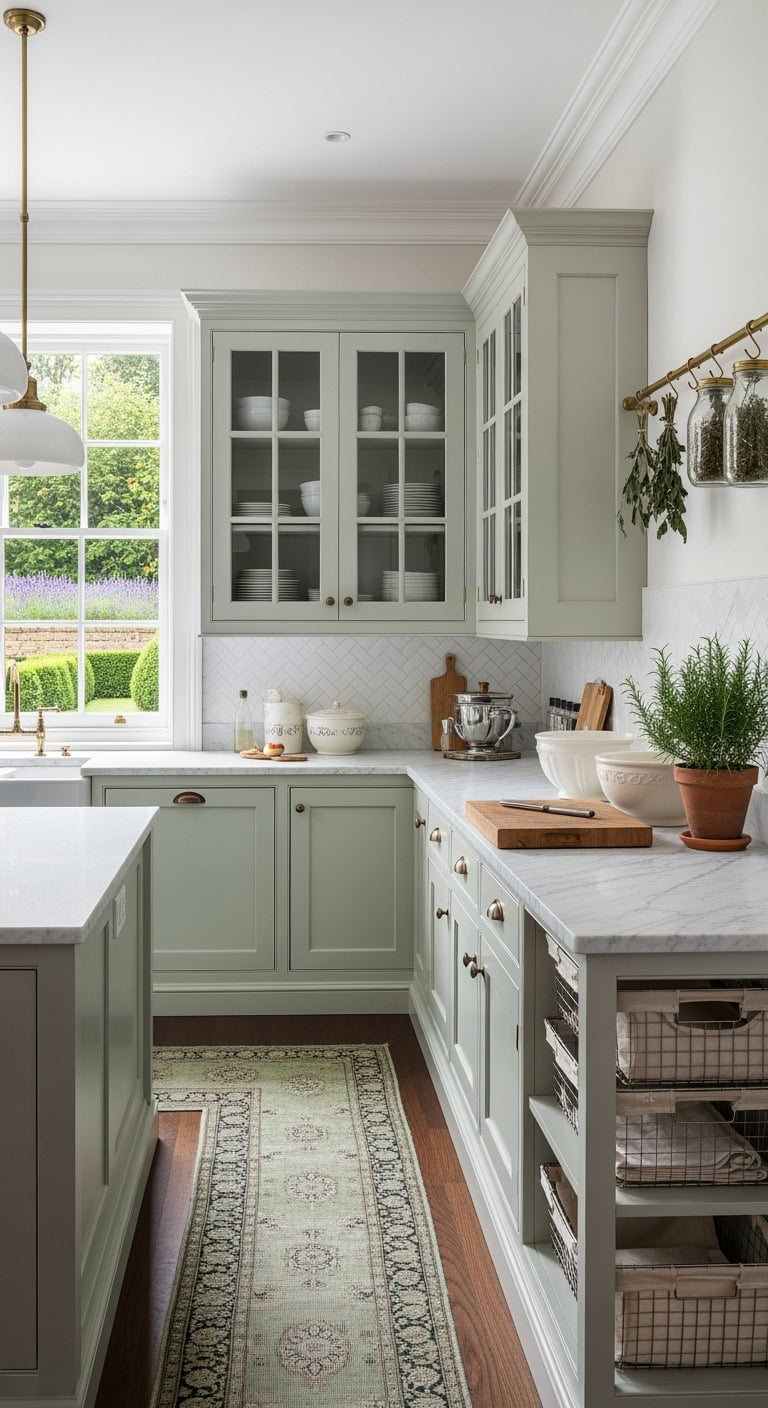
7. Classic Sage Kitchen with Marble and a Herringbone Backsplash
When mixing metals, the key is to be intentional. In this kitchen, the warm brass of the cabinet hardware and pendant light stands out beautifully against the cool tones of the sage green and white marble. The rule of thumb is to choose one dominant metal (here, it’s brass) and use it in at least two-thirds of the metallic elements. Then, you can introduce a secondary metal (like the stainless steel sink) as an accent. This prevents the space from looking like a random collection of finishes.
🔧 How-To Brief
The patterned green runner rug is the element that truly pulls this whole room together. It serves multiple functions: it adds a layer of softness and texture to the hard surfaces of the floor, cabinets, and countertops. Critically, its color palette directly references the sage green of the cabinets while introducing complementary shades, tying the whole scheme together. Without it, the room would still be beautiful, but it would lack that final, personal touch that makes it feel like a home.
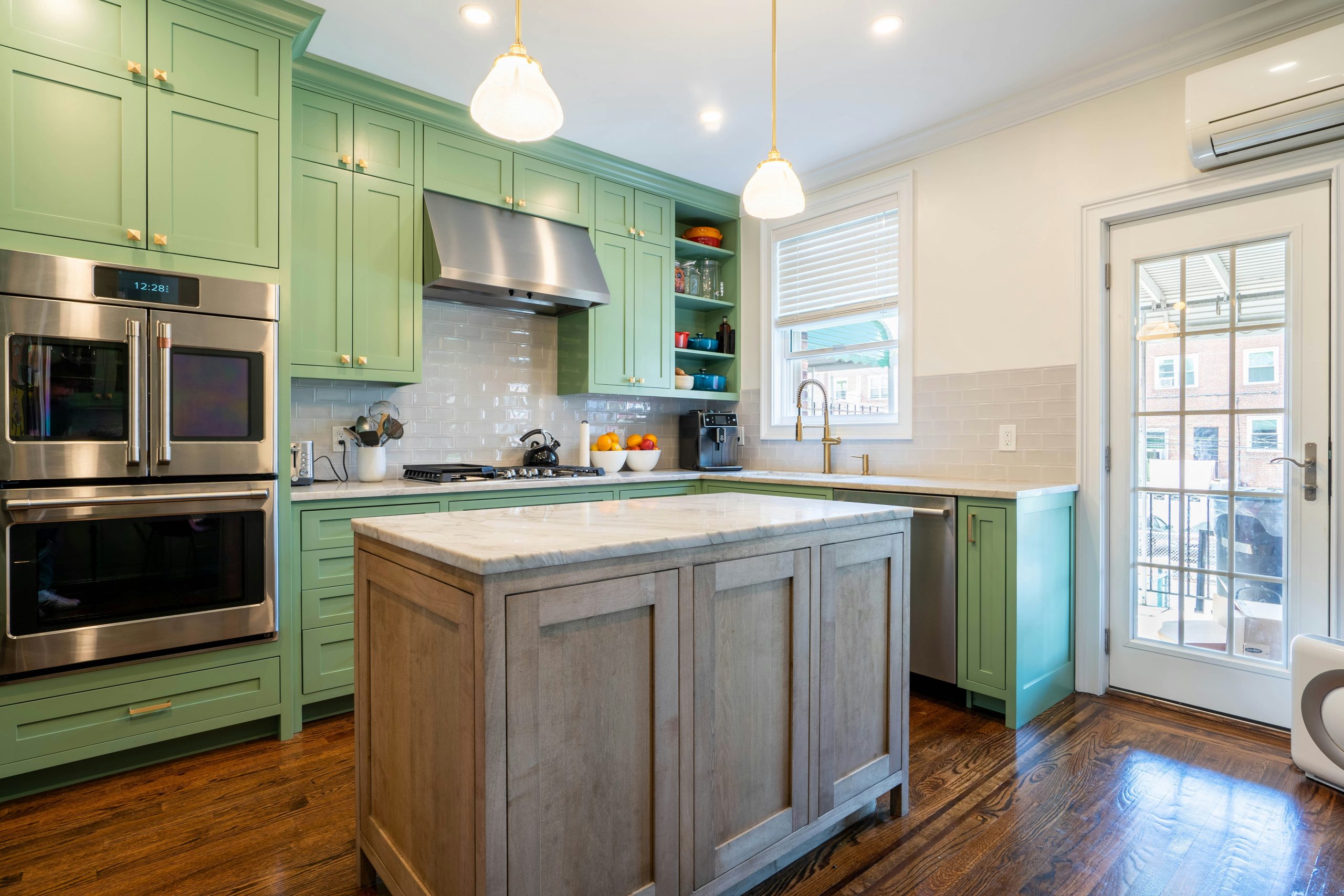
8. Fresh Kitchen with Sage Cabinets and a Light Wood Island
This kitchen design works because it’s a triad of balanced textures and temperatures. The cool, serene sage green of the main cabinets sets a calm backdrop. This is then warmed up significantly by the natural, light wood tone of the island. Finally, the crisp white marble countertop and light grey subway tile backsplash add a clean, bright element that keeps the overall look from becoming too earthy or dark. The small, sharp pops of brass hardware add a touch of necessary sparkle and sophistication, preventing the design from feeling too plain.
🔥 Trending Context
You don’t need a five-figure budget to get this fresh, inviting look. For the cabinets, consider painting your existing ones with a high-quality cabinet paint like Benjamin Moore’s ‘October Mist’. Find an old wooden kitchen island or a simple pine table on Facebook Marketplace for $100-$300 and top it with a laminate marble-look counter from IKEA or Home Depot for around $200. Peel-and-stick subway tiles for the backsplash and new brass hardware from Amazon can complete the transformation for under $1,000.
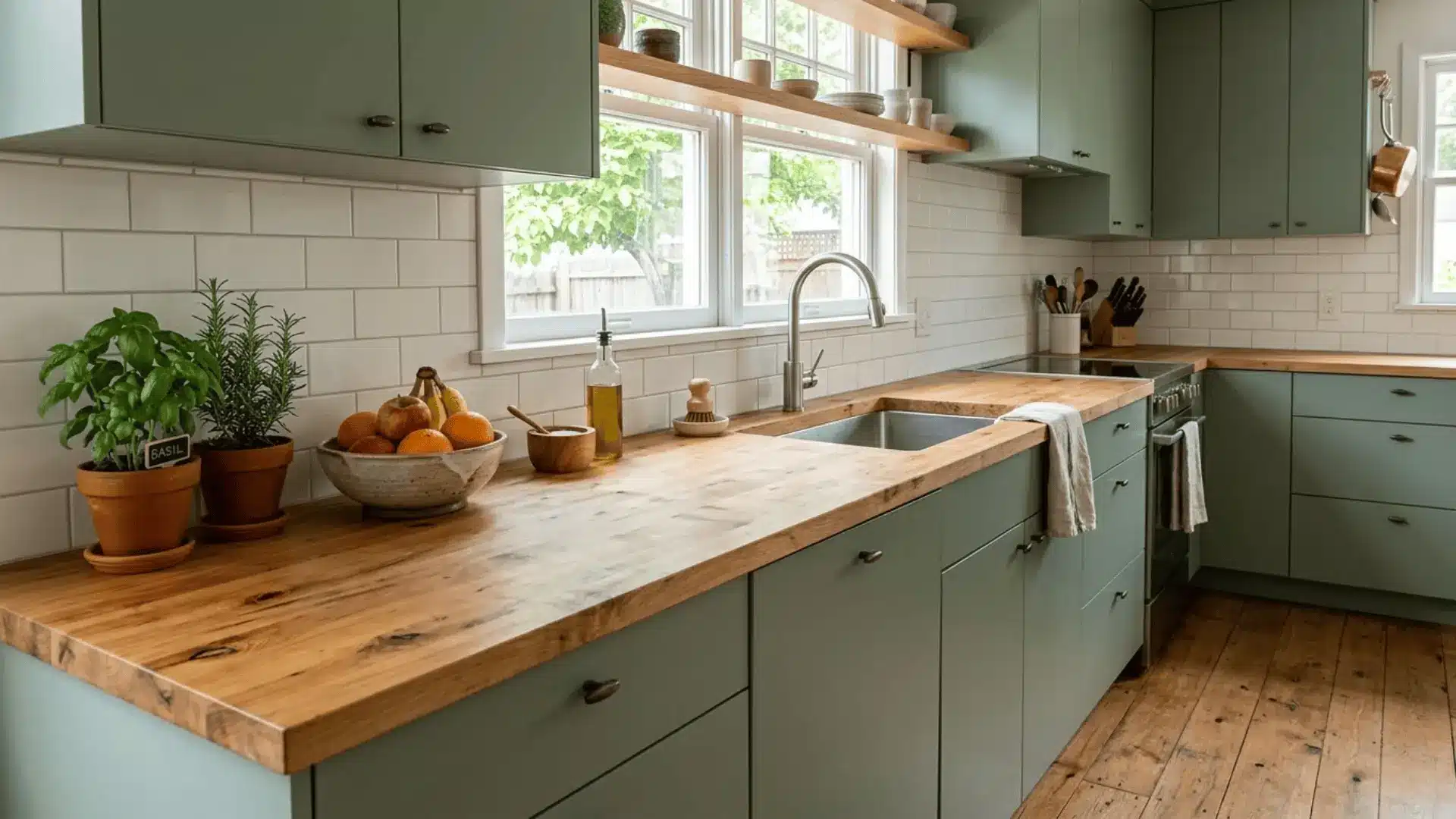
9. Earthy Sage Kitchen with Butcher Block Countertops
A natural wood countertop, often called butcher block, brings incredible warmth and character to a kitchen. However, it’s crucial to understand the reality of living with it. Wood is a soft material. It will scratch, it will dent, and it can scorch if you place a hot pan directly on it. While some people embrace this patina as part of its charm, if you’re someone who desires a perpetually pristine surface, a wood countertop will likely drive you crazy. It requires a different mindset than stone or quartz.
💡 Designer Tip
Wood countertops require consistent but straightforward maintenance to stay beautiful and hygienic. At least once a month, you’ll need to treat them with food-grade mineral oil or a specialized butcher block conditioner. This prevents the wood from drying out and cracking, and helps it repel moisture and stains. For a deeper clean or to address minor stains, a paste of salt and lemon juice works wonders. The area around the sink is the most vulnerable to water damage and requires the most vigilant oiling. If properly cared for, a wood counter can last for decades.
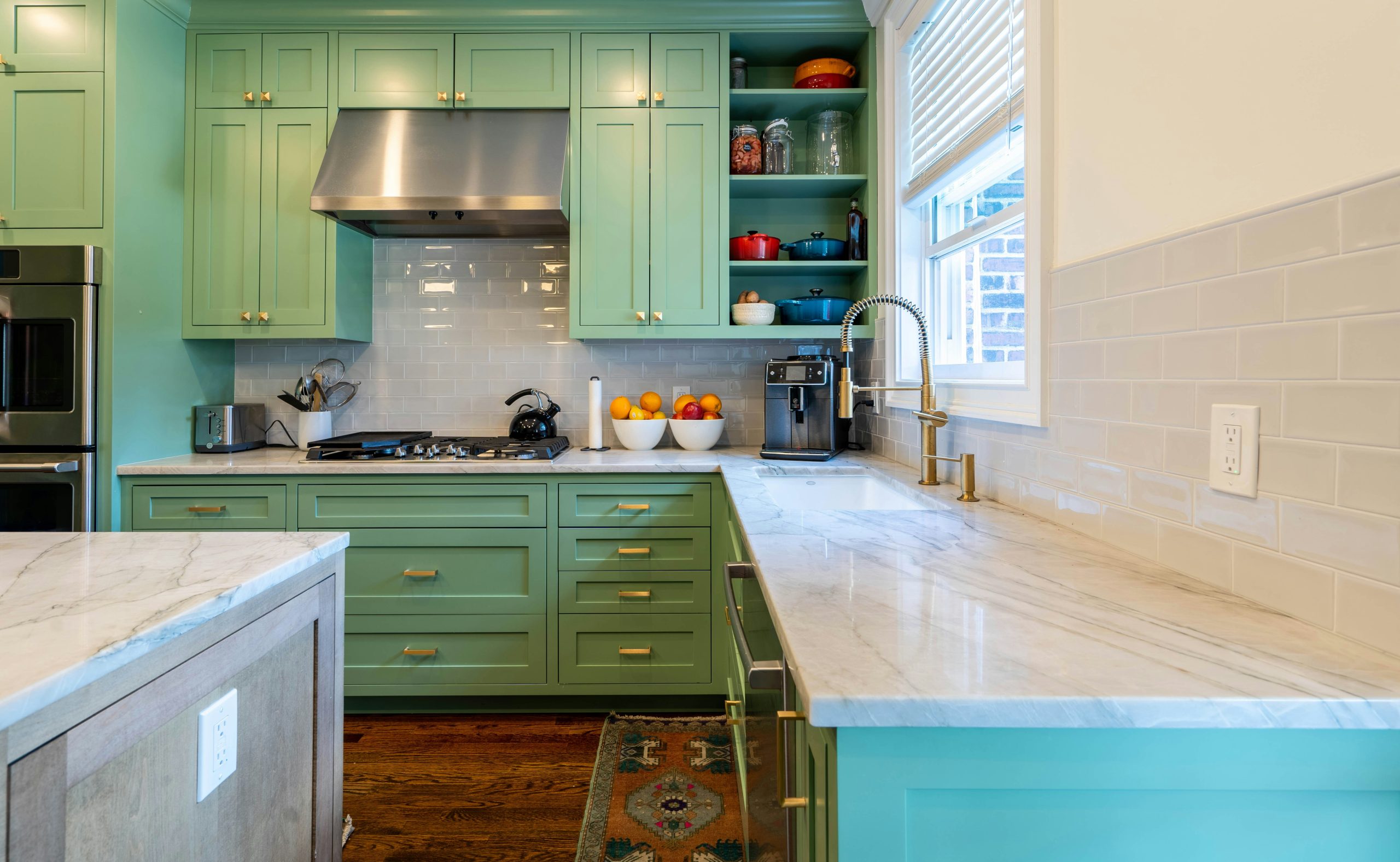
10. Bright Sage Kitchen, Marble Counters, and Gold Hardware
The single thing making this kitchen feel special is the confident mixing of different tile styles. You have the soft grey subway tile as the main backsplash, but then there’s a section of bright white subway tile in another area. This subtle variation adds depth and prevents the design from feeling monotonous or ‘one-note’. It’s a designer-level move that shows a thoughtful approach to materials, creating distinct zones within the kitchen without using walls. It proves that you don’t have to stick to just one tile to create a cohesive look.
💰 Budget Breakdown
Before you commit to a look with such specific material interplay, run through this quick checklist:
- Get Samples: Order physical samples of your cabinet color, countertop material, backsplash tile, and hardware. View them together in your actual kitchen’s light at different times of day.
- Map Your Lighting: Where are your windows? Where will light fixtures be? A color palette can look dramatically different in a north-facing room versus a south-facing one.
- Test Your Grout: The color of your grout can drastically change the look of your tile. Test at least two or three grout colors on a sample board before making a final decision.
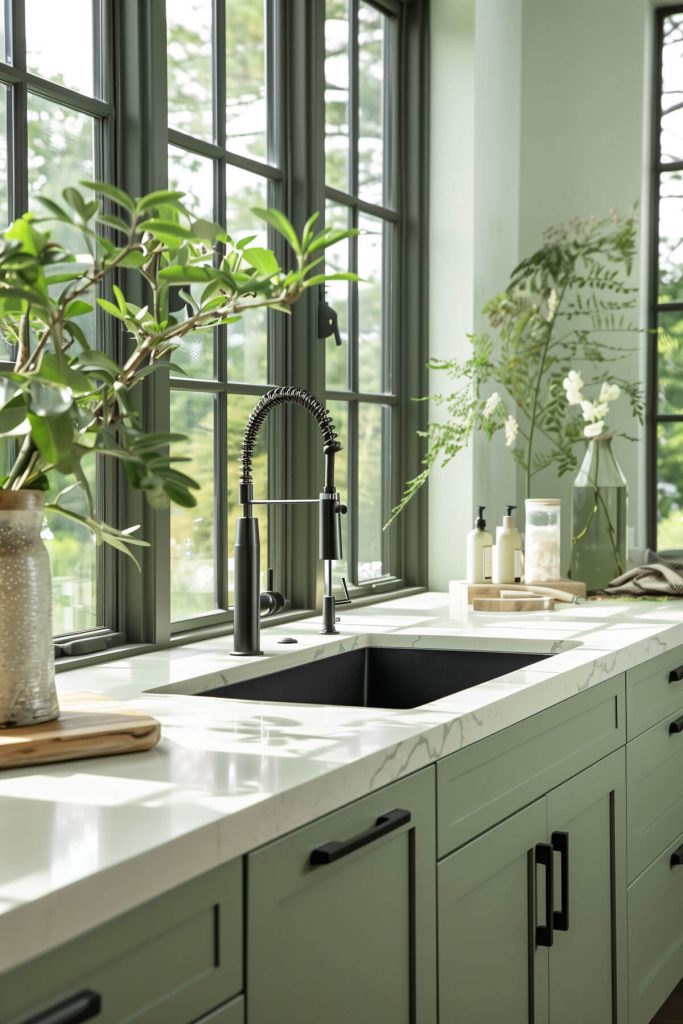
11. Contemporary Kitchen with Sage Cabinets and Black Accents
This kitchen strikes a perfect contemporary balance by pairing a soft, natural color (sage green) with a strong, graphic element (black). The black window frames, faucet, sink, and cabinet hardware create a bold outline that gives the gentle green a modern edge. It’s like putting a picture in a really great frame. The white countertops act as negative space, allowing both the green and the black to stand out without competing. The addition of green plants enhances the natural vibe and softens the hard lines.
✅ Before You Start
When using black as an accent color, consistency in finish is key to a high-end look. Don’t mix a matte black faucet with glossy black cabinet pulls and satin-finish window frames. Pick one finish—in this case, a sophisticated matte black is used throughout—and stick with it for all your black elements. This creates a cohesive, intentional design rather than a collection of mismatched parts. This small detail is what separates a designer-curated space from an amateur one.
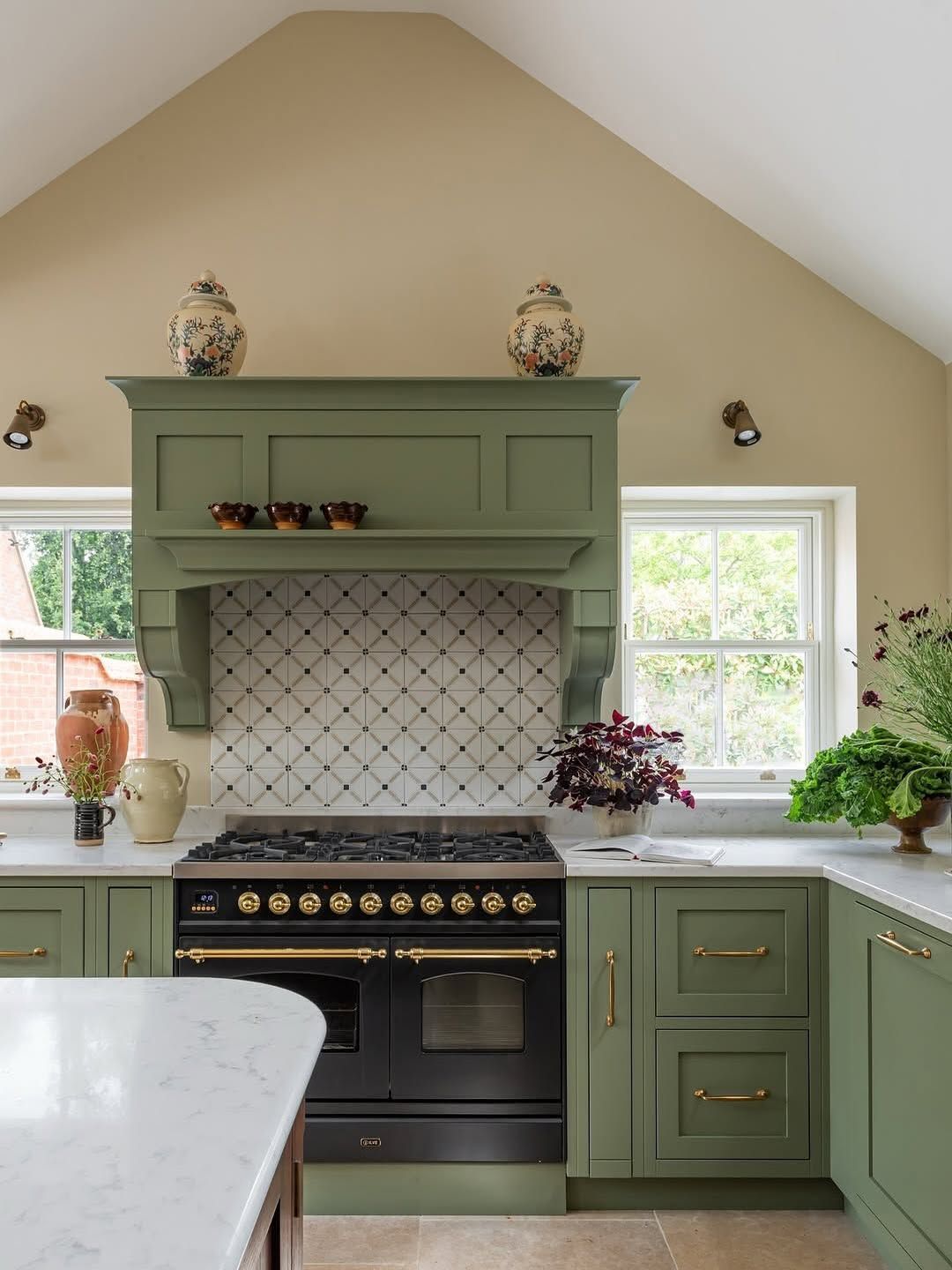
12. Traditional Sage Kitchen with a Black Range and Patterned Tile
The formula for this warm, elegant space is about balancing bold statements with soft surroundings. It breaks down to roughly 40% sage green cabinetry + 30% warm beige walls + 15% white marble + 10% dramatic black range + 5% brass accents. The sage and beige create a gentle, inviting envelope, which allows the black range to be a stunning centerpiece without feeling jarring. The brass hardware and accents on the range link everything together with a touch of warmth and glamour.
📐 Style Math
This is a look best suited for kitchens with higher ceilings—9 feet or more is ideal. The custom range hood and vaulted ceiling are key components of its grand, traditional feel. In a room with standard 8-foot ceilings, a large, dark range and prominent hood could feel overwhelming and heavy. A minimum room size of about 150 square feet would be best to allow the statement range and patterned backsplash enough breathing room to be appreciated without dominating the space entirely.
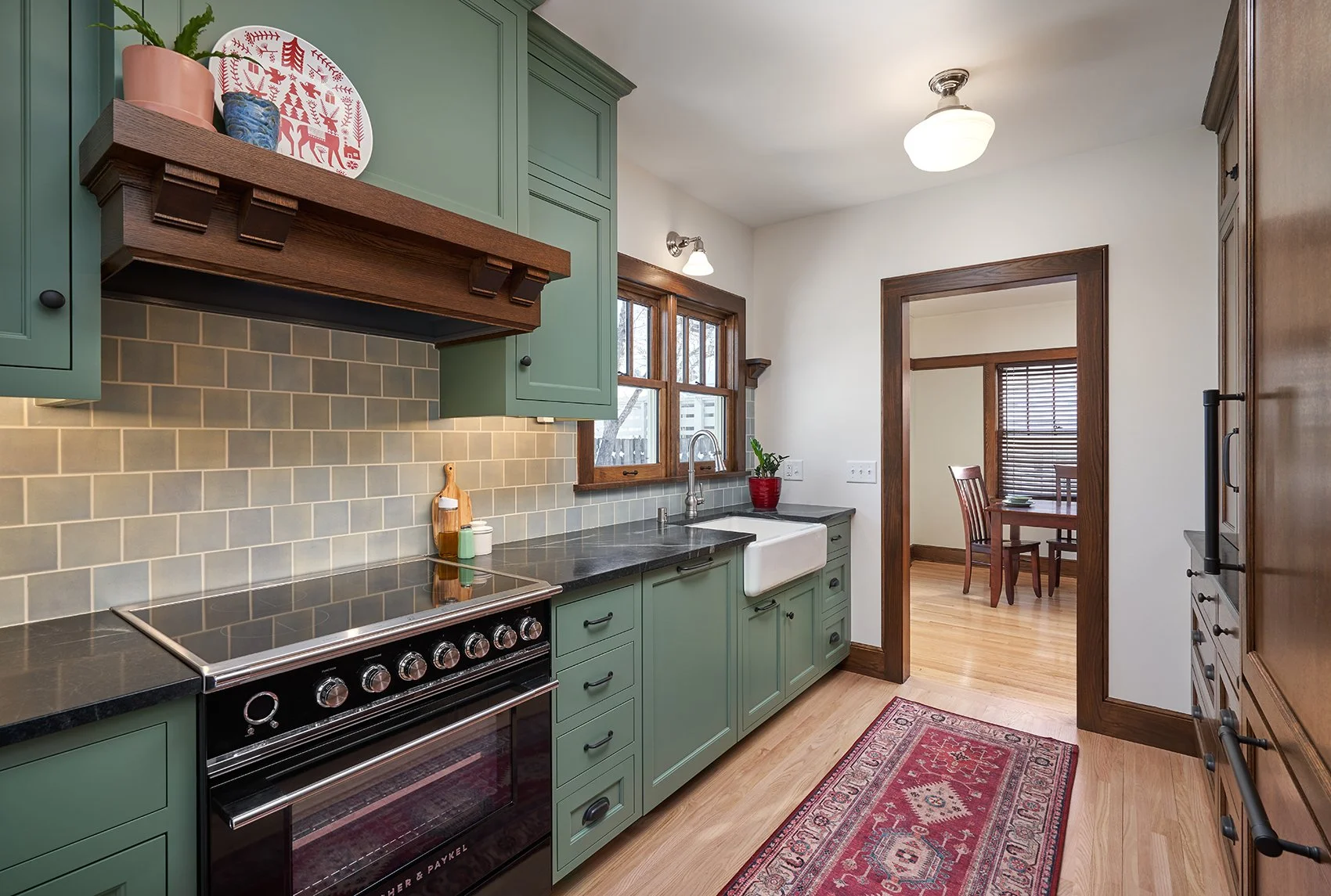
13. Craftsman-Style Kitchen with Sage Cabinets and Dark Wood
The dark wood range hood cover is the undeniable heart of this kitchen. It’s the element that defines the room’s warm, Craftsman-inspired character. Its substantial size, rich color, and decorative corbels provide a powerful focal point that balances the lighter sage green of the cabinetry. If you were to remove it and put a standard stainless steel hood in its place, the kitchen would instantly lose its unique, custom-built personality and feel far more generic. It’s a statement of style and substance.
⚠️ Real Talk
A kitchen this rich in contrasting colors and materials needs careful handling of light. The combination of sage green, dark wood trim, a black oven, and charcoal countertops can absorb a lot of light. This look could feel gloomy in a kitchen that doesn’t get a lot of natural light or lacks a well-planned artificial lighting scheme. Be sure you have ample ambient light (ceiling fixtures), task light (under-cabinet), and accent light to keep the space from feeling heavy, particularly in the evening.
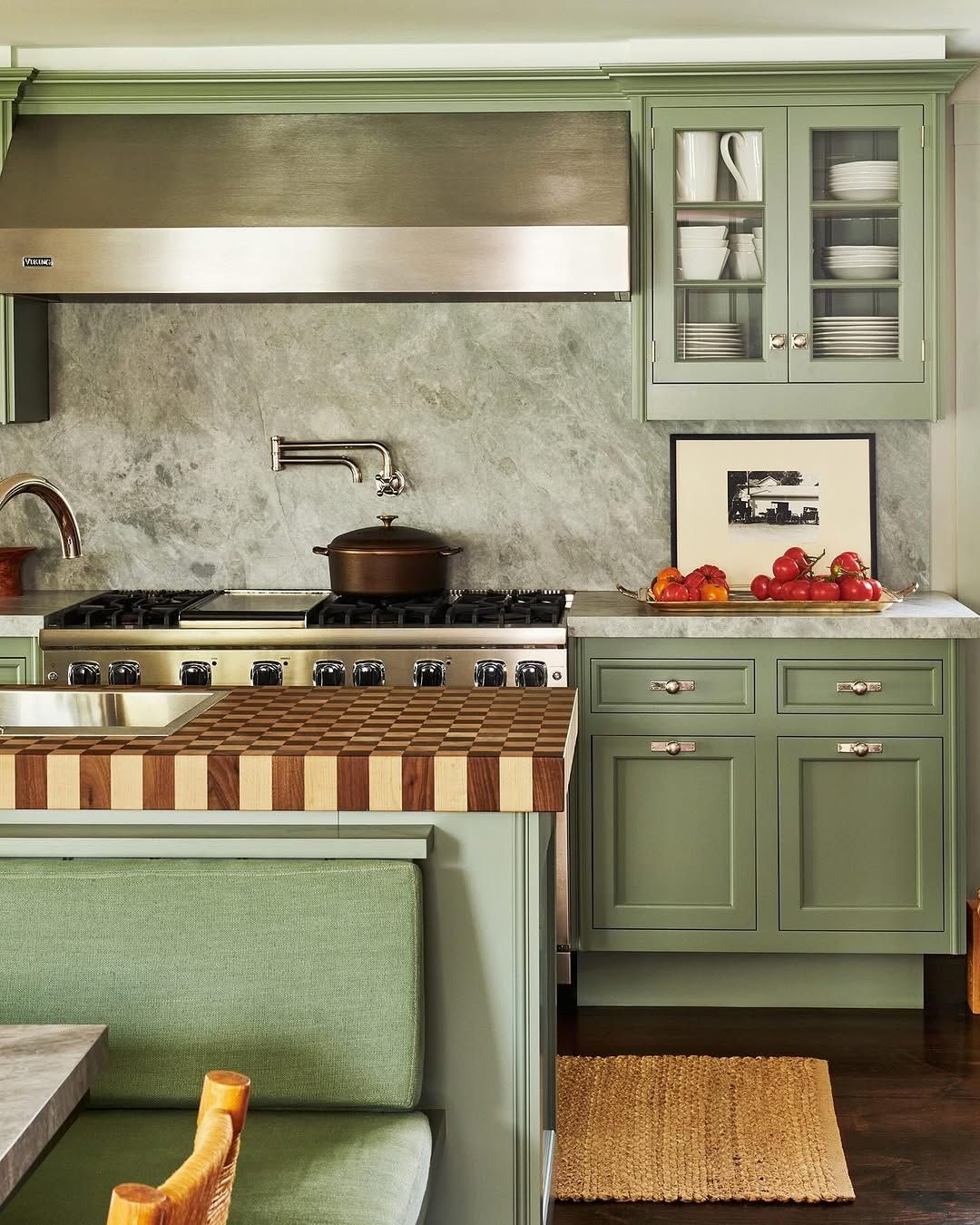
14. Functional Sage Kitchen with Marble Backsplash and Banquette
This kitchen’s design is successful because it’s a masterclass in material continuity. Instead of using a different material for the backsplash, the same grey-veined marble from the countertops continues up the wall. This creates a seamless, dramatic, and incredibly high-end look. It makes the entire cooking zone feel like a single, unified feature. The warmth of the checkerboard butcher block and the green banquette seating then provides a perfect, soft counterpoint to the cool, hard stone.
⭐ The One Thing
A full marble slab backsplash is a significant investment. To get a similar integrated feel for much less, look into large-format (24″x48″) porcelain tiles that mimic the look of marble. With rectified edges and a tight grout line, you can create a nearly seamless appearance for a fraction of the cost. For the banquette, instead of custom upholstery, buy a simple bench from IKEA or Target and have a local upholsterer create a custom cushion in a durable green fabric for a few hundred dollars.
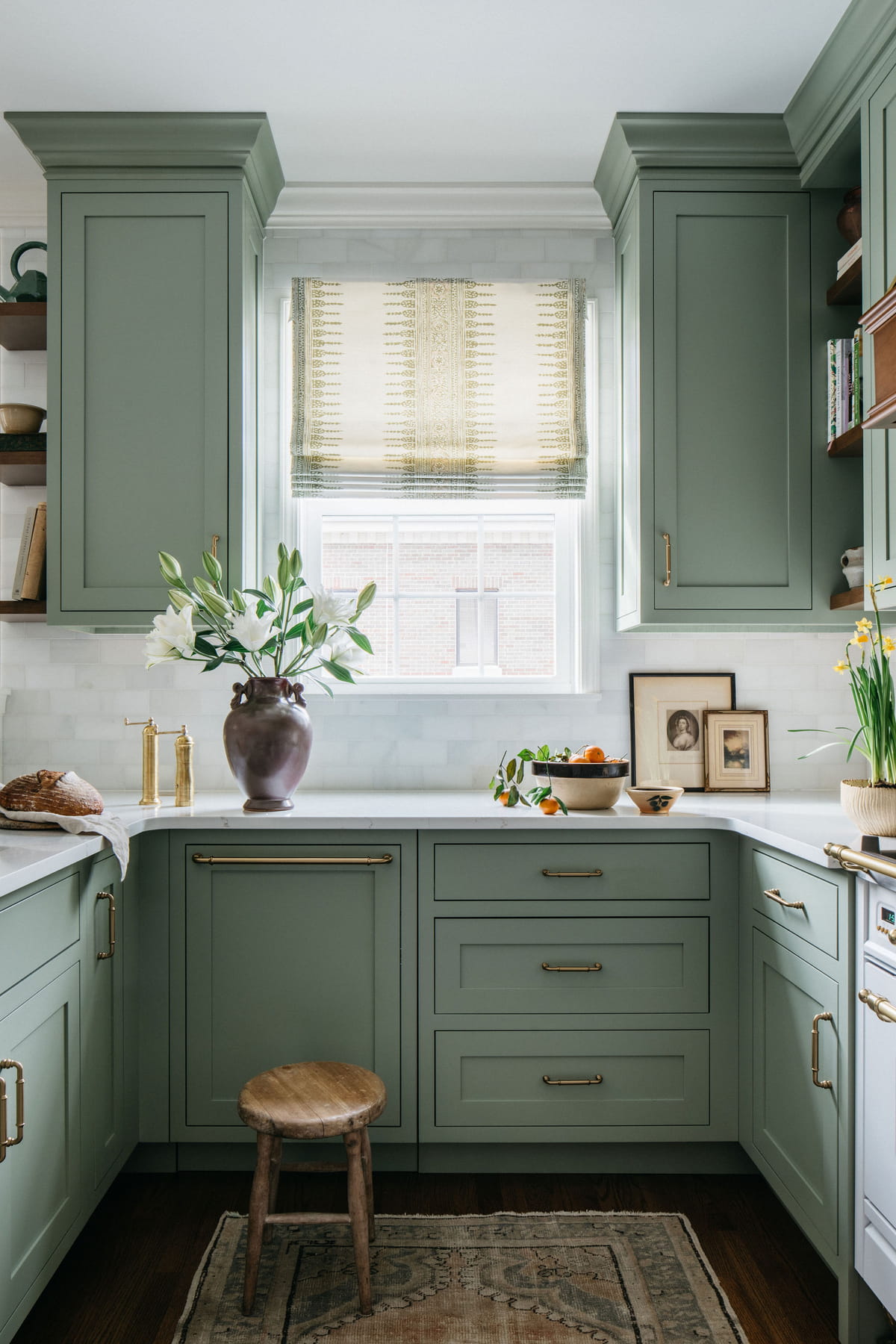
15. Classic Sage Kitchen with Gold Hardware and a Roman Shade
Choosing the right hardware can make or break your kitchen design. Here’s a quick guide to getting it right:
- Establish a Budget: Hardware prices vary wildly, from $2 to over $50 per piece. Decide what you can spend first.
- Choose a Finish: Pick a metal finish that complements your cabinet color and faucet. Here, the warm gold pops beautifully against the cool sage.
- Decide on Knobs vs. Pulls: A common rule is knobs for doors and pulls for drawers, but using all pulls, as seen here, creates a more modern, streamlined look.
- Measure for Size: For pulls on drawers, the rule of thirds is a great guideline: the pull should be about 1/3 the width of the drawer front.
- Order a Sample: Always order one of each piece to see how it looks and feels in your hand before buying them all.
🎯 What Makes It Work
To avoid a look that’s too ‘matchy-matchy’, introduce a pattern. The patterned Roman shade over the sink is a perfect example. It breaks up the solid blocks of sage green and white, adding a layer of visual interest and personality. When selecting a pattern, pick one that contains the main colors of your kitchen (sage, white) and introduces one or two new accent shades. This makes the addition feel intentional and curated. A similar effect could be achieved with a patterned runner, as seen in Idea #7.
16. Refined Sage Kitchen with Geometric Tile and Brass Hardware
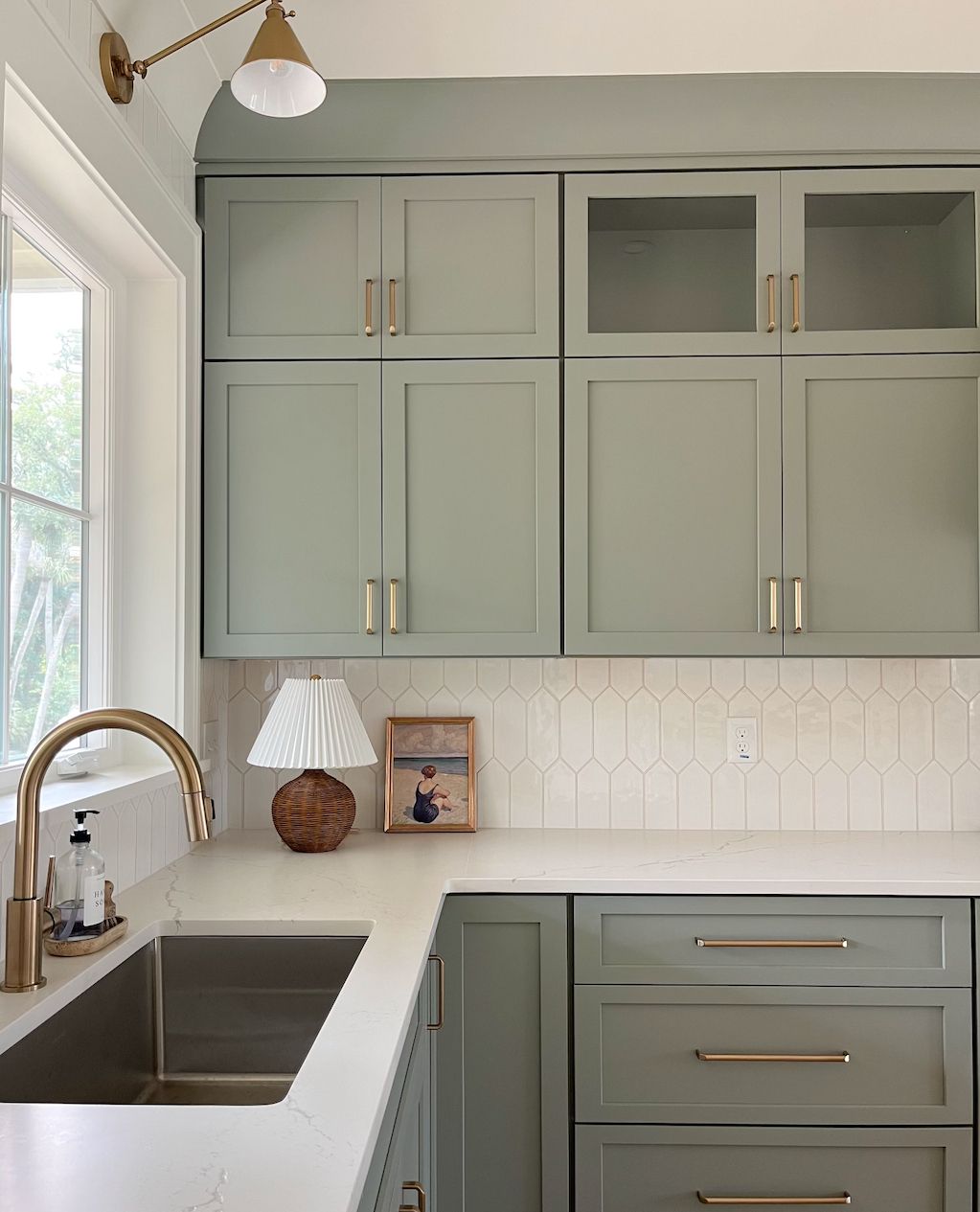
The success of this kitchen lies in its sophisticated subtlety. The cabinetry is a simple, flat-panel style, which gives it a modern feel. The brass hardware is likewise clean and linear. The countertops are a quiet white with minimal veining. All of this simplicity allows the backsplash to be the star without overwhelming the space. The geometric, off-white tile adds texture and a point of interest that is unique and refined, elevating the entire design from simple to special.
📏 Scale Guide
Open-front or glass-front upper cabinets are beautiful for displaying your prettiest dishes, but they demand constant neatness. Be honest with yourself: are you the kind of person who will keep those shelves perfectly styled and organized? Or will they quickly become a jumble of mismatched mugs and cluttered Tupperware? If you crave a more lived-in, less curated look, stick with solid cabinet fronts. It’s better to have a practical kitchen you love than a photo-ready one that causes daily stress.
17. Modern Sage Kitchen with Marble Mosaic Backsplash
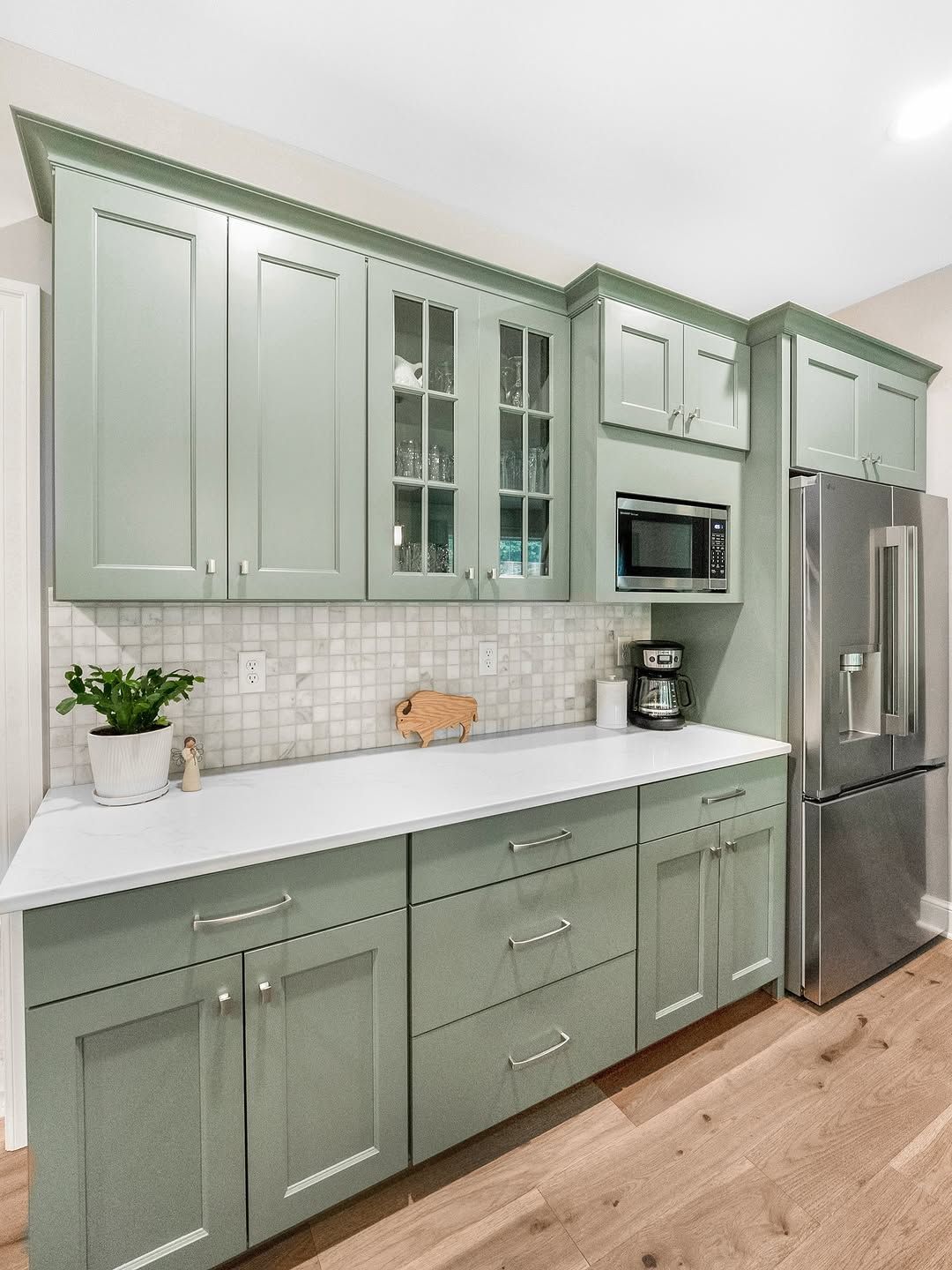
This kitchen achieves its fresh, clean aesthetic through a balanced material equation: 50% soft sage cabinetry + 30% bright white (countertops and trim) + 15% mixed metallics (stainless appliances and satin nickel hardware) + 5% warm wood flooring. The high contrast between the sage, white, and wood creates visual energy, while keeping the tones relatively light prevents the space from feeling heavy. Using a cool-toned metal like satin nickel keeps the look modern and complements the gray tones in the backsplash.
🧹 Maintenance Reality
A marble mosaic tile backsplash is gorgeous, but the increased number of grout lines means more potential for staining and cleaning headaches, especially behind a stove. Sealing the grout annually is non-negotiable to prevent grease and food splatters from discoloring it. For daily cleaning, avoid harsh or acidic cleaners, which can damage the marble and the grout. A pH-neutral stone cleaner or a simple solution of gentle dish soap and warm water is your best bet for keeping both the tile and grout looking fresh.
18. Clean Sage Shaker Kitchen with Full Marble-Patterned Backsplash
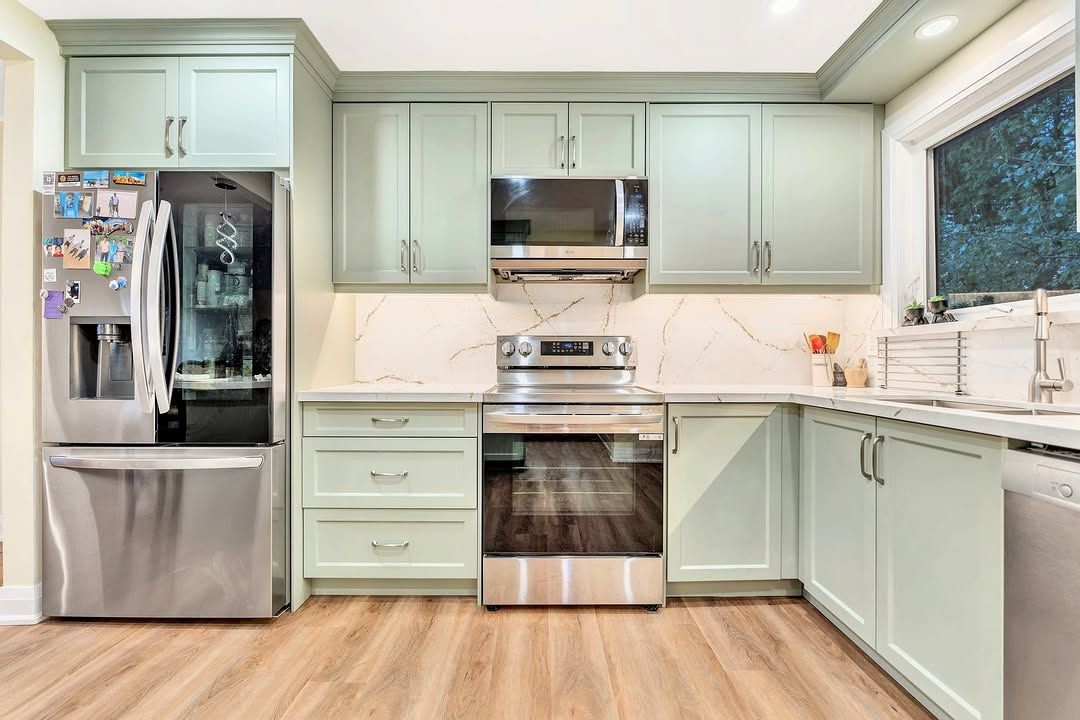
The single most impactful decision in this kitchen is continuing the same marble-patterned material from the countertop up to the backsplash. This creates a seamless, monolithic look that feels incredibly clean, modern, and luxurious. It eliminates the visual clutter of a grout-lined tile backsplash and makes the entire L-shaped counter area feel like a single, intentional design feature. This technique also makes a space feel larger and less busy, as there’s one less visual break for the eye to process.
💸 Get This Look For Less
That stunning full-height backsplash look can be achieved on a much tighter budget. Instead of a solid slab of quartz or marble, which can cost thousands, consider using a marble-patterned porcelain slab or large-format tile. Even more affordable is a high-quality laminate backsplash panel, like those from Wilsonart or Formica, which can provide a very similar seamless look for a few hundred dollars. Paired with a matching laminate countertop, you can capture the essence of this design for 70-80% less than the cost of natural stone.
19. Serene Sage Kitchen with Marble Backsplash and Wood Handles
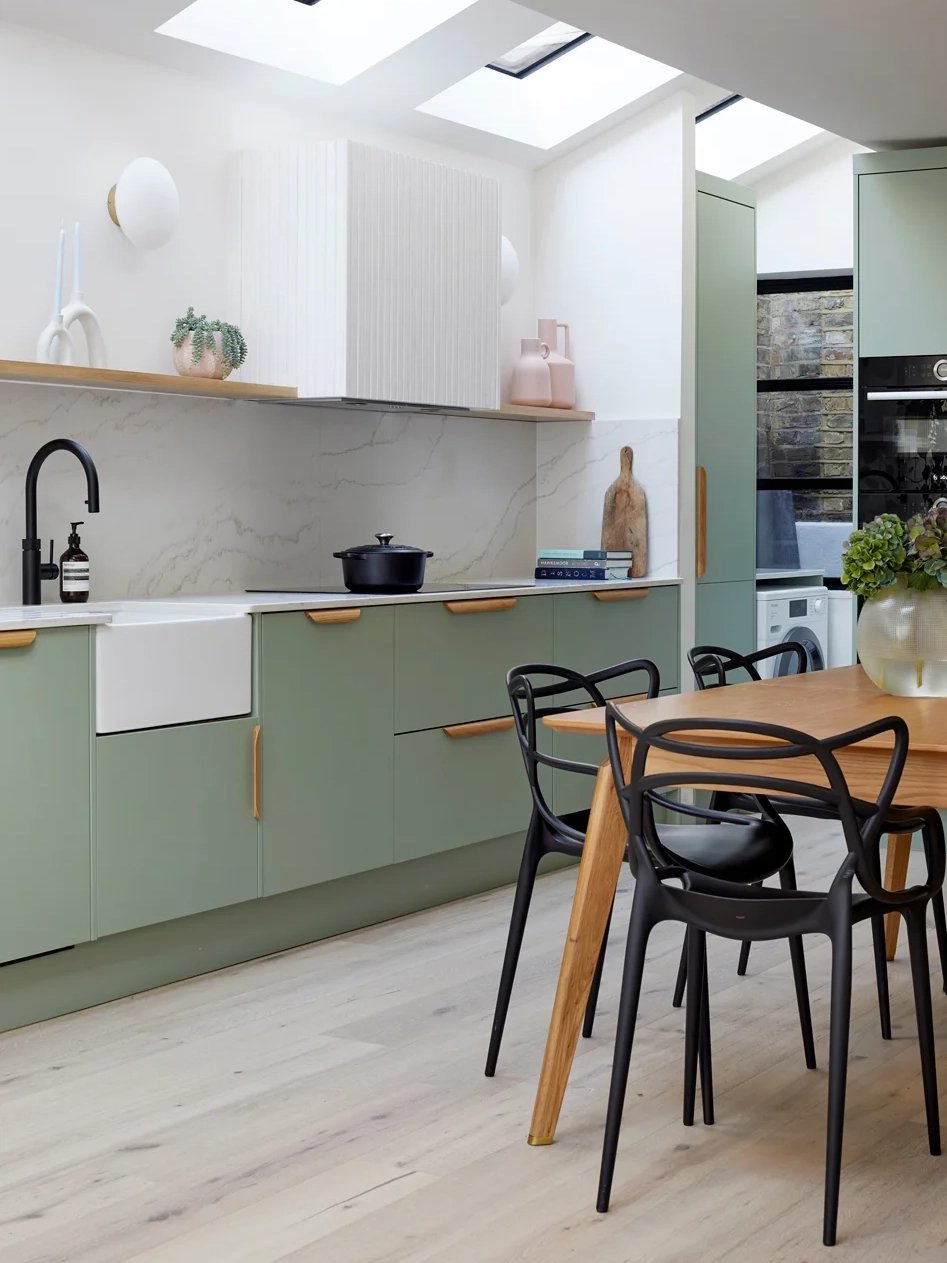
This design’s success comes from its fusion of organic and modern elements. The flat-front sage green cabinetry and seamless marble-look backsplash are clean and contemporary. But the introduction of light wood recessed handles and the prominent farmhouse sink adds a soft, organic warmth that keeps the space from feeling sterile. The choice of a high-contrast matte black faucet acts as a modern sculptural element, while the spherical sconces add a touch of playful geometry. It’s a beautifully executed balancing act.
🔧 How-To Brief
This aesthetic is deeply rooted in the Japandi trend—a hybrid of Scandinavian functionality and Japanese rustic minimalism. We’re seeing this everywhere on Pinterest and in design magazines for 2026. It’s a move away from the colder, more severe minimalism of years past toward a warmer, more natural version. The focus is on clean lines, natural materials (like the light wood here), and a calm, uncluttered feeling. This look has staying power because it’s both incredibly stylish and deeply calming to live in.
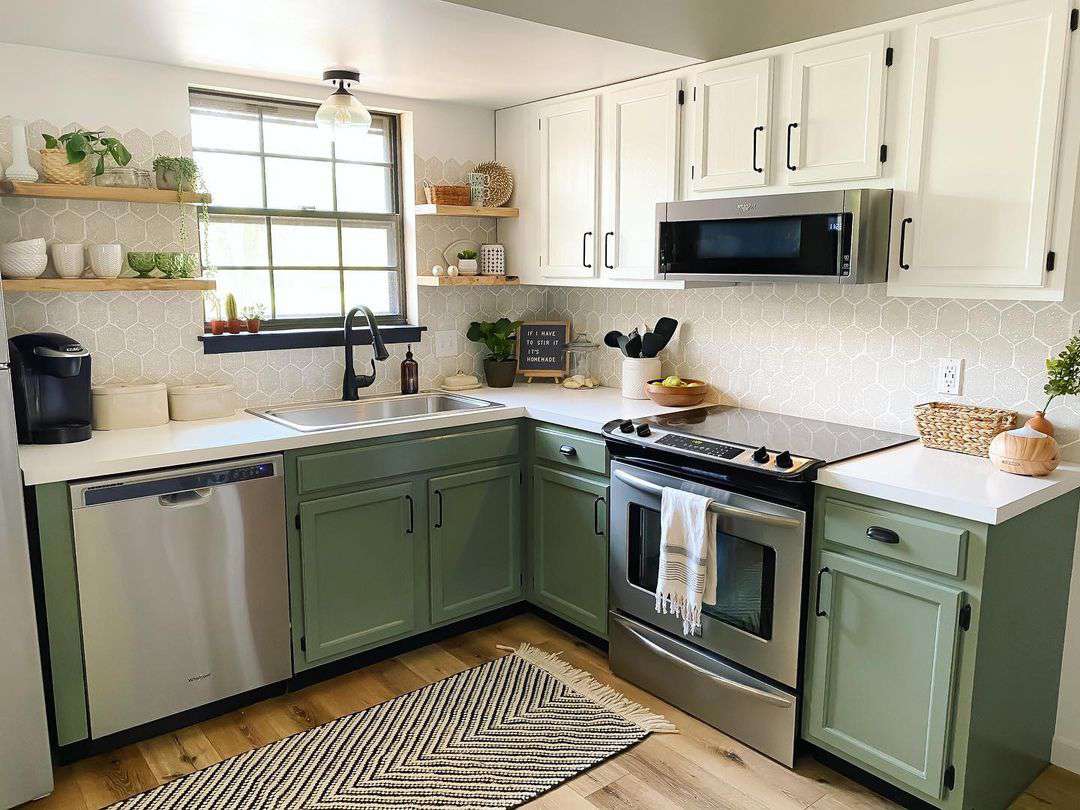
20. Two-Tone Kitchen with Sage, White, and Hexagonal Tile
When using a two-tone cabinet scheme like this, place the darker color on the bottom and the lighter color on top. This grounds the space and makes the ceiling feel higher. The key to making it look intentional is to have all the hardware match. Here, the simple black pulls on both the sage green lower cabinets and the white upper cabinets create a cohesive visual thread that ties the two halves of the kitchen together. Mixing hardware finishes here would have made the design feel disjointed and accidental.
🔥 Trending Context
This two-tone approach combined with open shelving is exceptionally well-suited for small to medium-sized kitchens (80-150 sq ft). The white upper cabinets prevent the room from feeling top-heavy and visually recede, making the space appear larger. The open shelving provides storage without the bulk of a cabinet box, further enhancing the sense of openness. For a very small kitchen, you might consider this layout but with a more reflective backsplash, like the glossy subway tile in Idea #21, to bounce even more light around.
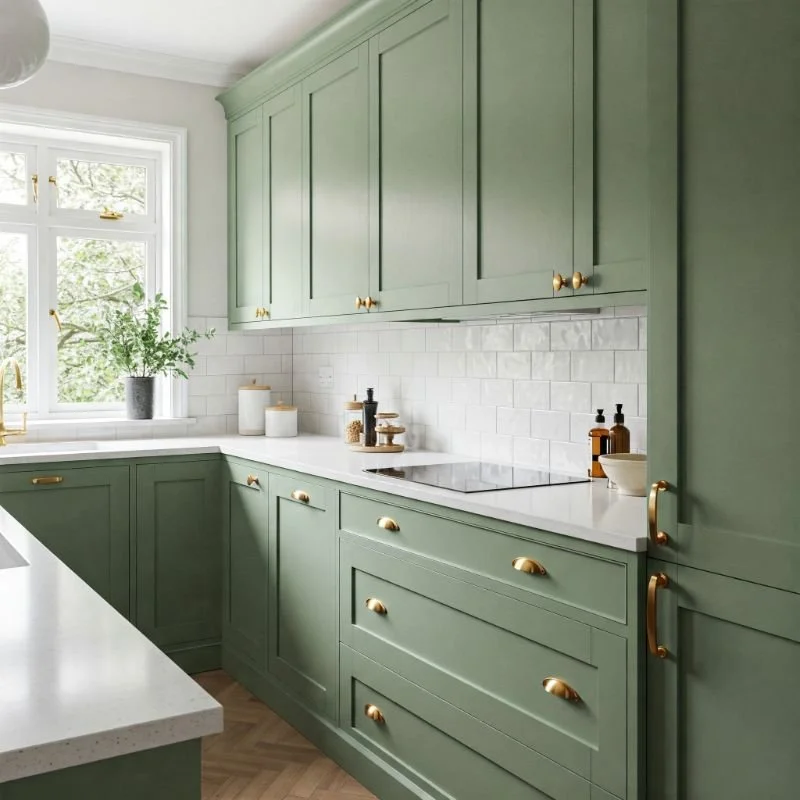
21. Fresh Sage Kitchen with Glossy White Subway Tile
The choice of a glossy finish on the white subway tile backsplash is the critical detail that makes this kitchen feel so fresh and inviting. A matte tile would have absorbed light, but the glossy surface reflects it, bouncing light from the large window all around the room. This reflection adds a subtle sparkle and liveliness to the space, creating a beautiful textural contrast with the matte finish of the sage green cabinets and the brushed finish of the brass hardware. It’s a small choice that has a huge impact on the room’s energy.
💡 Designer Tip
A classic look like this is tempting, but it’s important to check a few things before you start demo.
- Assess Your Floors: The warm herringbone wood floor is a key part of this look. Does your existing flooring complement a sage and white palette? If not, you need to budget for new flooring or find a rug that can bridge the color gap.
- Confirm Your Undertones: Bring a sample of your chosen sage green paint and hold it next to your floor and countertop samples. Ensure the undertones are compatible—a cool sage can clash with a warm, yellow-toned wood.
- Plan Your Grout: The classic choice is a light grey or white grout for a clean look. A darker grout would create a much busier, more graphic pattern—make sure that’s what you want!
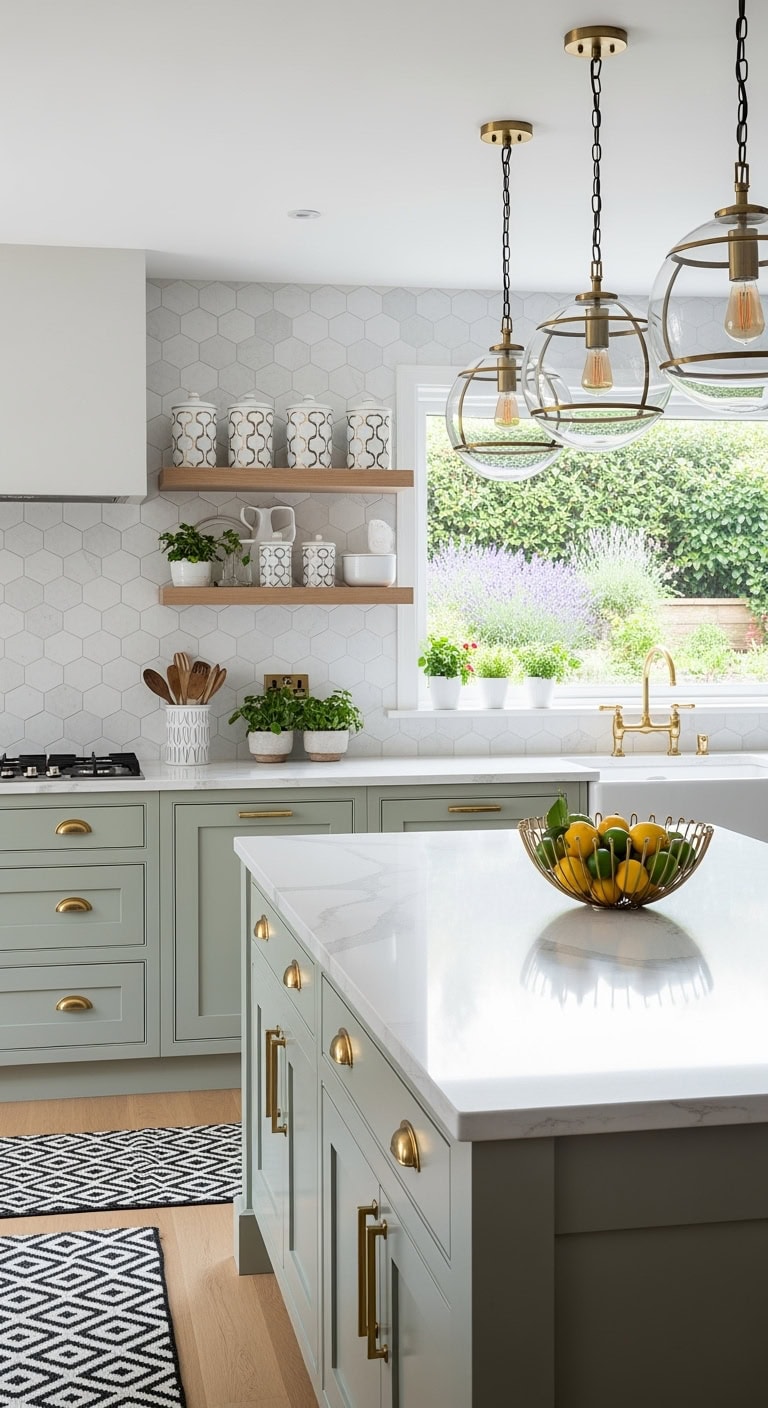
22. Modern Sage Kitchen with Hexagon Tile and Brass Lights
This kitchen is a masterclass in geometric harmony. The design repeats one core shape—the hexagon—in the light grey backsplash tile. This bold choice is then softened and complemented by a different shape: the circle, seen in the brass globe pendant lights. The repetition of these two simple, strong shapes creates a visual language that is both modern and playful. The straight lines of the shaker cabinets and open shelving provide a rigid grid against which these shapes can really sing.
💰 Budget Breakdown
Hanging pendant lights over a kitchen island requires precision for both function and style. Here’s a quick guide:
- Determine Quantity: For a large island, two or three pendants are standard. For a smaller one, one larger pendant might be better.
- Get the Height Right: The bottom of the pendants should hang 30-36 inches above the countertop. This provides clearance for work and conversation without obstructing views.
- Space Them Evenly: Find the center point of your island. If using two lights, space them about 30 inches apart, equidistant from the center. For three, hang one at the center and the other two about 24-30 inches out on either side.
- Check the Sightlines: Before making final cuts, have someone hold the lights in place while you walk around the room to ensure they don’t block important views (e.g., to the TV or out a window).
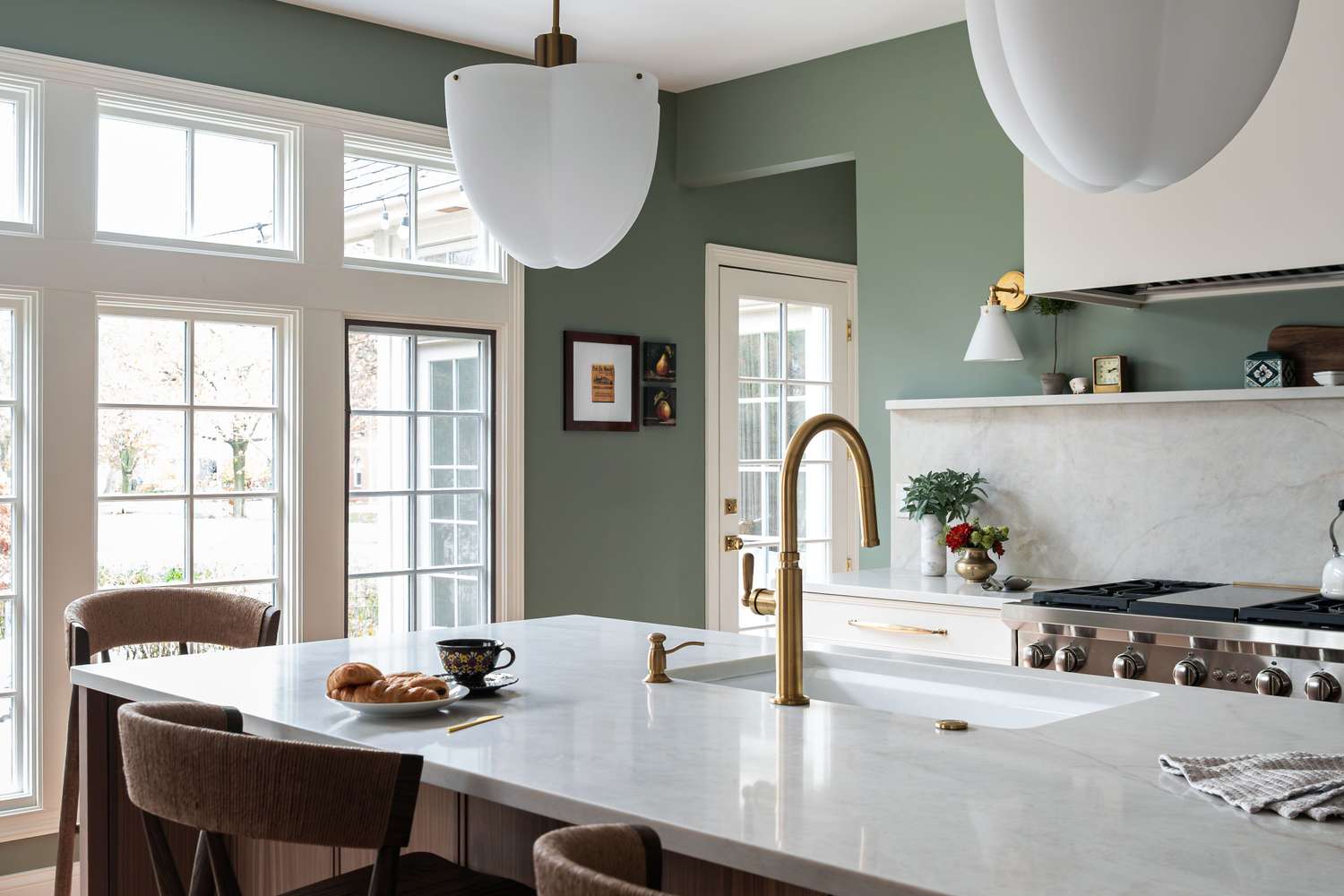
23. Elegant Kitchen with Sage Green Walls and a Marble Island
This room uses a sophisticated formula where the accent color is on the walls, not the cabinets. The visual math is roughly: 40% crisp white (cabinetry, trim, doors) + 30% sage green (walls) + 20% white marble + 10% warm metals and wood (brass faucet, dark island base). This approach makes the room feel incredibly bright and open, as the largest surfaces (the cabinets) are white. The sage green walls then act as a rich, colorful backdrop that envelops the space in warmth, a much bolder choice than simple white walls.
✅ Before You Start
This look is stunning, but painting your walls sage green when you have white cabinets is a bigger commitment than you might think. Any scuffs, grease splatters, or fingerprints will be much more visible on the colored walls than they would be on white. It also means you are locked into this color palette more firmly. If you decide in three years that you’re tired of sage green, you’re not just repainting some cabinets—you’re repainting the entire kitchen and living with how the new color interacts with your permanent fixtures.
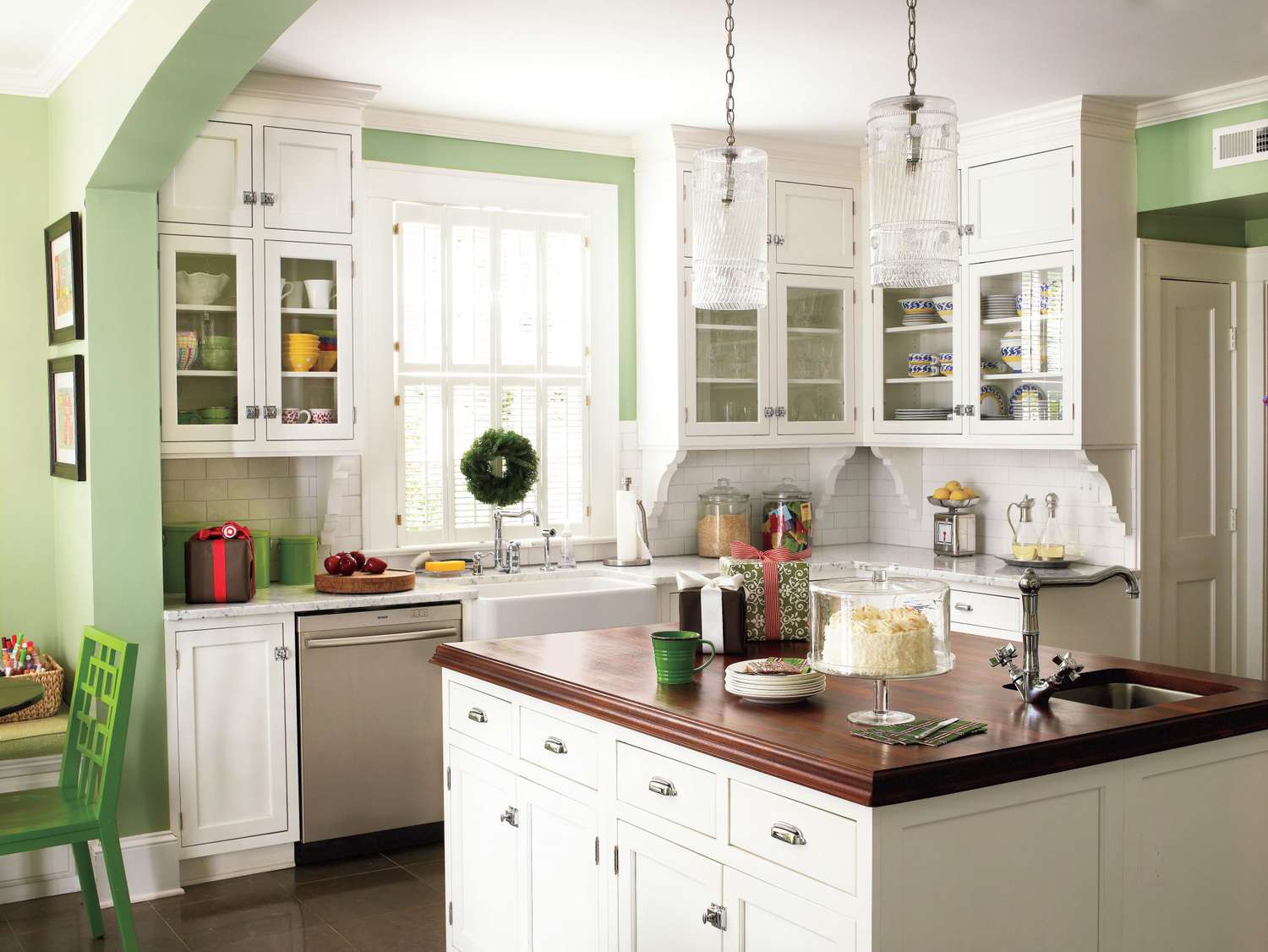
24. Traditional Kitchen with Sage Walls and a Wood-Topped Island
The single element that gives this kitchen its friendly, welcoming heart is the dark wood countertop on the large white island. While the perimeter counters are a practical grey stone, the island is treated like a piece of furniture—a warm, central gathering table. This choice immediately signals that this is a space for more than just cooking; it’s for homework, conversations, and morning coffee. It softens the entire room and prevents the all-white cabinetry and formal glass fronts from feeling too sterile or unapproachable.
📐 Style Math
You can achieve this cozy, traditional vibe without a full custom kitchen. A great starting point is painting the walls. A gallon of quality sage green paint is about $70. Instead of a custom island, find a large, second-hand dining table or workbench on Facebook Marketplace and paint the base white. For the top, you can buy a pre-made butcher block countertop from Home Depot or Lowe’s for $200-$500. Add some glass-film to your existing upper cabinets to get the ‘glass front’ look for less, just like in Idea #15 with its decorative uppers.
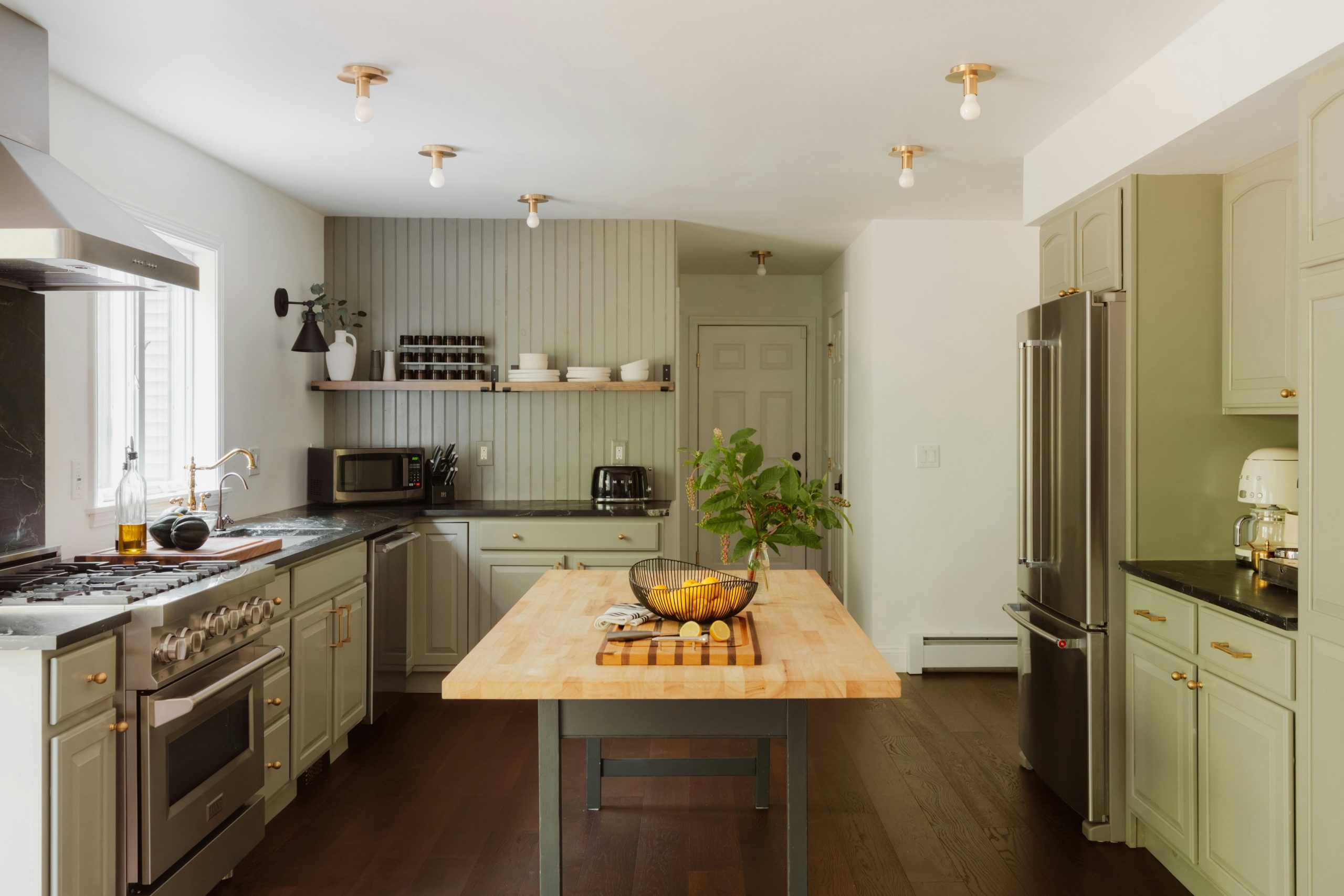
25. Modern Farmhouse Kitchen with a Butcher Block Island
This kitchen design works so well because it balances multiple textures within a tight color palette. The eye is drawn to the interplay of the smooth, painted sage green shaker cabinets, the rougher texture of the vertical plank wall, the warm grain of the butcher block island, and the cool, sleek surface of the dark stone countertops. The gold-toned hardware acts as jewelry, adding a touch of sparkle and warmth that ties the wood and green tones together. This textural variety makes the space feel rich and layered, not flat.
⚠️ Real Talk
Dark stone countertops, whether they’re soapstone, honed granite, or quartz, are fantastic for hiding crumbs but they are notorious for showing everything else. Water spots, oil smudges from fingerprints, and dust will be much more visible than on a lighter, patterned countertop. If you choose a natural stone like soapstone, be aware that it’s soft and can scratch or chip, though many people value this developing patina. Honed (matte) surfaces are particularly prone to showing oil marks, so you’ll be wiping them down frequently to keep them looking pristine.
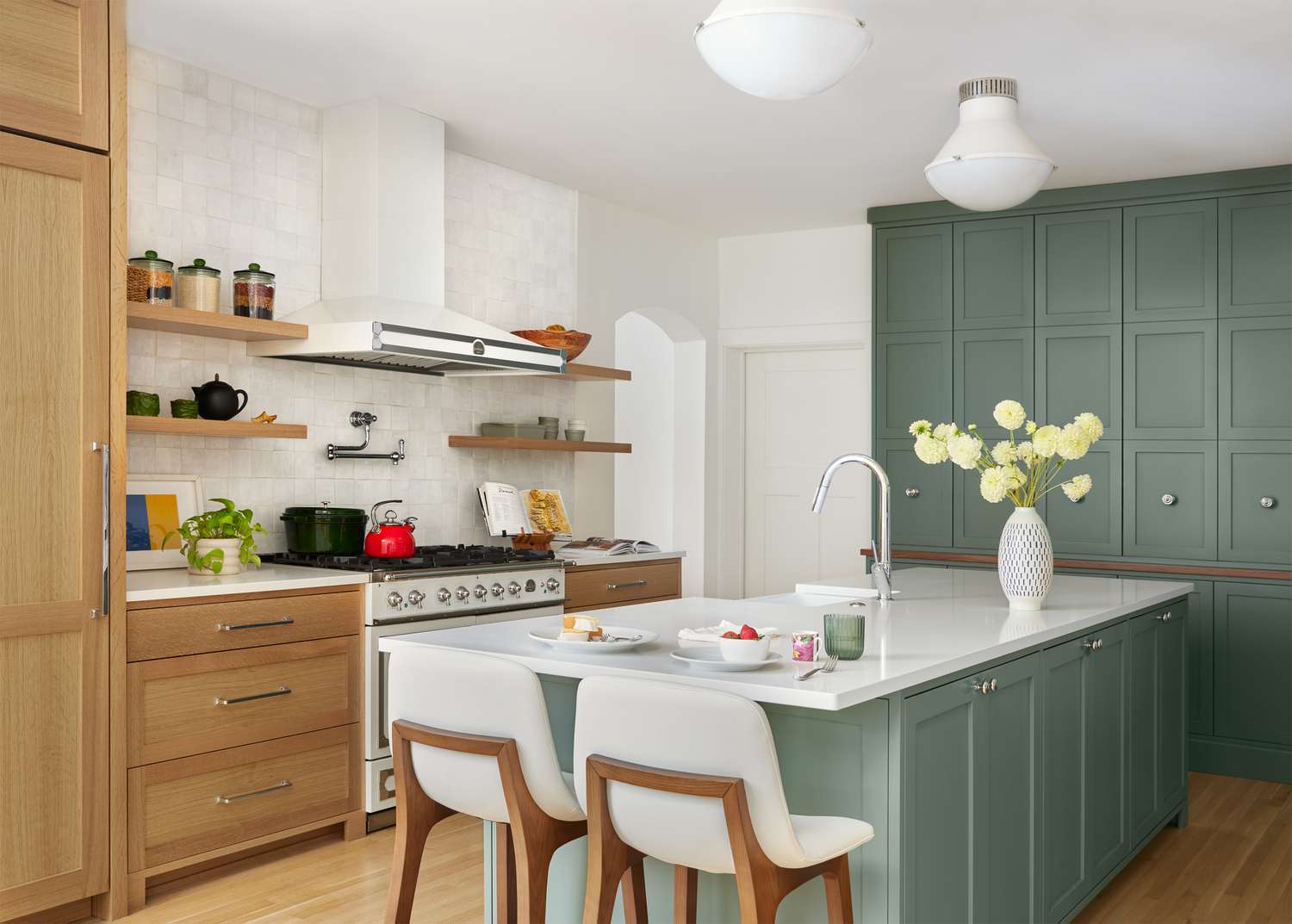
26. Mixed-Material Kitchen with Sage and Natural Wood Cabinets
This kitchen perfectly captures the evolution of the farmhouse trend for 2026. The sage green shaker cabinets and square white tiles nod to the classic look, but the introduction of flat-front, natural wood cabinets gives it a distinctly modern, slightly Scandinavian feel. This mixing of cabinet styles and finishes is a sophisticated move we’re seeing more and more. It breaks up the monotony of a single cabinet color and adds layers of warmth and texture, resulting in a space that feels custom, personal, and very current.
⭐ The One Thing
When mixing two different cabinet finishes, like the sage green and natural wood here, the key to a cohesive look is to use the same countertop material throughout. The uninterrupted plane of the white solid-surface countertop acts as a unifying element, visually connecting the different cabinet sections. If you were to use a different countertop on the island than on the perimeter, the whole design would start to feel busy and disjointed. Consistency in the countertop is the glue that holds this look together.
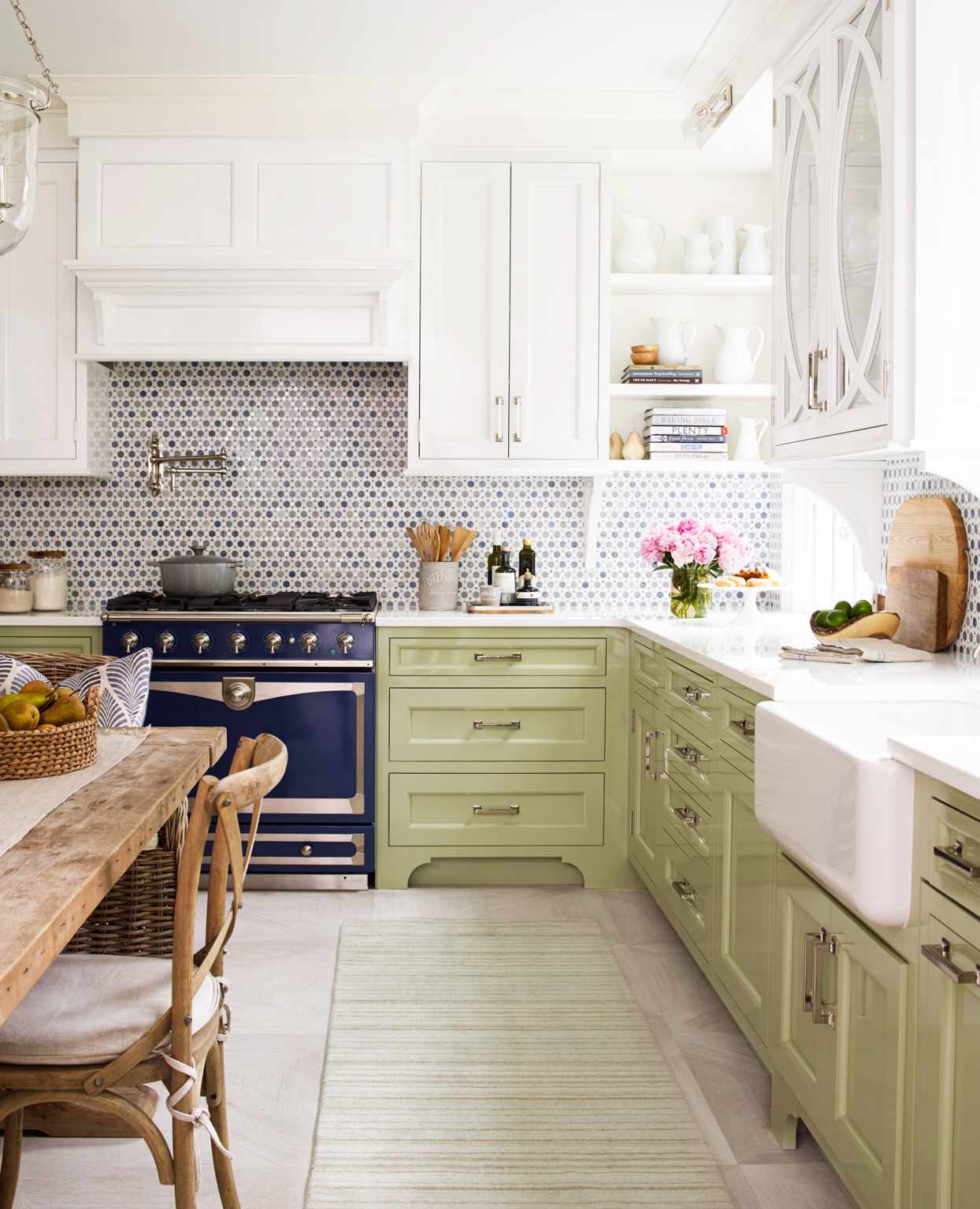
27. Cheery Kitchen with Sage Green Lowers and a Blue Range
The navy blue range is, without a doubt, the star of this kitchen. It’s a bold, unexpected choice that injects a huge dose of personality and joy into the space. While sage green, white, and wood is a lovely combination on its own, it’s a very safe and common one. The decision to introduce a strong, saturated color like navy blue for the most important appliance transforms the kitchen from ‘pretty’ to ‘unforgettable’. It shows confidence and a willingness to play with color in a way that feels both sophisticated and fun.
🎯 What Makes It Work
A statement-colored range is an amazing focal point, but it is a significant commitment, both financially and stylistically. Unlike a paint color or a backsplash, you can’t easily change it in a few years if you get tired of it. Before you splurge on a pricey blue or red oven, be very sure you love the color and that it will work with potential future changes to your decor. A stainless steel range, like in Idea #18, is a much safer, more timeless choice if you’re worried about long-term appeal or resale value.
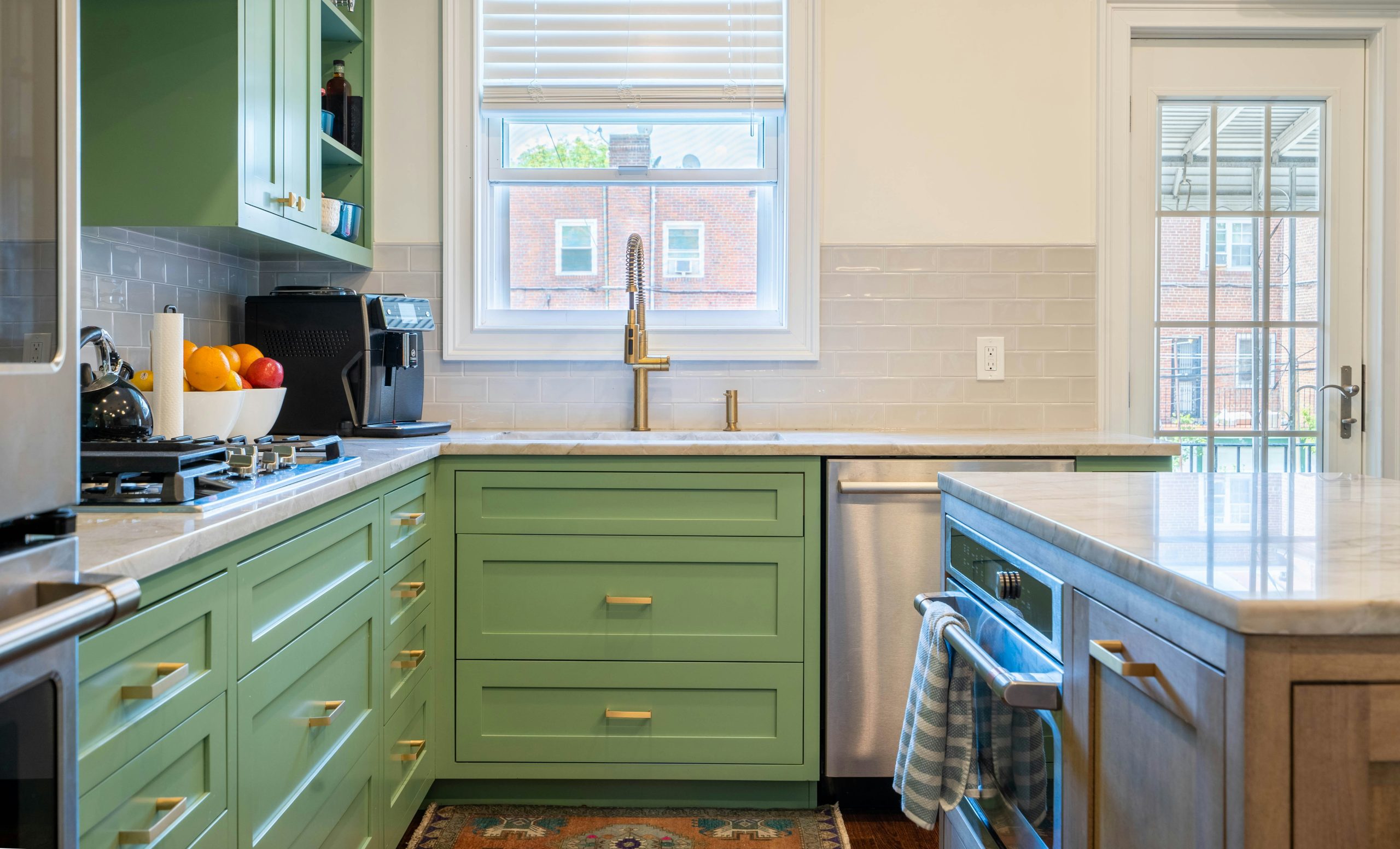
28. Earthy Modern Kitchen with Sage Cabinets and Marble Counters
The visual recipe for this bright, clean look is simple yet effective: 60% earthy sage green cabinetry + 20% classic white subway tile + 15% light marble countertops + 5% warm gold hardware. The large expanse of sage green grounds the space in a natural, calming color. The white tile provides a bright, reflective surface that keeps the room from feeling dark. The marble adds a touch of quiet luxury, while the gold hardware provides a necessary pop of warmth and glamour. It’s a balanced and timeless combination.
📏 Scale Guide
You can get this high-end look for a fraction of the cost with some savvy shopping. Start with IKEA’s green ‘BODARP’ or ‘LERHYTTAN’ cabinet fronts. Pair them with an affordable white subway tile from Home Depot (often less than $0.20 per tile). For the countertop, explore laminate options like Formica’s ‘Calacatta Marble’, which offer a surprisingly realistic look. Finally, find stylish gold hardware on Amazon or at Target. You can achieve this entire aesthetic for under $5,000 in a moderately sized kitchen.
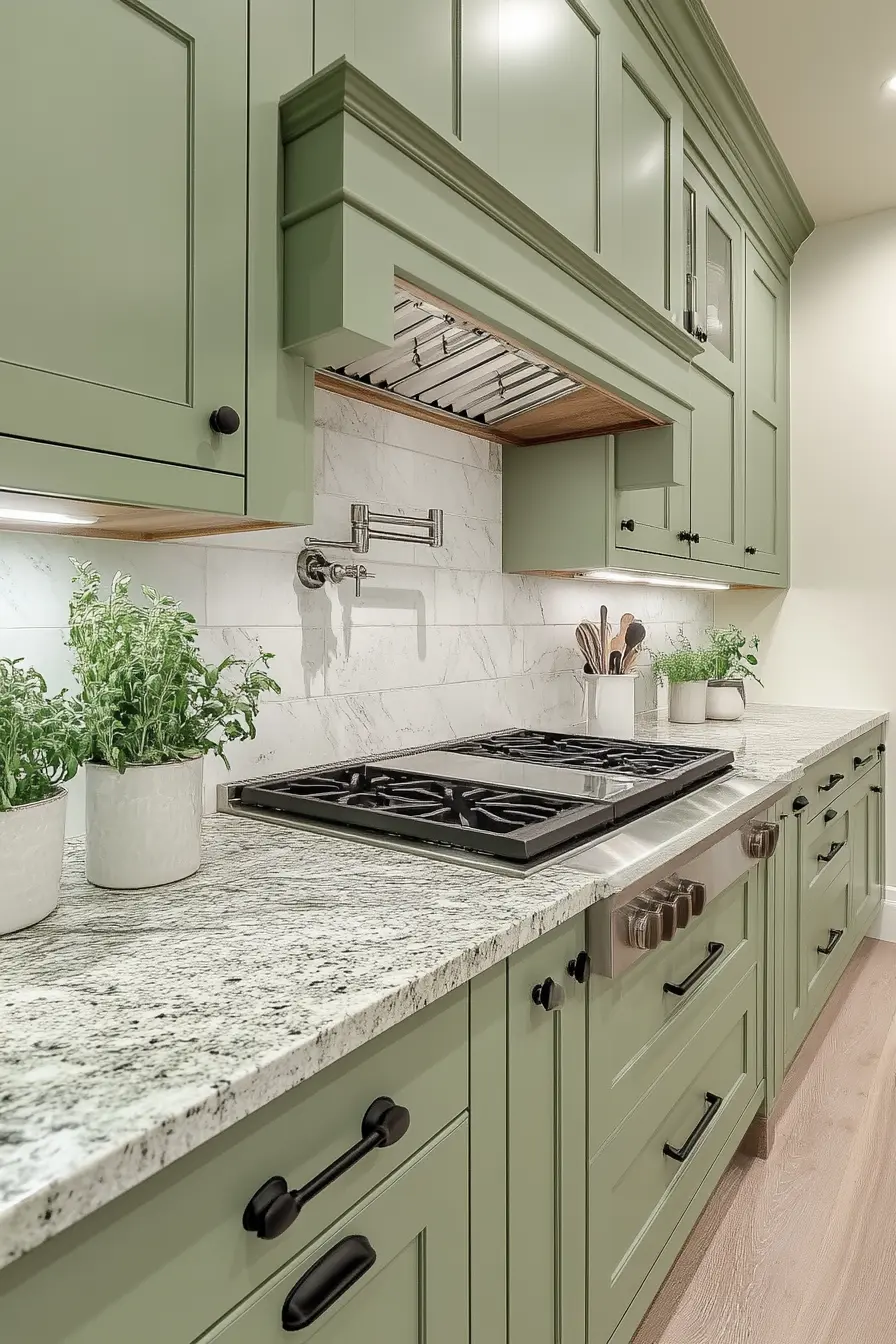
29. Classic Kitchen with Sage Shaker Cabinets and Marble Tile
This kitchen’s success lies in its thoughtful layering of classic materials. The sage green shaker cabinets provide a timeless base with a touch of color. The white marble subway tile backsplash adds a layer of luxury and texture that’s more dynamic than standard ceramic tile. The speckled granite offers a durable, practical work surface that complements both. The key is how the finishes are mixed: the matte black hardware provides a modern, graphic contrast, while the polished chrome of the pot filler adds a touch of classic sparkle. This mix feels collected and custom.
🧹 Maintenance Reality
Under-cabinet lighting is one of the most impactful and relatively inexpensive upgrades you can make in a kitchen. It serves two purposes. Functionally, it illuminates your countertops for prep work, eliminating shadows cast by your body. Aesthetically, it makes the kitchen feel more high-end and highlights your beautiful backsplash material. For a warm, inviting glow that renders food colors accurately, look for LED strips or pucks with a color temperature between 2700K and 3000K.
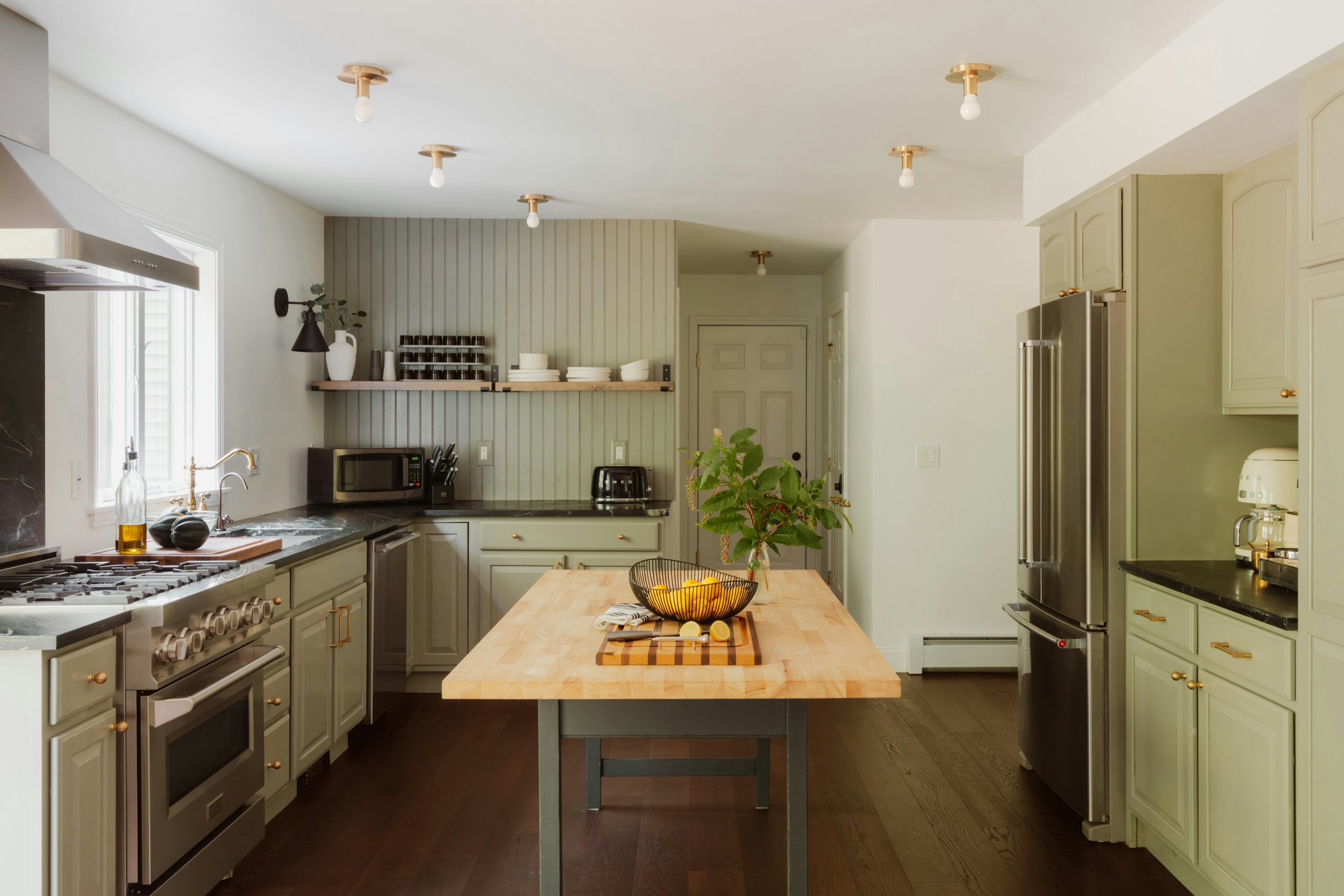
30. Warm Sage Kitchen with a Butcher Block Island and Dark Floors
The accent wall of vertical sage green paneling is the game-changing element in this kitchen. The cabinets and island are beautiful, but they are standard fare. Creating a full feature wall that matches the cabinets in the same color and finish does two things: it adds incredible texture and architectural interest, and it makes the entire space feel more cohesive and intentionally designed. This choice elevates the room from a collection of nice pieces to a truly custom, enveloping space. The open shelving against this backdrop is just icing on the cake.
💸 Get This Look For Less
This design, with its dark countertops, dark wood floors, and textured accent wall, needs a good amount of space and light to work effectively. It’s best suited for a kitchen that is at least 150 square feet and is part of an open-concept floor plan. In a smaller, enclosed kitchen, the combination of dark surfaces and the full-height feature wall could feel heavy and make the space seem smaller. Ample natural light from windows or skylights is also a must to keep the look warm and inviting rather than dark and gloomy.
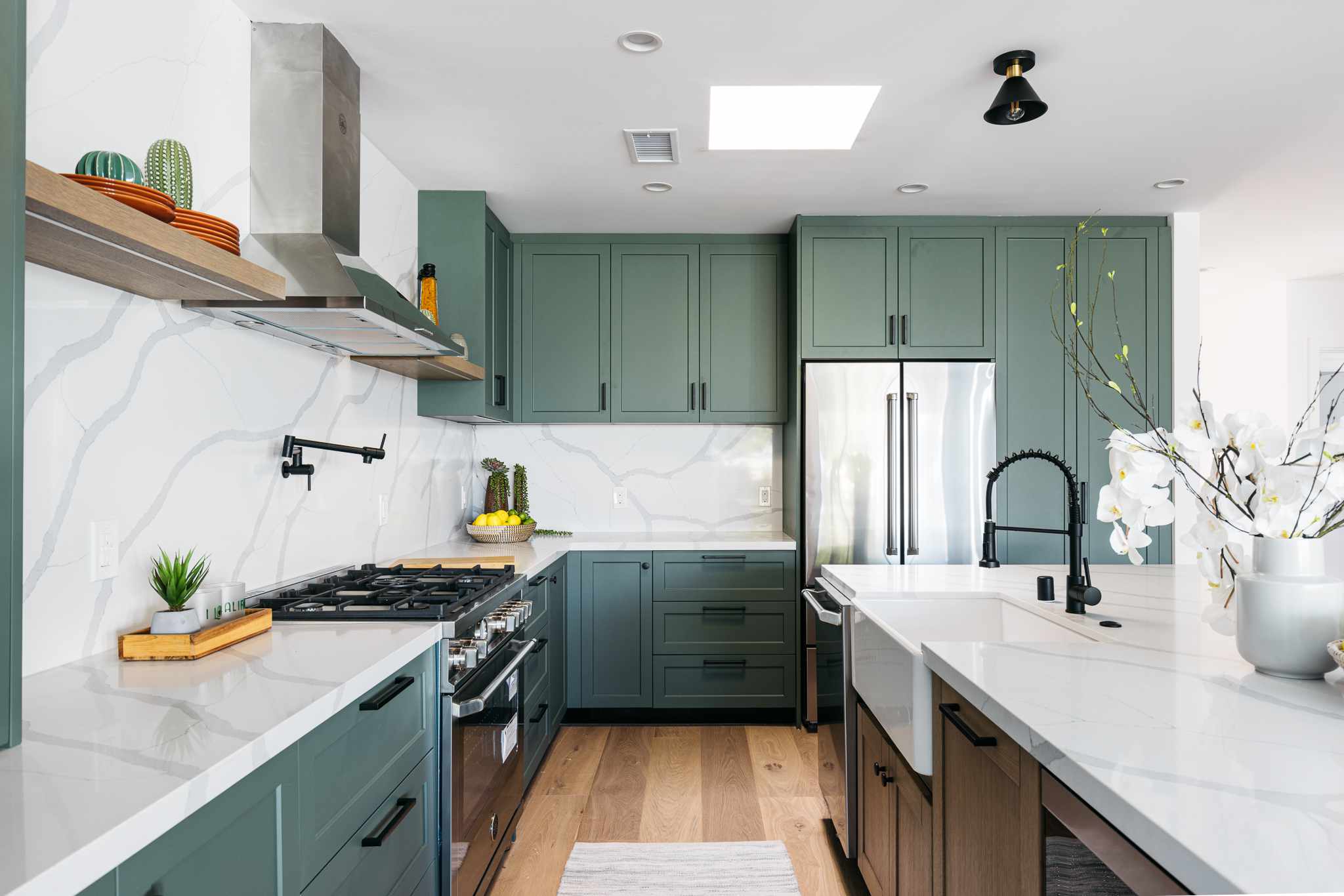
31. Modern Kitchen with Sage Flat-Panel Cabinets
This kitchen’s modern aesthetic is a study in clean lines and material contrast. The formula is: 50% sage green flat-panel cabinets + 30% dramatic marble-look backsplash and countertop + 10% warm light wood flooring + 10% sharp black accents (hardware and faucet). The simplicity of the flat-panel cabinets allows the bold, veiny pattern of the backsplash to be the star. The black hardware creates a strong graphic element, while the wood floor provides essential warmth to keep the look from becoming too clinical or cold.
🔧 How-To Brief
A white farmhouse sink looks beautiful, but it requires more maintenance than a stainless steel one. Porcelain or fireclay can chip if you drop a heavy pot, and scuff marks from pans are a common occurrence. These scuffs can usually be scrubbed out with a product like Bar Keepers Friend, but it’s a regular cleaning task you’ll have to take on. If you want a pristine sink at all times with minimal effort, this might not be the choice for you. A stainless steel version offers a similar look with much greater durability, like in Idea #18.
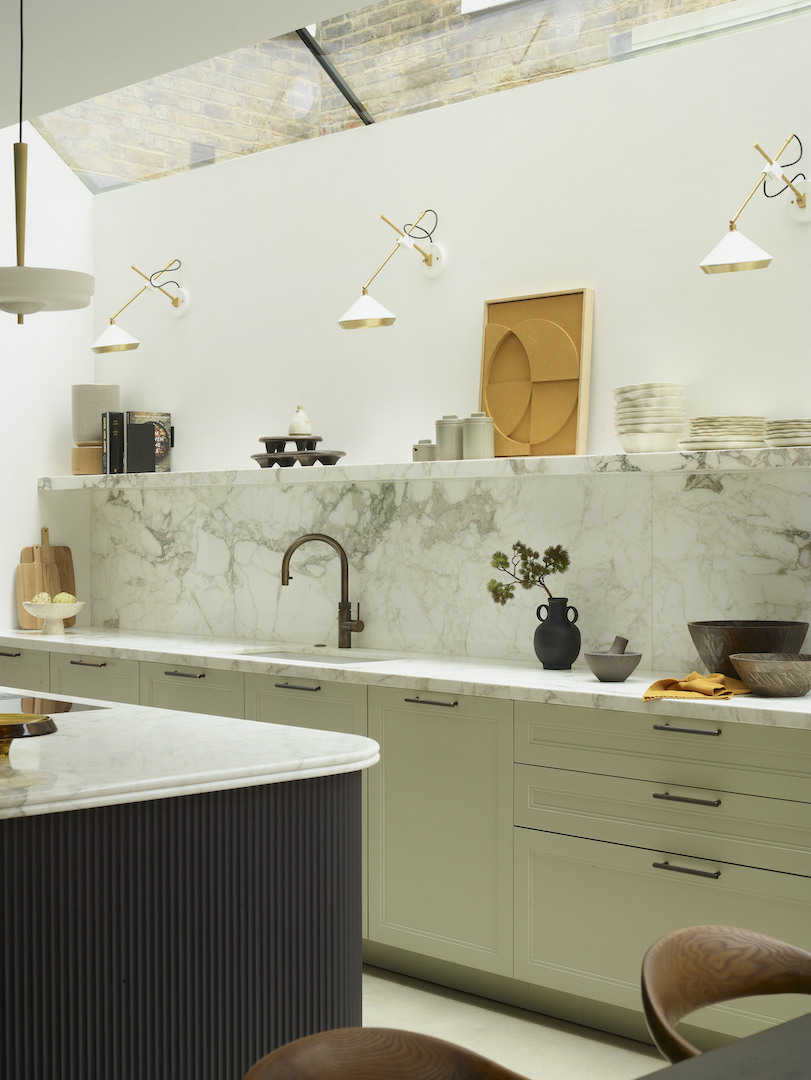
32. Contemporary Kitchen with Marble, Sage, and a Fluted Island
This design feels incredibly fresh and high-end due to its sophisticated play on textures. The dominant texture is the dramatic, smooth marble of the counter and backsplash. This is contrasted by the cool, matte surface of the sage green cabinets. The showstopper, however, is the rich, ribbed texture of the dark fluted island, which adds depth and a tactile quality. Finally, the sleek, metallic brass of the faucet and sconces provides a final layer of polished refinement. It’s a design that engages the eye on multiple levels.
🔥 Trending Context
Fluted or reeded detailing on cabinetry, islands, and furniture is a huge trend for 2026. It’s an evolution of the board-and-batten look but with a more refined, contemporary, and almost Art Deco sensibility. It adds texture and architectural interest without the rustic connotations of farmhouse style. We’re seeing it in high-end design everywhere because it’s a way to make simple forms feel dynamic and luxurious. This is a trend with staying power, as it’s rooted in classic architectural details.
Ready to Find Your Perfect Shade of Sage?
We hope these 32 ideas have shown you just how versatile sage green can be. Whether you’re drawn to the warmth of butcher block or the cool elegance of marble, there’s a combination that’s perfect for your home’s unique story. Now go get inspired and start planning that dream kitchen on Pinterest!