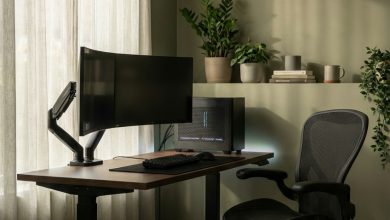

You know that feeling when you finally find the home office desk setup that looks exactly right? It’s not just about finding a place to put your laptop; it’s about creating a space that feels calm, organized, and completely yours. After filtering through hundreds of options, we’ve narrowed it down to 31 distinct ideas that truly deliver for 2026. These looks cover everything from minimalist and Scandinavian designs to modern and earthy styles.
This year is all about the “functional retreat”—a workspace that isn’t just productive but also serves as a personal sanctuary. This shift towards deeply personalized, comfortable work zones is why finding the right desk setup is more important than ever. And stay until the end — we break down the most common mistakes that can ruin these looks. 📌 Save this to Pinterest for later — you’ll want to revisit these ideas.
1. The Tech-Ready Collaboration Hub
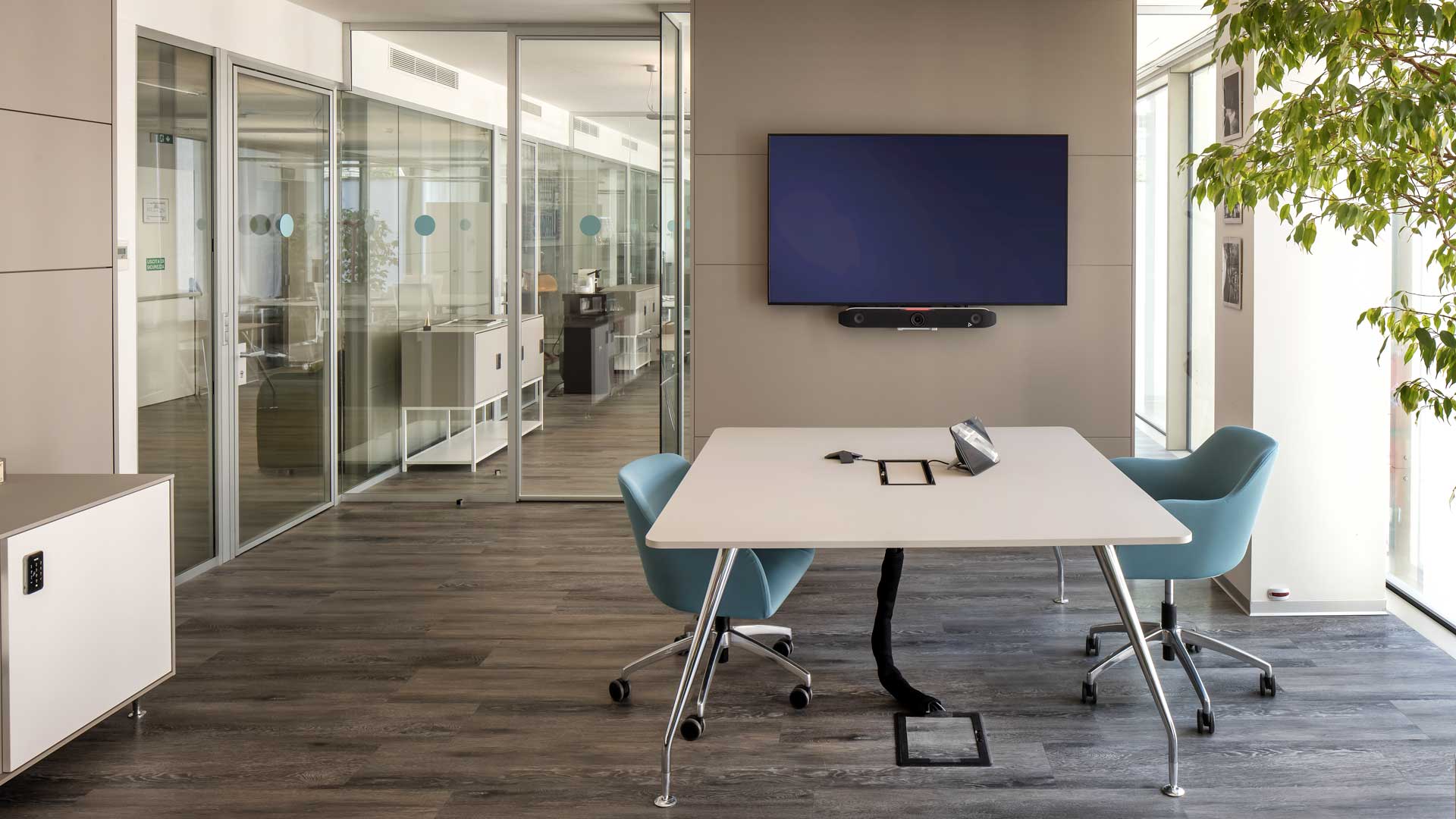
What makes this setup so effective is the seamless integration of technology. The desk isn’t just a surface; it’s a functional hub with built-in power and data ports, eliminating cable clutter. This clean approach is reinforced by the choice of a wall-mounted screen, which frees up table space and creates a clear focal point for presentations or video calls. The harmony between the sleek furniture and the glass partitions creates an atmosphere of open, modern professionalism.
🎯 What Makes It Work
This idea is best suited for a dedicated commercial office space or a large home office, requiring a minimum of 120-150 square feet to accommodate the table and allow for comfortable circulation around it. The key is to have enough room so the glass partitions don’t feel constricting. For this to work, you need at least 8-foot ceilings to handle the scale of the wall-mounted screen console without overwhelming the space. It’s less about the room’s overall size and more about having one clear, unobstructed wall.
2. A Bright Home Office with Classic Built-Ins
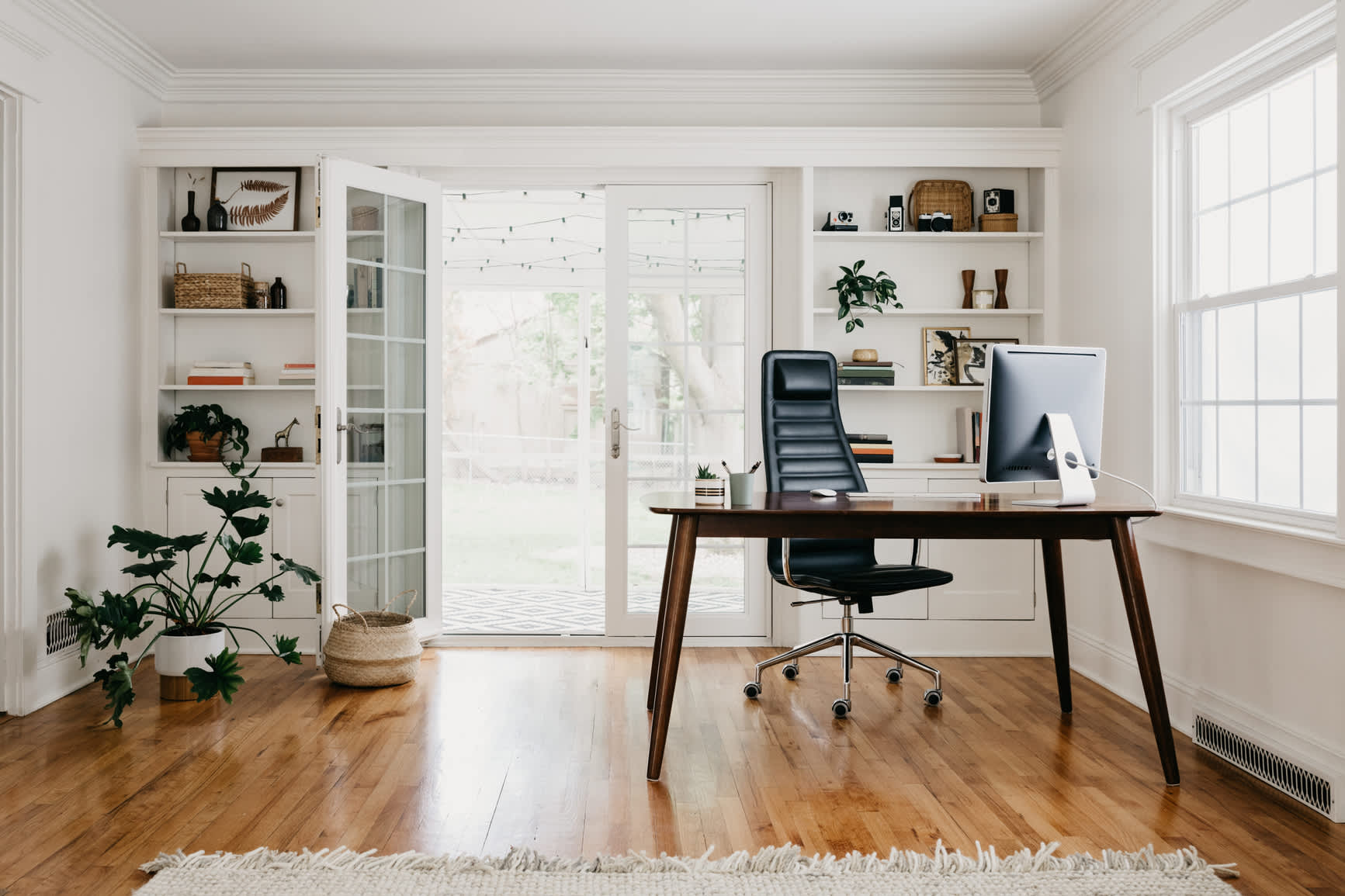
When incorporating built-in shelving, paint the shelves and the wall behind them the same color—in this case, a crisp white. This technique makes the shelving feel like an integrated part of the architecture rather than a separate piece of furniture. It creates a clean, cohesive backdrop that makes the items on the shelves pop, turning your books and decor into an intentional display. For a touch of drama, you could also paint the back wall of the shelves a contrasting color.
⚠️ Real Talk
that truly defines this space is the abundance of natural light. Remove the large glass doors and the side window, and the entire feel of the room would shift from bright and serene to dark and stuffy. The light illuminates the polished hardwood floors and makes the white built-ins feel even more expansive. It’s the single element that connects the professional setup with the calming influence of the outdoors, making it a place you genuinely want to spend time in.
3. Dual Chrome Desks with Leather and Open Shelving
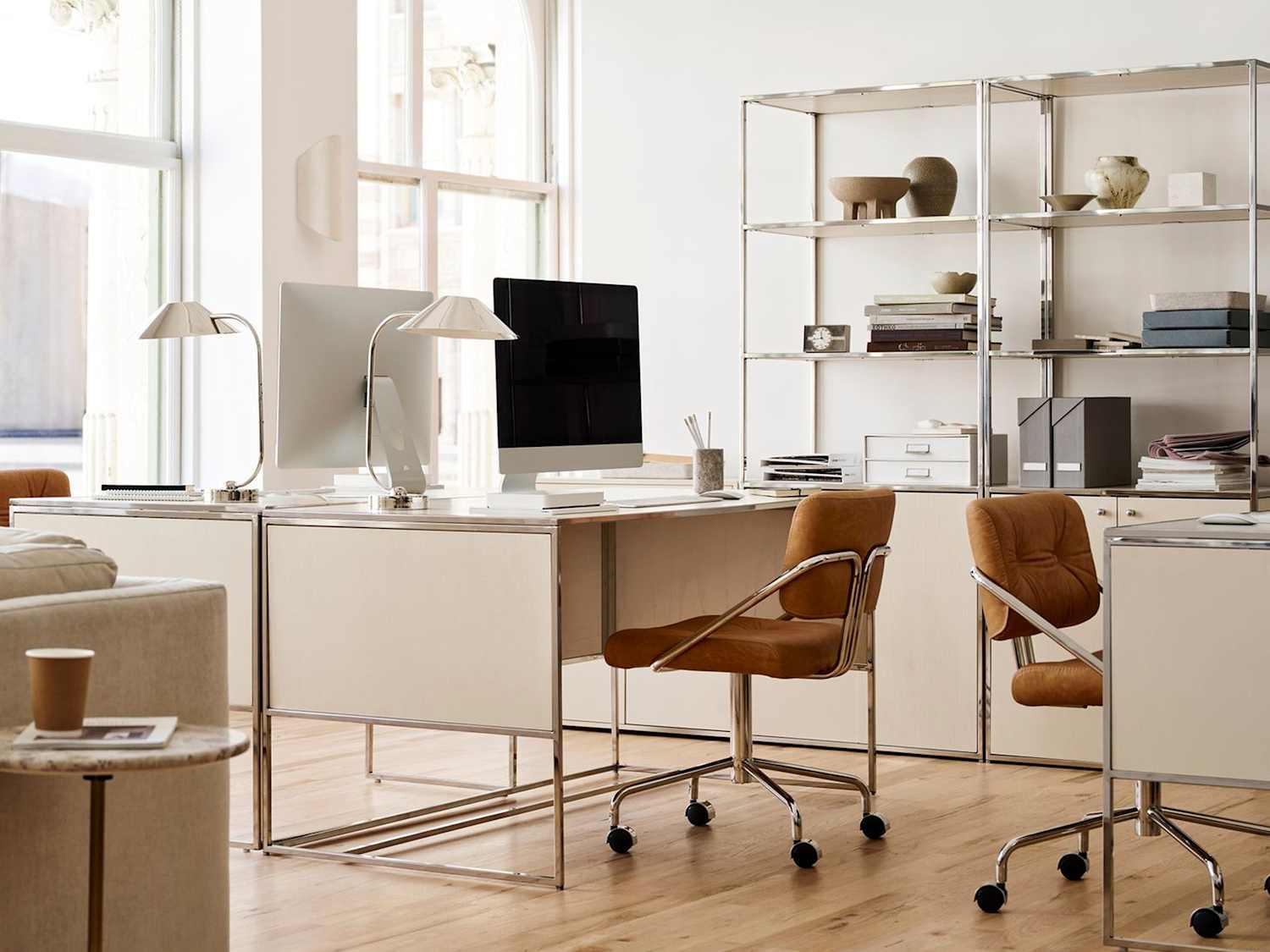
This look achieves its sophisticated harmony through a simple formula: 50% warm neutrals (light cream panels, light wood flooring) + 30% reflective metal (chrome frames and shelving) + 20% organic texture (light brown leather chairs). You could swap the materials while keeping the ratio for a different vibe. Imagine replacing the light brown leather with a deep navy velvet or switching the chrome for a warmer brass—the fundamental balance would remain, but the mood would shift instantly.
📐 Style Math
You don’t need a high-end designer budget to get this look. Find two simple desks from IKEA, like the MICKE series, for around $99 each. Hunt for vintage-inspired leather chairs on Facebook Marketplace or Wayfair, which can often be found for $150-$250 apiece. For the shelving, a simple Vittsjö unit from IKEA in black metal spray-painted silver would create a near-identical effect for under $100. The key is mixing affordable staples with one or two slightly more unique secondhand finds. Compare this with the luxe version in Idea #21.
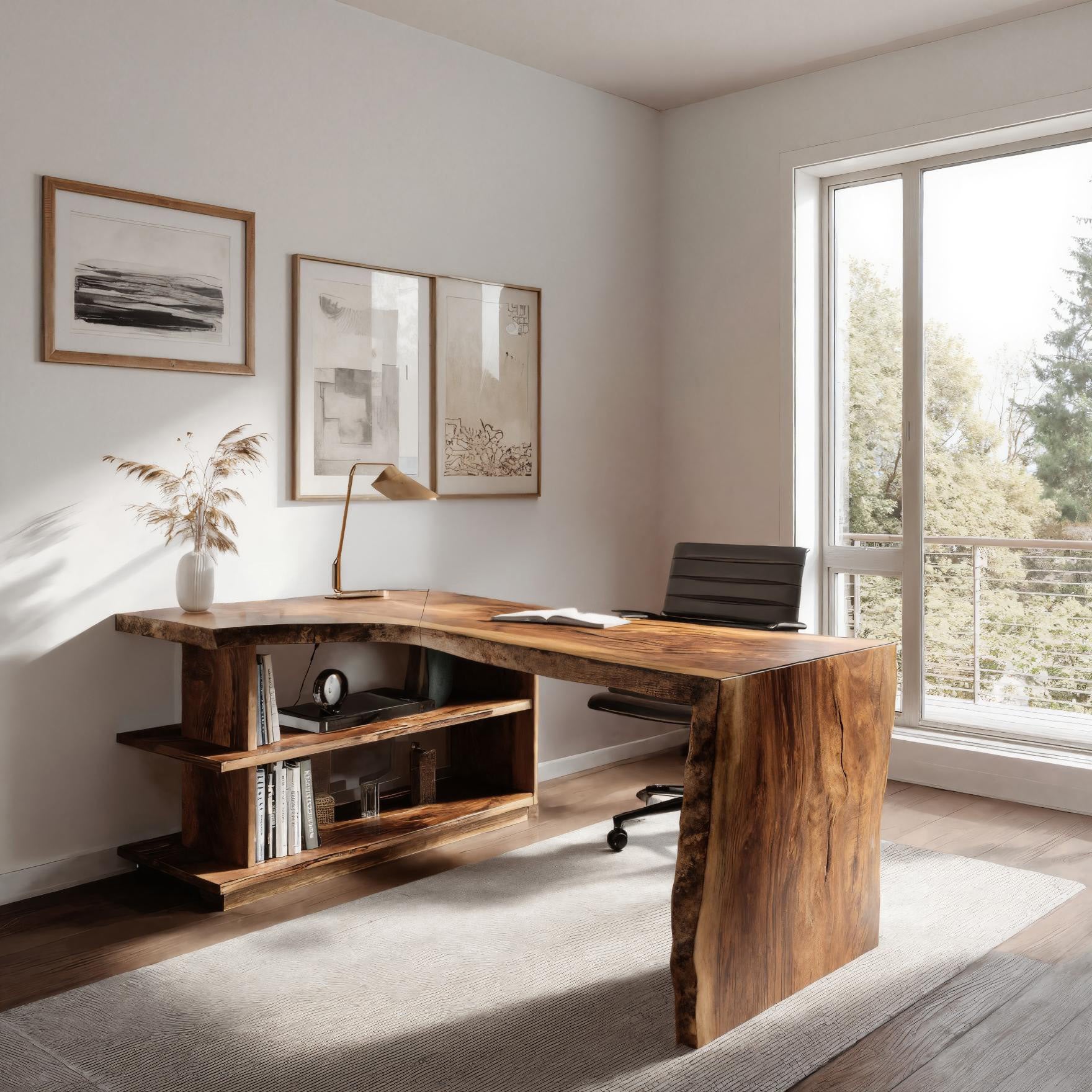
4. A Modern Live-Edge Desk with Minimalist Art
This space works because of the powerful contrast between the organic, irregular shape of the live-edge wood desk and the clean, straight lines of the room’s architecture and the window frame. This tension creates visual interest without adding clutter. Furthermore, the limited color palette—warm wood, off-white walls, a neutral rug—allows the natural beauty of the desk to be the undisputed star of the show. The simple, abstract art complements the scene rather than competing with it.
🧹 Maintenance Reality
A live-edge wood desk is a stunning statement piece, but it requires specific care. To keep the wood from drying out or staining, it should be treated with a food-safe oil or wax finish every 6-12 months, which costs about $20-$30 for supplies. Be vigilant about coasters, as condensation can leave permanent rings. While incredibly durable, a deep scratch is difficult to repair without professional help. For a similar but lower-maintenance vibe, consider the slat-wall look in Idea #11.
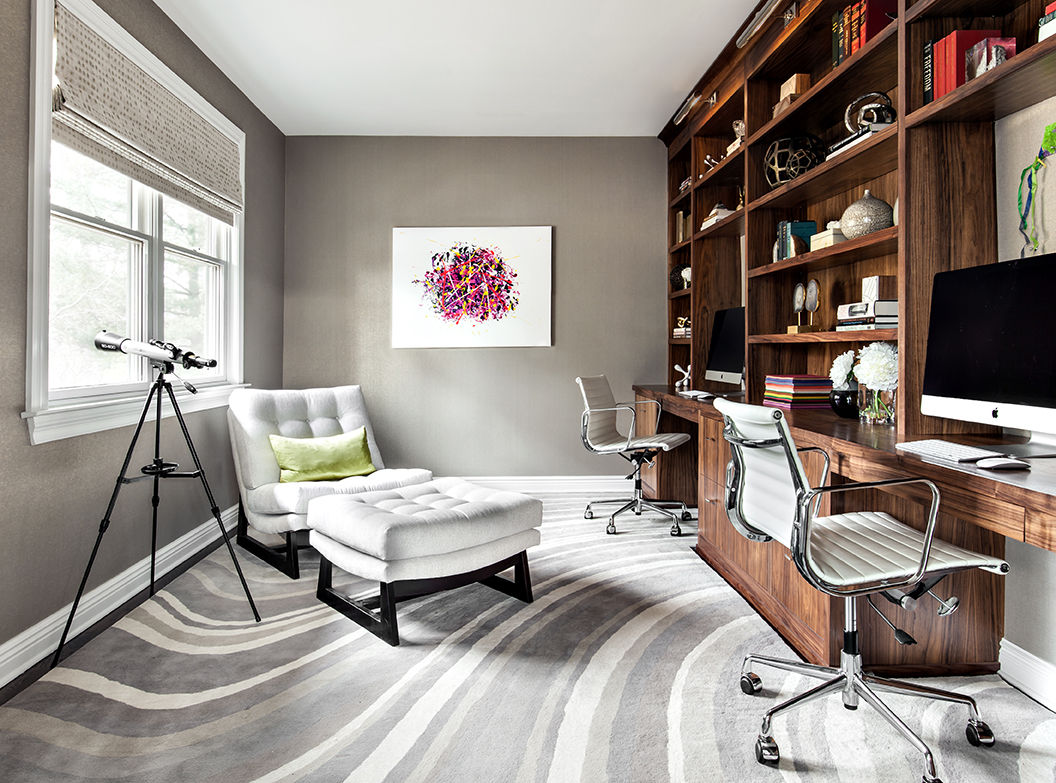
5. Integrated Two-Person Desk and Shelving Unit
For a shared workspace, visual separation is key, even with an integrated desk. Use distinct (but coordinated) office chairs and define each person’s zone with subtle cues like separate task lighting or small area rugs under each chair. In this setup, the two white chairs create a sense of unity, but you could easily give each person a different colored desk mat or set of accessories to maintain a sense of personal space without disrupting the room’s overall aesthetic.
🔧 How-To Brief
While a built-in desk and shelving unit looks incredibly chic and organized, it’s a major commitment. Unlike freestanding furniture, you can’t easily move it or take it with you when you leave. This kind of custom millwork can also be costly and requires professional installation. Before you commit, be absolutely certain about the room’s layout and function, as changing it later will mean a significant demolition and renovation project. This isn’t a solution for renters or anyone who likes to frequently rearrange their space.
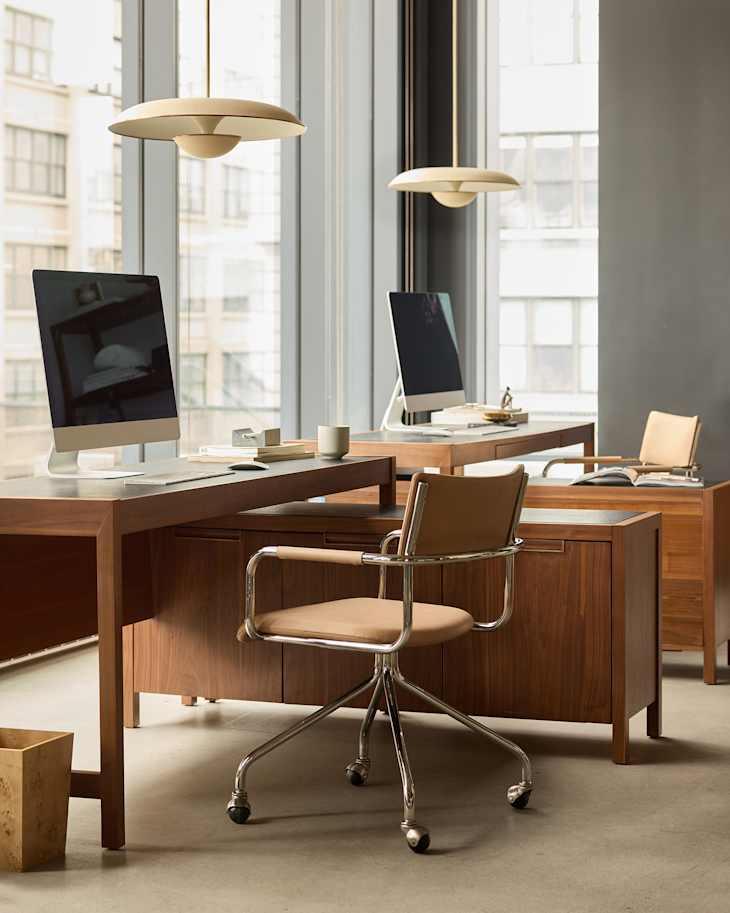
6. Mid-Century Wooden Desks with a Cityscape Backdrop
Recreating this dual mid-century setup requires investment in a few key pieces. The chairs and desks are the main event, with lighting and accessories playing a supporting role.
🔥 Trending Context
- Main Furniture: $3,000 – $6,000 (Two wooden desks and two tan leather/chrome chairs)
- Lighting: $400 – $900 (Two designer pendant lights)
- Decor/Accessories: $300 – $700 (Computers, desk plants, etc.)
- TOTAL: $3,700 – $7,600
- Budget alternative: Achieve a similar look for around $1,500 by using desks from Article or West Elm and finding replica chairs and lighting on Wayfair.
The mid-century modern style has had remarkable staying power for a reason: it blends beautiful, natural materials like wood and leather with clean, functional lines. In 2026, as many of us continue to seek a balance between professional polish and personal comfort at home, this style hits the perfect note. It feels elevated and intentional, yet warm and liveable. It’s a direct reaction against the cold, sterile office environments of the past, making it a perfect fit for today’s home-centric work culture.
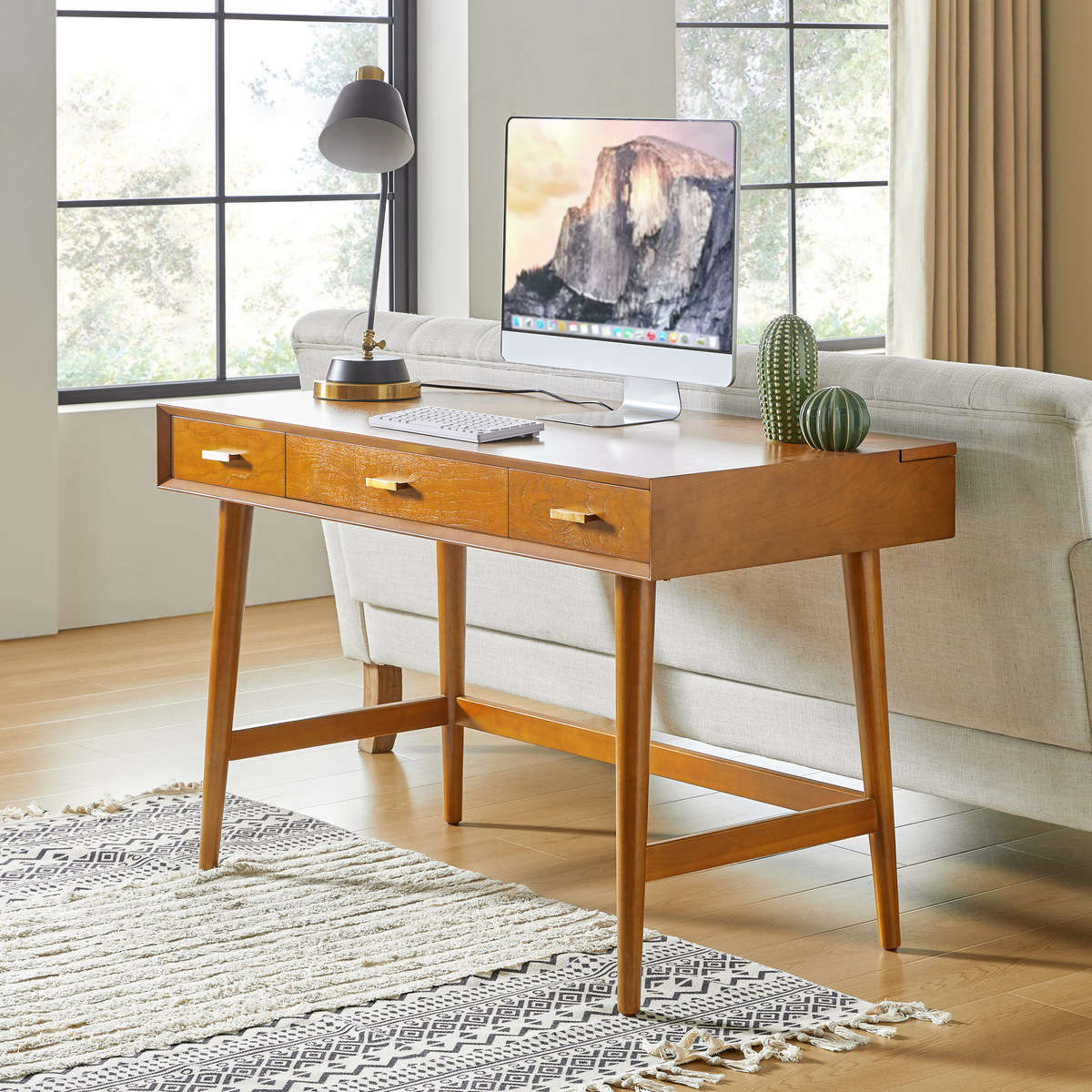
7. Light Wood Desk with Gold and Green Accents
The single element that elevates this simple desk setup is the choice of gold hardware. It’s a small detail, but it makes a huge impact. Without the warm metallic gleam of the drawer pulls, the desk would be perfectly nice but forgettable. The gold adds a touch of bespoke glamour, coordinates with the lamp, and transforms a functional piece of furniture into a considered design element. It’s proof that the little things are often the big things. For a different take on this era, check out Idea #6.
✅ Before You Start
This calm and approachable look is built on a simple formula: 70% natural and neutral base (light wood desk, white monitor, light-colored sofa) + 20% dark contrast (black lamp shade, dark elements in the rug) + 10% curated accents (gold hardware, green cacti). You could easily change the accent color from green to dusty rose or cobalt blue to personalize the space. As long as you maintain that 70/20/10 ratio, the balanced and airy feeling will remain intact.
8. Minimalist Home Office with Dark Wood and Abstract Art
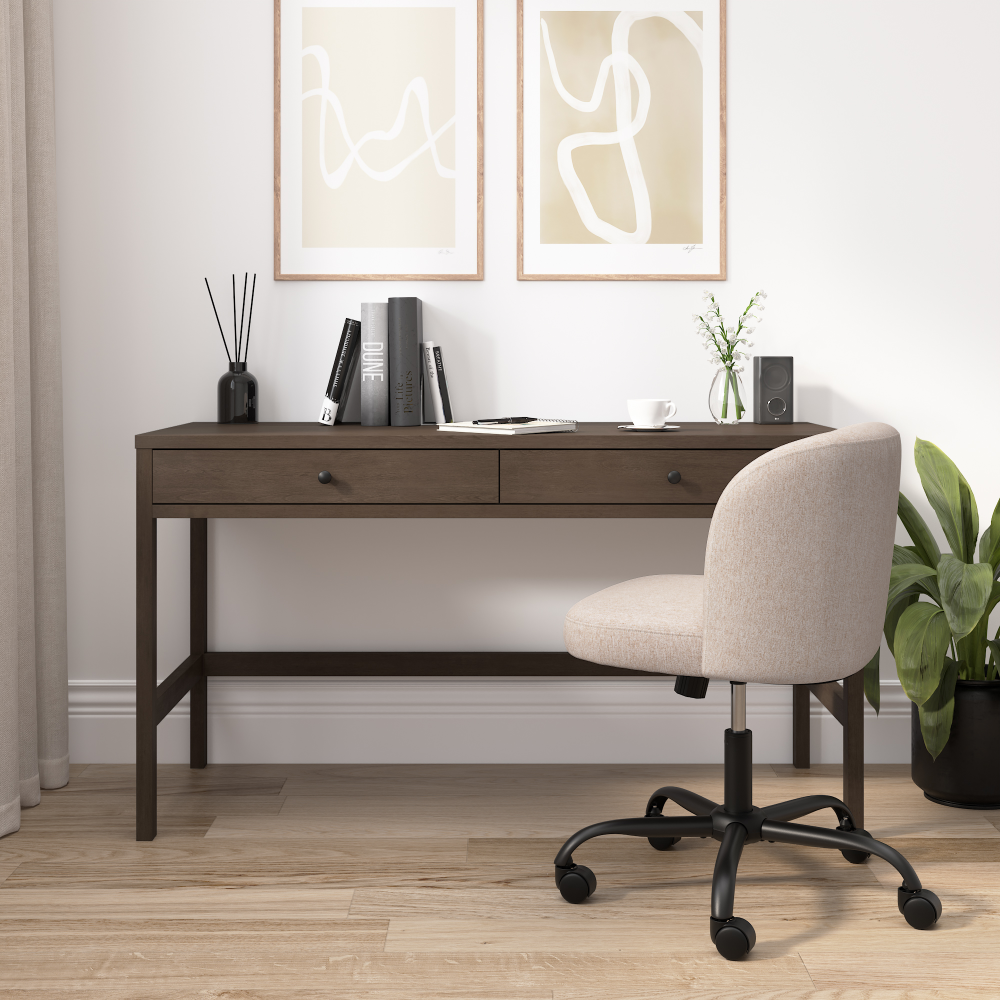
The success of this space lies in its restraint. With only a few essential pieces—desk, chair, art, plant—each one is given room to breathe and make an impact. The warmth of the dark brown wooden desk is perfectly balanced by the cool, neutral tones of the beige chair and white wall. The abstract art adds a layer of personality and sophistication without introducing clutter, and the large green plant provides an organic, sculptural element that enlivens the minimal composition.
💸 Get This Look For Less
You can get this serene, minimal look for much less. Start with a simple, clean-lined desk from Target or Walmart in a dark wood finish (around $150-$200). Pair it with a basic upholstered rolling chair, which can be found for under $100. For the art, browse sites like Etsy or Society6 for affordable abstract prints—you can often get two framed pieces for under $150. Finish the look with a snake plant or a ZZ plant from a local nursery, and you’ve captured the entire vibe for under $500.
9. A Modern Grey and White Minimalist Workspace
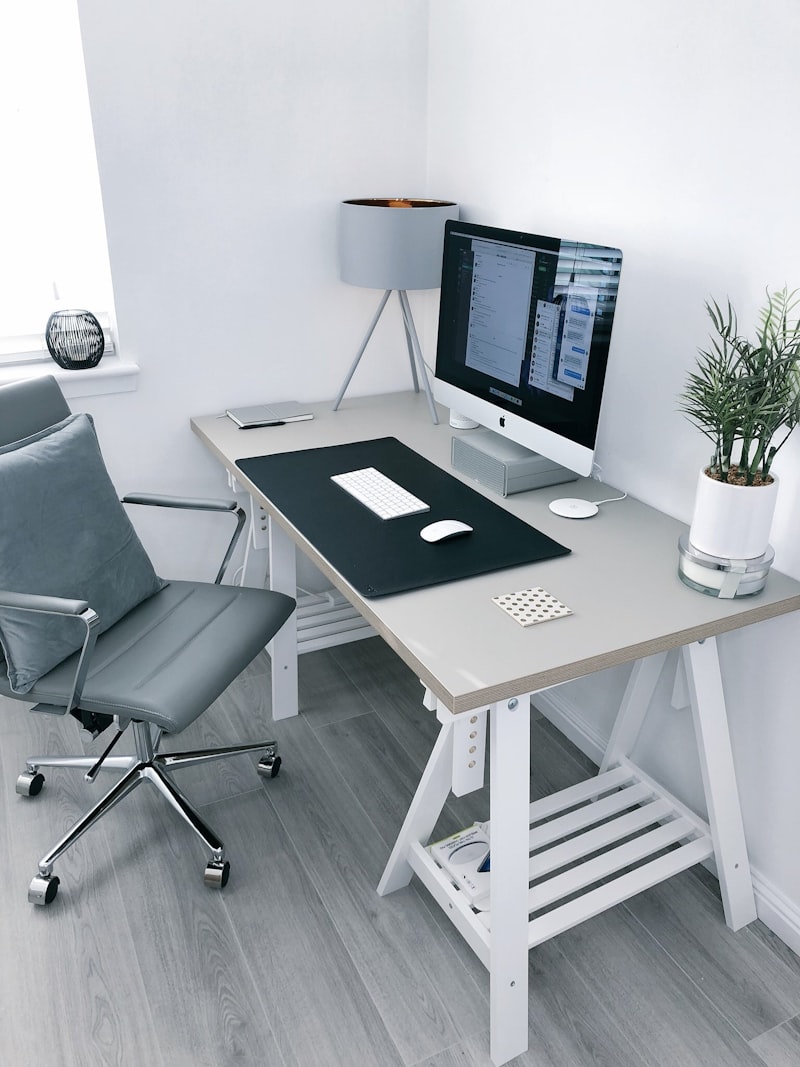
To prevent a minimalist, monochromatic room from feeling flat, introduce a single metallic accent. In this office, the bronze interior of the tripod lamp is a game-changer. It adds a touch of warmth and luxury that breaks up the sea of grey and white. When the lamp is on, it casts a warm, inviting glow that creates an entirely different mood. Whether it’s bronze, brass, or gold, a single pop of warm metal can make a minimal space feel instantly more dynamic and sophisticated.
⭐ The One Thing
This setup is ideal for smaller spaces, apartments, or a corner of a larger room. It requires a footprint of only about 30-40 square feet. The use of trestle legs for the desk creates a visually lighter feel than a solid desk with drawers, which helps in a tight space. Because the decor is so minimal, it doesn’t demand high ceilings or a lot of architectural interest. Its strength is its simplicity, which can be deployed almost anywhere you have a spare wall and good natural light.
10. A Light Wood and Rattan Desk with Integrated Shelving
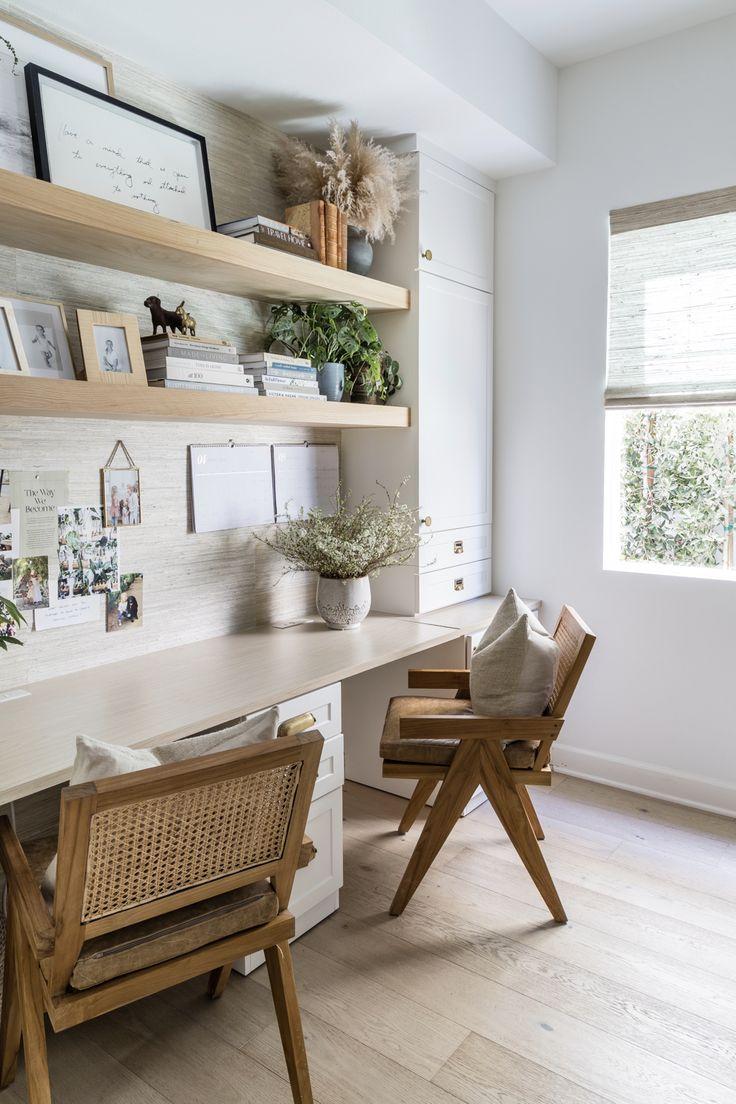
Creating your own version of this integrated desk and shelving look is a great weekend project. Time estimate: 4-6 hours. Material cost: $200-$400.
📏 Scale Guide
- Choose your wall and measure the desired width for your desk and shelves.
- Purchase pre-finished wood boards (like pine or oak) and a set of strong, stylish shelf brackets.
- Install the brackets for the floating shelves first, ensuring they are level and screwed into wall studs for stability.
- Install the brackets for the desktop at a comfortable height (usually 29-30 inches from the floor).
- Secure the wood boards to the brackets.
- Style with your favorite books, plants, and accessories!
While rattan is having a major design moment and brings a wonderful sense of warmth and texture, be aware of its durability. The woven material can be prone to snagging on clothing or fraying over time with heavy use, especially on a chair that’s pulled in and out frequently. It can also be tricky to clean, as dust and spills can get trapped in the weave. If you have pets or young children, you might consider a solid wood or upholstered chair for better longevity.
11. A Modern Office with a Vertical Wood Slat Wall
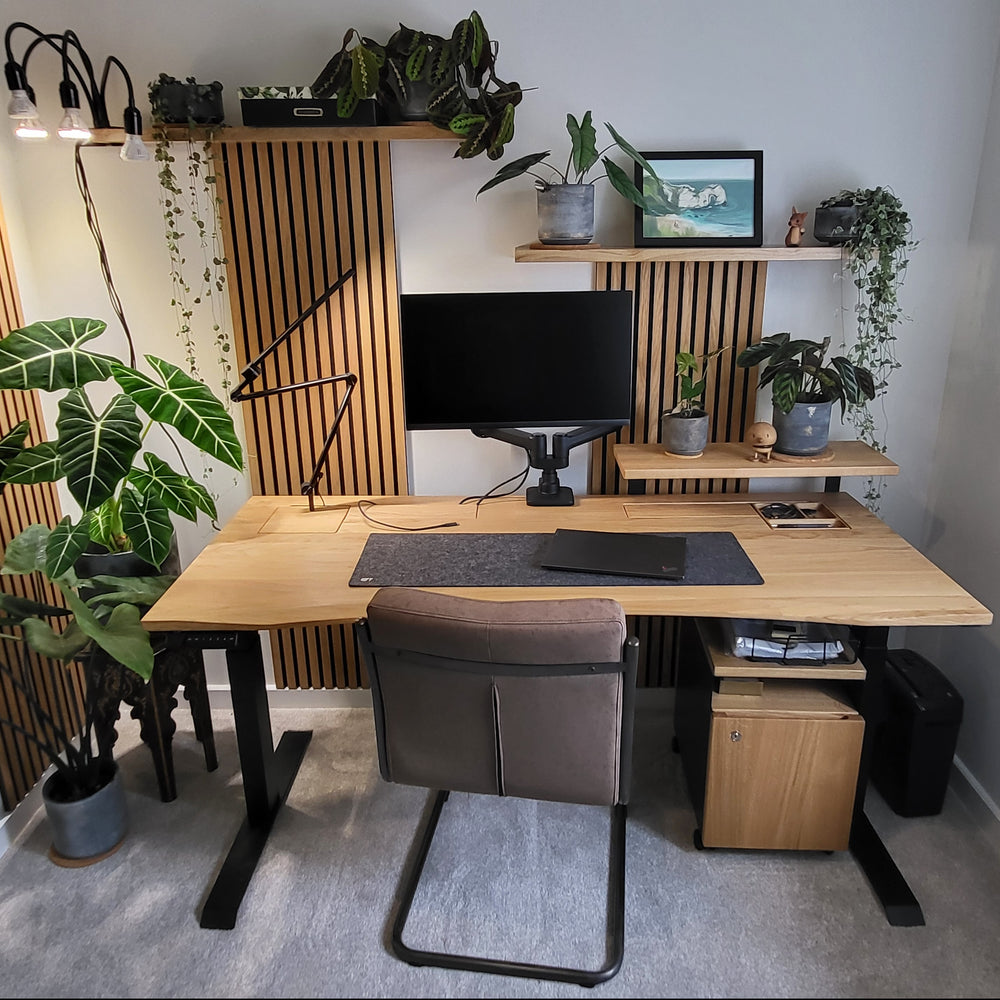
This room’s design is successful because it masters the art of texture. The vertical wooden slatted panels create a focal point that is both visually interesting and acoustically functional, absorbing sound and reducing echo. This textural depth is balanced by the smooth, clean surfaces of the sit-stand desk and the simple grey carpet. The abundance of green plants adds another layer of organic texture, softening the modern lines of the furniture and tech. The whole composition feels layered and intentional. To see a different wood texture, view the live-edge desk in Idea #4.
💡 Designer Tip
The “biophilic” design trend—incorporating natural elements into indoor spaces—is more than just a passing fad. It’s a response to our increasingly digital lives. In 2026, creating a connection to nature within our homes is a priority. This desk setup, with its combination of natural wood tones and an abundance of living plants, is a perfect example. It fosters a sense of calm and well-being, which has been shown to boost focus and reduce stress during the workday.
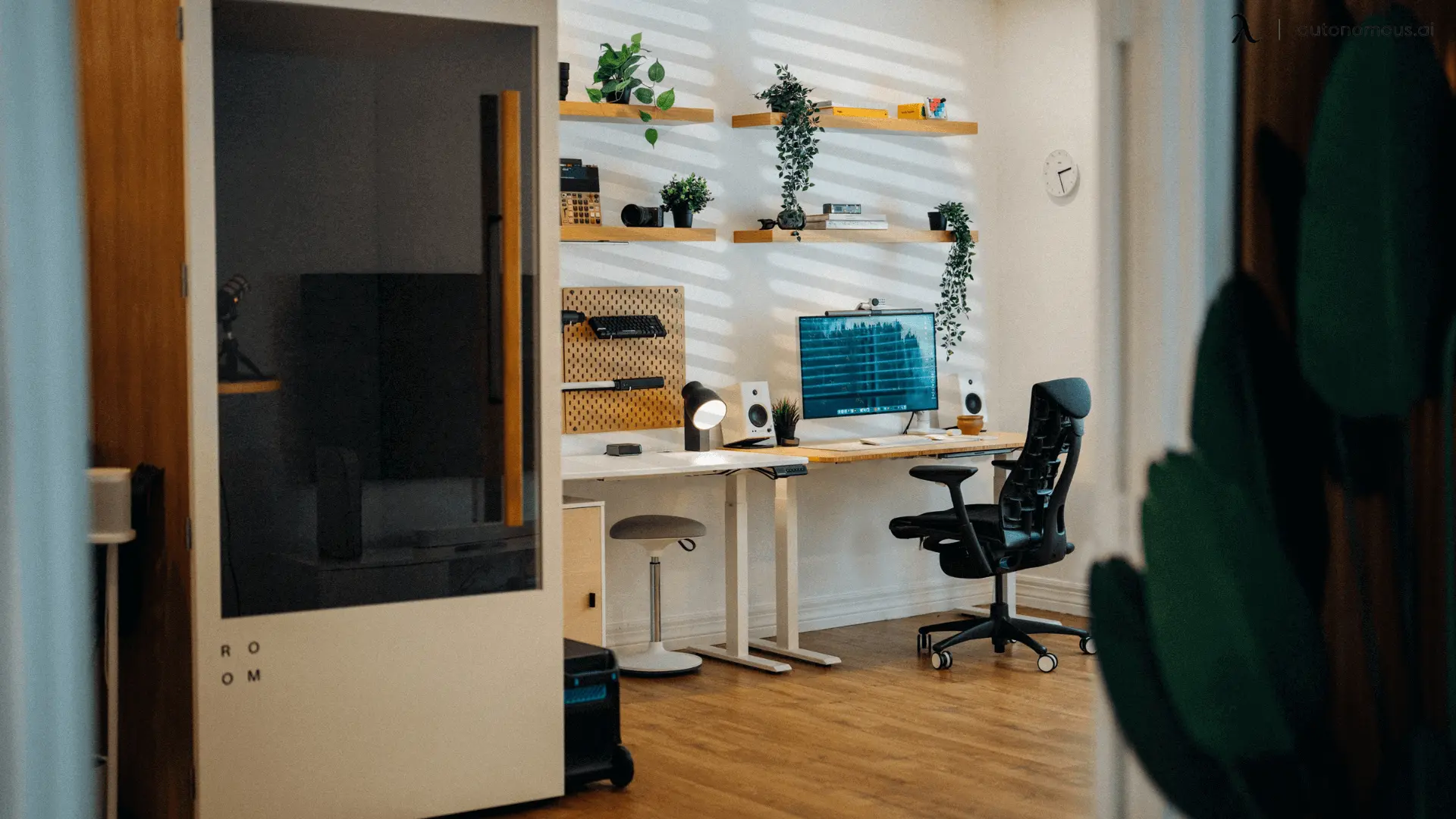
12. A Minimalist Desk with a Light Wood Pegboard Organizer
The undisputed hero of this workspace is the light wood pegboard. It’s the element that lifts the entire setup from being just a desk to being a truly organized system. It provides a flexible, vertical storage solution that keeps the desk surface almost entirely clear, which is a cornerstone of minimalist design. By consolidating storage, display, and organization into one attractive feature, the pegboard provides maximum function with a minimal footprint. Remove it, and the beautiful sense of order is lost.
💰 Budget Breakdown
Before you commit to this airy, minimal look, run through this quick checklist:
- Do you have enough hidden storage? This look relies on having closets or cabinets nearby to store papers, printers, and other non-aesthetic items.
- Are you committed to cable management? Visible, tangled cords will instantly ruin the clean vibe. Plan for cord clips, sleeves, or a desk with built-in management.
- Is your light source adequate? While it looks great in bright, natural light, ensure you have sufficient task lighting for overcast days or evening work sessions.
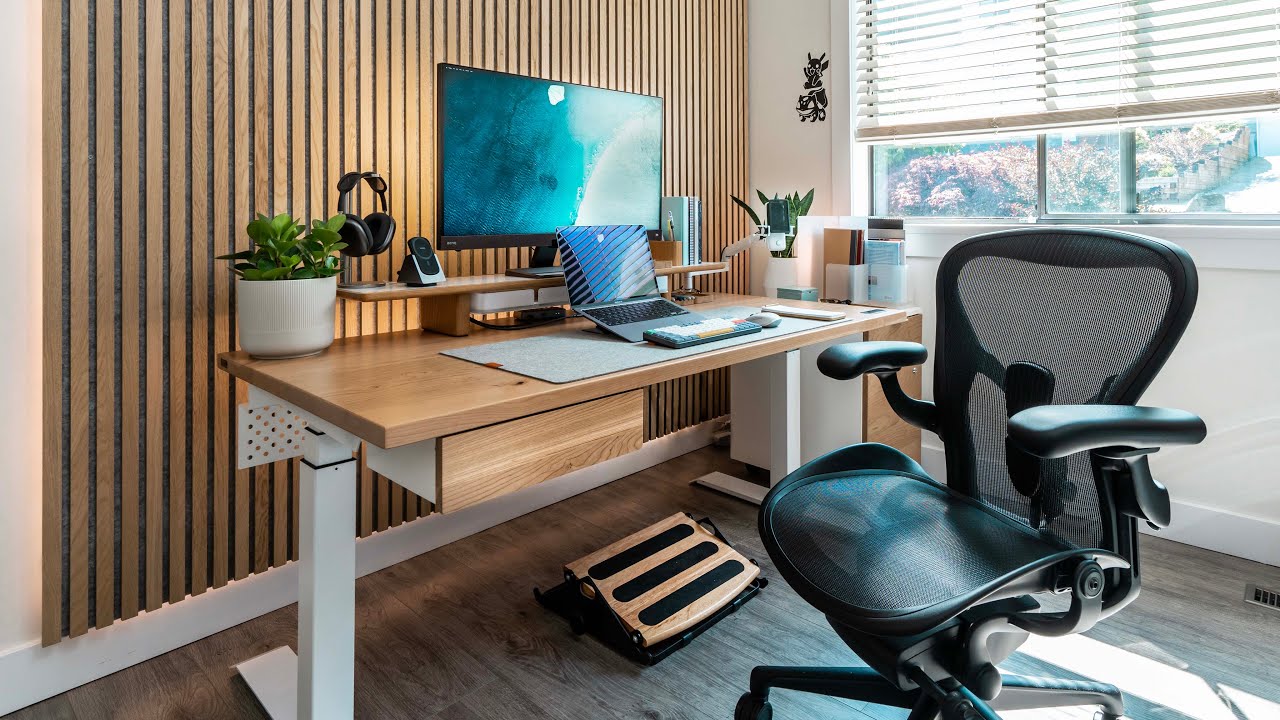
13. Scandinavian-Inspired Desk with an Illuminated Slat Wall
The integrated lighting in the slat wall is a professional-level touch that completely makes the space. When installing a feature like this, always use a diffuser channel for your LED strip lights. A diffuser is a frosted plastic cover that softens the light, eliminating the “polka dot” effect of individual LED bulbs. This creates a smooth, even glow that looks high-end and is much easier on the eyes. It’s a small detail that makes the difference between a DIY project and a designer installation.
🎯 What Makes It Work
Here’s a quick guide to installing a wood slat wall. Time estimate: 3-5 hours. Material cost: $150-$500.
- Measure your wall space and purchase pre-made acoustic slat panels (often sold in 2×8 foot sections).
- If adding lighting, install your LED channel and wiring on the wall first.
- Mark your stud locations on the wall.
- Use black screws to mount the panels directly into the studs, screwing through the felt backing to hide the hardware.
- Cut panels as needed using a fine-toothed saw to fit around outlets or to finish an edge.
- If using multiple panels, ensure the slat spacing is consistent for a seamless look.
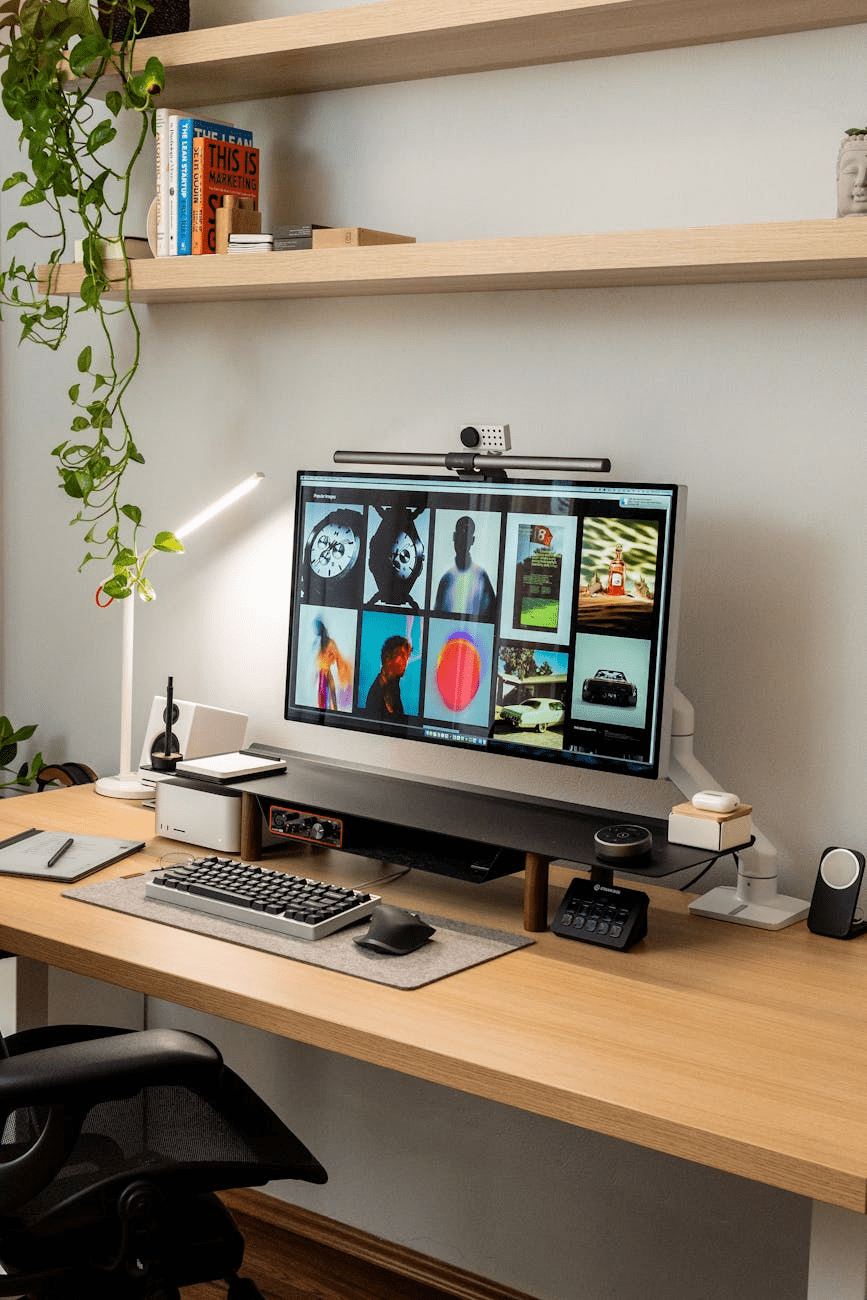
14. Minimal Oak Desk with a Trailing Vine Plant
The magic here is in the balance of hard and soft elements. The formula is roughly: 60% clean, hard surfaces (oak desk, monitor, white lamp) + 30% soft textures (grey mousepad, soft-cover books) + 10% living nature (the trailing green plant). The plant is the key ingredient; its organic, slightly wild shape breaks up the rigid geometry of the tech and furniture, preventing the minimalist setup from feeling sterile or cold. It injects life and a sense of easy-going style into the otherwise highly structured space.
⚠️ Real Talk
A minimalist desk looks incredible on Pinterest, but it requires serious discipline to maintain. This setup only works if you are a “clean desk” person by nature. If you tend to have piles of paper, multiple notebooks, or lots of personal trinkets, this look will quickly become cluttered and lose its peaceful, organized appeal. Be honest with yourself about your work habits. If you’re a piler, not a filer, you might want to opt for a desk with built-in drawers or pair it with a separate storage cabinet.
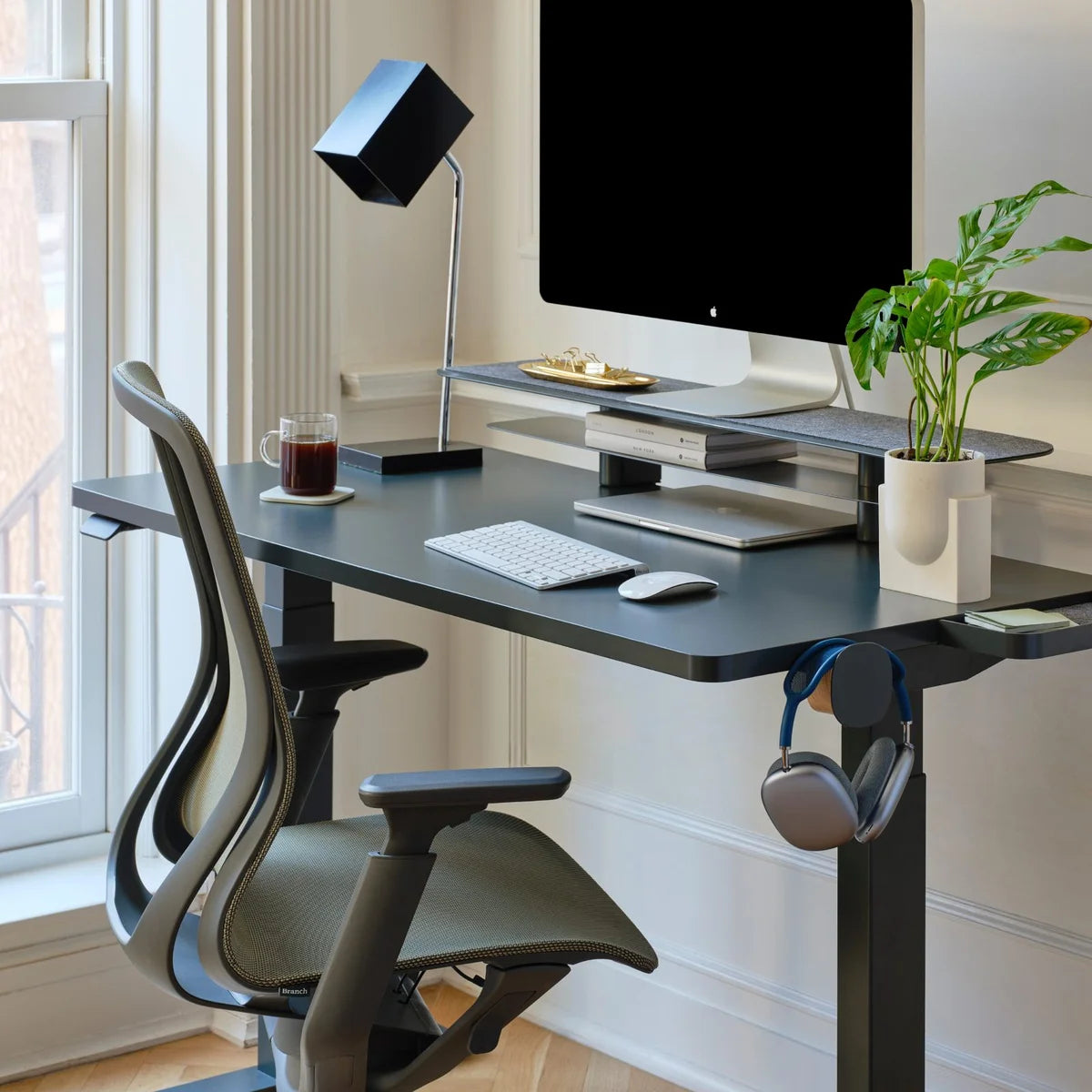
15. A Modern Dark Sit-Stand Desk with an Ergonomic Chair
This type of sleek, self-contained workstation is perfect for compact areas. It can function beautifully in a space as small as 5×7 feet. Because the desk itself holds all the key elements (monitor, laptop on a shelf, lamp), it doesn’t rely on surrounding walls for shelving or storage. This makes it an excellent choice for a studio apartment, a guest room corner, or a dorm room where every square inch counts. The vertical nature of the sit-stand desk also draws the eye upward, creating a sense of height in rooms with standard 8-foot ceilings.
📐 Style Math
Matte and dark-colored desk surfaces, while incredibly chic, are magnets for fingerprints, dust, and smudges. To keep this desk looking sharp, you’ll need to wipe it down daily with a microfiber cloth. Using cleaning sprays with ammonia or harsh chemicals can damage the finish over time, so stick to a slightly damp cloth or a product specifically designed for matte surfaces. The trade-off for this sophisticated look is a bit more daily upkeep than you’d have with a lighter-colored or textured wood desk.
16. A Minimalist Walnut Desk with Contrasting White Accessories
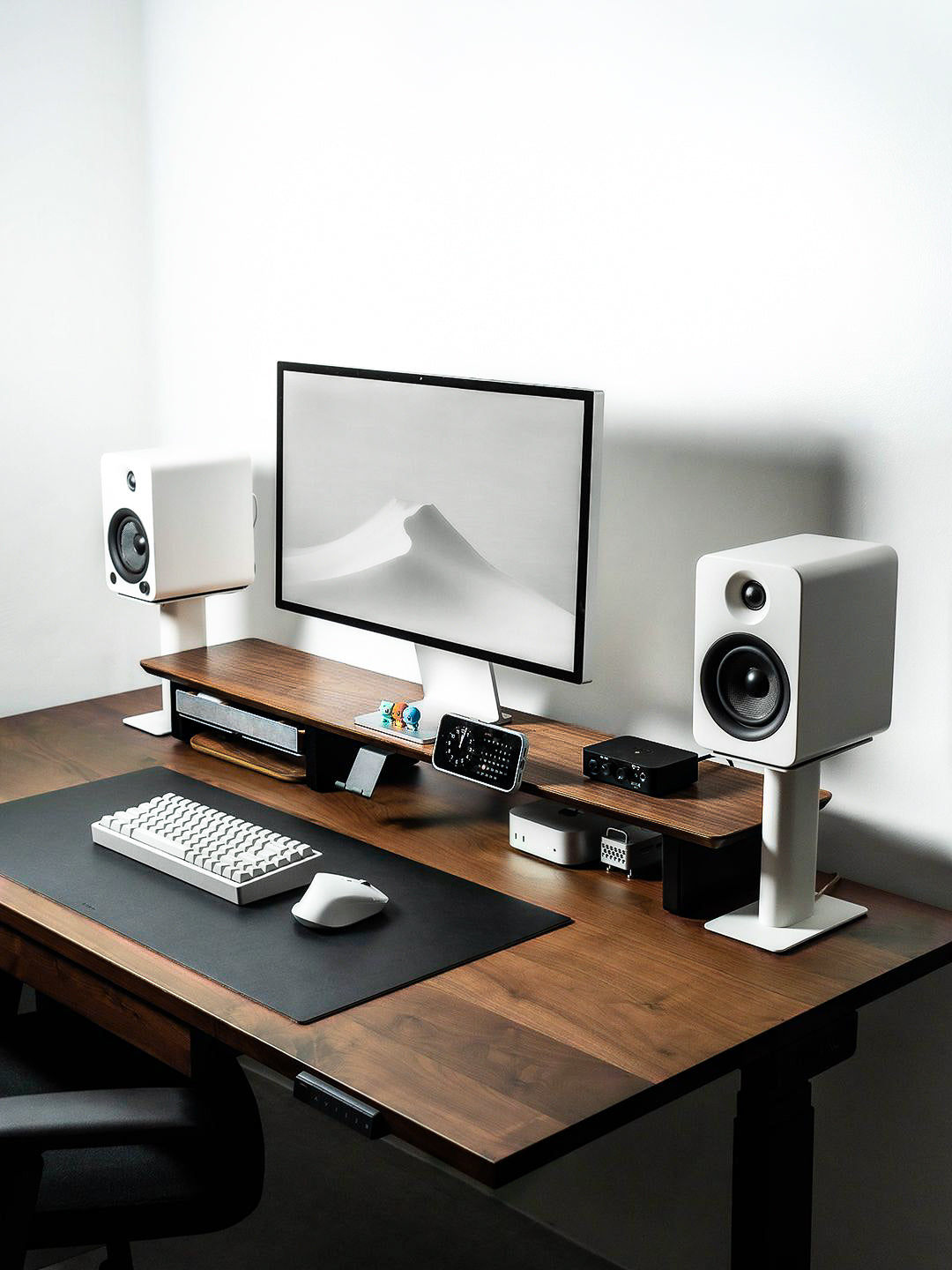
This setup is a masterclass in color contrast. The deep, rich tones of the walnut desktop and monitor shelf create a dramatic backdrop for the crisp white tech accessories—monitor, keyboard, speakers, and mouse. This high-contrast pairing creates a look that is visually striking, clean, and incredibly intentional. The black desk mat acts as a perfect intermediary, grounding the white elements and tying them to the darker wood tone. The result is a workspace that feels both bold and perfectly balanced.
🧹 Maintenance Reality
The single most important element here is the matching walnut monitor shelf. It’s what elevates the setup from a simple desk to a cohesive, two-tiered system. It not only provides ergonomic benefits by raising the screen to eye level, but it also creates a dedicated zone for the monitor and speakers, leaving the main desk surface open and uncluttered. This visual organization is key to the entire look; without the shelf, it would just be a collection of items on a desk. This simple addition provides structure and sophistication.
17. A Bright Attic Office with a Built-In Desk
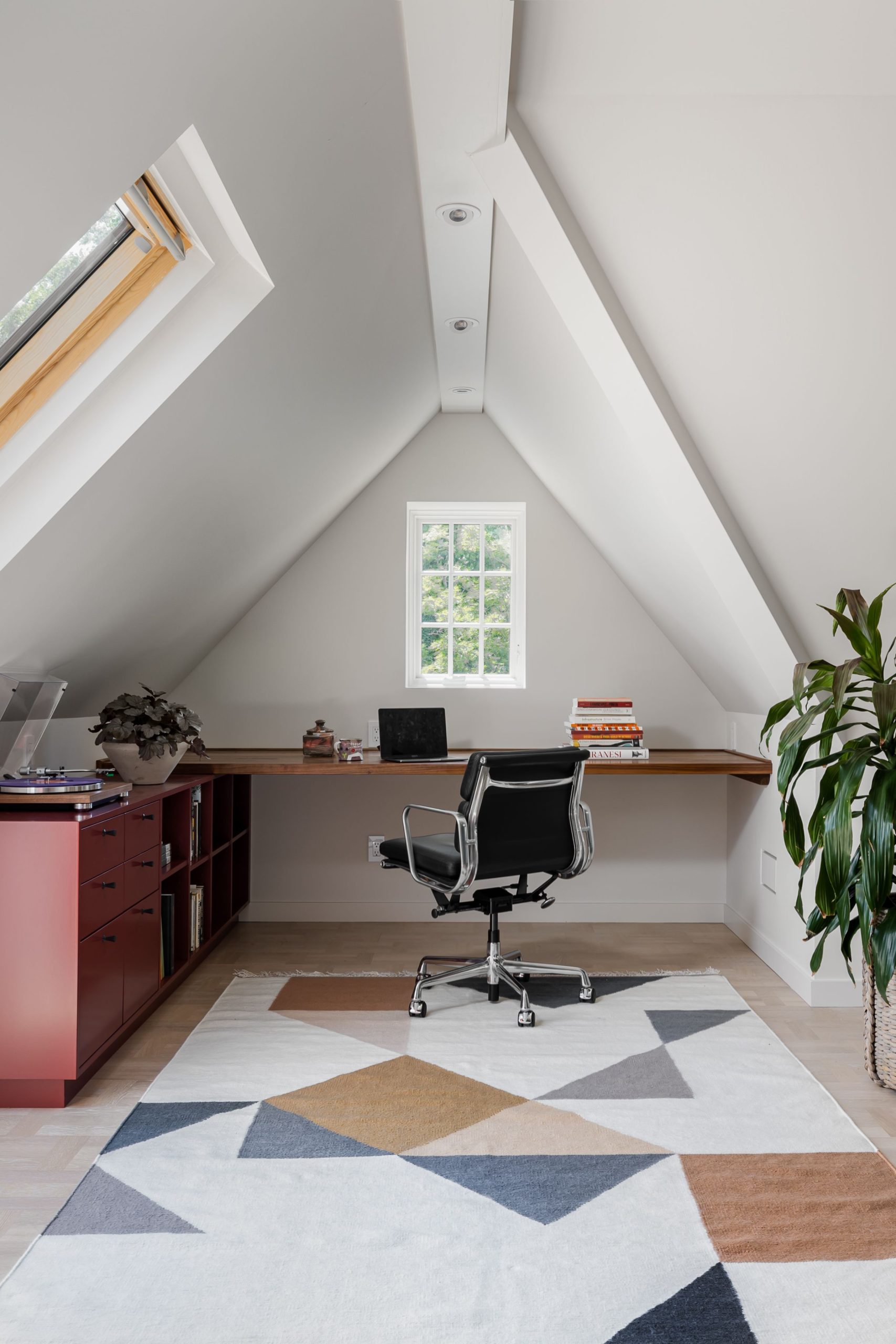
You can achieve this custom built-in look on a budget. Instead of hiring a carpenter, buy two small filing cabinets or cube storage units (like IKEA’s KALLAX) in white. Place them on either end of the wall and then have a hardware store cut a piece of finished plywood or a laminate countertop to span the distance between them. Secure the top to the base units, and you have a functional, wall-to-wall desk for a fraction of the cost of custom millwork. See another great budget-friendly idea here: Idea #25.
🔧 How-To Brief
When working with sloped attic walls, paint everything—walls, slopes, and ceiling—the same light color. Using one continuous color, like the crisp white seen here, eliminates the harsh lines and shadows that can make an attic feel cramped. It blurs the boundaries between wall and ceiling, making the entire space feel taller, brighter, and much more expansive. This simple paint trick is the most effective way to maximize the sense of space in a room with tricky angles.
18. A Minimalist Floating Desk with Natural Light
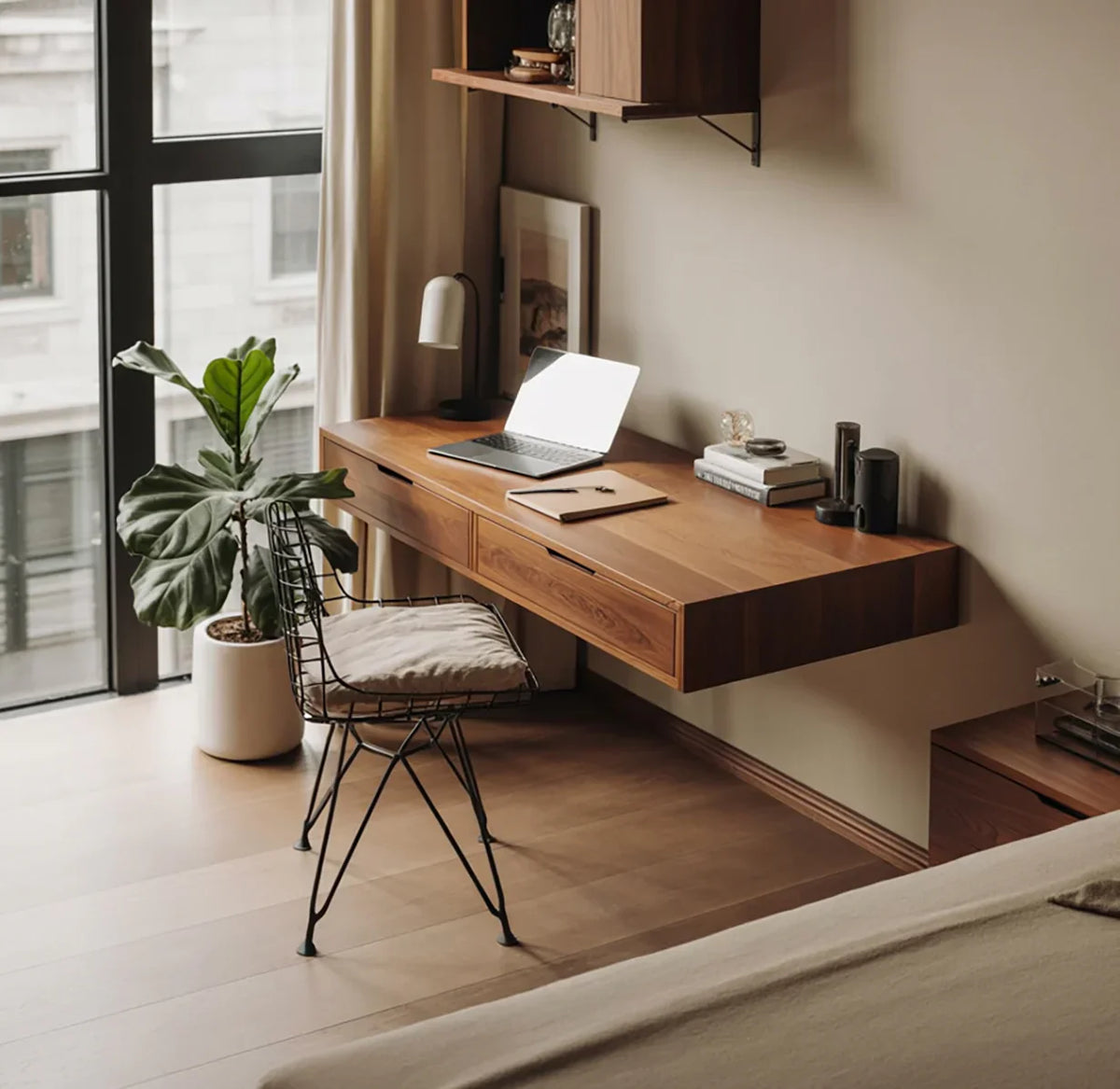
A floating desk is a brilliant solution for small or narrow rooms. This idea works best in a space that is at least 6 feet wide to allow for the desk and chair with comfortable clearance. Because the desk has no legs, it creates an uninterrupted view of the floor, which makes the room feel significantly larger and more open. It’s an ideal choice for a hallway nook, a small guest bedroom, or any area where a traditional desk would feel too bulky and visually heavy.
🔥 Trending Context
Creating your own floating desk is a straightforward project. Time estimate: 2-3 hours. Material cost: $100-$300.
- Purchase a pre-made floating desk or shelf with a drawer from a retailer like IKEA, Wayfair, or West Elm.
- Use a stud finder to locate the wall studs. This is a critical step; do not mount a floating desk only to drywall.
- Mark a level line on the wall at your desired desk height (typically 29-30 inches).
- Mount the desk’s support bracket to the wall, making sure to drive the screws securely into the studs.
- Slide the desk onto the bracket and secure it according to the manufacturer’s instructions.
19. A Truly Minimalist Desk Setup
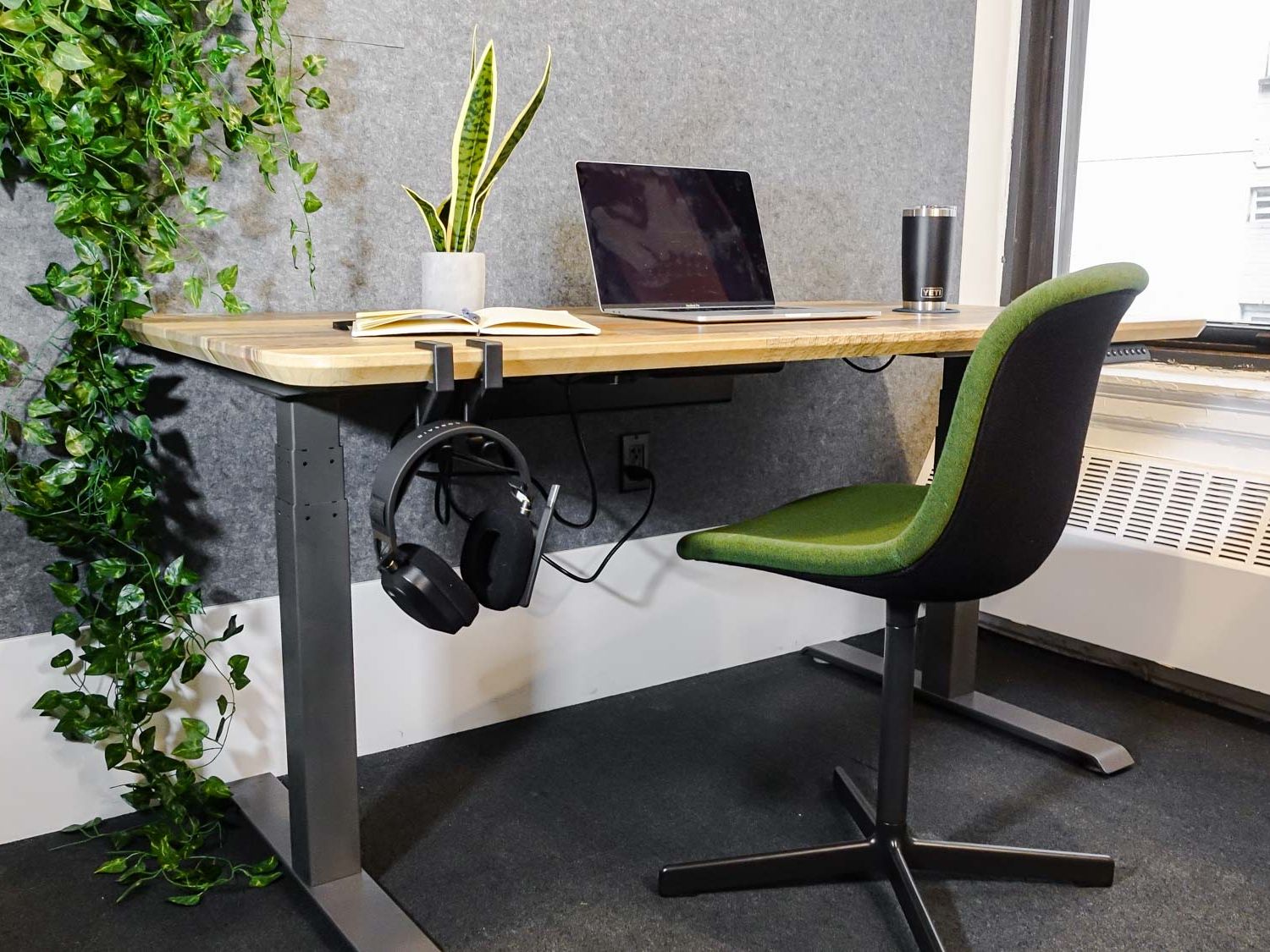
The defining feature of a truly minimalist desk setup is what isn’t there. The focus is entirely on the essential tools for the task at hand. There are no decorative objects, no stacks of paper, no personal trinkets. This radical simplicity is a design choice in itself. The “emptiness” is the point—it’s meant to create a zone of pure focus, free from any visual or mental distraction. This setup isn’t about adding style; it’s about subtracting everything that isn’t absolutely necessary.
✅ Before You Start
This level of minimalism isn’t for everyone, and it’s important to be honest about your own work style. A desk this bare requires a rigorous habit of putting everything away at the end of each day. It also relies heavily on digital organization systems, as there is no room for physical files or notes. For some, this can feel liberating and promote focus; for others, it can feel sterile, uninspiring, and even stressful to maintain. It works best for those who are naturally tidy and primarily work on a single computer.
20. A Traditional Home Office with a Dark Wood Desk
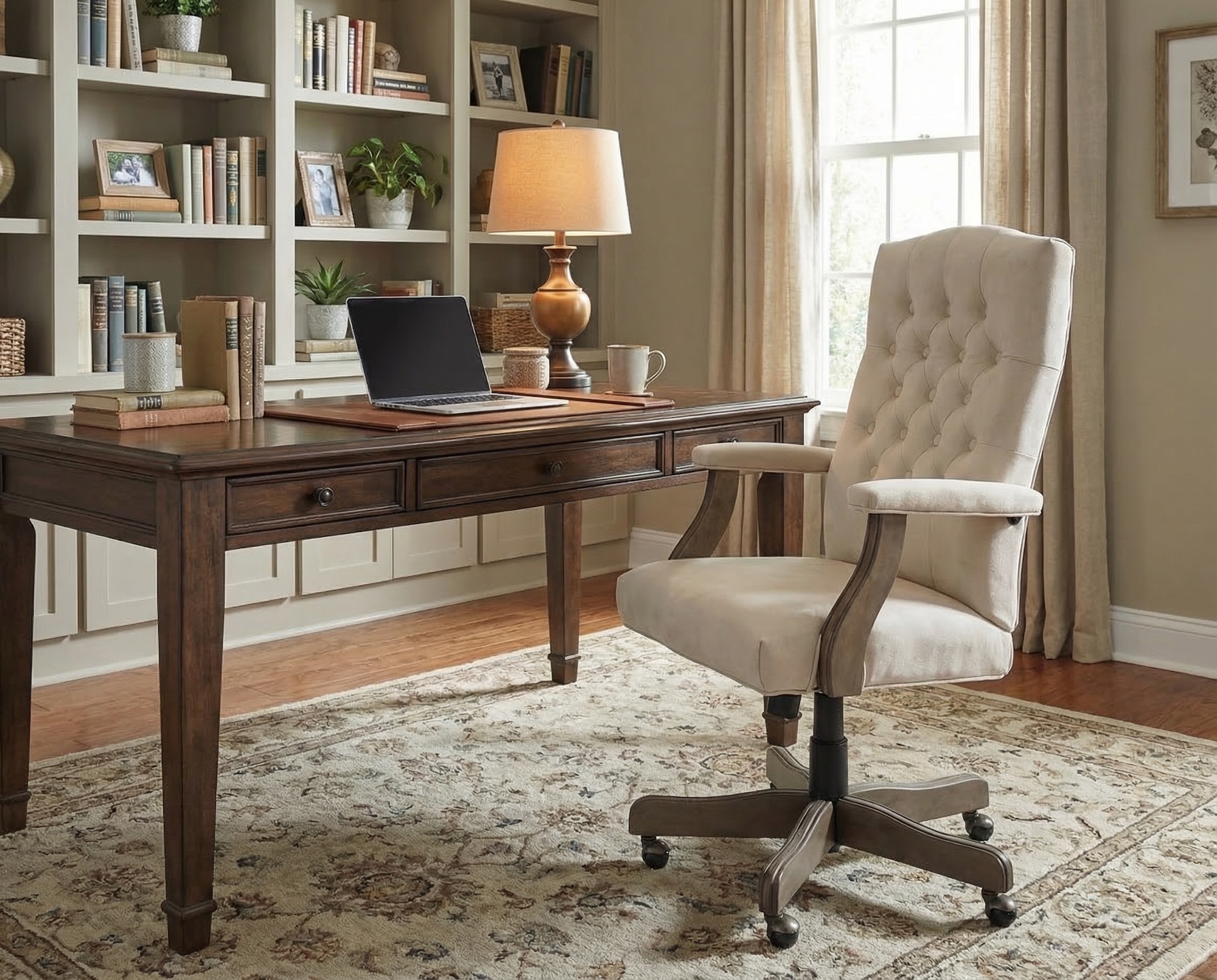
This classic, inviting look is achieved with a timeless recipe: 50% stately wood (the dark desk) + 30% soft, creamy textiles (the tufted chair, rug, and curtains) + 20% curated details (brass lamp, books, leather mat). The formula creates a feeling of established comfort and quiet luxury. The dark wood provides a sense of history and gravitas, while the light-colored fabrics keep the room from feeling heavy or dated. The brass and leather accents are the perfect finishing touch.
💸 Get This Look For Less
Before you invest in a traditional dark wood desk, consider the following:
- Room Size and Light: A heavy, dark desk can overwhelm a small room. This look works best in spaces with ample natural light and light-colored walls to balance the visual weight of the furniture.
- Your Existing Furniture: Does a traditional desk fit with the overall style of your home? While mixing styles can be effective, adding a very traditional piece to a very modern home can feel jarring if not done carefully.
- Functionality: Do you need the drawer space that a traditional desk provides, or would a simpler, more open design better suit your workflow?
21. Defining a High-End Home Office Aesthetic
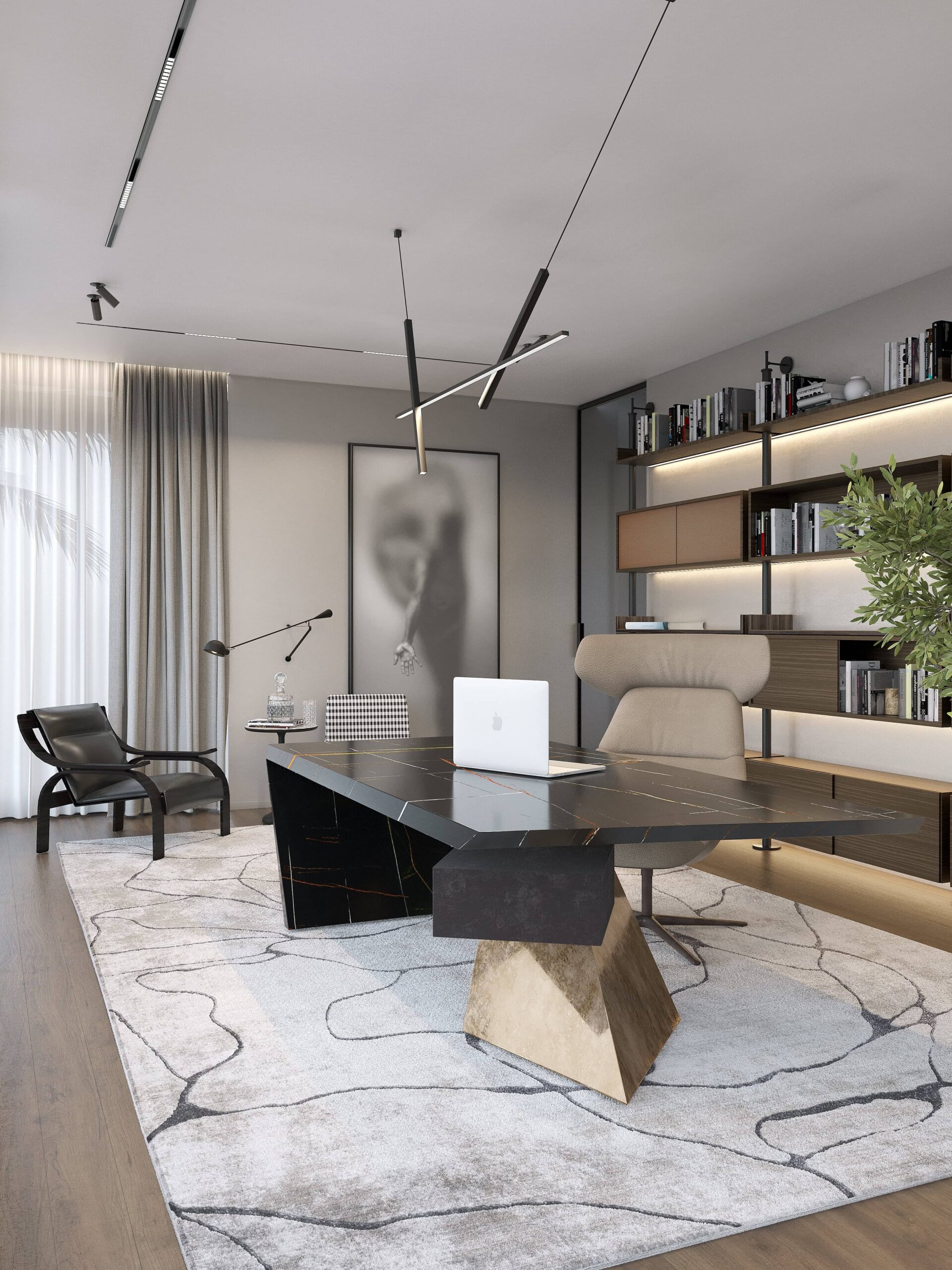
Achieving a truly luxurious and custom feel often involves investing in high-quality materials and bespoke furniture. This is an aspirational look where craftsmanship and material choice are paramount.
⭐ The One Thing
- Main Furniture: $8,000 – $20,000+ (Custom or high-end designer desk and ergonomic chair)
- Lighting: $1,500 – $5,000 (Designer fixtures, potentially with smart controls)
- Wall & Floor Coverings: $3,000 – $10,000 (Custom millwork, high-end wallpaper, premium carpeting or hardwood)
- Decor/Accessories: $1,000 – $4,000 (Curated art, high-end tech)
- TOTAL: $13,500 – $39,000+
- Budget alternative: Focus on one luxury piece, like the desk, and supplement with more affordable items.
What sets a luxury space apart is the attention to layering and texture. It goes beyond just furniture and considers how all the surfaces in the room interact. Think about the combination of polished wood, textured wallpaper, plush carpets, and sleek metal accents. Each material is chosen for its intrinsic quality and how it contributes to a cohesive, tactile experience. The lighting is often multi-layered as well, with ambient, task, and accent lights working together to create a sophisticated and comfortable atmosphere.
22. Transforming a Small Space with Smart Luxury
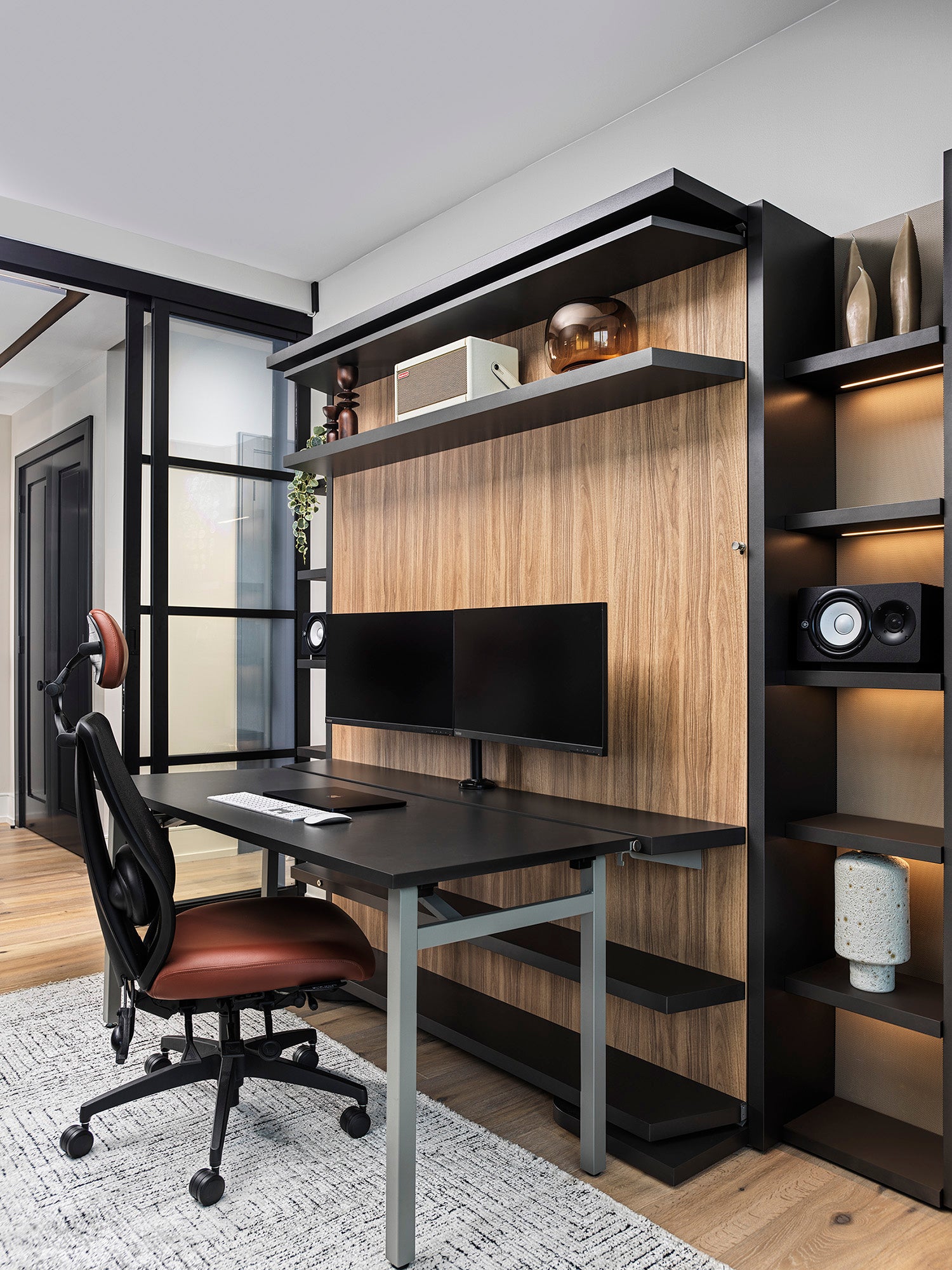
In a small home office, think vertically. Instead of a wide desk with lots of surface area, opt for a more compact desk paired with high-quality, wall-mounted shelving or a tall, narrow bookcase. This draws the eye upward and makes the most of your wall space without eating into your precious floor area. Using furniture with slender legs, like the desk shown here, also creates a sense of openness by allowing you to see more of the floor, which tricks the eye into perceiving a larger space.
📏 Scale Guide
Luxury isn’t about size; it’s about smart design. This approach is perfect for spaces that are under 100 square feet. A compact, high-quality desk (around 40-48 inches wide) is the key. Look for models that are specifically designed for small spaces, which often have clever built-in storage or a shallower depth. Resource Furniture, for example, specializes in transformative pieces that are ideal for apartments, guest rooms, or any area where you need one room to serve multiple purposes. This proves you don’t need a dedicated room to have a dedicated, luxurious workspace.
23. A Chic Desk with Grey Geometric and Linear Walls
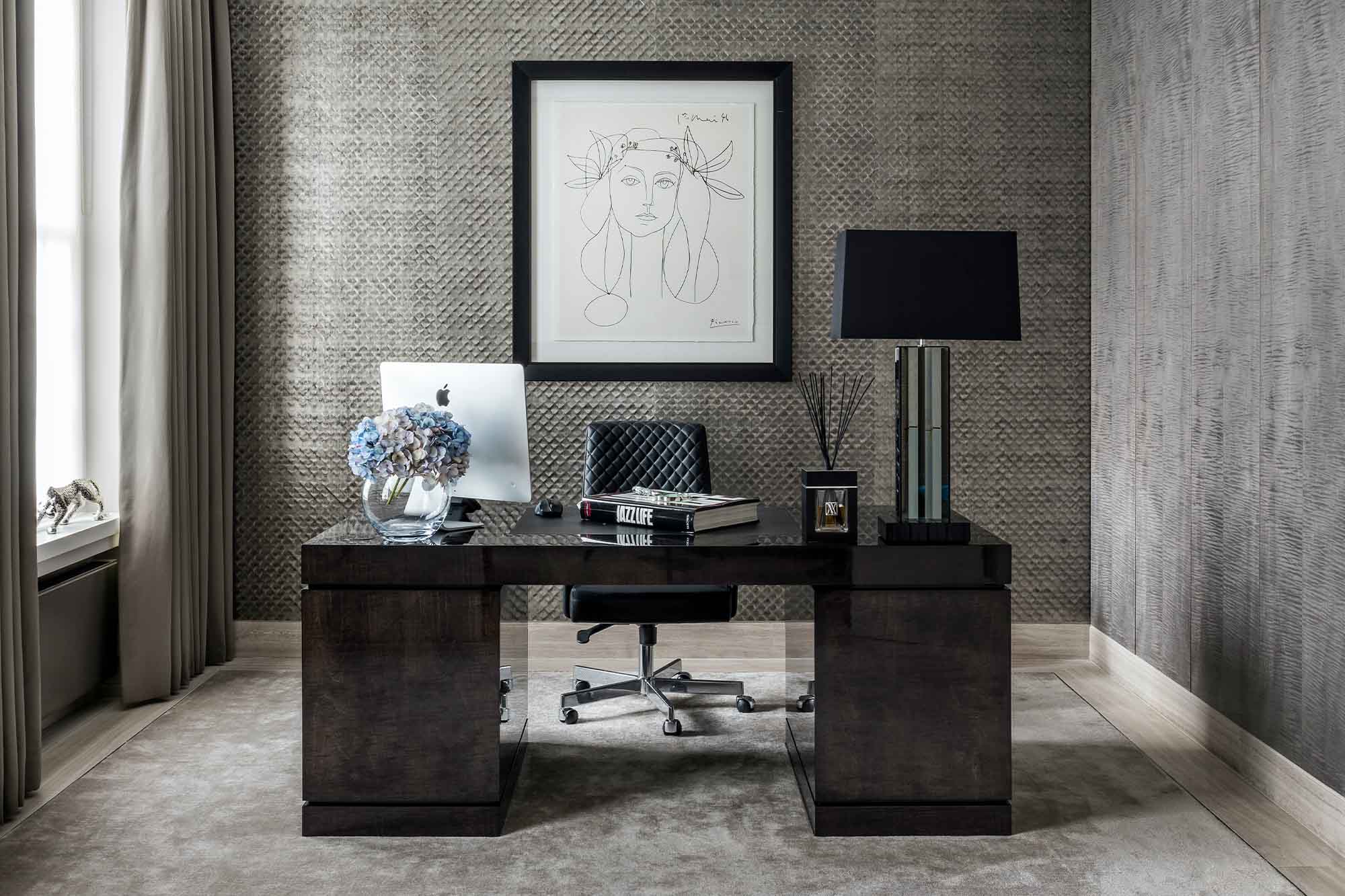
The single element that makes this room unforgettable is the use of two different, but complementary, wall textures. The combination of the geometric-patterned wall covering and the linear wood paneling is a bold, confident design choice. It creates incredible depth and architectural interest without using a single bright color. It turns the walls themselves into art, providing a sophisticated and dynamic backdrop for the sleek, simple desk. For a different take on a feature wall, see Idea #24.
💡 Designer Tip
This design works because it commits to a monochromatic palette. By keeping everything—the walls, the carpet, the desk—in shades of grey and dark wood, the focus shifts entirely to texture and form. The high-gloss finish of the desk contrasts beautifully with the matte, textured walls. The straight lines of the paneling are a counterpoint to the repeating shapes of the wallpaper. This lack of color variation allows the subtle interplay of light and shadow across the different surfaces to become the main event.
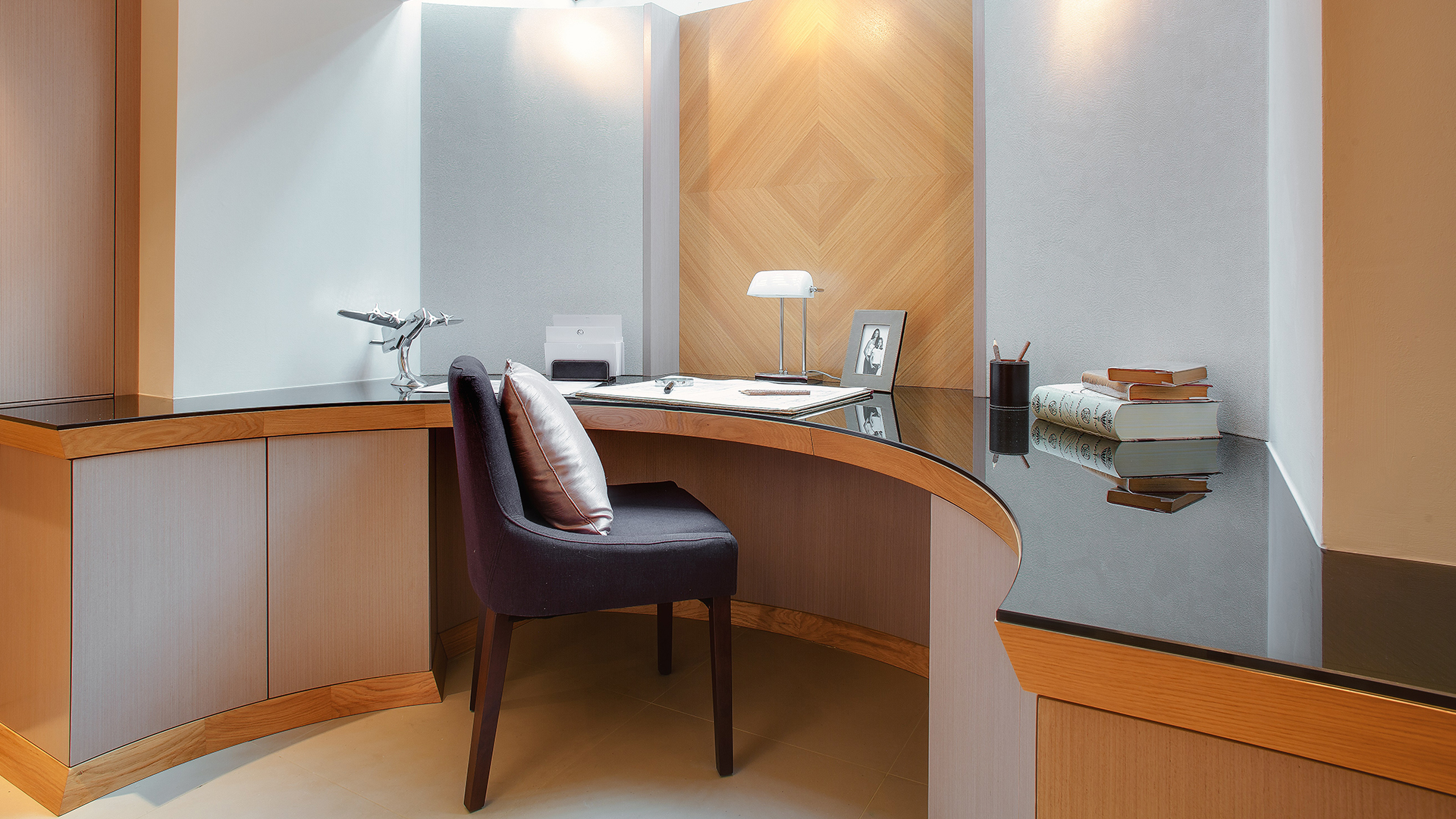
24. A Curved Desk with Black Glass and a Geometric Wood Wall
When using a strong geometric pattern on a feature wall, keep the rest of the room’s major surfaces relatively simple. Notice how the other walls use a subtle, non-directional texture, and the ceiling is plain white. This allows the geometric wood wall to be the star without creating a visually chaotic or overwhelming environment. If you have too many competing patterns, the eye doesn’t know where to look, and the impact of your beautiful feature wall will be lost.
💰 Budget Breakdown
A glossy black glass desktop looks incredibly sleek and modern, but it is notoriously high-maintenance. It will show every speck of dust, every fingerprint, and every minor scratch. To keep it looking pristine, you’ll need to clean it constantly. It can also create glare depending on your lighting situation. Before falling in love with the look, be honest about whether you have the patience for that level of upkeep. A matte or wood-grain surface will always be more forgiving in a busy workspace.
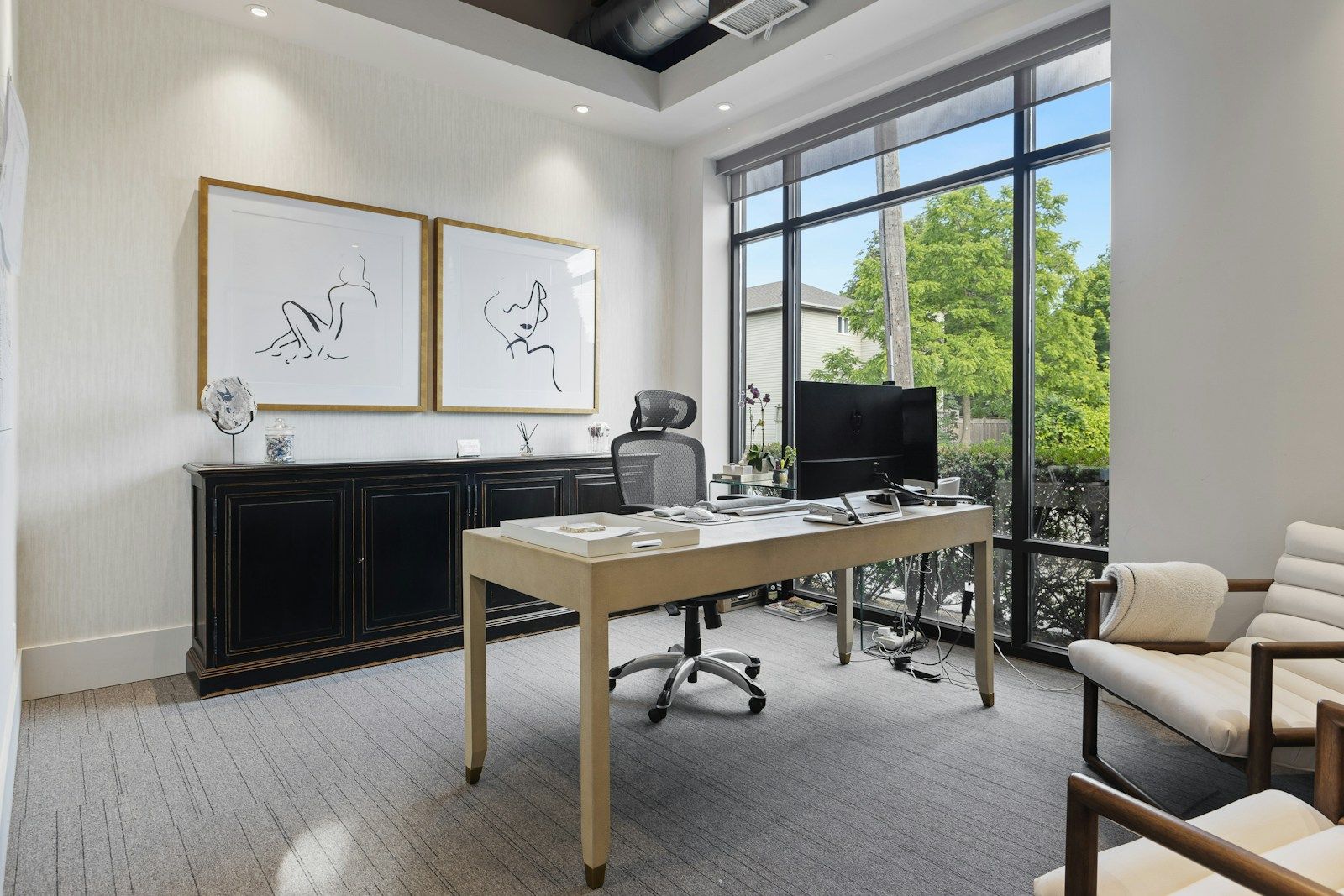
25. A Minimalist Office with a Full-Height Window
This minimalist approach is perfectly suited for a room with a “hero” feature, like the large window here. The room itself should be moderately sized, at least 100 square feet, to prevent the furniture from feeling cramped against the glass. The key is to let the architecture and the view do the heavy lifting. The furniture is kept low-profile and neutral to avoid competing with the window. This setup would lose its impact in a room without a strong architectural element or a compelling view. It echoes the bright, airy feel of Idea #2 in a more minimalist way.
🎯 What Makes It Work
To get this professional, modern look for less, focus on finding well-proportioned basics. An IKEA MALM dressing table can work as a sleek, minimalist desk for around $150. For the credenza, look for a simple black TV stand from a store like Target or Wayfair. You can easily upgrade it by adding stylish brass pulls from a hardware store for about $5-10 each. Finally, search Facebook Marketplace or thrift stores for a pair of low-slung mid-century modern armchairs, which can often be found for a great price.
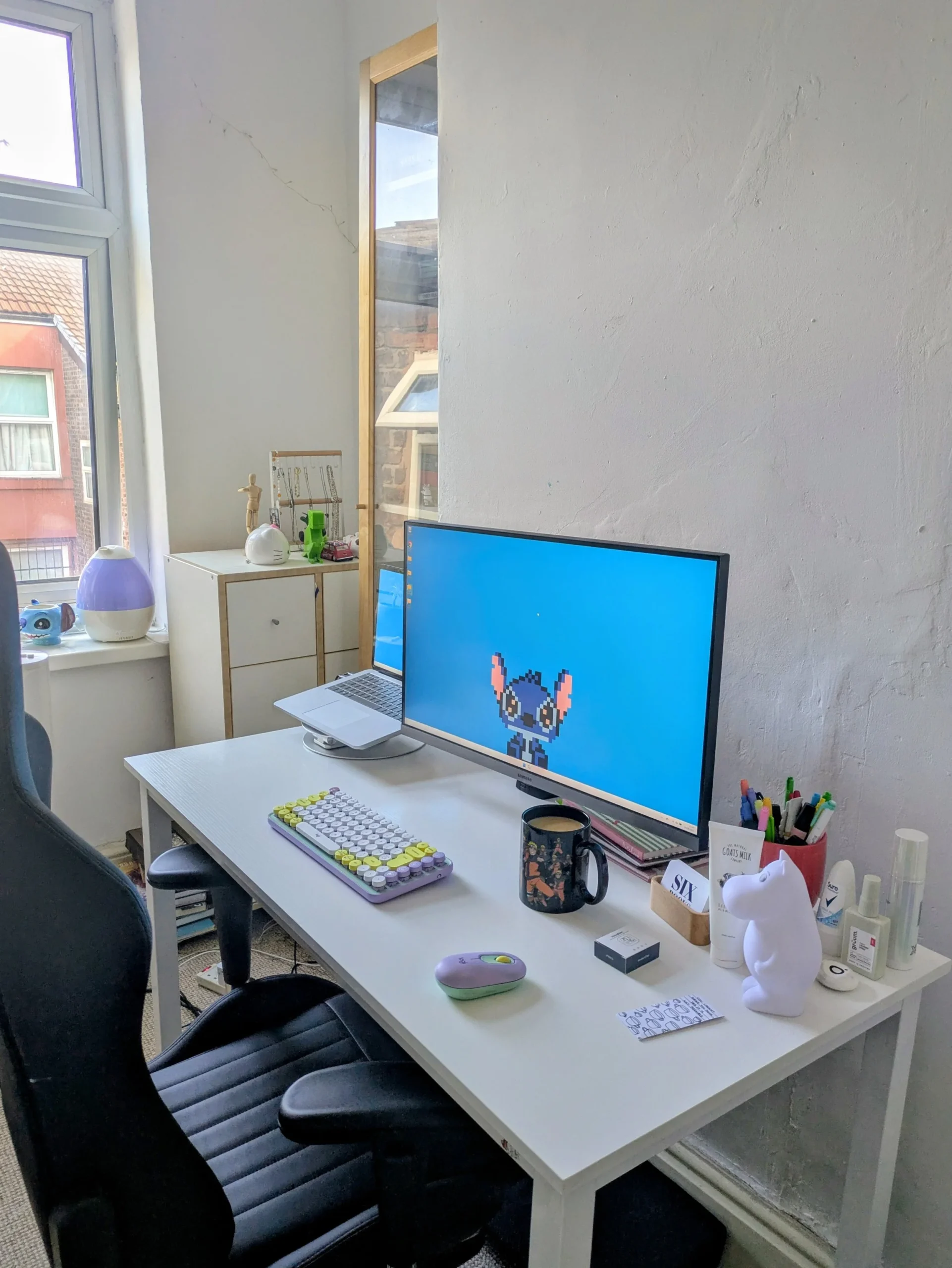
26. A Simple White Desk Workspace with Personal Touches
This setup works because it strikes a balance between function and personality. The core elements—the white desk, monitor, and storage unit—are simple, neutral, and highly functional. This provides a clean canvas for personal items to be layered in without creating a sense of chaos. The little touches, like the specific choice of laptop stand, the items in the storage unit, and the color on the adjacent wall, are what keep the space from feeling generic. It’s a practical, real-world workspace that feels lived-in and comfortable.
⚠️ Real Talk
The single most important element in making this small space work is the white storage unit with drawers. It’s the unsung hero of the office. By providing ample, accessible, and hidden storage right next to the desk, it allows the desktop itself to remain relatively clear and focused. Without this piece, papers, supplies, and clutter would inevitably pile up on the main work surface, undermining the clean, functional aesthetic. Good storage is the foundation of good organization.
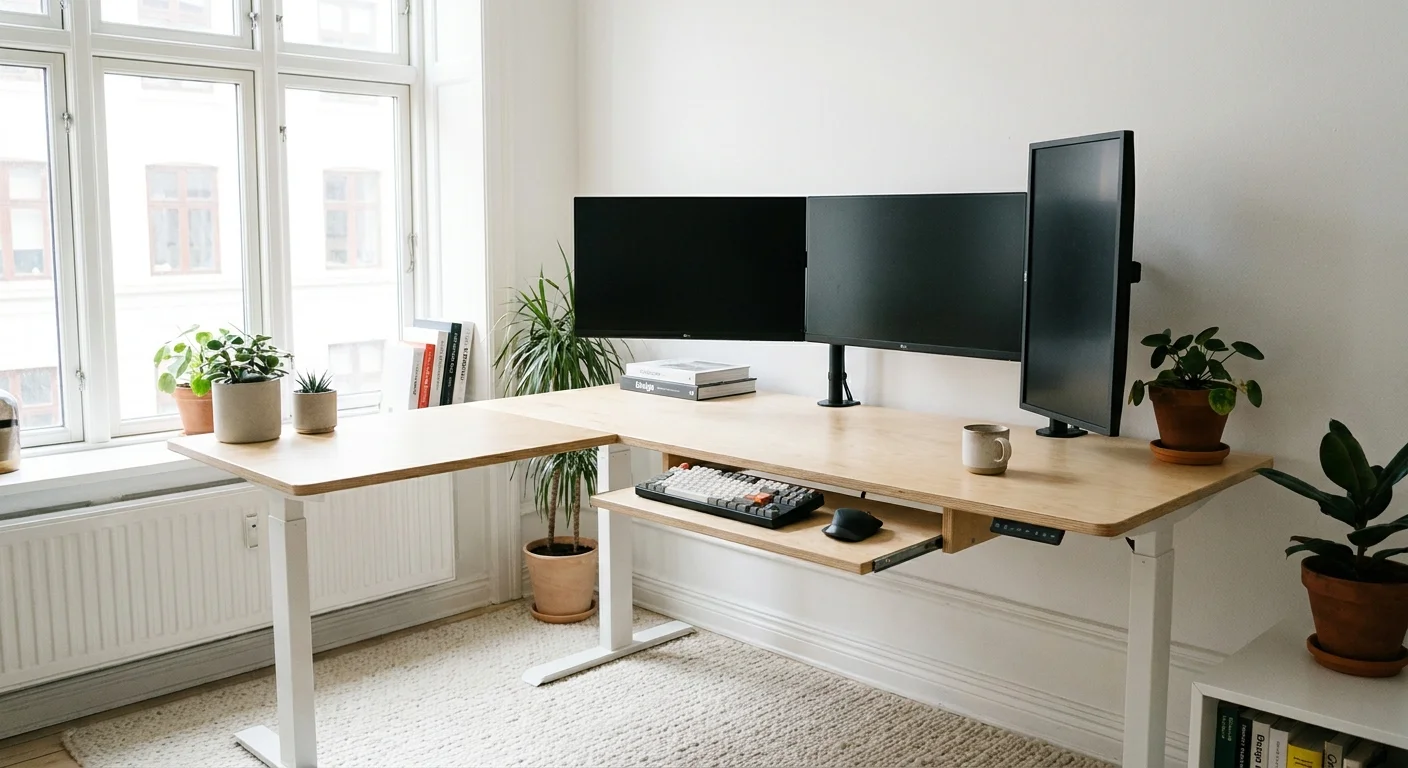
27. An L-Shaped Sit-Stand Desk with a Triple Monitor Setup
When setting up multiple monitors on an L-shaped desk, position the “L” or corner of the desk directly in your central line of sight. Place your primary monitor in that corner and the secondary monitors on either side, angled slightly inward. This creates an immersive, cockpit-style setup that minimizes head and neck turning. It keeps all your screens within your peripheral vision, which is more ergonomic and efficient than having your main screen off to one side.
📐 Style Math
An expansive triple-monitor setup is fantastic for productivity, but it can also be a recipe for distraction. With so much screen real estate, the temptation to have email, social media, and chats open at all times can be detrimental to deep work. To make this setup work for you, not against you, be disciplined about what you display. Use one monitor for your primary task, another for reference materials, and try to keep the third one either off or dedicated to something non-intrusive, like a calendar or to-do list.
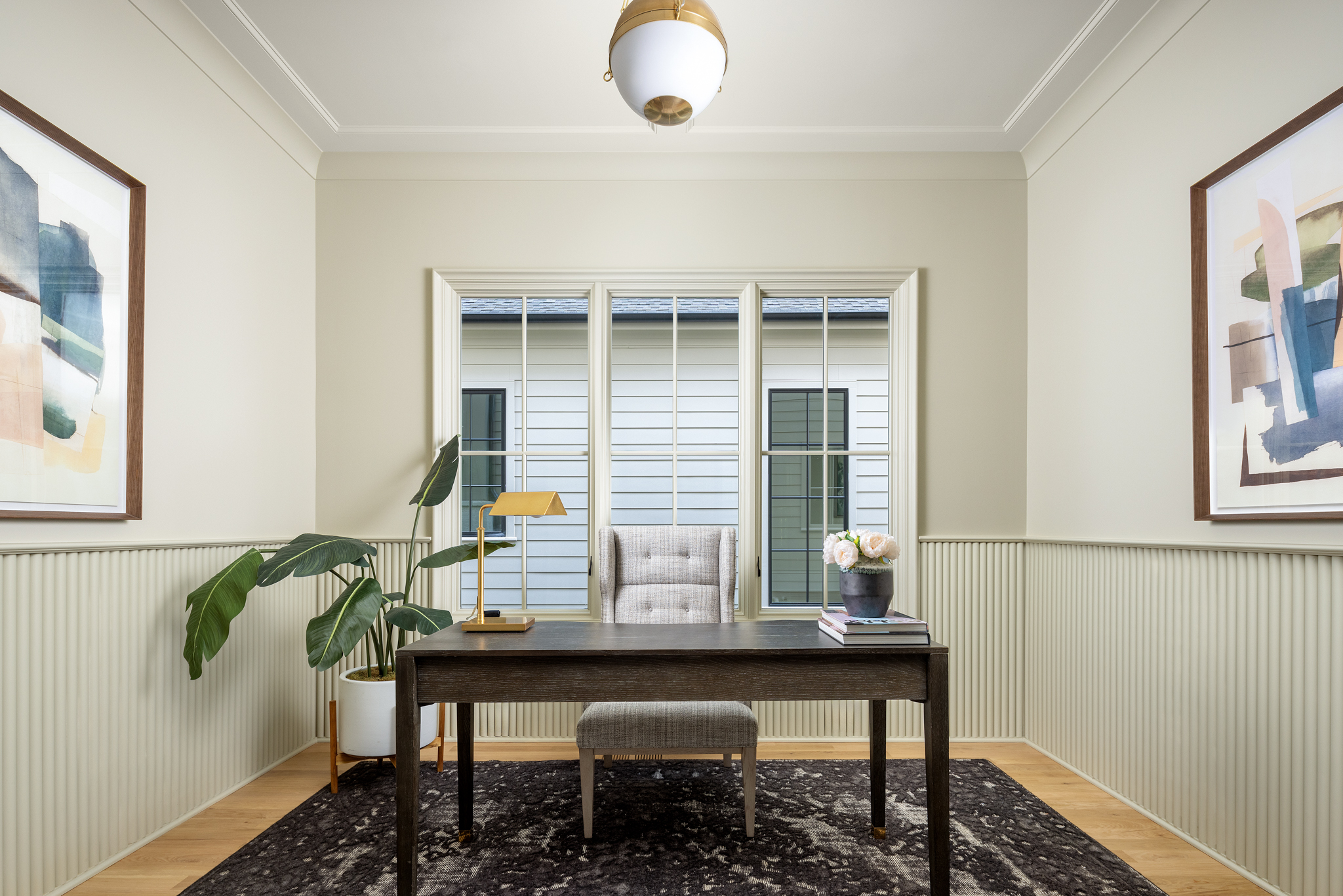
28. A Modern-Traditional Office with Textured Wainscoting
Add character to a plain room with this easy vertical slat wainscoting. Time: 4-5 hours. Cost: $100-$250.
🧹 Maintenance Reality
- Decide on the height for your wainscoting (typically one-third of the wall height).
- Purchase 1×2 inch primed pine or MDF boards and a top ledge piece.
- Paint the wall section and your boards in your chosen color (here, a rich cream) before installation.
- Nail the top ledge piece to the wall, ensuring it’s level.
- Using a construction adhesive and a brad nailer, install the vertical slats, using a spare slat as a spacer for perfect, consistent gaps.
- Fill nail holes, touch up paint, and you’re done!
This room’s inviting feel comes from a formula of: 60% traditional structure (the wainscoting, the window panes, the classic desk shape) + 30% modern simplicity (the clean lines of the art, the lack of clutter) + 10% organic warmth (the light wood floors, the green plant). This thoughtful blend is what makes the space feel current yet timeless. It respects classic design principles while feeling fresh and breathable enough for a 2026 home.
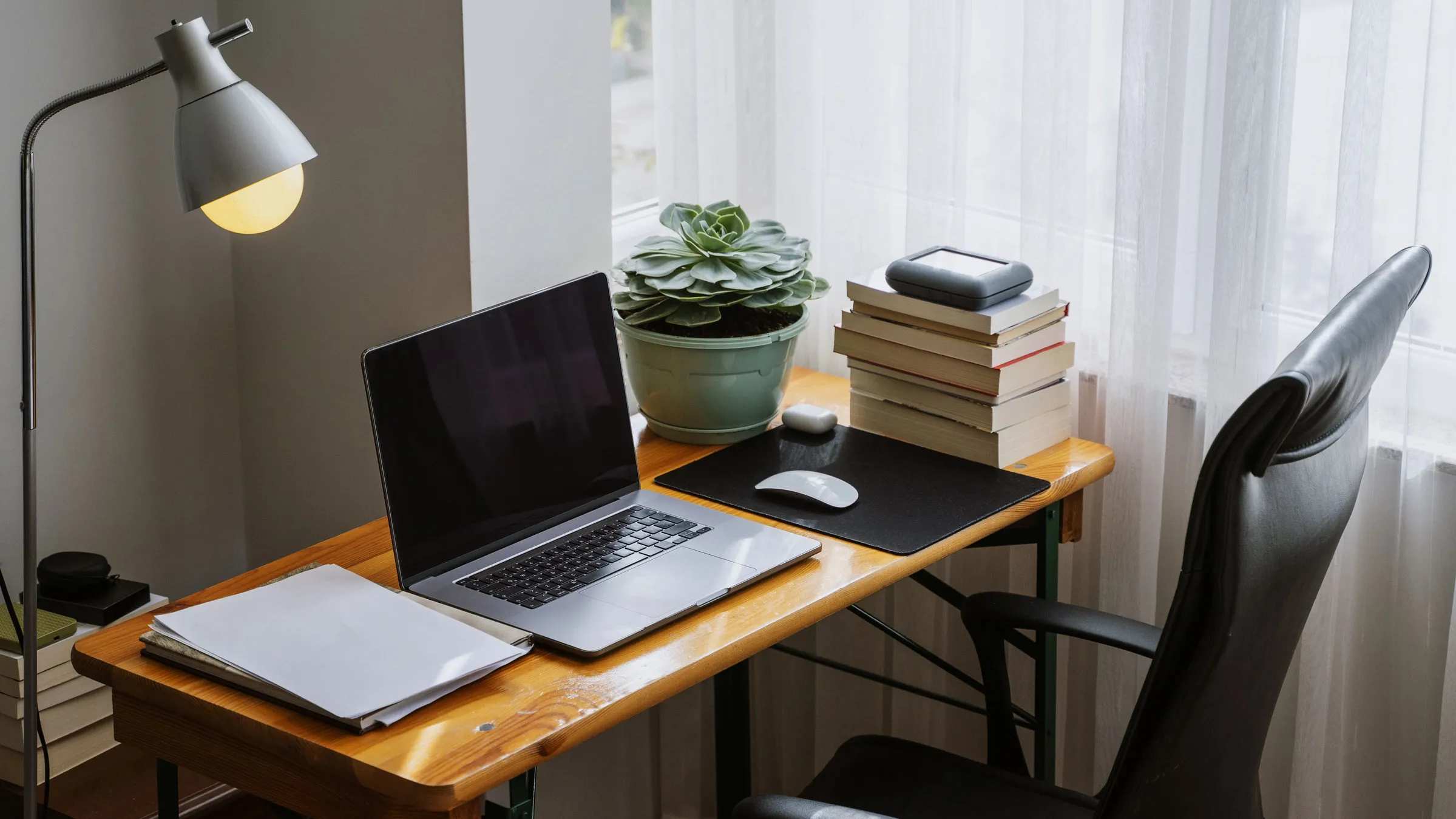
29. A Cozy Home Office Nook with Sheer Curtains
This cozy and functional nook can be created on a very tight budget. A simple wooden desk can be found at thrift stores or on Facebook Marketplace for under $75—a little sanding and a coat of oil can bring it back to life. Sheer white curtains are available from IKEA or Target for as little as $20 a pair. A small succulent or snake plant adds a touch of green for under $15. The biggest investment might be a quality task lamp, but even that can be found for under $50. This entire look can easily be achieved for less than $200.
🔧 How-To Brief
The magic of this little corner is the masterful use of light. The sheer white curtains are essential; they diffuse the natural light from the window, softening it and casting a gentle, even glow across the entire workspace. This eliminates harsh shadows and screen glare, creating a calm and pleasant environment. The silver laptop and lamp subtly bounce that soft light around, further enhancing the bright and airy feeling in a compact space.
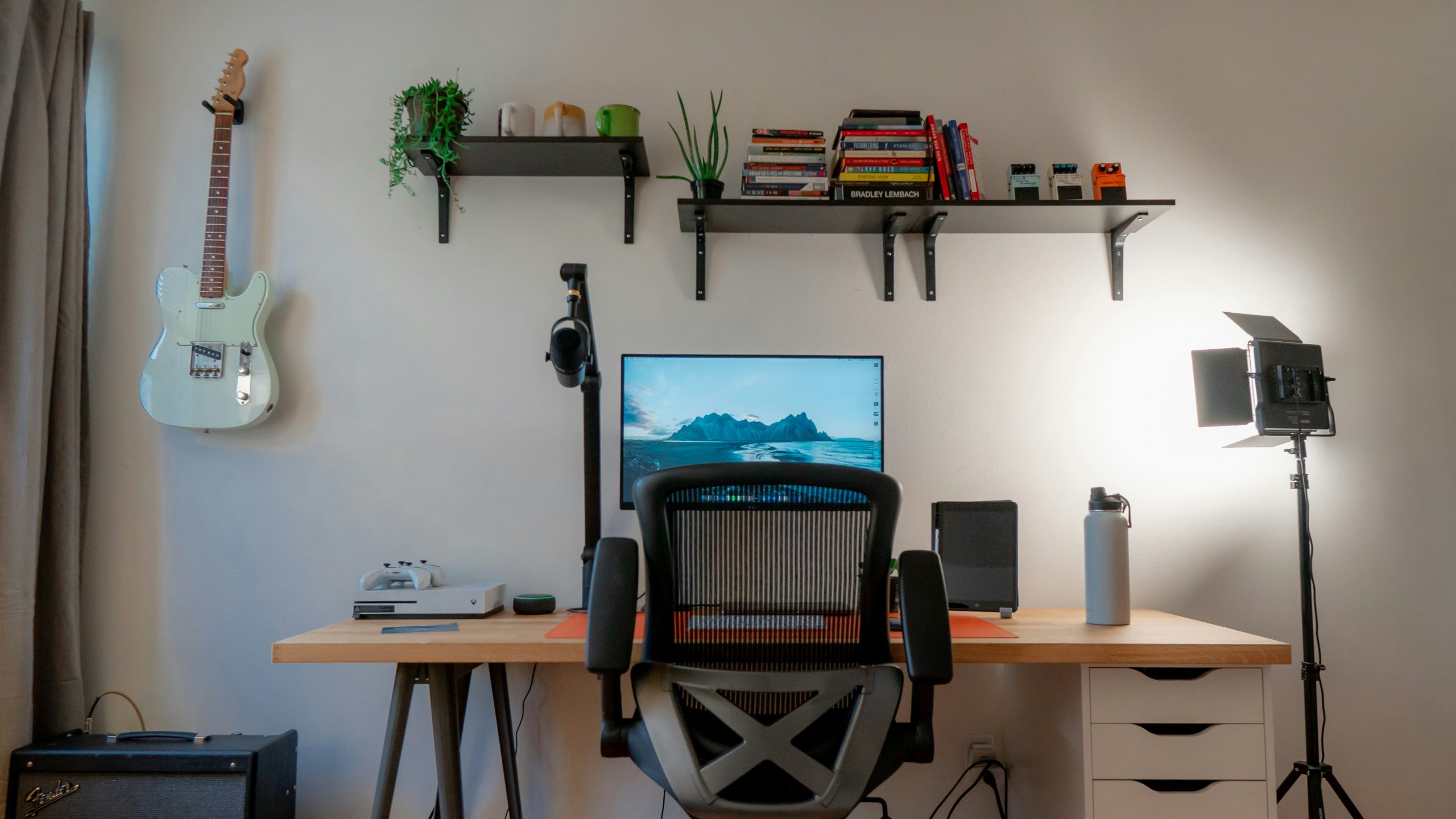
30. A Minimalist Desk with Floating Shelves and a Hanging Guitar
This simple, wall-focused setup is a dream for small-space dwellers. It works in a footprint as tight as 4 feet wide and 5 feet deep. By using the vertical space above the desk for storage (floating shelves) and personal expression (the hanging guitar), you keep the floor clear. This makes it an ideal layout for a bedroom corner, a studio apartment, or a narrow bonus room. The lack of bulky furniture keeps the space feeling open and uncluttered, proving you don’t need a separate room to have a stylish, functional office.
🔥 Trending Context
While floating shelves are a sleek, minimalist storage solution, they have their limits. Be mindful of their weight capacity, which is often less than a traditional bookcase. They are best for displaying a curated collection of books, plants, and lighter decor items. If you have a large, heavy book collection or need to store bulky binders and equipment, you’ll want to supplement this setup with a more robust storage solution, like a credenza or a filing cabinet, to avoid shelf failure.
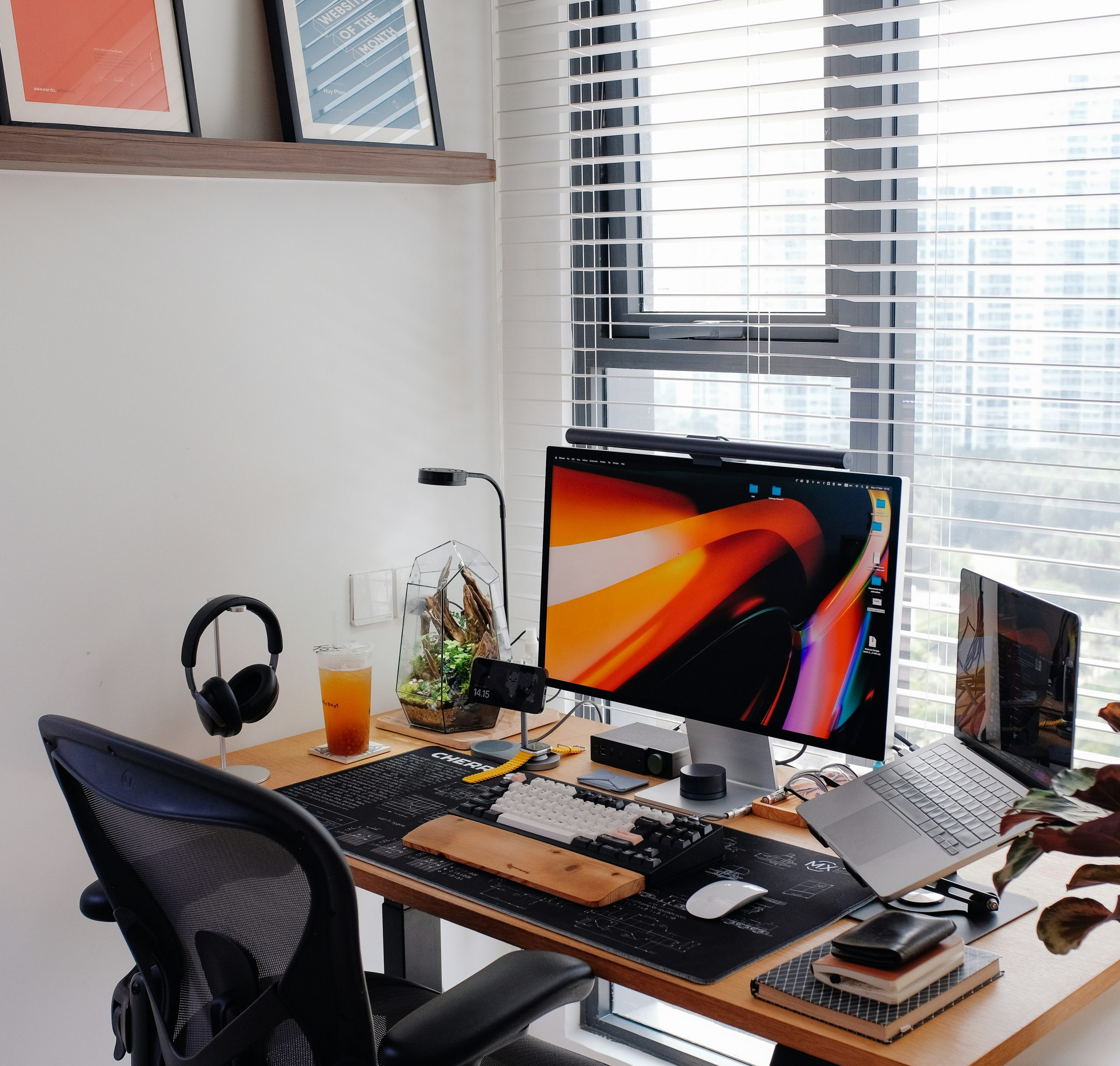
31. A Warm Wood Desk with a Plant Terrarium
that makes this desk setup feel special and personalized is the terrarium. In a space dominated by technology and hard surfaces, the glass vessel containing a miniature ecosystem of plants and wood adds a vital touch of living nature. It’s a small world of organic texture and form that acts as a focal point and a source of calm. More than just a simple potted plant, the terrarium is a curated, sculptural element that shows a deep appreciation for detail.
✅ Before You Start
To make your workspace feel more organized and focused, use a screen light bar that mounts on top of your monitor. This clever gadget illuminates your desk area without taking up any surface space, unlike a traditional lamp. It casts light downwards at an angle that reduces screen glare and eye strain. It’s a minimalist solution that provides excellent task lighting while keeping your desk looking clean and uncluttered. It’s one of those small tech upgrades that makes a huge difference in your daily workflow.
Your Desk Story Starts Here
Finding the right desk is about more than just furniture—it’s about designing the life you want to live while working. We hope you’ve found the perfect inspiration in these 31 ideas to start creating a workspace that truly feels like you. Now, which one are you pinning to your ‘Dream Home Office’ board first?