

You know that feeling when you finally find the rustic bedroom that looks exactly right for your space? That “aha!” moment is what this guide is all about. Rustic style in 2026 isn’t about dusty antiques; it’s about creating a warm, personal, and deeply cozy retreat from the world. We filtered through hundreds of options across high-end designers and accessible stores like Target and IKEA to bring you the best. Inside, you’ll find 27 distinct ideas covering modern, boho, and traditional takes on the rustic theme. The best part? These looks are more achievable than you think. And stay until the end — we break down the most common mistakes that can ruin these looks. 📌 Save this to Pinterest for later — you’ll want to revisit these ideas.
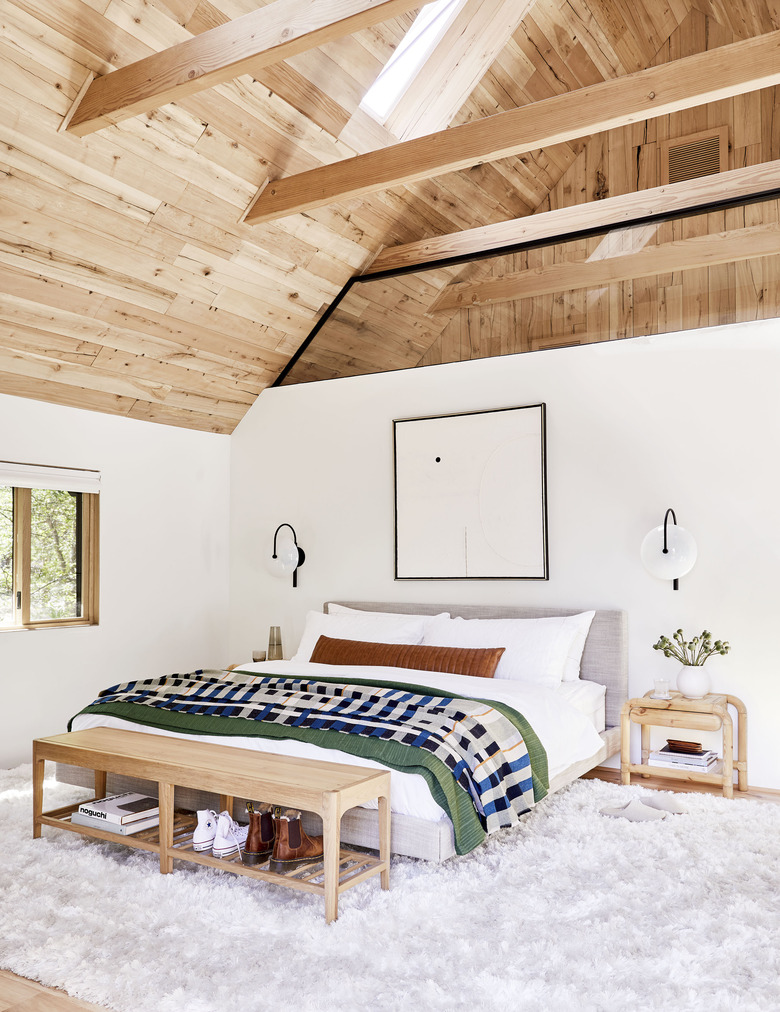
1. Marry a Vaulted Wood Ceiling with Bright White Walls
The magic here is all about contrast. The vaulted ceiling, with its warm, natural wood planks and substantial beams, provides a sense of enclosure and coziness—like being in a modern cabin. But instead of letting that woodsy feeling become overwhelming, the crisp white walls bounce light around the room, making it feel expansive and bright. This high-contrast pairing feels both grounded and airy, creating a dynamic look that’s the essence of modern rustic design. The final touch is the large, shaggy white rug, which adds a layer of softness and echoes the brightness of the walls.
💡 Designer Tip
To get this look right, lighting is key. With a vaulted ceiling, you can’t just rely on a central fixture. Use multiple light sources at different heights. Install uplights on the beams to graze the wood and highlight the architecture. Then, place wall sconces—like the globe lights seen here—about 55-60 inches from the floor on either side of the bed. This creates a cozy, human-scale glow for reading and relaxing that makes a large room feel intimate.
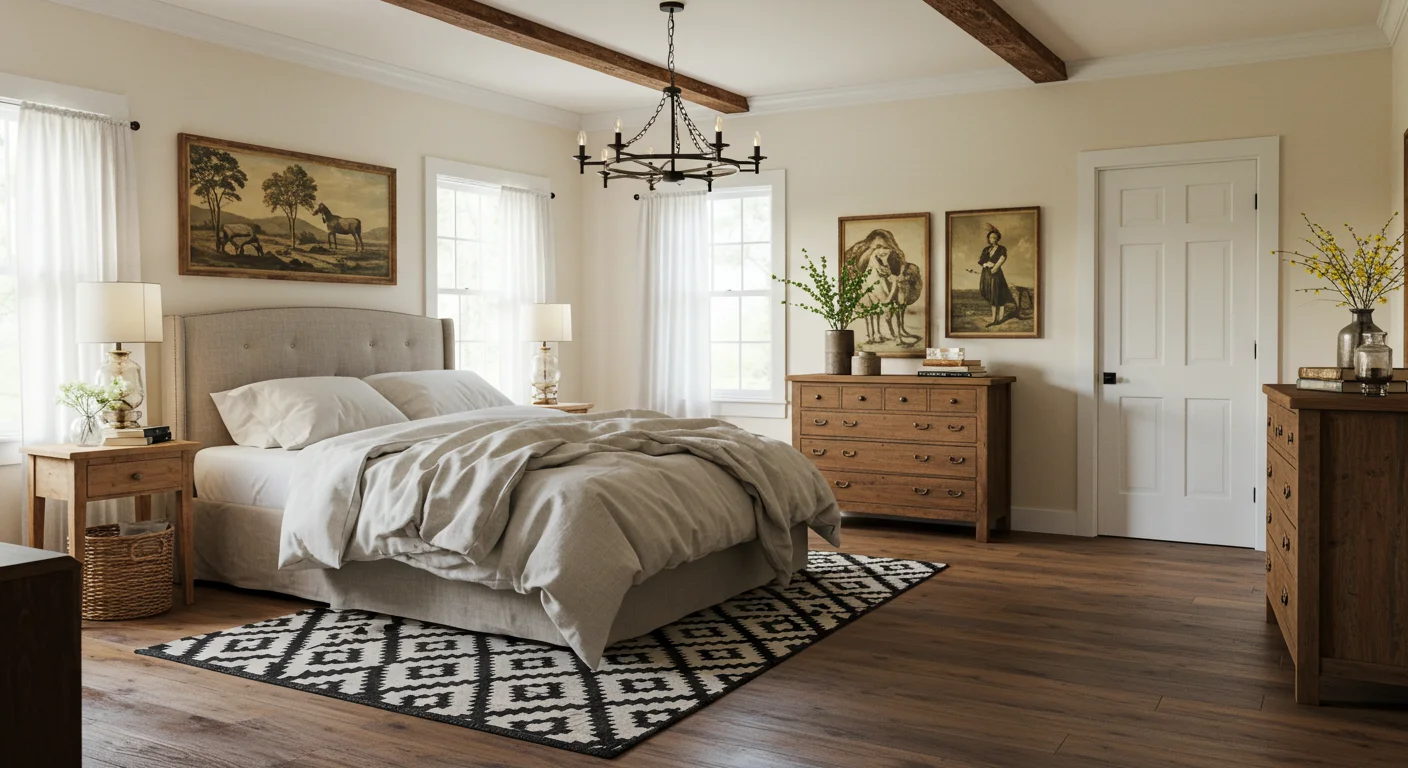
2. Combine Exposed Beams with Traditional Wooden Furniture
This look follows a classic rustic formula: 50% warm neutrals, 40% natural wood, and 10% pattern. The creamy off-white walls and light gray bedding form a soft, neutral base that keeps the space from feeling too dark. The various wood tones—from the dark ceiling beams and floor to the medium-brown dressers—add depth and history. The final 10% comes from the bold, black-and-white geometric rug, which injects a dose of modern energy and prevents the traditional elements from feeling stuffy. You could swap the geometric rug for a floral one to lean more traditional, or change the art to abstract pieces for a more modern feel.
📐 Style Math
A room with this much wood—floors, beams, and multiple pieces of furniture—can easily feel heavy or dated. The key to keeping it fresh is twofold: light and contrast. This room works because of the ample natural light and the light-colored walls and bedding. If your room is naturally dark or small, this exact combination could feel oppressive. Consider using fewer wood pieces or a lighter stain on the floors to achieve a similar vibe without sacrificing a sense of space.
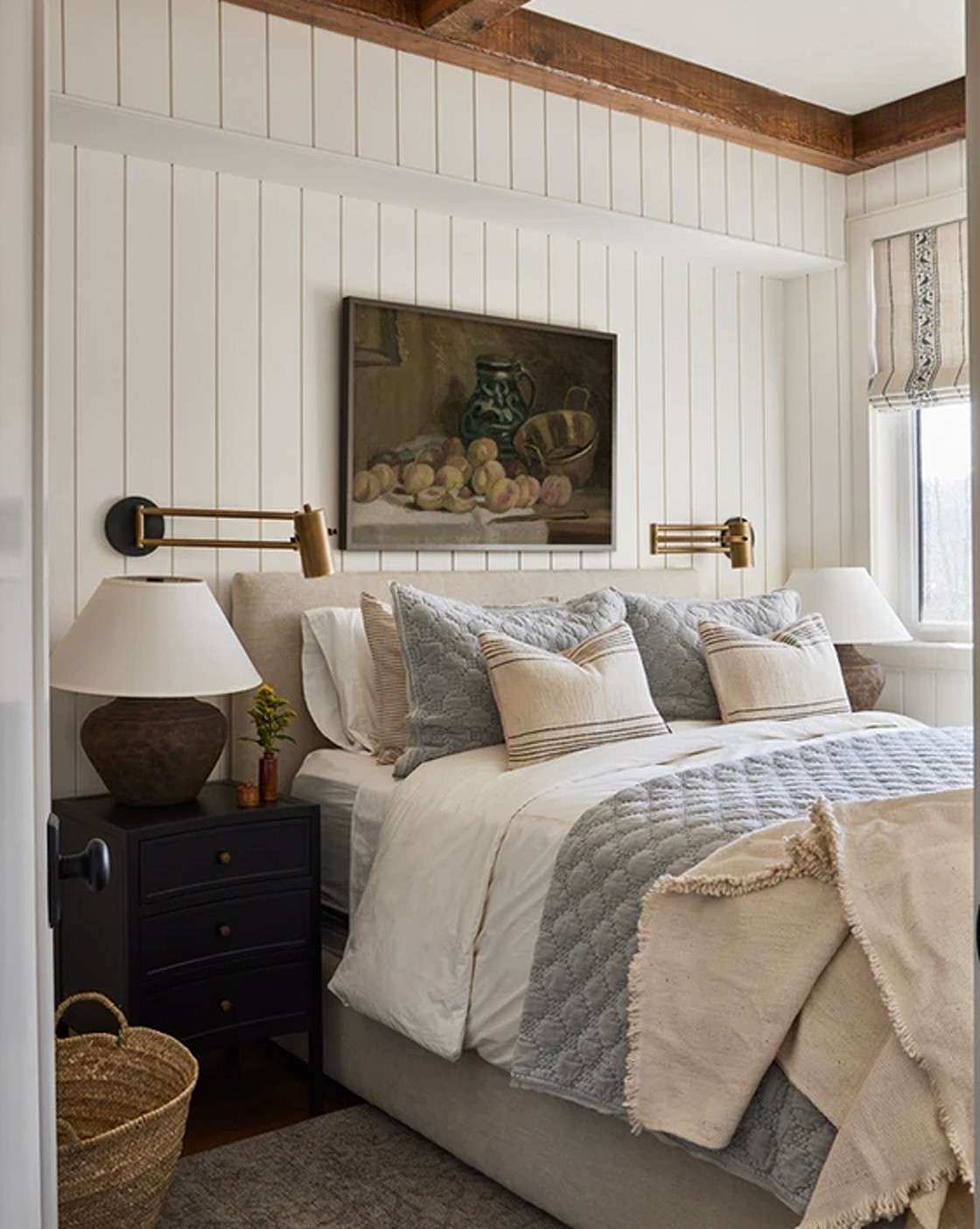
3. Create Coziness with White Plank Walls and Timber Beams
The single element that makes this room sing is the white vertical plank wall. It’s the perfect compromise between a flat, painted wall and a full-on rustic wood wall. The vertical lines draw the eye upward, adding a subtle sense of height, while the texture provides depth and character without darkening the space. It’s a clean, almost coastal nod to traditional paneling that, when paired with the rougher timber beams, creates a beautifully balanced and sophisticated rustic style. Without it, the room would be far more generic.
⚠️ Real Talk
You don’t need a full renovation to get this vibe. Create your own plank wall for under $200. You can use MDF shiplap boards from a home improvement store, which are relatively easy to cut and install with adhesive and nails. For the beams, you can find surprisingly realistic faux wood beams online for a fraction of the cost of solid timber. Pair them with an affordable upholstered headboard from Wayfair or Target, and hunt for second-hand black nightstands on Facebook Marketplace to complete the look for about 60% less.
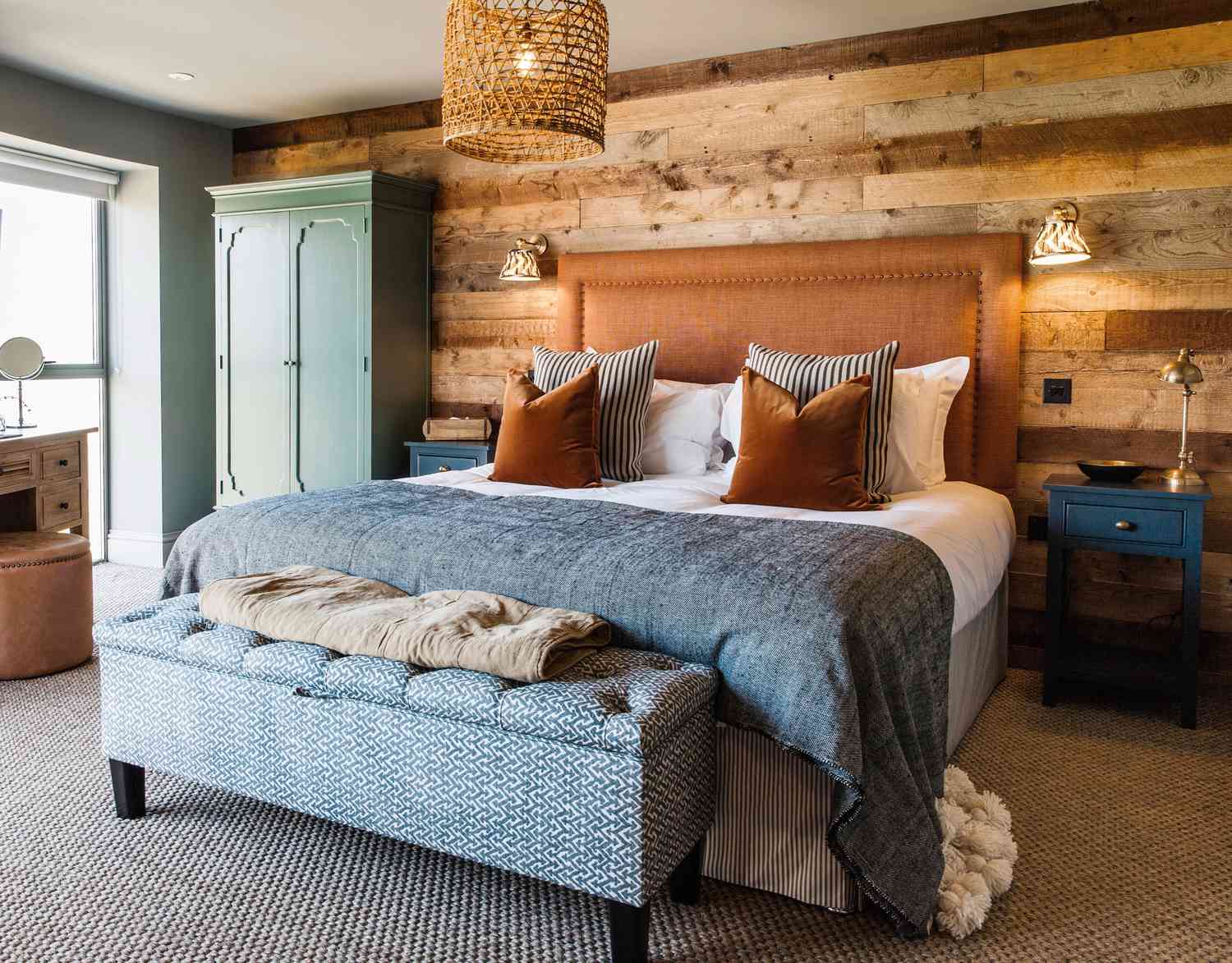
4. Design a Focal Point with a Reclaimed Wood Accent Wall
Want to install a reclaimed wood wall yourself? It’s a weekend project that makes a huge impact. Time estimate: 6-8 hours. Material cost: $200-$500.
- Measure your wall to determine the square footage you need to cover. Order about 10% extra for cuts and mistakes.
- Use a stud finder to locate and mark the studs on your wall. This is where you’ll anchor the boards.
- Clean the wall and paint it a dark color (black or dark brown). This helps hide any small gaps that might appear between the planks.
- Starting from the bottom, use a level to ensure your first row is perfectly straight. Secure the planks to the studs using a nail gun.
- Stagger the seams of the planks from one row to the next for a more natural, random look.
- Cut the planks as needed to fit around outlets and windows.
🔧 How-To Brief
An accent wall as visually heavy as this works best in a medium to large bedroom, ideally at least 12 feet by 14 feet. You need enough distance from the wall to appreciate the texture and variation without it feeling like it’s closing in on you. A standard 8-foot ceiling is fine, but it looks especially stunning with 9-foot or higher ceilings. For a smaller room, consider a more toned-down version, like the vertical white planks in Idea #3, to get texture without the visual weight.
5. Embrace a Cabin Feel with a Log Beam Wall
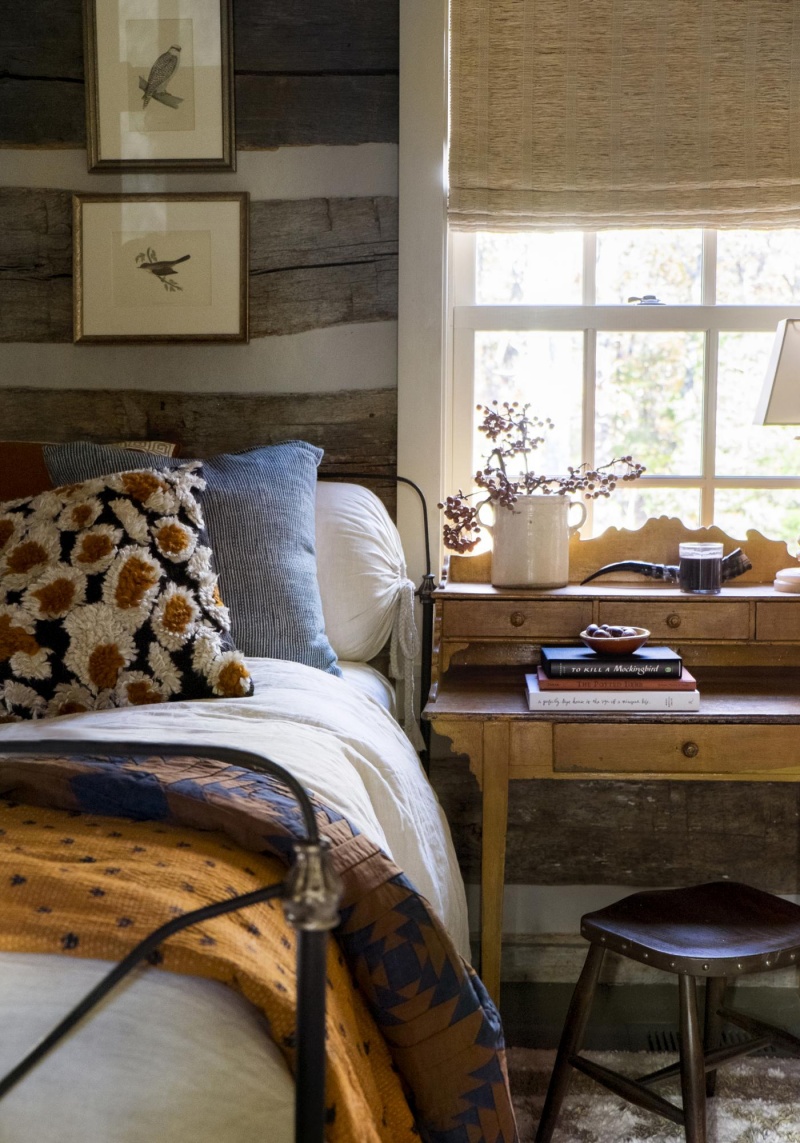
This room feels so personal and authentic because it perfectly balances rough, rustic structure with soft, curated details. The log beam wall acts as a massive, unrefined headboard, providing immense texture and a strong cabin identity. But the design doesn’t stop there. It’s softened by the layers of patterned textiles—a classic quilt and striped pillow—that add color and a sense of history. The addition of a functional, personal space like the small writing desk makes the room feel lived-in and real, not like a hotel theme. It’s this blend of rugged architecture and homey touches that makes it so charming.
🧹 Maintenance Reality
A log wall like this is gorgeous, but it’s not zero-maintenance. The crevices between the logs are prime real estate for dust and cobwebs, so expect to vacuum the wall with a brush attachment every month or two. Depending on your climate, the wood can expand and contract, and may need to be resealed every 5-7 years to prevent cracking or moisture issues. It also makes hanging artwork more complicated; you can’t just hammer in a nail. You’ll need to drill into the wood carefully or use specialized hangers.
6. Layer Earthy Textiles Against White Wooden Paneling
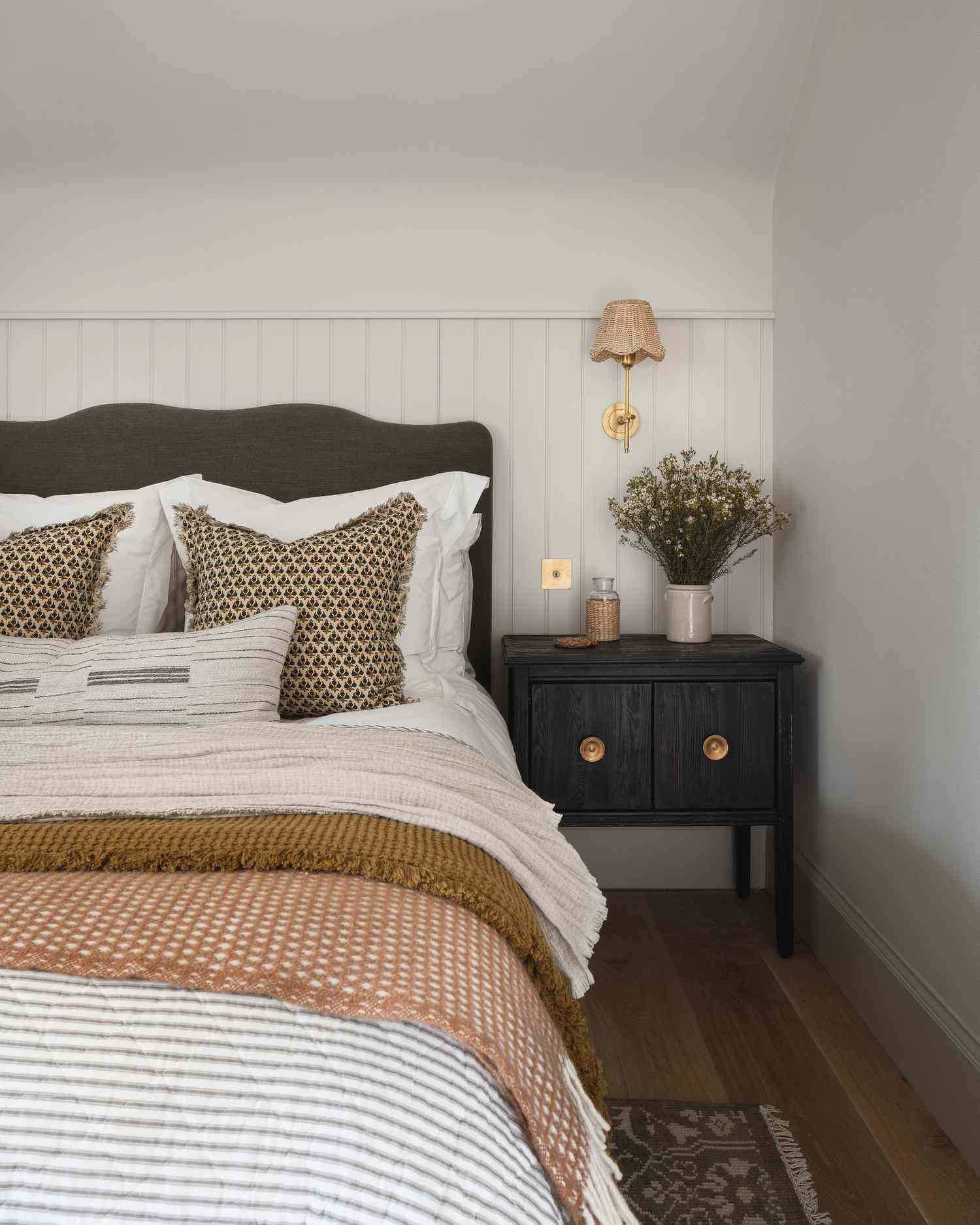
Here’s the formula for this warm, textured look: 60% clean lines + 30% earthy colors + 10% metallic accents. The white vertical paneling and wide-plank floors provide a bright, linear foundation. The color and warmth come from the layered bedding—a mix of camel, terracotta, and charcoal in various patterns and textures. This is where the personality shines through. The final 10% is the subtle gleam from the brass wall sconce and copper knobs on the nightstand. These small metallic touches add a layer of sophistication and prevent the earthy palette from feeling too flat.
✅ Before You Start
When layering bedding for a rich, textural look, think in threes and focus on varied materials. Start with your main duvet or comforter. Then, add a folded-down quilt or coverlet at the foot of the bed in a contrasting but complementary color. Finally, add a chunky knit or faux fur throw draped casually over the corner. For pillows, use your two main sleeping pillows, two larger Euro shams in a solid color, and finish with one or two smaller decorative pillows in a bold pattern or texture. This creates that effortless, professionally styled look.
7. Soften a Room with Wooden Beams and Warm Neutral Textiles
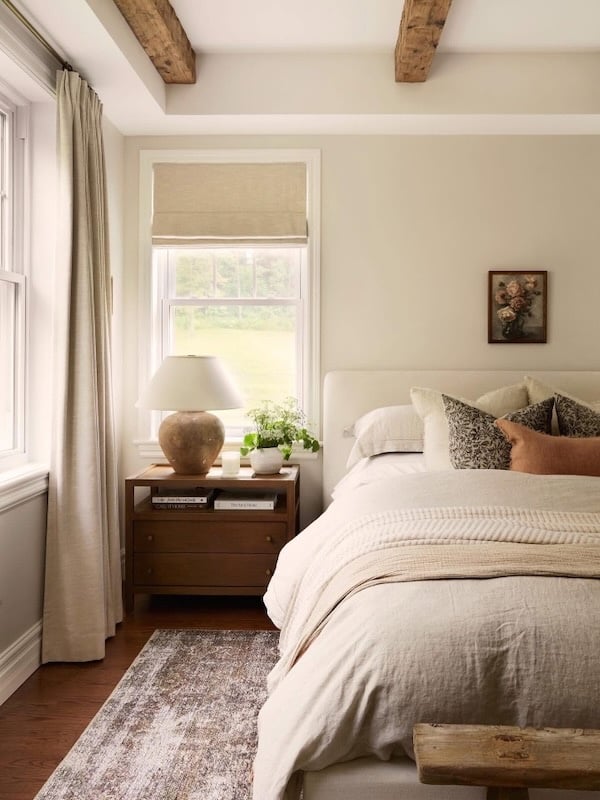
The key to this room’s tranquil, inviting feel is the layering of soft, neutral textiles. While the wooden beams provide the rustic architecture, the bedding is what makes the room a sanctuary. Notice how there are multiple layers—a quilt, a duvet, several pillows, and a throw—all in slightly different shades of cream, beige, and rust. The textures vary from smooth cotton to chunky knits. This abundance of softness directly contrasts with the hard lines of the wood beams and floor, creating a space that feels both rustic and incredibly plush. Remove the layered bedding, and the room loses its soul.
⭐ The One Thing
A light, neutral palette is beautiful, but it can be unforgiving. If you have pets, kids, or just a habit of drinking coffee in bed, maintaining this pristine look will take effort. White and cream bedding will show every stray hair and small stain. Be prepared for frequent washing, and consider performance fabrics for key pieces. Similarly, a lightly colored distressed rug is great at hiding some wear, but a major spill will be noticeable. This look is stunning, but it’s best suited for a household that is mindful of its surroundings.
8. Showcase Heavy Exposed Beams in an Attic Bedroom
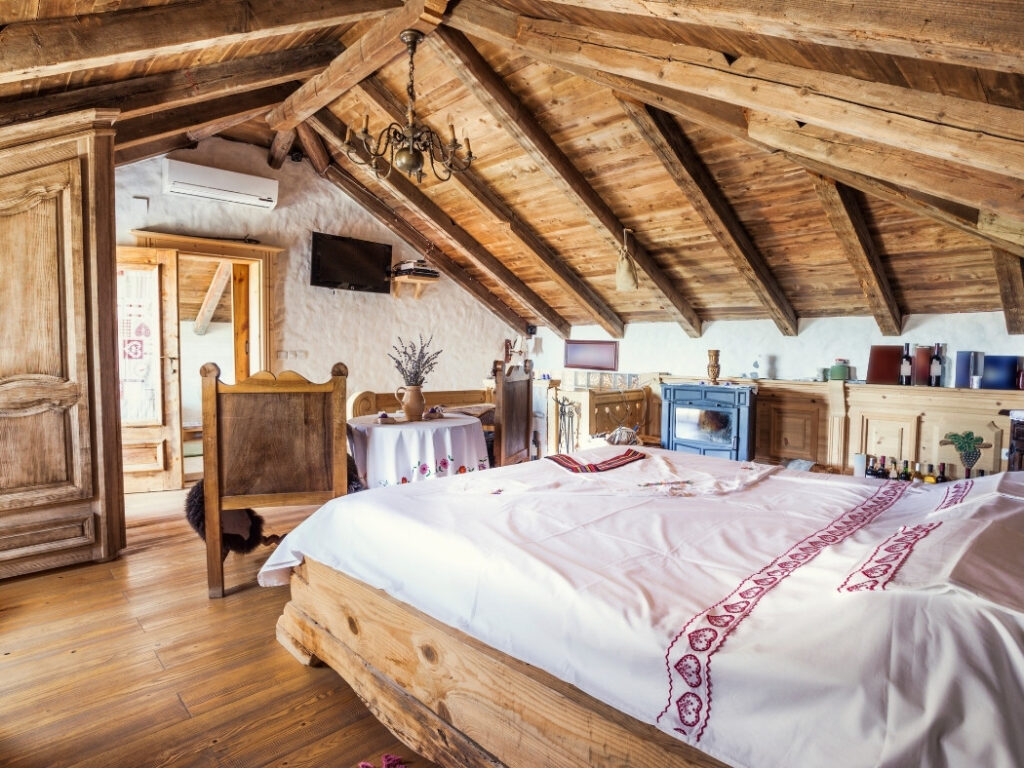
This design works by embracing the architectural constraints of the space rather than fighting them. The heavy, dark wooden beams and slanted ceilings aren’t hidden; they’re the main event. By keeping the walls and bedding primarily white, the design allows the timber structure to have maximum impact without making the room feel dark or small. The pop of red embroidery on the bedding and the small floral tablecloth add just enough color and charm to personalize the space and keep the wood-and-white palette from feeling too stark. This is a masterclass in using decor to complement, not compete with, strong architecture.
💸 Get This Look For Less
This style is tailor-made for attic or loft conversions with low or slanted ceilings. A minimum floor area of 10×12 feet is needed to prevent it from feeling cramped, but the key is ceiling height. The lowest point of the slanted ceiling should ideally be no less than 5 feet to allow for usable space. To maximize the feeling of openness, stick to low-profile furniture like the rustic platform bed shown here. A tall headboard or four-poster bed would visually crowd the space and clash with the low beams. Compare this to the vaulted ceiling in Idea #1, which suits a larger, more open room.
9. Mix Modern and Rustic with a Windmill Ceiling Fan
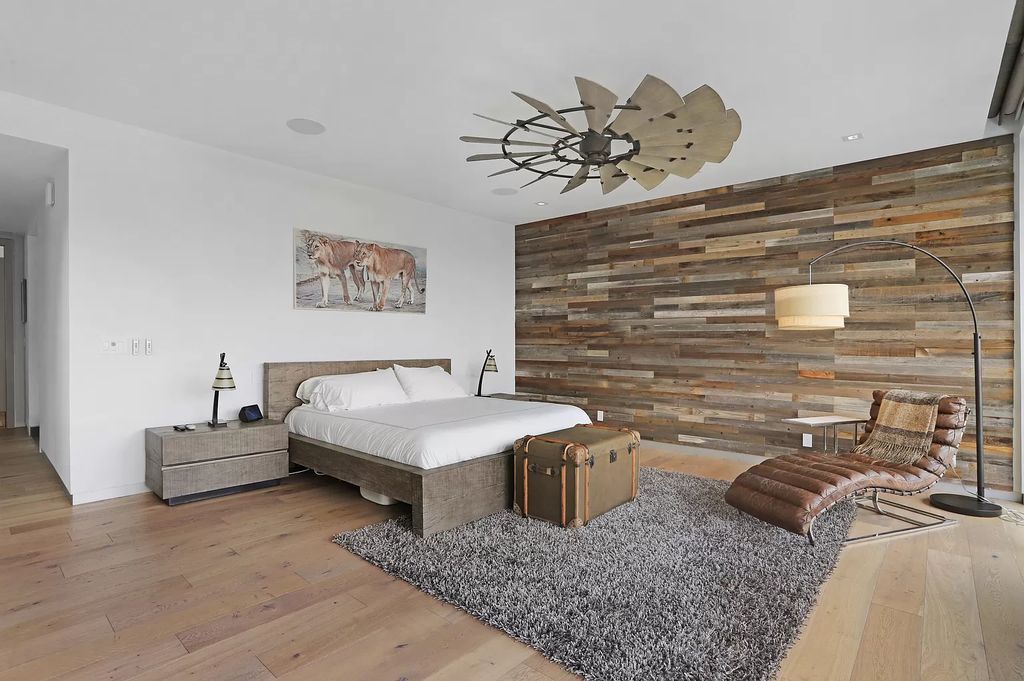
The “Modern Farmhouse” aesthetic has been huge for years, and this look shows its 2026 evolution. People are moving away from the all-white-everything version and embracing more authentic, eclectic touches. The reclaimed wood wall is a classic rustic element, but pairing it with a sleek leather chaise and a dramatic windmill fan feels fresh and current. This mix of old and new, hard and soft, is resonating now because it feels more personal and less staged. It suggests a home collected over time, rather than decorated overnight from a single catalog.
🎯 What Makes It Work
Undoubtedly, the windmill ceiling fan is the statement piece that defines this room. It’s an industrial-rustic hybrid that bridges the gap between the reclaimed wood wall and the more modern furniture. Its large scale and unique form draw the eye upward, adding a sculptural element that’s both functional and decorative. Without the fan, the room would still be nice, but it would lack a central, unifying feature. It’s a bold choice that confidently sets the tone for the entire space.
10. Go All-In with Rough-Hewn Wood Walls and Bed Frame
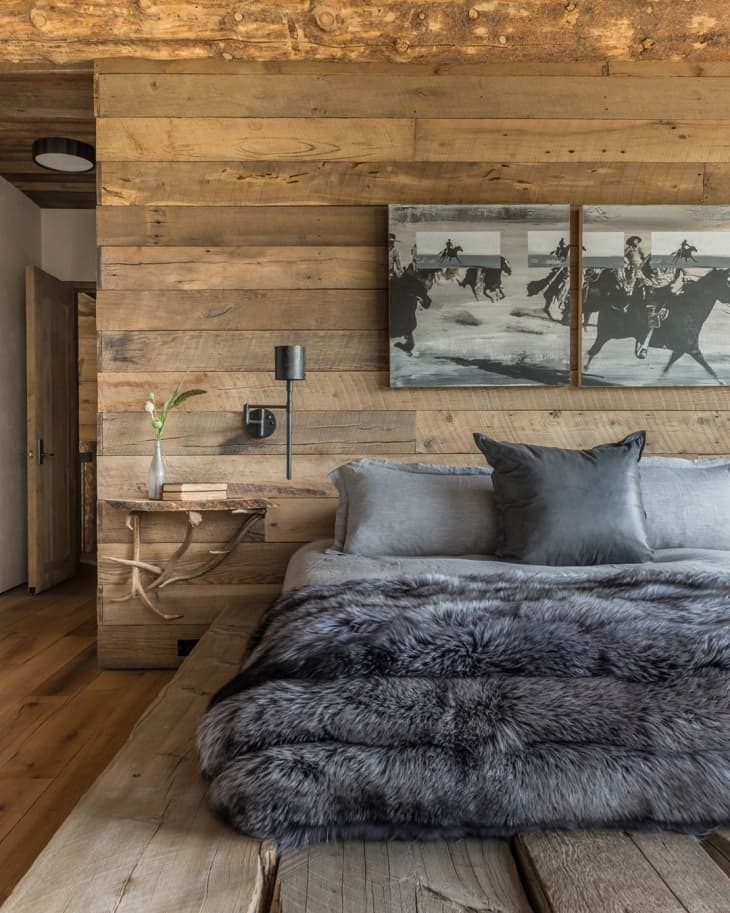
A room paneled entirely in rough-hewn wood requires specific care. The uneven surface is a major dust magnet and needs regular vacuuming with a soft brush attachment. Unlike smooth walls, you can’t easily wipe them down. Be cautious of splinters, especially on the bed frame. It is essential that the wood is properly sealed upon installation to prevent this and to make cleaning easier. Also, this much wood can make a room feel dark, so it absolutely depends on having good natural or artificial light to feel cozy rather than cave-like.
💰 Budget Breakdown
This look fully commits to its rustic identity, and its success lies in that commitment. By using the same rough-hewn wood for both the walls and the bed, it creates a completely immersive, cabin-like environment. The design avoids monotony by introducing sharp, modern contrasts. The plush grey faux fur throw adds a much-needed touch of softness and luxury against the raw wood. The black and white photography and minimalist black sconces provide a clean, graphic counterpoint that keeps the all-wood look from feeling dated. It’s a powerful play of textures: rough wood, soft fur, and sleek metal.
11. Embrace Western Style with a Dark Wood Bed and Antler Decor
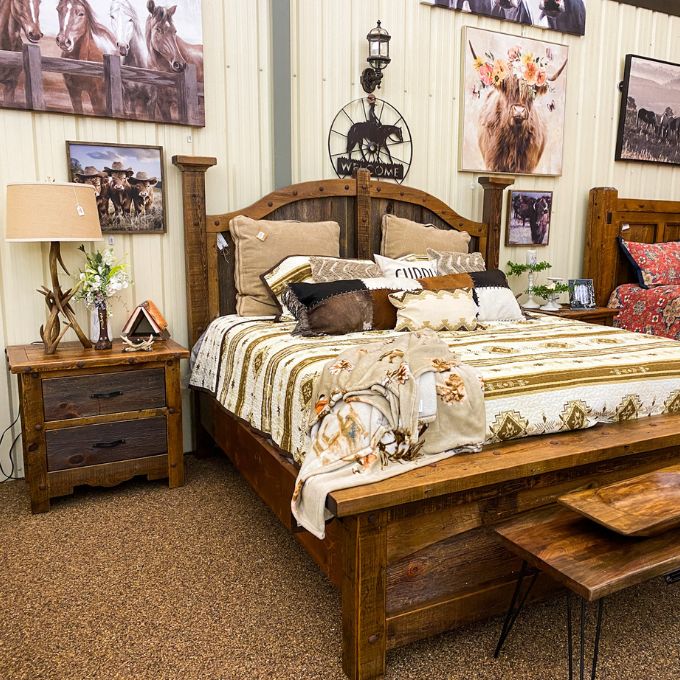
This cozy, western-inspired room breaks down into a simple formula: 50% dark, rustic furniture + 40% warm, neutral textiles + 10% themed decor. The chunky, dark reclaimed wood bed frame is the undeniable anchor of the space. It’s balanced by a generous amount of bedding in cream, beige, and tan, which keeps the dark wood from feeling too heavy. The final 10% comes from the explicit western and wildlife elements—the antler lamp, the animal-themed art, and the wrought iron sign. This allows the theme to be present without being overwhelming.
🔥 Trending Context
You can get this rustic lodge look without the high-end price tag. Look for a solid wood bed frame on Facebook Marketplace or at a thrift store; a dark stain and some minor distressing can work wonders. For the bedding, raid the clearance aisles at Target or Walmart for patterned quilts and pillows in warm colors. The key is in the accessories: you can find affordable antler-style lamps and rustic wall art on Amazon or at craft stores like Hobby Lobby. The entire vibe can be achieved for $500-800 if you’re a savvy shopper.
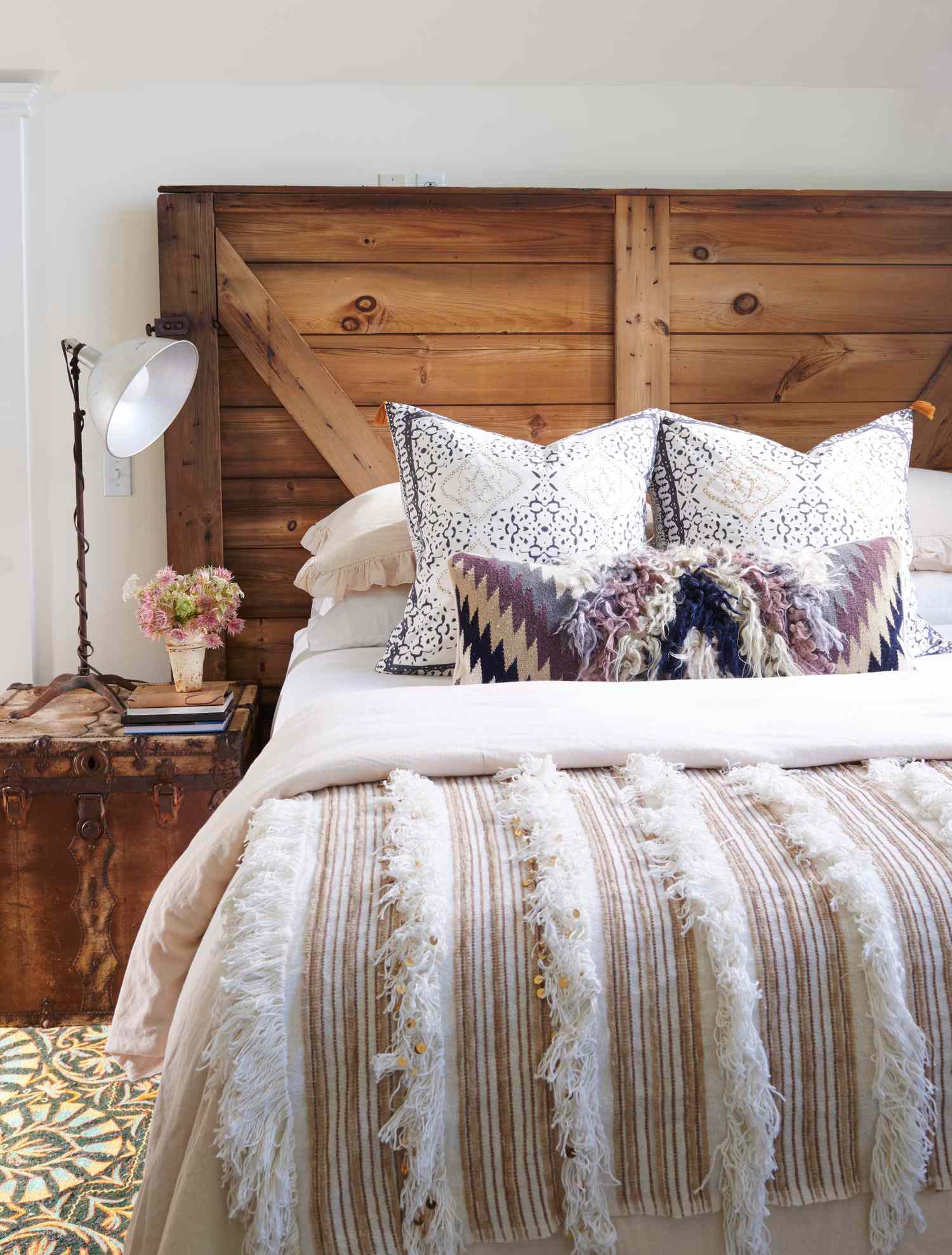
12. Upcycle a Barn Door as a Rustic Headboard
Creating a barn door headboard is a fantastic weekend DIY project. Time estimate: 4-5 hours. Material cost: $100-$300.
- Acquire a door. You can find old barn doors at salvage yards, or build one from scratch using new planks for a cleaner look.
- Measure the width of your bed and decide on the desired height for your headboard. Trim the door to size if necessary.
- Thoroughly clean the wood with a stiff brush and a wood-safe cleaner, especially if it’s reclaimed. Let it dry completely.
- Sand the entire surface to remove any splinters or rough patches, while being careful to preserve the aged character.
- Apply a clear matte or satin polyurethane sealer to protect the wood and make it easier to clean.
- Securely mount the headboard to the wall by screwing it directly into the wall studs. A French cleat is another great option for a secure, floating mount.
📏 Scale Guide
While a barn door headboard is a strong style statement, make sure it’s practical for you. Authentic, reclaimed doors can be extremely heavy, requiring very secure mounting to the wall to be safe. Also, the rough, uneven surface isn’t the most comfortable to lean against while reading in bed. You’ll want to have plenty of large, supportive pillows (like Euro shams) to compensate. Finally, the crevices in the planks can collect dust, so it will need a regular once-over with a vacuum brush.
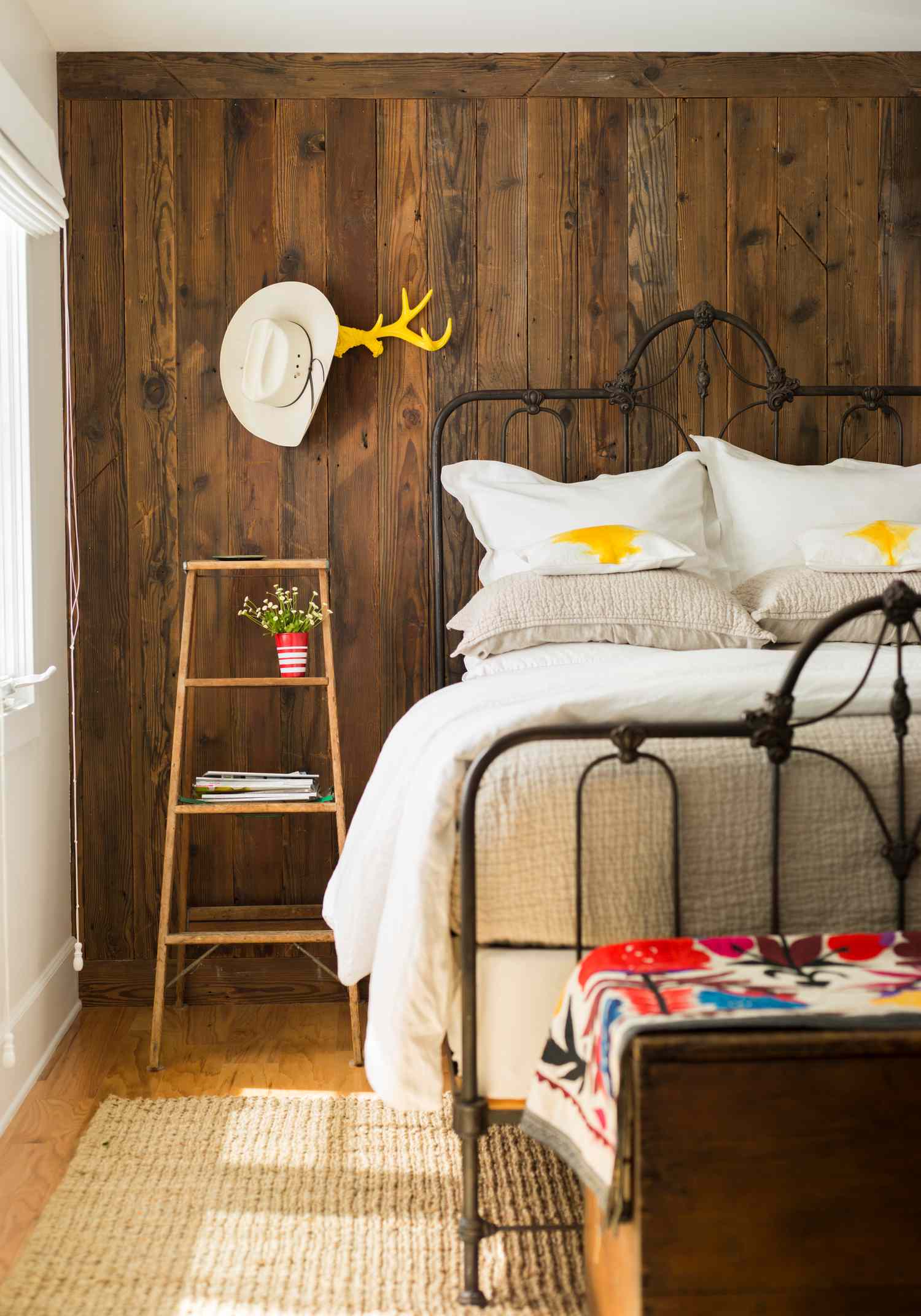
13. Contrast a Weathered Wood Wall with an Ornate Iron Bed
The success of this room lies in the unexpected pairing of textures and styles. The accent wall, made of dark, weathered wood planks, is deeply rustic and rugged. In contrast, the black iron bed frame is ornate and almost delicate in its detail, with its curves and spindles. This juxtaposition creates a dynamic tension that is far more interesting than pairing the wall with a heavy wood bed would have been. The choice of simple, bright white bedding acts as a clean canvas, allowing both the wall and the bed to stand out. The surprising pop of bright yellow adds a touch of playful, modern energy.
💡 Designer Tip
Ready to commit to a dark accent wall? Run through this checklist first.
- Measure your light: Does this room get plenty of natural light? A dark wall can make a poorly lit room feel like a cave.
- Check your room size: A dark accent wall works best in a medium to large room. In a very small space, it can make the wall feel closer, shrinking the room visually.
- Plan your contrast: What elements will you use to balance the darkness? Plan for light-colored bedding, a light-colored rug, and bright artwork as seen here to provide necessary contrast.
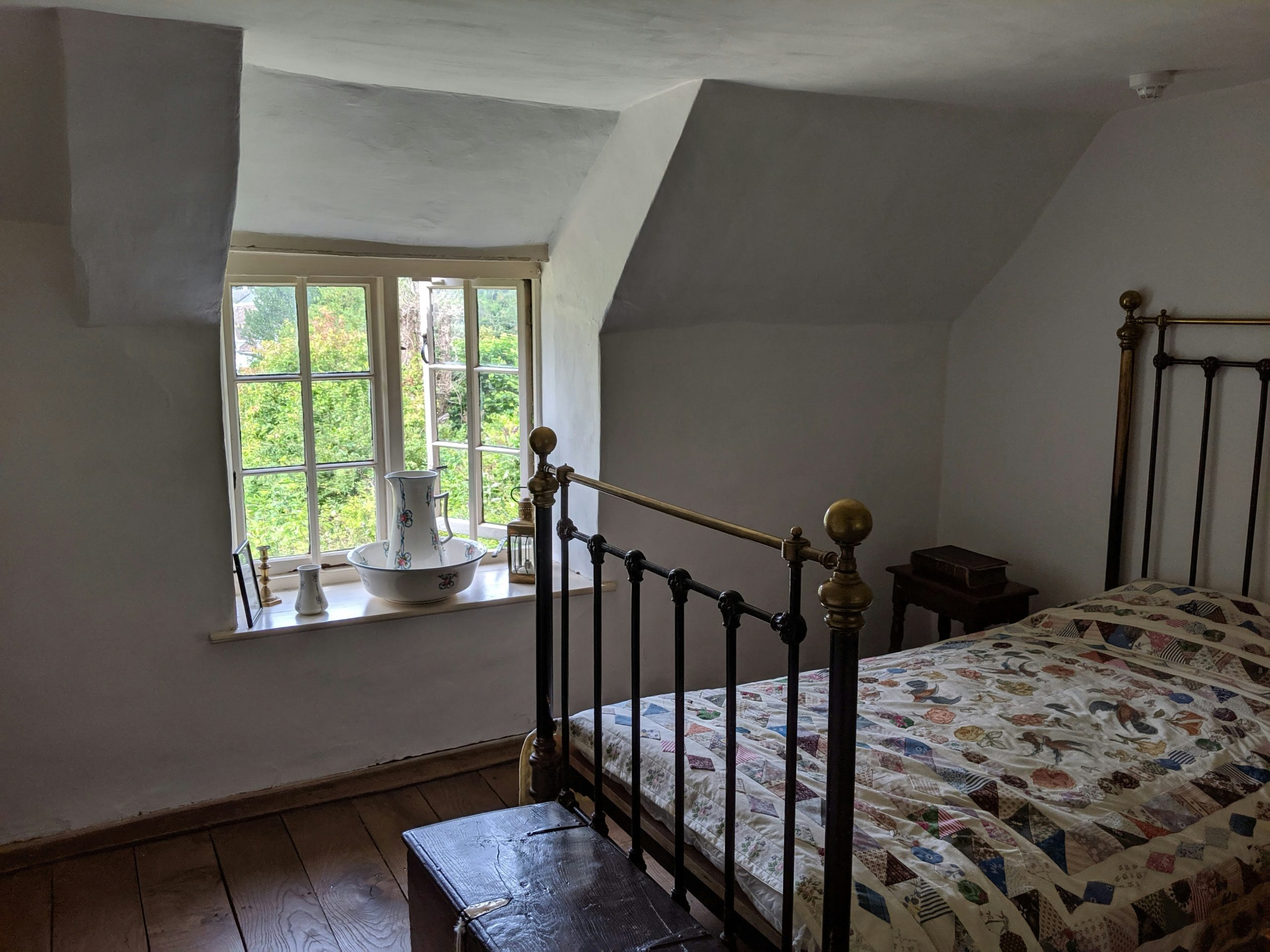
14. Capture Historic Charm with a Vintage Metal Bed and Patchwork Quilt
The patchwork quilt is the heart and soul of this bedroom. It single-handedly tells a story of history, craft, and comfort. The variety of colors and patterns prevents the simple room from feeling stark, and its handmade quality radiates warmth. Without it, you’d have a black bed, white walls, and a dark floor—a perfectly fine but generic combination. The quilt transforms the space, infusing it with personality and a sense of heirloom heritage. It proves that sometimes, the most impactful design element isn’t a piece of furniture, but a single, meaningful textile.
📐 Style Math
In an age of fast furniture and mass-produced everything, there’s a growing desire for items with history and soul. This is why “cottagecore” and “grandmacore” aesthetics are resonating so deeply on Pinterest and Instagram. This bedroom taps directly into that trend. The patchwork quilt and vintage-style metal bed feel authentic and collected. It’s a move away from hyper-curated, minimalist spaces toward rooms that feel lived-in, layered, and full of personal stories. This look has staying power because it’s rooted in nostalgia and comfort, not fleeting trends.
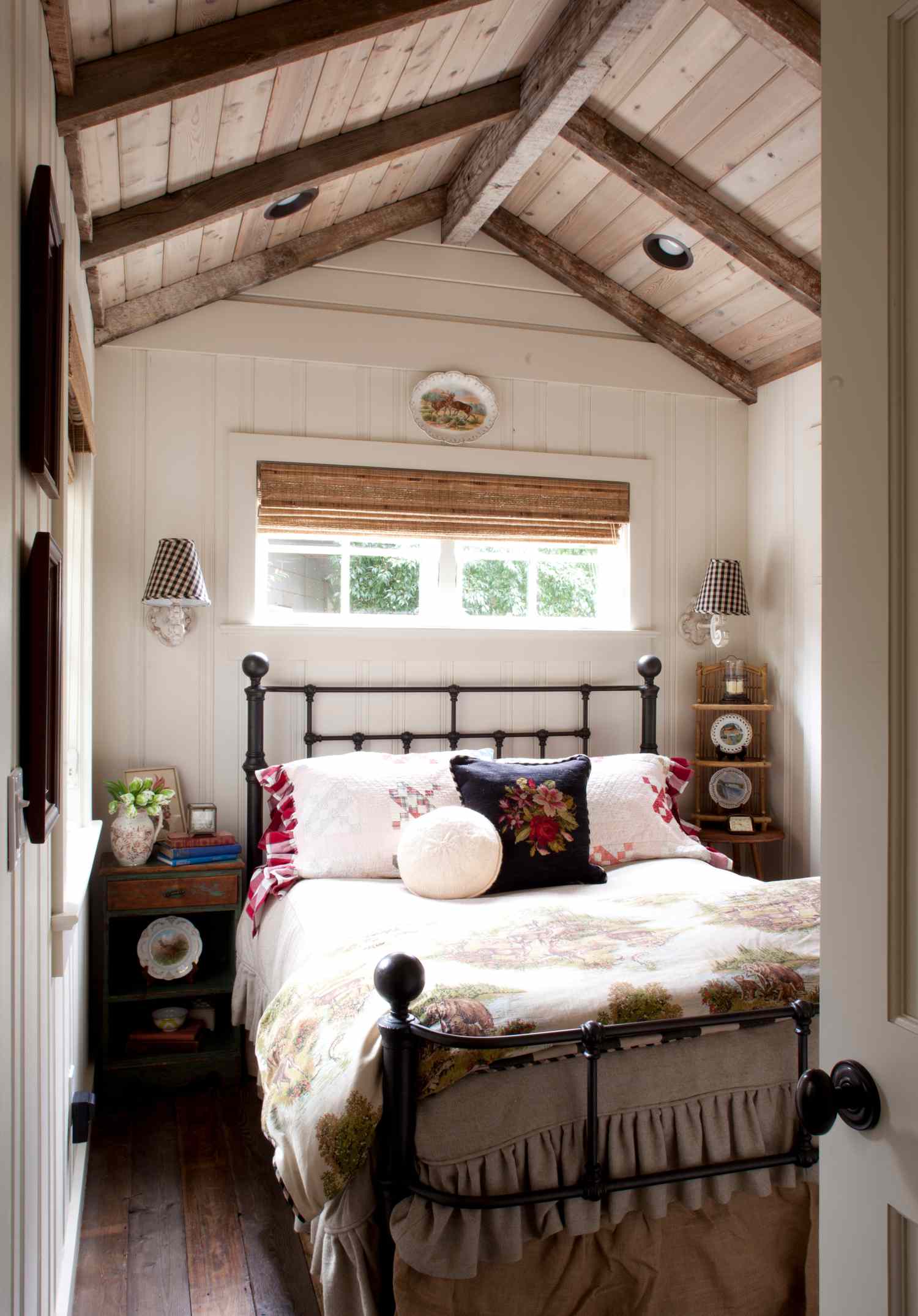
15. Combine a Planked Ceiling with Cheerful Floral Textiles
When mixing patterns in a single space, the key is to vary the scale. Here, the large-scale floral print on the bedding is the dominant pattern. The much smaller, tighter pattern of the gingham wall sconces acts as a supporting accent. The rule of thumb is to combine one large-scale pattern with one medium or small-scale pattern. A third pattern could be introduced (perhaps in a rug or accent pillow), but it should be very subtle, like a simple stripe. This creates a cohesive, layered look instead of a chaotic mess.
⚠️ Real Talk
The visual recipe here is about balancing architectural rusticity with decorative charm. Think of it as 50% rustic structure + 30% traditional pattern + 20% clean space. The vaulted wooden plank ceiling and rough flooring provide a strong, rustic foundation. The floral and gingham patterns inject a dose of classic, country charm. Crucially, the white paneled wall and simple bamboo blind provide the “clean space”—a visual resting spot that prevents the wood and patterns from becoming overwhelming. This balance is what makes the room feel both cozy and fresh.
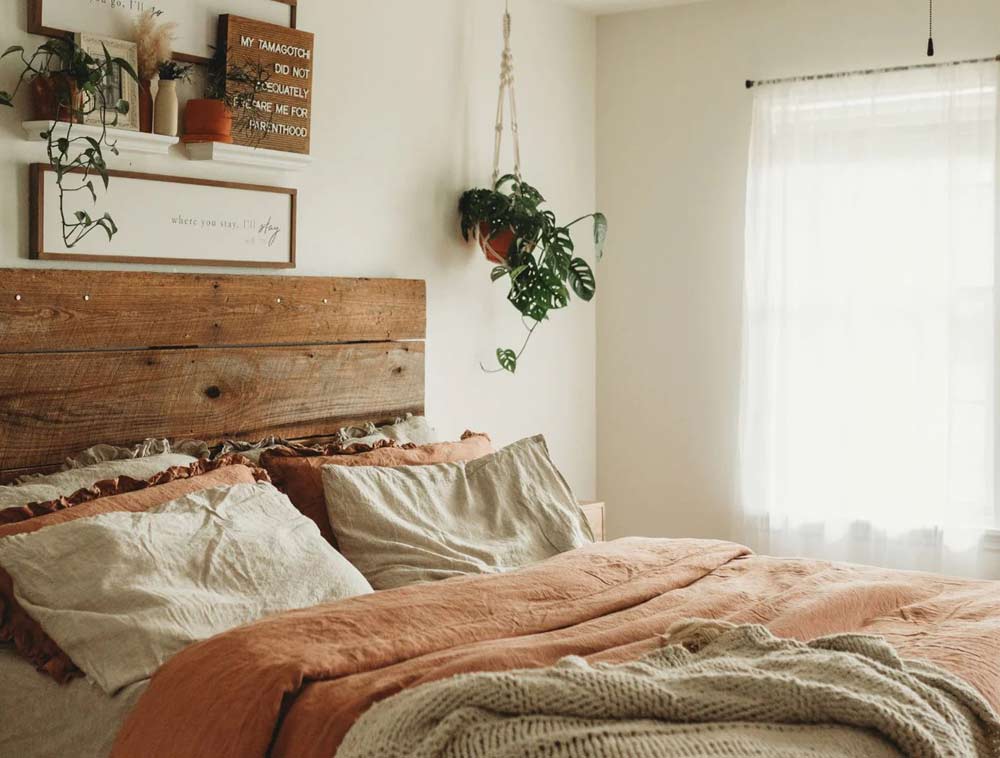
16. Soften a Weathered Headboard with Light Peach Bedding
This look is all about the power of softness to balance rustic texture. The headboard, made of rough, weathered wood, is inherently masculine and rugged. The designer brilliantly softened this by pairing it with a duvet in a delicate, light peach color. This unexpected color choice immediately subverts expectations and adds a layer of feminine warmth. The addition of fluffy, off-white ruffled shams and sheer curtains further enhances the soft, dreamy quality of the room. It’s a perfect example of how to make a rustic space feel gentle and inviting rather than just rough-and-tumble.
🔧 How-To Brief
A weathered wood headboard can be a beautiful, rustic feature, but be aware of the practicalities. The rough surface can snag delicate fabrics, so be careful with knit throws or silk pillowcases. It will also collect dust in its crevices more than a smooth headboard, requiring a quick vacuum or wipe-down. Most importantly, if you’re sensitive to allergens, a piece of reclaimed wood could potentially harbor dust or mold if not properly cleaned and sealed before being brought into the bedroom.
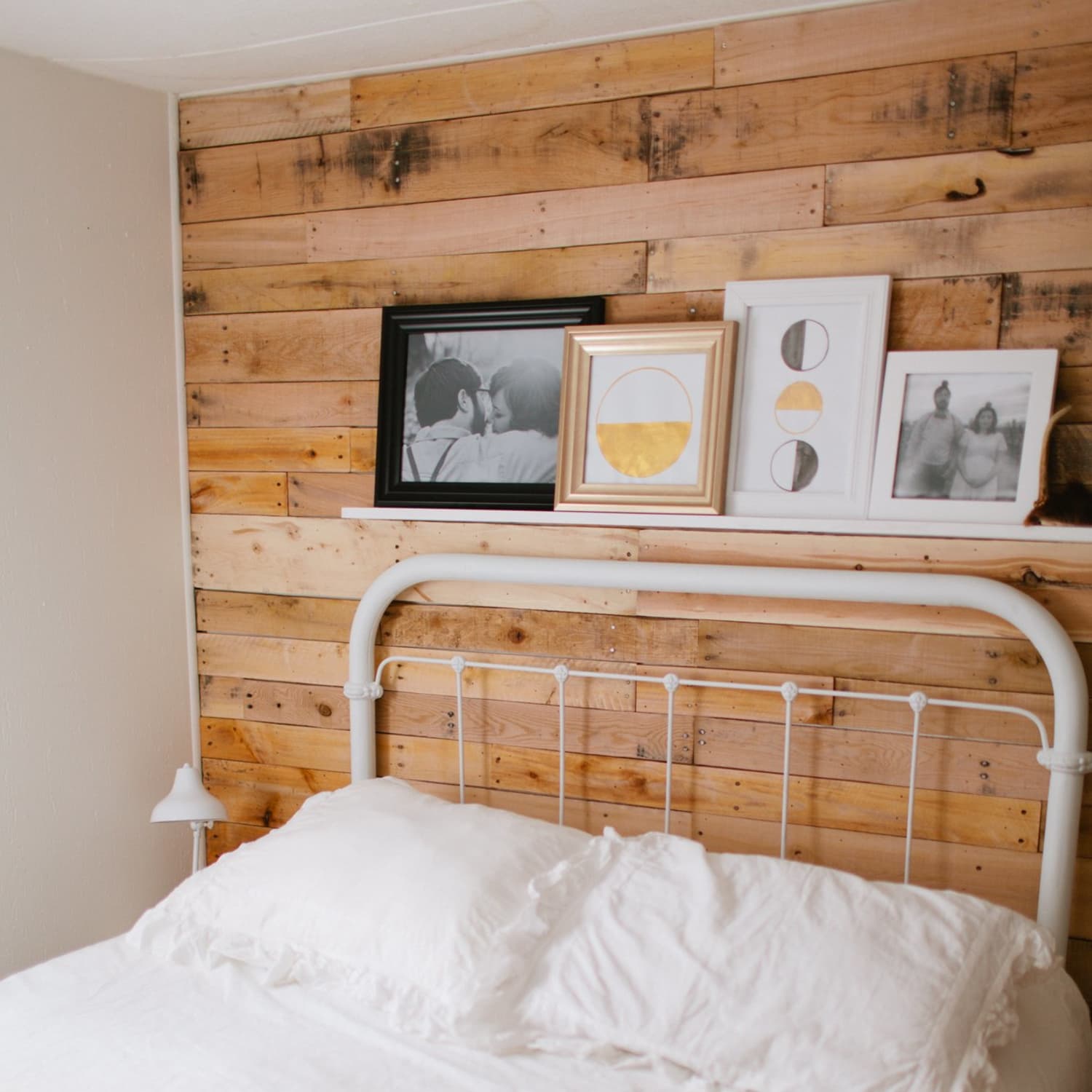
17. Pair a Rustic Wood Wall with a Crisp White Metal Bed
This high-contrast look is incredibly achievable on a budget. The key is the reclaimed wood accent wall, which you can DIY using peel-and-stick wood planks from brands like Stikwood or Timeline Wood, often for under $10 per square foot. Pair it with an affordable white metal bed frame from IKEA (like the SAGSTUA) or Amazon for around $150-$250. Simple white bedding from Target and a basic picture ledge from a home improvement store complete the core look. You can create this entire focal point for well under $700, making it a budget-friendly way to get a major rustic transformation.
🧹 Maintenance Reality
This idea is incredibly versatile and works well in bedrooms of almost any size, from a small guest room (10×10 feet) to a larger master suite. The key is the simplicity of the other elements. Because the bed frame is visually lightweight and the bedding is bright white, it doesn’t compete with or crowd the accent wall. This prevents the room from feeling cluttered. For a very small room, consider a wood wall with lighter-toned planks to maximize the sense of space. Compare this to the dark paneled walls in Idea #24, which require a much larger room to feel balanced.
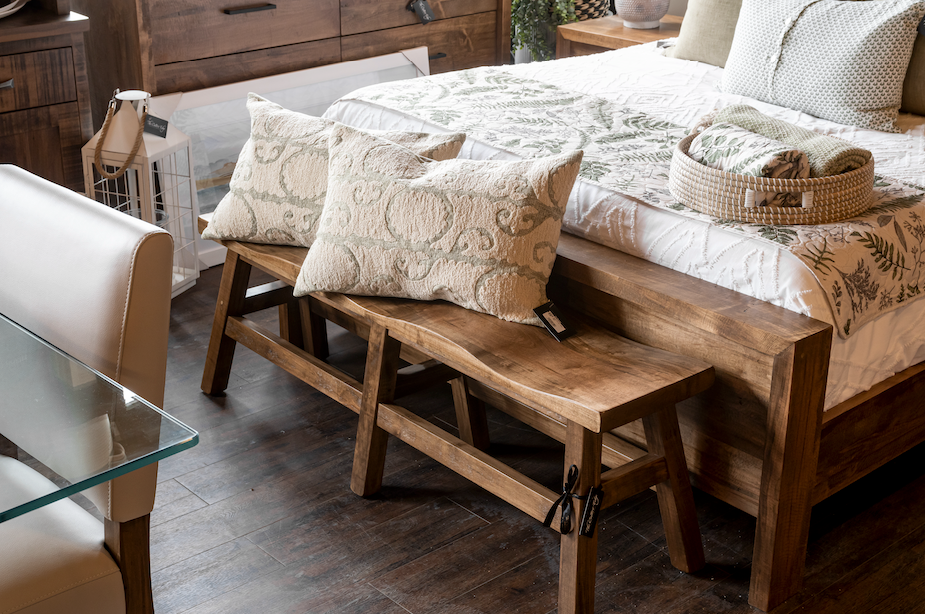
18. Accessorize a Dark Wood Bed with a Large Matching Bench
A bench at the foot of the bed is both practical and a great design tool for finishing a room. To get the scale right, the bench should be slightly shorter than the width of the bed—aim for it to be about two-thirds to three-quarters of the bed’s width. Its height should be a few inches lower than the top of the mattress. This ensures it looks proportional and doesn’t obstruct the view of your beautifully made bed. Here, matching the dark wood of the bench to the bed frame creates a cohesive, intentional look.
✅ Before You Start
This bedroom feels so serene and grounded because of its commitment to a simple, nature-inspired palette and repetition of form. The dark wood of the bed frame is mirrored in the large bench and the plank flooring, creating a strong, unified foundation. The color palette is kept intentionally simple: wood brown, creamy white, and sage green. This limited palette is calming to the eye. The botanical print on the quilt directly references nature, reinforcing the rustic theme in a soft, elegant way. The woven basket adds another layer of natural texture, completing the cohesive feel.
19. Create a Romantic Cabin Vibe with Heart-Patterned Curtains
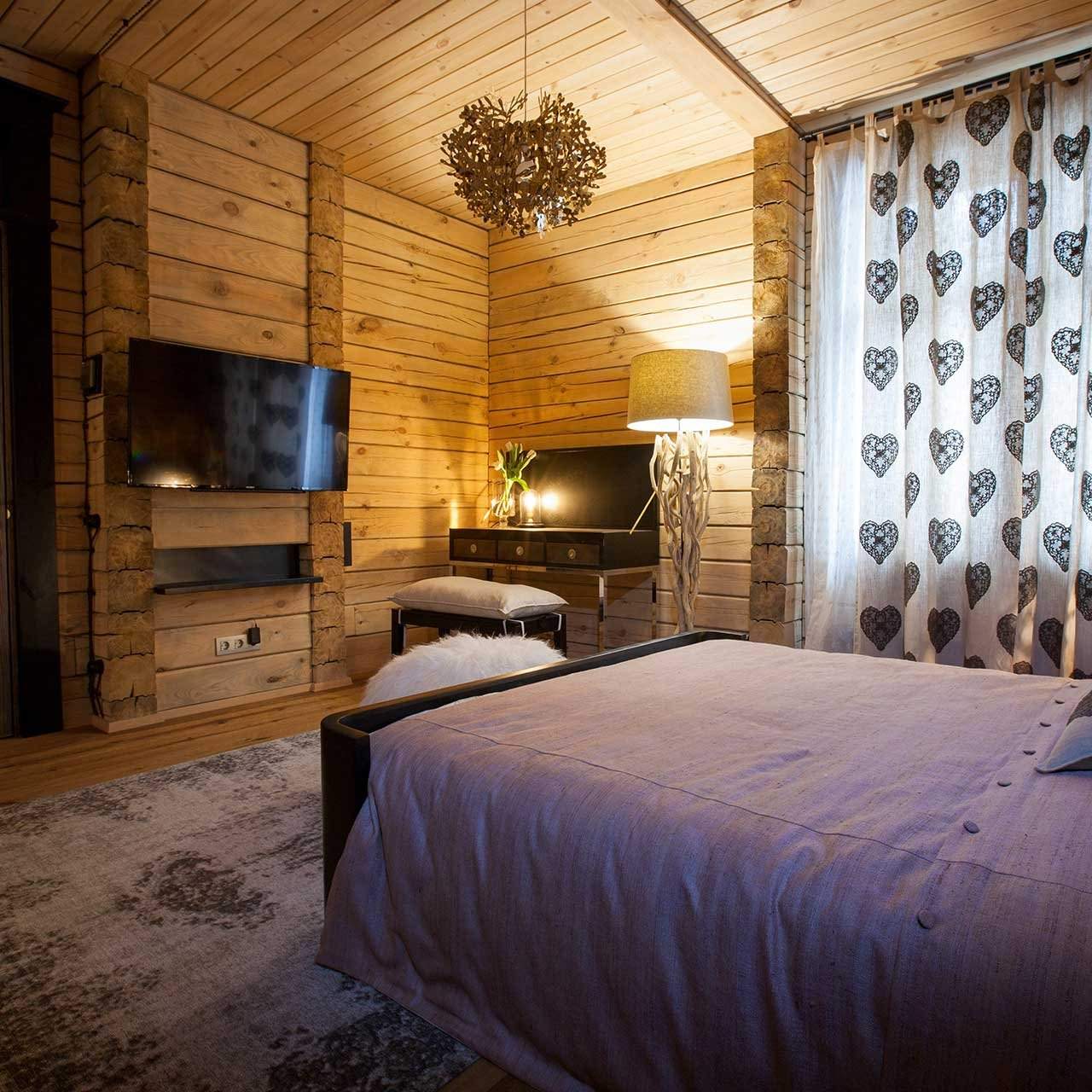
The undeniable charm of this room comes from the heart-patterned sheer curtains. In a space so dominated by the rugged, rustic texture of log walls, these curtains introduce an unexpected touch of delicacy and romance. They soften the hard lines of the wood and filter the light beautifully, casting a gentle glow. It’s a playful, personal choice that keeps the room from being just another generic log cabin bedroom. It demonstrates a confidence in mixing a traditionally “cute” pattern with a masculine architectural style, resulting in a space that feels unique and full of personality.
⭐ The One Thing
A full log-cabin interior like this presents a lighting challenge. Wood absorbs a massive amount of light compared to drywall. Notice the multiple light sources here: a central chandelier, a floor lamp, and likely other lights not in view. You cannot rely on a single overhead light. You’ll need to layer your lighting with task lamps, ambient floor lamps, and perhaps even sconces to keep the room from feeling like a dark cave, especially at night. When choosing bulbs, opt for a warm white (2700K-3000K) to complement the wood tones.
20. Balance Wood Furniture with a Bright, Neutral Backdrop
Let’s estimate the cost to create this warm and earthy bedroom.
- Main Furniture (Dresser, Nightstand): $800 – $2,500
- Lighting (Ceiling beam fixture, lamp): $300 – $700
- Textiles (Rug, bedding, curtains): $500 – $1,500
- Decor/Accessories (Baskets, plants): $150 – $400
- TOTAL: $1,750 – $5,100
- Budget alternative: Find a used wood dresser on Facebook Marketplace and refinish it. Use peel-and-stick faux wood beams. Shop for rugs and bedding at stores like HomeGoods or Target. You could achieve a similar feel for around $800 – $1,800.
💸 Get This Look For Less
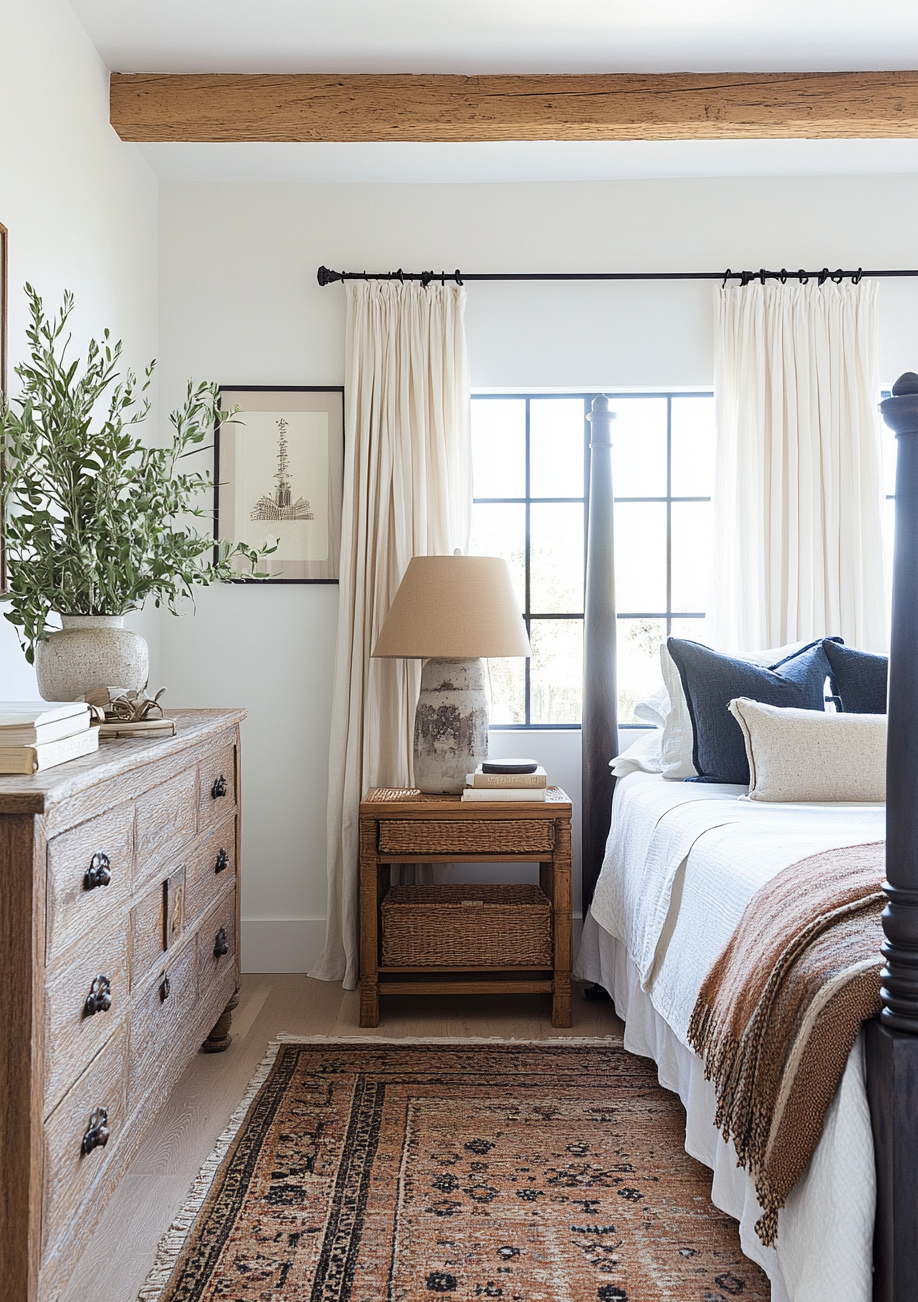
This room masters the art of balance. The wooden furniture, distressed beam, and terracotta accents bring a lot of warmth and earthy texture. To keep this from feeling heavy or dated, the design incorporates large areas of bright neutrality. The white walls, creamy curtains, and light-colored bedding act as a canvas, allowing the rustic elements to pop without overwhelming the space. The Persian-style rug is a clever addition, as its complex pattern and multiple colors help to tie the wood tones, the terracotta, and the neutral base together into one cohesive palette.
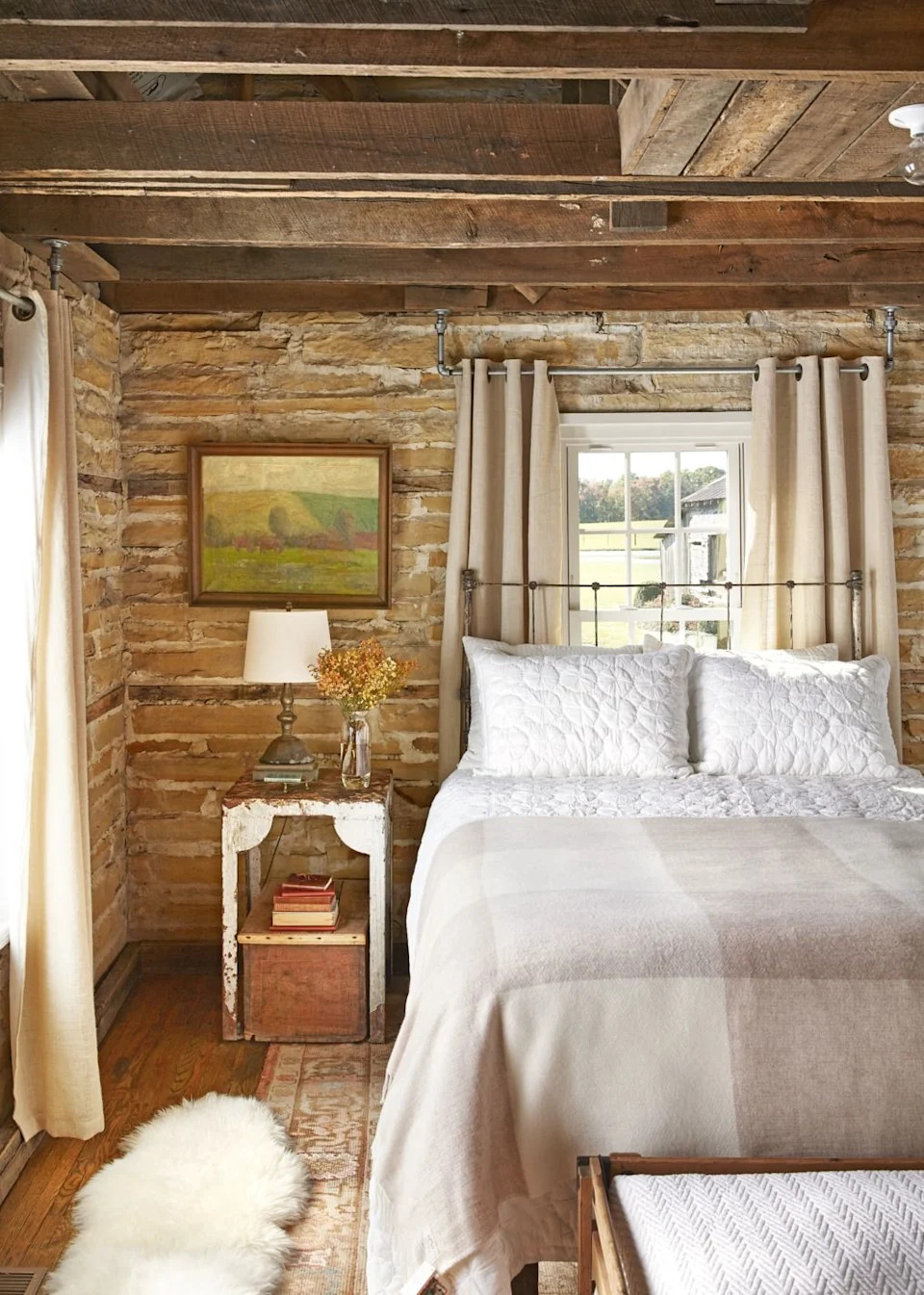
21. Build a Rugged Retreat with Stone Walls and Exposed Beams
An interior stone wall is a stunning feature, but it comes with its own set of rules. Like the log wall in Idea #18, the uneven surface of stacked stone is a haven for dust and cobwebs, requiring regular vacuuming with a brush attachment to look its best. Hanging anything on it is a major commitment, involving a masonry drill bit and proper anchors. Also, be mindful of its texture; placing furniture directly against it can cause scratching, and leaning against it isn’t exactly comfortable. It’s a beautiful but rugged element that prizes form over function.
🎯 What Makes It Work
When working with dominant, rugged materials like stone and dark wood beams, you must intentionally introduce softness to make the room feel like a home. Don’t skimp on textiles. Use long, flowing curtains that pool slightly on the floor to contrast the hard window lines. Layer the bed with pillows and throws in different textures. Most importantly, use an area rug to cover a good portion of the floor. This not only adds softness underfoot but also absorbs sound, making a room with hard surfaces feel quieter and more serene.
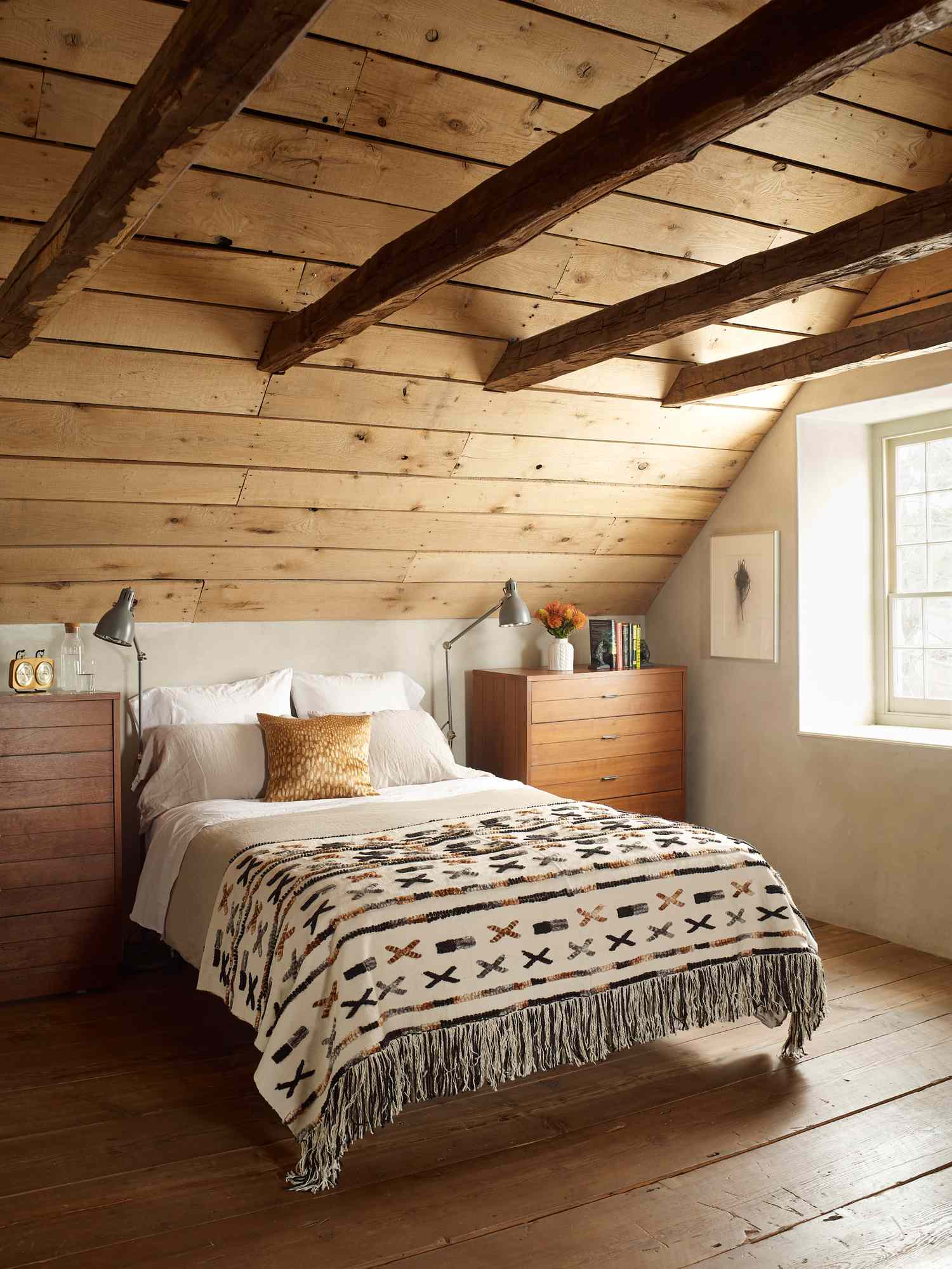
22. Highlight a Vaulted Wood Ceiling in an Attic Bedroom
The formula for this cozy attic retreat is: 70% natural wood + 20% soft neutrals + 10% industrial black. The vaulted wood plank ceiling and dark beams are the undeniable star, covering a large visual area and setting the rustic tone. To balance this, the walls and bedding are kept in calm, soft shades of beige and gray, preventing wood overload. The final 10% comes from the black industrial-style lamps and the subtle dark hardware on the dressers. This touch of black adds a modern, graphic edge that keeps the space feeling current and defined. The same principle is seen in Idea #1 but with a brighter overall feel.
💰 Budget Breakdown
Thinking of finishing your attic? Here’s a quick checklist before you begin.
- Check building codes: Ensure your attic meets local requirements for a habitable space, including ceiling height, window size for egress, and proper insulation.
- Assess the structure: Can the floor joists support the weight of furniture and people? You may need to reinforce them, which is a job for a professional.
- Plan for utilities: How will you run electrical wiring for outlets and lighting? What about heating and cooling? This needs to be planned before any drywall or paneling goes up.
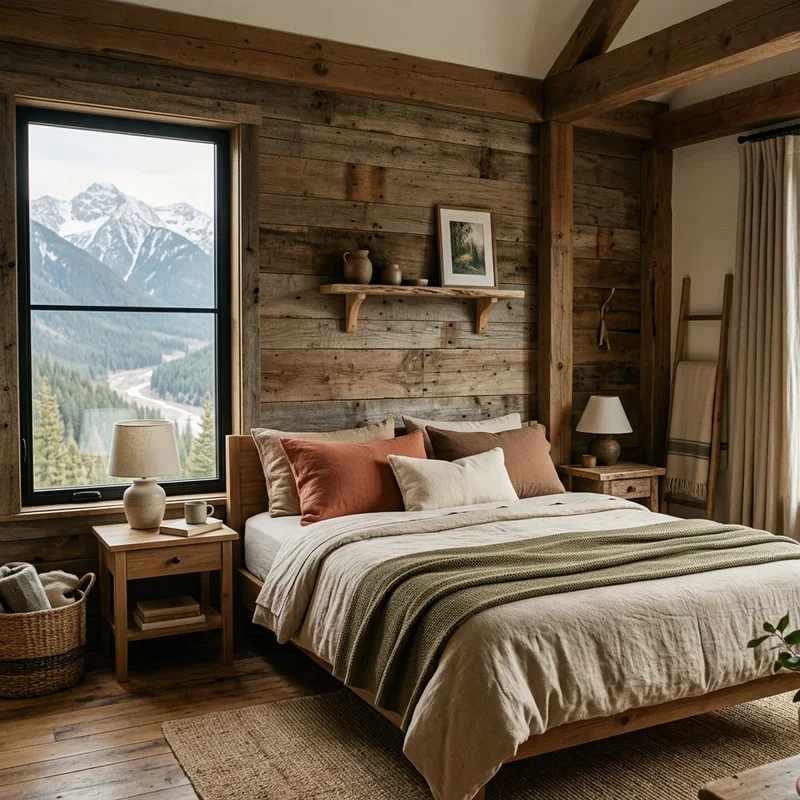
23. Frame a Mountain View with Reclaimed Wood Walls
The single most important element in this room is the view. The entire design is built to honor and frame the incredible mountain landscape outside the window. The choice of reclaimed wood for the walls is no accident; its natural, rugged texture creates a seamless transition between the indoor space and the wild outdoors. The bed is oriented to face the window, making the view the first thing you see in the morning. This isn’t just a bedroom; it’s a viewing platform for nature, and every design choice serves that purpose.
🔥 Trending Context
This design works because it understands its context. The palette inside directly mirrors the palette outside. The varied brown and gray tones of the reclaimed wood echo the trees and rocks, while the olive green and terracotta textiles pull from the colors of the forest floor and autumn leaves. By using a nature-derived color scheme, the room feels like an organic extension of the landscape. The black window frame is a crucial touch; it acts like a picture frame, sharpening and defining the magnificent view.
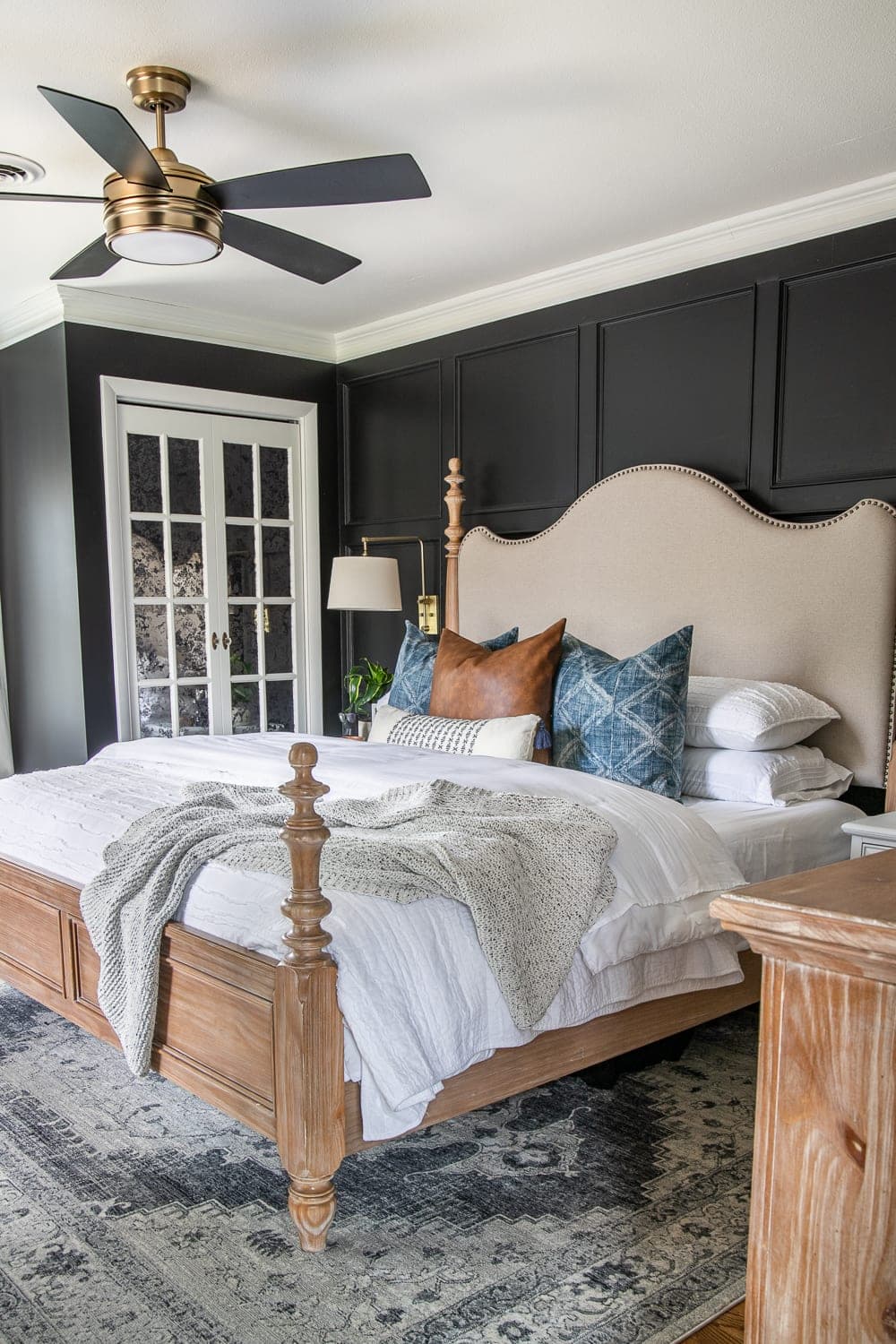
24. Create Drama with Dark Paneled Walls and a Light Wood Bed
Achieving this sophisticated, high-contrast look involves some investment pieces.
- Main Furniture (Four-poster bed): $1,500 – $4,000
- Wall Treatment (Paneling & Paint): $500 – $1,500 (DIY vs. Pro)
- Lighting (Ceiling fan): $300 – $800
- Textiles (Rug, bedding): $600 – $2,000
- Closet Doors: $700 – $2,500
- TOTAL: $3,600 – $10,800
- Budget alternative: Create the paneled look with inexpensive MDF trim from a hardware store and a can of dark paint. Find a used four-poster bed on Marketplace and either strip it to a light wood finish or paint it. A similar vibe could be achieved for $1,500 – $3,000.
📏 Scale Guide
A room with dark walls like this requires generous proportions to avoid feeling gloomy. This look is best suited for a primary bedroom that is at least 13×15 feet with ceilings that are 9 feet or higher. The height is essential to keep the dark color from feeling oppressive. The mirrored closet doors and light-colored bed, headboard, and rug are not just stylistic choices; they are necessary to bounce light around the room and provide visual relief from the dramatic walls. In a smaller room, this much dark color would be overwhelming.
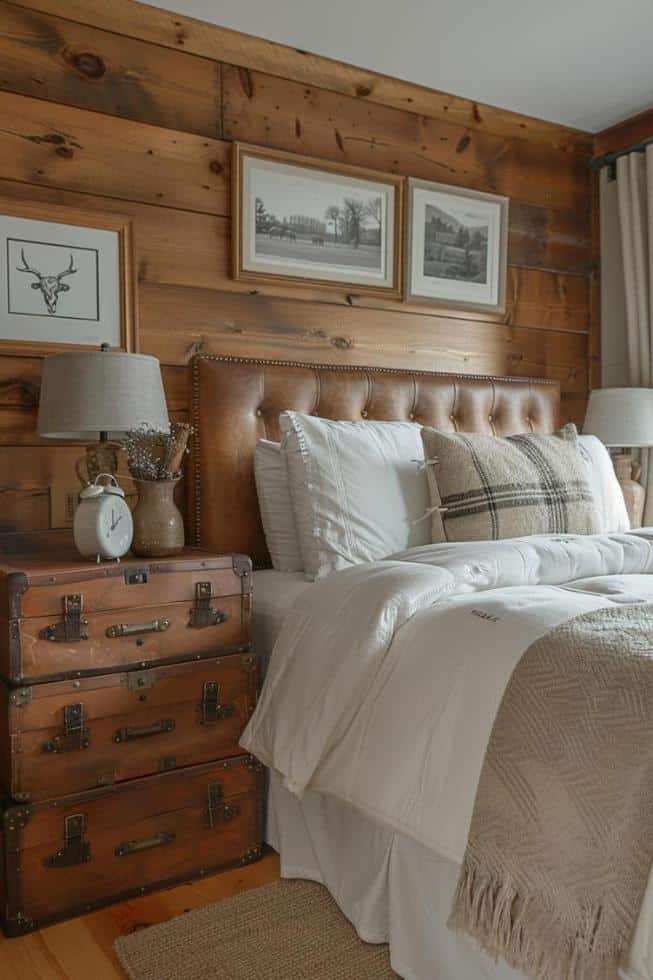
25. Combine a Brown Leather Headboard with Vintage Trunks
When using an unconventional item as a nightstand, like this stack of trunks, height is everything. The top surface should be roughly level with the top of your mattress. If it’s too low, it’s awkward to reach; if it’s too high, it looks strange and you might knock things over. You can adjust the height by choosing trunks of different sizes or even adding small, discreet feet to the bottom trunk if you need a little extra lift. This ensures your unique piece is as functional as it is stylish.
💡 Designer Tip
Want to create that wood-paneled accent wall? Here’s a quick guide to using peel-and-stick wood planks. Time estimate: 2-3 hours. Material cost: $150-$400.
- Choose your planks. Many companies offer sample packs so you can see the colors and textures in your room first.
- Prepare your wall. Make sure it’s clean, dry, and smooth. A quick wipe-down is all that’s usually needed.
- Use a level to draw a perfectly straight guideline for your first row of planks.
- Peel the backing off your first plank, position it along the guideline, and press it firmly to the wall.
- Continue adding planks, staggering the seams for a natural look. The planks can be easily cut with a utility knife to fit at the end of a row or around outlets.
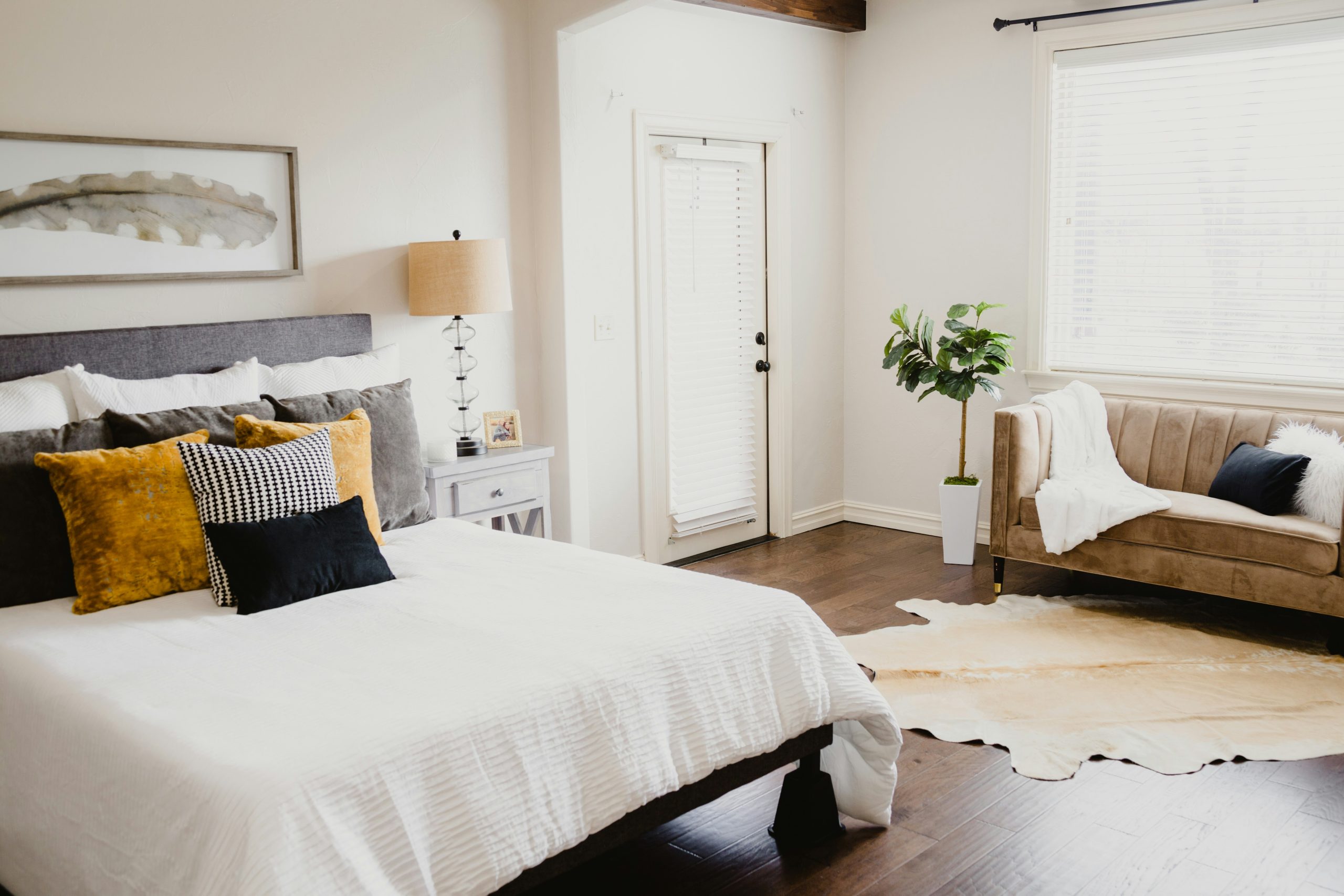
26. Mix Modern and Rustic with a Cowhide Rug and Velvet Sofa
This room is a perfect example of “modern rustic” because it skillfully blends clean, contemporary elements with natural, earthy textures. The white walls, clean-lined gray headboard, and simple white bedding create a bright, modern base. The rustic warmth comes from the key textural pieces: the exposed dark wood beams, the organic shape of the cowhide rug, the rich tan velvet of the sofa, and the living fiddle-leaf fig. The tension between the smooth, straight lines and the irregular, natural textures is what makes the space feel dynamic and sophisticated.
📐 Style Math
The all-white farmhouse look is evolving. For 2026, designers and homeowners on Pinterest are craving more warmth, color, and personality. This room is a perfect example of that shift. The introduction of rich tan velvet, gold accents, and the organic pattern of a cowhide rug adds layers of interest that were missing from earlier iterations of the modern rustic trend. It’s less about a strict formula and more about creating a collected, comfortable space that mixes different materials and eras with confidence. This look feels very now because it’s both clean and cozy.
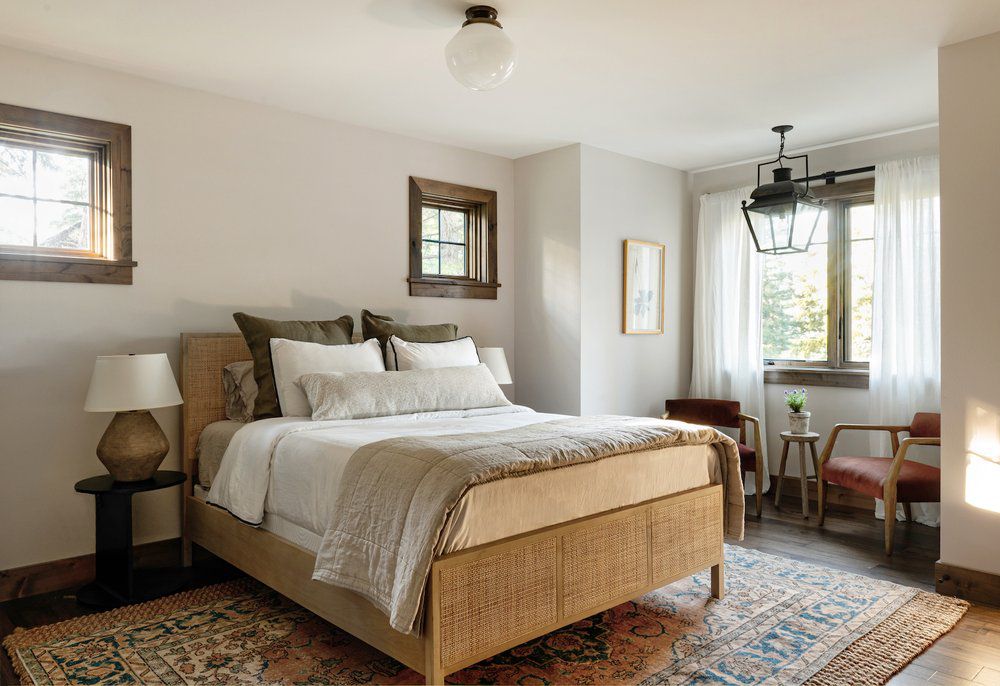
27. Add Subtle Detail with a Reeded Wood Bed Frame
The reeding on the bed frame is the detail that elevates this entire bedroom. It’s a subtle, sophisticated texture that adds a custom, high-end feel without shouting for attention. Reeded and fluted details are a huge trend in furniture design, and applying it to a simple, light wood bed frame makes it feel current and special. It catches the light beautifully, creating a delicate play of shadow and highlight that a flat wood panel just wouldn’t have. This small detail transforms the bed from a simple piece of furniture into the room’s quiet, elegant centerpiece.
⚠️ Real Talk
To make a distressed, multi-colored rug work, pull your accent colors directly from its pattern. Notice how the dark olive green of the accent pillows is a perfect match for the deep green notes in the rug, and the terracotta chairs pick up on its warmer, rust-colored threads. The cream bedding ties into the rug’s lighter base. This is the professional way to build a cohesive color palette: start with a “hero” pattern (the rug) and use it as your roadmap for the rest of the room’s colors. This ensures that even disparate colors feel like they belong together.
Ready to Build Your Rustic Retreat?
We’ve shown you the inspiration, and now it’s your turn to create a space that feels like a true getaway. Pick the details you love, mix and match with confidence, and start building the cozy retreat you deserve. Don’t forget to save your favorites to your Pinterest board to keep the inspiration flowing!